Data: Black Friday Down

Updated. The writing was on the wall when holiday decorations hit sales floors in October. Thanks to persisting supply chain concerns, the holiday season began earlier than ever, which is impacting the bellwether statistics that retail industrialists rely on for forecasted investments. For the first time in history, online retail saw a reversal in year-over-year growth trends. On November 26, online shoppers spent $100 million less than they did on Black Friday 2020. Total sales fell $8.9 billion compared to last year according to Adobe Analytics. Adobe’s Lead Analyst Vivek Pandya:

Shoppers are being strategic in their gift shopping, buying much earlier in the season and being flexible about when they shop to make sure they get the best deals.

By some, the downward trend has been characterized as a contraction in eCommerce spend, but it will be remembered as a confirmation of a much larger shift in pandemic-era retail. In July’s Digital Supply Chain, I wrote about one of the changes that we’d see this fall.

This Black Friday season will see a narrative around short supply of physical goods and an emphasis on brand retailers offering NFT-based products that appeal to their most enthused consumers. Nike will sell digital shoes, Balenciaga will sell avatars for your child’s favorite multi-player game, and legacy companies will emulate the brilliance of the Bored Ape Yacht Club whose NFT sales provide access to a real-life community.

There were other contributing factors to retail’s declining Black Friday performance, and they were not exclusive to online retail. According to CNBC’s Lauren Thomas, Black Friday shopping in stores fell 28.3% from 2019’s levels. And Thanksgiving Day visits were down 90.4% from 2019 levels according to Sensormatic. It should be no surprise that the culprit behind the “down year” is actually a number of factors. The Adobe data indicates an 124% increase in out-of-stock levels. Consumers starting earlier may have taken the sting out of the November shopping event. In October 2021, I explained in No Stock For Chrismukkah:

This means Black Friday will look different. In previous holiday seasons, pricing incentives were the sales hook. This year, retailers won’t need to offer flash sales or free shipping: availability is the hook. Plainly put, if a quality product is available to ship before the holiday season, it will likely be purchased. This is what Lowe’s is signaling with their premature focus on Christmas. If they waited until the normal beginning of holiday cheer, there may not be the stock to support the spike in demand.

It’s not for a lack of trying. According to a Gallup poll, Americans intend to spend record amounts for Christmas; product availability is the problem. This forecasted spend is actually higher than pre-pandemic levels and 2020.

The other problem may be no problem at all. With spend spread over a greater period of time, even with supply chain concerns persisting, this holiday season may still set a new record in gross merchandising volume (GMV) between October and December 24. According to Adobe’s data, shoppers spent $3 billion or more 22 times so far this holiday season. Last year by this date, the GMV exceeded $3 billion just five times. There’s also conversion rates to consider:

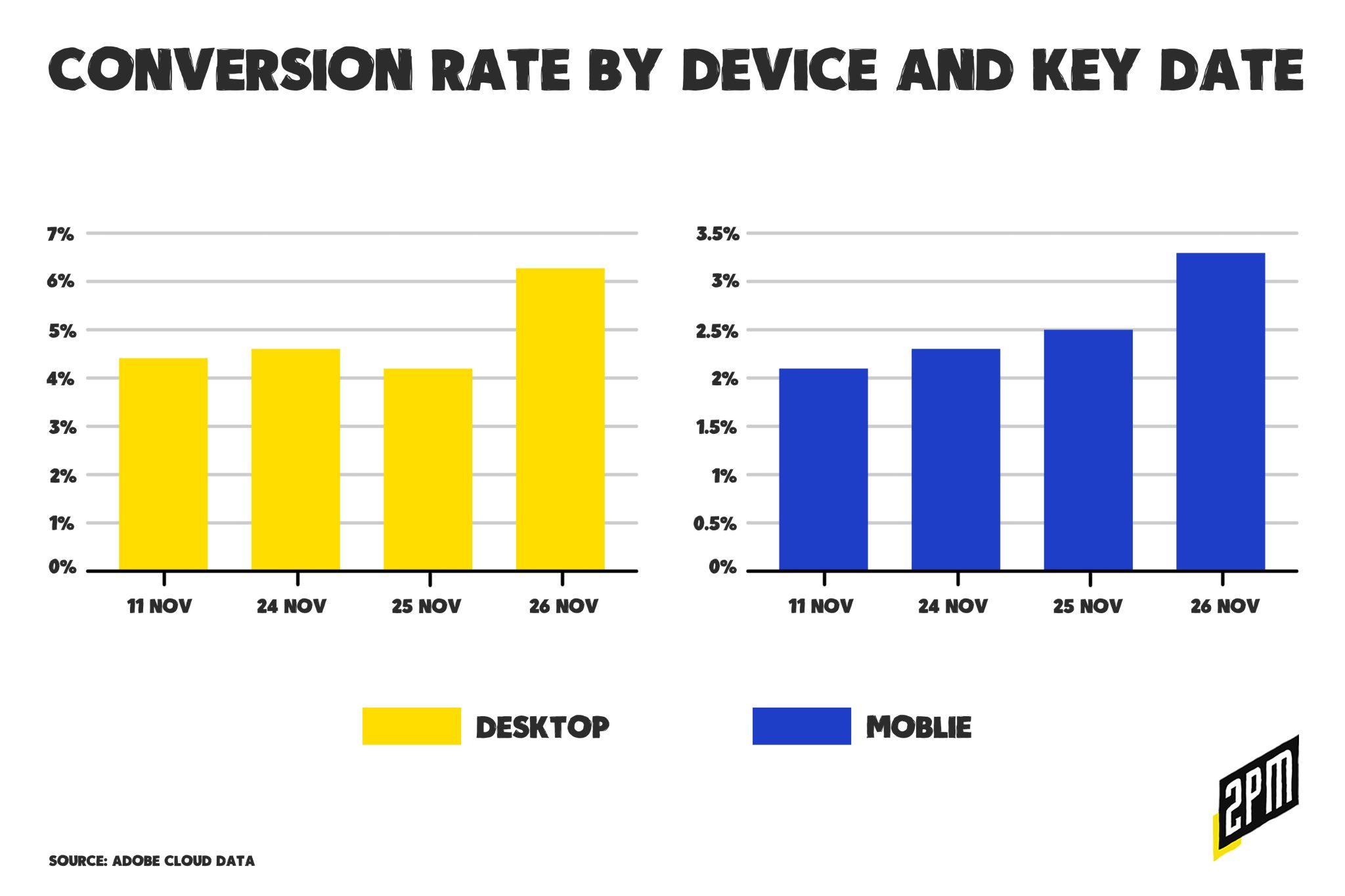
The Black Friday conversion rates across the Adobe Sales Cloud spiked to extraordinary averages across desktop and mobile devices on Black Friday – a sign that there may still be an unmet need that Cyber Monday and beyond will account for. An elongated holiday season, fewer deals, and a supply chain under pressure are all contributing factors to America’s first Black Friday without a sales record. According to Adobe Analytics, shoppers spent $10.7 billion on Cyber Monday. This falls to 1.4% less than 2020’s record breaking Cyber Monday spend. When you consider the stay-at-home conditions of 2020, this figure is more of an accomplishment than it may seem to analysts. CNBC reports that November spend (through Cyber Monday) in the United States is up 11.9%, totaling $109.8 billion online.

Additionally, out-of-stock messages increased 8% over the week, signifying the culmination of a tumultuous season for supply chain workers and the retailers that rely on them. These out-of-stock messages are up 169% vs. 2020 figures and 258% higher than 2019.

The reality of these figures is nuanced; it could mean that demand could remain pretty strong and this year’s remaining sales volume will average out to finish higher than previous Q4 sales figures. There’s also the small chance that we’re just more grateful for what we already have.

By 2PM

Memo: CryptoKicks

A popularização de carteiras de criptomoedas, NFTs e mercados como o OpenSea abriu a porta para um maior interesse no metaverso. Um NFT existe no blockchain, representando de forma exclusiva um ativo digital ou real. É comum ver um usuário de mídia social exibindo orgulhosamente seu NFT como sua identidade preferida em vez de sua própria imagem. A Nike está apostando que isso se estenderá à forma como você deseja se representar on-line por meio de suas próprias roupas e acessórios. Popularizada durante a pandemia, a convergência do mundo físico e do mundo digital está sendo liderada tanto pelo comércio quanto pela comunidade. A Nike tomou nota:

Imagine seu gêmeo digital usando tênis Nike e um agasalho de treino para uma reunião da equipe da Microsoft ou para as salas virtuais do Facebook - quero dizer, do Meta - enquanto você fica no seu sofá de pijama e meias felpudas. Esse é o futuro que a Nike está imaginando para si mesma. Em 27 de outubro, a Nike registrou mais de meia dúzia de marcas registradas no Escritório de Marcas e Patentes dos EUA (USPTO), incluindo as do logotipo swoosh e do slogan "Just Do It", que revelam planos de fabricar e vender calçados e roupas virtuais. [1]

Dois pensamentos não relacionados me fizeram pensar sobre o possível futuro da Nike na Web3:

  • Uma potencial DAO (Organização Autônoma Descentralizada) construída em torno de sua comunidade digital com uma tokenização que permite que a comunidade experimente o lado positivo das buscas da Nike na Web3 de uma forma que as ações tradicionais podem demorar a refletir.
  • Uma presença digital ativa, nos mesmos moldes das comunidades CryptoPunks ou Bored Ape Yacht Club. Ela seria liderada por executivos da Nike e atletas patrocinados, onde as interações se assemelham ao uso do Twitter por Jack Dorsey para construir sua legitimidade.

De acordo com Cathy Hackl, CEO do Futures Intelligence Group, mais marcas e ativos seguirão o exemplo da Nike:

Acho que algo como o que a Nike está fazendo envia uma grande mensagem ao mercado de que isso não é especulação, é realmente para onde estamos indo. E, eventualmente, você terá que contratar esses líderes que podem ter a visão e que podem liderar a empresa de uma forma informada.

A Nike, que está no caminho certo para obter US$ 50 bilhões em vendas este ano, entrou com sete pedidos de registro de marca que mostram a intenção de criar e vender produtos virtuais, incluindo "calçados, roupas, acessórios para a cabeça, óculos, bolsas, bolsas esportivas, mochilas, equipamentos esportivos, arte, brinquedos e acessórios para uso on-line e em mundos virtuais on-line". Com seu logotipo swoosh e o slogan "Just Do It" também fazendo parte das marcas registradas, a Nike está se adiantando ao fato de sua própria marca ser usada e cooptada por terceiros no metaverso. Mas também está planejando participar diretamente: a empresa também está planejando contratar designers de materiais virtuais. O momento não poderia ser melhor:

A Nike está na vanguarda de uma tendência de varejo que se tornará a norma para outras marcas capazes. Conforme relatado pela 2PM em julho:

Toda marca deve ter uma cadeia de suprimentos digital ou um conjunto de componentes que, quando construídos adequadamente, equipam uma empresa de varejo com uma classe importante de produtos finais: conteúdo, dados primários, produtos digitais e comunidade.

Há poucas marcas mais bem posicionadas do que a Nike. Ser pioneira no marketing de produtos dentro do metaverso requer paciência, investimento e capital social que poucas outras marcas possuem. Ela tem uma vasta rede de atletas famosos contratados para ajudar a impulsionar o apelo. Os clientes da Nike são leais e engajados o suficiente para que usar os tênis Nike em espaços virtuais seja algo óbvio. No processo, uma nova forma de comunidade e produtos mais acessíveis - embora digitais - podem começar a resolver os problemas da Nike com seu aplicativo SNKRS. O vice-presidente global de SNKRS da Nike comentou recentemente com a revista Complex sobre essa questão:

Estamos correndo o risco de perder nosso consumidor mais obcecado por tênis. O calor e o hype estão "matando a cultura" e os consumidores estão migrando para a New Balance e para marcas menores e independentes.

Atualmente, muitos desses clientes ficam de fora de alguns dos lançamentos mais cobiçados da Nike, ou apenas sonham em garantir um raro par de tênis Nike para si mesmos. O metaverso pode ser uma solução para isso, criando mais demanda, impulsionando mais compras e tornando uma compra inatingível alcançável de uma nova maneira para mais pessoas. A Nike não está apenas garantindo o controle sobre sua marca digital à medida que os espaços da Web3 proliferam; ela também está criando fluxos de receita e marketing totalmente novos.

A adoção dos princípios da Web3 será gradual, mas a Nike já começou a estabelecer as bases, desenvolvendo seu negócio direto ao consumidor e investindo em seus próprios aplicativos, marcas registradas e propriedades intelectuais, ao mesmo tempo em que reduz sua dependência dos canais tradicionais de varejo. A Web3 e o DTC são parceiros naturais, e a Nike será um dos primeiros grandes varejistas a iterar em torno dos princípios da Web3. Não se trata apenas de um novo fluxo de receita: trata-se de comunidade e status.

Quem você é nos espaços digitais se tornará tão importante quanto quem você é na vida real, da mesma forma que os seguidores do Instagram se tornaram um símbolo de status. A Nike pegou o jeito porque a empresa parece entender que quem você é é influenciado pelo que você veste.

Neste momento, não há como evitar os NFTs. Todo varejista com valor de marca se esforçará para criar sua pegada digital para a versão da Internet da Web3. O metaverso não é mais um conceito distante e futurista, e onde a Nike vai, outros a seguem.

Por Web Smith | Editor: Hilary Milnes | Arte: Christina Williams


An Open Letter: Headwinds and Hope

I am bullish on the next decade of eCommerce. Consider the history of automobile innovation and the roads needed to see the new technology thrive.

The demand for cars far outpaced the capacity of American roads. If history is any indication, upcoming innovations to a degraded and antiquated logistics infrastructure will spur more growth in the relatively nascent industry. eCommerce is overdue to correct America’s penchant for over-retail. But first, its proliferation will become public policy.

The ties between commerce, entrepreneurship, and infrastructure have always been clear. In the early 20th century, trade was hindered by poor transcontinental routing. In 1903, a Vermont doctor took the first coast-to-coast road trip across the United States, a feat of endurance at the time. During this trip, only 150 miles of road were paved. In fewer than 70 years, that 150 miles became nearly 49,000 miles of paved road. There were 4,900 automobiles in the United States in 1903. By 1956, there were 25 million cars on America’s freshly paved roads. The Federal Highway Act of 1956 accelerated road-based travel and commerce. The online retail industry is analogous to the infrastructural developments of old. 

There is good reason to be spirited if you are an operator in the direct-to-consumer industry today. Despite the supply chain crisis, there have been a record 20 companies that have gone public in the previous year. There are signs that 2022 will be an even greater breakout year for IPOs. The long-term outcome of impending changes will far outweigh the short-term discomforts currently experienced.

Yes, the near-term obstacles are substantial. November is the Super Bowl of months for the retail industry and there have never been more questions around advertising, supply chain, and shipping availability. Operators like Common Thread Collective VP of Marketing Aaron Orendorff have been pragmatic in their practical advice for upstart retailers without the war chest or market leverage to navigate the next months as they would have in previous years. Orendorff captured the spirit of 2PM’s digital supply chain essay in a recent tweet providing creative solutions to a rampant lack of SKUs:

  • personalized gift cards
  • NFTs or digital downloads
  • print on-demand merchandising
  • post-holiday incentivized gift cards (ex: worth more if purchased in the spring months)

We have never seen the trade hindrances that currently exist, though we have seen something similar some 100 years ago. Then – an international supply chain fiasco was resolved leading into the Roaring 20s of the 20th century. History doesn’t repeat but it sure does rhyme. Over the course of the 20th century, we fixed both bottlenecks (roads for the automobile and international supply chain for post-WWI America). I believe that we will resolve today’s.

In the near-term, it feels that there is no real solution to the supply chain crisis. Since the current administration announced a 24/7 operational period for the Port of Los Angeles, the number of container ships in the queue have only grown. Some reports have the numbers increasing from 56 to 77. There appears to be failure at every level: municipal, state, and federal. But it does feel like private and public companies are beginning to change public policy.

Ryan Petersen on Twitter: “In the midst of the greatest crisis of the container shipping era the local governments in California have responded with a massive tax on the victims of that crisis, American businesses. Those businesses will need to pass through the costs to you, the consumers. / Twitter”

In the midst of the greatest crisis of the container shipping era the local governments in California have responded with a massive tax on the victims of that crisis, American businesses. Those businesses will need to pass through the costs to you, the consumers.

Secretary of Transportation Pete Buttigieg recently commented on the second and third order effects of this persisting shortfall of the logistics labor force:

Look, there are so many things that are still happening in our economy — distortions, disruptions, things in our supply chain that are affecting prices that are clearly a direct consequence of the pandemic.

Yes, we are beginning to see tangible effects of this supply chain catastrophe. The GMV deceleration is astounding and not even the world’s finest retailers are immune. No, it’s not like Amazon to miss on revenue but supply chain disruptions and a labor shortage have led to a disappointing quarter. Third quarter revenue ($110.8 billion) came below expectations of $111.6 billion, while profits of $3.2 billion were down from $6.3 billion last year, and also under expectations. Where Amazon goes, other marketplaces follow.

Amazon is not immune to the broader shocks reverberating throughout the retail industry – if anything, its volume makes it a lightning rod. Costs are on the rise throughout the supply chain and more investments have been put into personnel costs and incentives. That’s happening at Amazon on a massive scale, and if it’s hurting its business, other retailers should expect to feel a similar pain.

The company’s year-over-year growth rate lands it in the middle of the herd in comparison to faster risers, Shopify and Walmart eCommerce. But even Shopify is feeling the heat. Tobi Lutke spoke to analysts on Shopify’s third-quarter earnings call:

The challenges are of course real. There are pressures in the supply chain. There are increasing logistics costs and things like this. Inflation is harder for us to judge. There are probably some inflationary things going on. We have no idea if they are shorter or long term.

Consider the following anecdote. America currently boasts an inflated 23.5 square feet of retail real estate per capita. In comparison, China, the world’s leader in online retail has just 2.8 square feet per capita. China passed the United States as the No. 1 retail market in late 2019 and a 40+% penetration rate as a % of retail. It’s no secret that America’s per capita physical retail figures are beginning to fall, it’s long been my belief that eCommerce market share will rise in its place.

In years past, an ailing eCommerce company would not have been cause for government intervention or bipartisan solution. However over the previous five years, the eCommerce industry has become essential to the lives of many Americans. More importantly, it has become an all-important asset to commercial real estate brokers looking to replace dying retail with fresh growth. And as suburban strip malls and aging retail developments pivot to warehousing and logistics hubs, the growth of this industry resembles an inflection point that is reminiscent of the shift from horse and buggy to automobiles in the early 20th century. It’s a loose parallel that gives me a bit of comfort.

We paved tens of thousands of miles of roads to aid in interstate trade, tourism, and a new retail economy. It redefined the 20th century. I am confident that governments at every level will coalesce around the realization that eCommerce infrastructure is critical to how we will live in the 21st century. Normally, national ideals turn into political action in years or decades. This current supply chain crisis will accelerate the solution to it.

We must begin viewing investments into our eCommerce infrastructure no differently than our predecessors viewed their investments into roads, bridges, and tunnels. The rest of the digital and physical economies will depend on that infrastructure: databases, financial technology, warehousing, logistics, privacy systems, and trust. Each are hallmarks of the eCommerce industry, but rarely do we consider how they can impact industries that have long been without these norms. [2PM, March 2021]

Whether the impending infrastructural fixes to ports, departing roads, and the labor force is addressed through public channels, private channels, or a joint effort by both: this will become the post-pandemic economic issue of this decade. The eCommerce industry, its many brands, technologies, and service-based companies will become the beneficiaries of these changes.

In the 20th century, we built roads to move people from state to state and city to suburb. In this decade, we will find highly efficient solutions to source, make, ship, and receive the goods made by the people that those 20th century roads served.

Por Web Smith