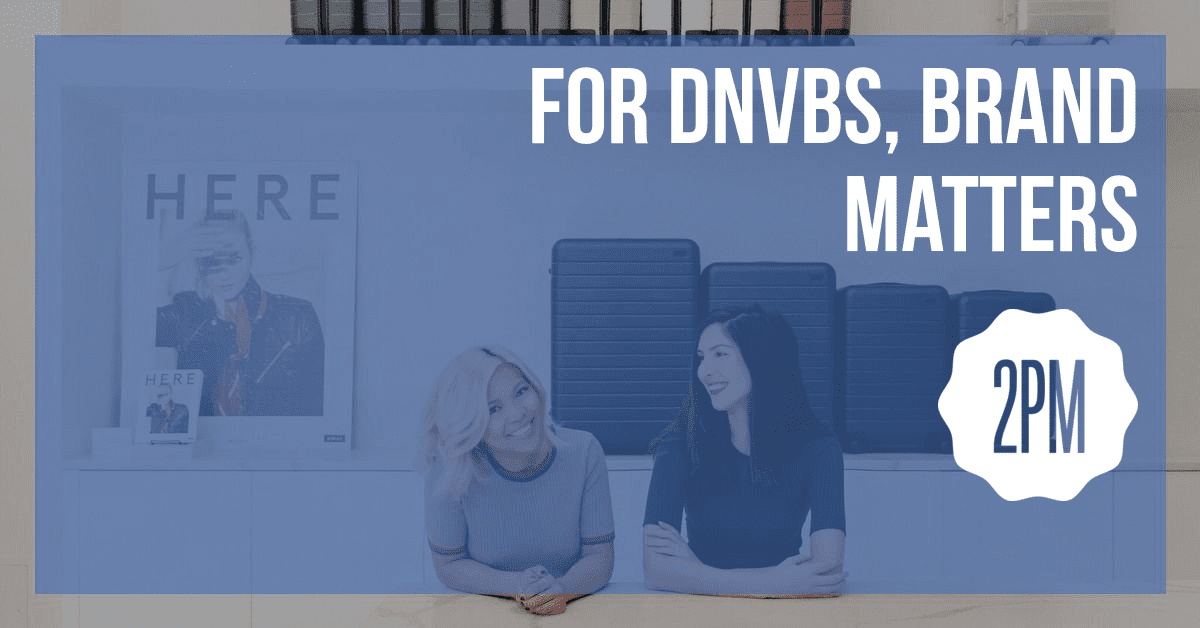
Nº 270: Para las DNVB, la marca es importante.

facebook-ad copy 4

El cierre de Raden (DNVB nº 119) y la persistencia de Away (DNVB nº 40). Tras la noticia del cierre de Raden y los comentarios de su fundador sobre las perspectivas del sector de las maletas en línea, 2PM analiza en profundidad qué puede haber influido en el cierre de Raden (y no sólo la regulación). Por su parte, Steph Korey, cofundadora y consejera delegada de Away, opina sobre las perspectivas de futuro de la empresa.

Josh Udashkin, fundador de Raden, declaró lo siguiente a Conde Nast Traveler sobre el futuro de la industria del equipaje inteligente:

Odio decir esto, pero creo que [el futuro] es inexistente. Todas estas empresas confían en el boca a boca, pero comprar este producto ahora hace que te molesten. No veo cómo puedes seguir vendiéndolo.

No estamos de acuerdo. Los consumidores de la generación del milenio son prácticos, inteligentes e incluso ligeramente territoriales. Estos consumidores buscan marcas que se adapten a su estilo de vida, su momento, sus valores y sus preferencias personales. La narrativa importa porque su estilo de vida importa.

La clave para crear un DNVB fuerte puede atribuirse a la calidad percibida, el valor del precio y la facilidad de compra.

Cambio de conveniencia + Cambio de precio + Cambio de percepción de la calidad > 0 

Comodidad: facilidad de compra, servicio de atención al cliente superior, facilidad de devolución y garantía de calidad.

Precio: es el precio comparable y o más barato que los precios de la marca premium incumbente.

Percepción de la calidad: ¿cómo se percibe la marca? ¿Existe afinidad por el producto?

Por el contrario, si la suma del "cambio" del DNVB es superior a cero, el DNVB puede ser una opción mejor que el titular. Es a través de este prisma que los DNVB y las marcas de CPG han sido capaces de posicionar sus productos frente a marcas más rígidas y tradicionales. Una de las claves para crear una presencia minorista en línea es hacer hincapié en los dos componentes de una fórmula ganadora: el producto y la narrativa. Esa narrativa comunica calidad, comunidad y valor de marca en torno al producto. Para los DNVB con una financiación total de 5 millones de dólares o menos, se puede argumentar que la narrativa es tan importante como el propio producto.


Número 254: Carta abierta a los directores generales de la DNVB

Los equipos ejecutivos de la DNVB construyen dos productos a partir de cero: la oferta y la demanda:

  1. El producto: la camisa, o el equipaje, los pantalones, las sombras, los abrigos, o lo que sea por lo que la gente te conoce.
  2. La marca: el aura de ese producto, el reconocimiento del nombre, la asociación, los socios entre bastidores, las portavoces, los embajadores, la inevitabilidad del éxito.

Tanto Raden como Away se fundaron en los primeros meses de 2015. Raden obtuvo una inversión inicial de Lerer Hippeau, First Round Capital y Gin Lane, el famoso creador de hecho de las DNVB. Away recaudó una ronda semilla repleta de estrellas que incluía a Andy Dunn, el ahora ejecutivo de Walmart que acuñó el acrónimo DNVB.

Cuando Udashkin fue entrevistado por Loose Threads en 2015, Udashkin indicó que el producto era la totalidad de su enfoque. Añadió que la narrativa del producto no era algo en lo que Raden fuera a hacer hincapié.

Tras pasar casi un año en la fase de prototipo, trabajando desde San Francisco, Los Ángeles, Montreal y Taiwán, Raden surgió como una empresa de productos que rechazaba la imaginería y la celebridad de las marcas de estilo de vida.

Udashkin continuó diciendo: "¿Cómo puedes tener un estilo de vida el primer día en torno a tu producto a menos que lo estés fingiendo? Creo que eso funciona a corto plazo, pero con el tiempo el cliente se vuelve más listo. Si no sigues trabajando en tu producto, al final pierdes".

Las cofundadoras Steph Korey y Jen Rubio adoptaron un enfoque casi opuesto para crear su marca competidora. En un segmento de julio de 2017 en Inc Magazine titulado "How I did it", esto es lo que se dijo sobre el dúo:

Steph Korey y Jen Rubio tenían un problema. Se acercaba el lanzamiento de Away, una nueva marca de maletas, y ninguna de ellas estaría lista a tiempo. Por suerte, ambas tenían un truco para las redes sociales en la maleta. Convirtieron una táctica probada de venta al por menor, el pedido anticipado, y una idea para un libro en una campaña que se hizo viral en Instagram y más allá.

Burt Helm, Inc. Revista

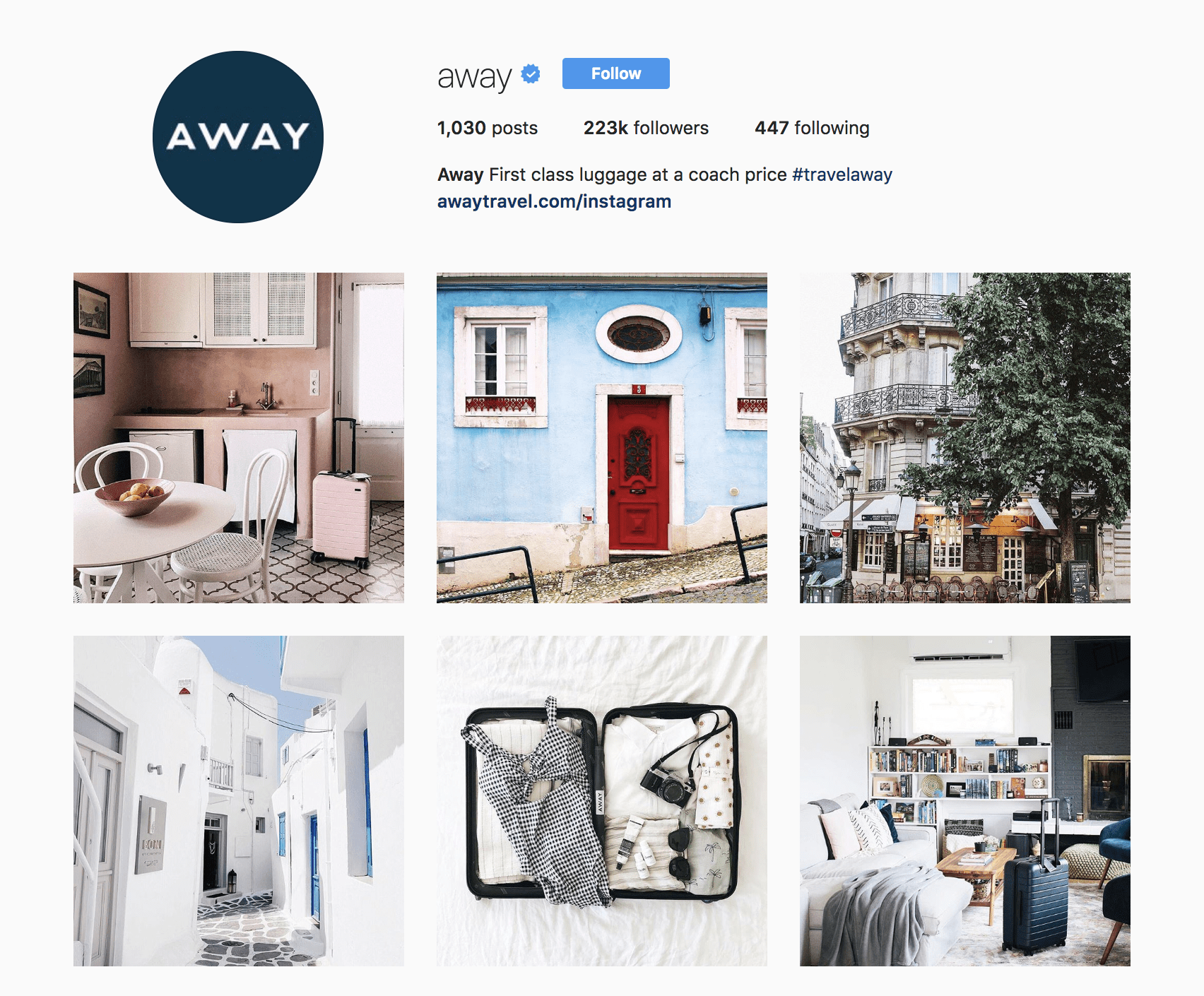
Esta forma de pensar impregna toda su posición de producto. Mientras que el Instagram de Raden se centraba únicamente en los productos que se vendían, la cuenta de Instagram de Away muestra tanto el estilo de vida y la usabilidad como los productos que Away vende.

Captura de pantalla 2018-05-21 a las 12.28.07 PM

Mientras Away se centraba en el destino y la afinidad de marca (para incluir una revista impresa llamada "Here"), la relación que Raden mantenía con los clientes era totalmente distinta de la que Away espera continuar. La diferencia entre ambos enfoques afectaba en gran medida a la oferta de productos de cada marca: La de Raden era estrecha, la de Away es amplia. He aquí un punto crucial del artículo destacado hoy por Fast Company:

Me explica los cálculos. El mercado objetivo de una marca de maletas de venta directa al consumidor es relativamente reducido. No se trata de una compra masiva. Tu público son personas con una renta disponible suficiente para gastarse entre 200 y 400 dólares en una maleta de mano, pero también lo bastante conocedoras del mundo digital como para estar dispuestas a comprar la maleta por Internet, en lugar de en unos grandes almacenes.

Una vez que la startup ha convencido a alguien de su mercado objetivo para que compre un equipaje de mano, la relación está básicamente acabada. Con algo de persuasión, la marca puede intentar venderles una pieza de equipaje facturado o quizá otro pequeño accesorio de viaje. Pero el valor del estilo de vida de cada cliente es relativamente pequeño, en comparación con otras categorías. Una marca de calzado de lujo directa al consumidor como M.Gemi puede vender a una mujer un nuevo par de zapatos de 300 dólares dos veces al año durante el resto de su vida. Everlane puede vender a un cliente actualizaciones de vestuario cada mes.

Elizabeth Segran, Fast Company

Aquí Udashkin sugiere que hizo lo correcto al centrarse únicamente en la superioridad del producto (sólo uno de los tres componentes de la fórmula DNVB). Pero como no vio ningún valor en crear una marca y una narrativa en torno a Raden, había menos productos alternativos que pudiera ofrecer a sus clientes actuales. Esto, sumado a la batería inamovible de su equipaje y al menor recorrido de la startup, influyó en su postura de que el fabricante de maletas no tenía más remedio que cesar sus operaciones. También sugirió que no había mercado para este tipo de productos a largo plazo, una afirmación de gran alcance.


En un correo electrónico enviado a 2PM, Steph Korey, CEO de Away, explicó la postura de la empresa: 

El éxito de una marca no viene determinado por la cantidad de dinero que recauda, ni por ninguna otra cosa, sino por la combinación adecuada de muchas pequeñas cosas.

Para nosotros, ha sido la combinación de tener un enfoque obsesionado con el cliente en todo lo que hacemos (dedicar tiempo a escuchar a nuestros clientes, entender en profundidad lo que nos dicen y actuar rápidamente en consecuencia), ser concienzudos sobre la forma en que les presentamos la marca en primer lugar (asegurándonos de que lo que estamos comercializando será interesante para quien lo estamos comercializando, y, al mismo tiempo, crear una narrativa que sea auténtica con respecto a lo que somos como marca, independientemente del canal o del público al que nos dirijamos), y no limitarnos a un único producto o plan para el futuro (pasando de una maleta a docenas de artículos de viaje desde el lanzamiento, y fijando nuestra mirada en solucionar todo lo que actualmente está mal en la experiencia de viajar).


Una de las primeras lecciones de la marca DNVB no puede explicarse únicamente con análisis y lógica. Es demasiado subjetiva. La otrora incipiente empresa de calzado de Phil Knight vendía zapatos, pero Nike nunca fue una empresa de zapatos: era una empresa que hacía campeones. Tesla vende coches, pero es una empresa para futuristas. Apple vende ordenadores, pero es una empresa para creadores.

En el caso de los productos aspiracionales, los consumidores eligen marcas que se ajustan a su estilo de vida, su sistema de creencias y sus objetivos. Desde el principio, Away consiguió algo que muy pocos DNVB entienden desde el principio. Construir el producto es sólo la mitad de la batalla. Esto significa que, independientemente de las arduas normativas que puedan encontrar, mantendrán un lienzo para construir productos que sean relevantes para su comunidad de apasionados viajeros milenarios. Es probable que, a medida que continúen las ventas tradicionales, veamos un número creciente de SKU, estilos y complementos muy apreciados por los viajeros millennials. Sí, Steph Korey y Jen Rubio venden maletas, pero Away es una empresa de viajes. Y Away irá donde ella quiera.


Actualización: El 26 de junio, Away anunció la colaboración Away x Dwayne Wade. El 28 de junio, Away anunció una ronda de inversión de 50 millones de dólares, una de las mayores rondas de fundadores femeninos de la historia. Según su Directora de Comunicación, Cassi Gritzmacher:

Con esta última ronda de financiación, Away planea seguir estableciéndose en todo el mundo mediante la ampliación a nuevos mercados; continuar ampliando su línea de productos para crear la versión perfecta de todo lo que necesita para viajar sin problemas; ampliar su huella física minorista (abriendo 6 nuevas tiendas a finales de 2018, además de sus actuales ubicaciones en Nueva York, Los Ángeles, San Francisco y Austin); ampliar sus actuales esfuerzos de impacto social (a través de su asociación con Peace Direct y de nuevas iniciativas); y crear 249 nuevos puestos de trabajo en los próximos cinco años, trasladando el equipo a una nueva sede mundial de 56.000 pies cuadrados en su ciudad natal, Nueva York.

Lea más sobre el tema aquí.

Por Web Smith y Meghan Terwilliger | About 2PM 

No. 269: Brands and Voice Commerce

facebook-ad copy 2

According to the Cowen Company, one in seven American consumers owns an Amazon Echo device. Additionally, ComScore notes that 50% of online searches will be voice controlled by 2020. The following is an actual sequence from earlier today.

Alexa, buy pants.

Amazon’s choice for pants is Goodthreads men’s athletic fit, five pocket chino pants. Navy, 29W x 34L. It’s $32.25 total including tax. Would you like to buy?

No thank you.

That’s all that I can find for pants right now. Check your Alexa app for more options. 

Here, Amazon recognizes my request and offers their own brand as the first option. This is a great opportunity for brands looking for a better way to reach new consumers. As consumer adoption of products like Google Home and Amazon Echo continue to accelerate, marketing officers must begin planning around voice as a retail channel. It’s common knowledge that voice assistants will directly and indirectly narrow consumer choices. This is done one of two ways: (a) by recommending goods that are promoted by a brand or (b) by recommending brands and products owned by the platform (see: Amazon’s private labels). For the sake of this argument, 2PM will focus on Amazon’s Echo. It’s a powerful tool with daily relevance in households around the country.

Amazon also debuted Echo Look, a new Alexa-powered device that the company dubs a “hands-free camera and style assistant.” The addition of a camera enables the device to record and comment on its owner’s clothing choices, using a combination of machine learning and human stylist feedback. This advice also takes the form of recommendations, which can drive revenue to Amazon Fashion, and specifically its private-label brands.

Amazon is iterating on and rolling out more features for the Echo Look, including curated content and even crowdsourced (human!) style feedback. It also created an AI algorithm for designing clothes and patented an AR mirror that lets you virtually try on clothes. The value of such a mirror was validated recently by L’Oreal’s acquisition of ModiFace, a company that produces technology that powers similar applications in beauty AR.

Amazon’s Next Conquest Will Be Apparel, Tech Crunch

Through the use of products like the Echo Lookhardware that allows users to layer visual context on top of voice commerce – consumers are becoming comfortable with Echo as a fashion consumer tool. For executives in the fashion industry, it’s an opportunity to establish an existing brand in a new channel.

Product. Establish a six month test of your brand’s products on Amazon. For young brands with tremendous brand equity this can be terrifying, but these tests are commonplace. Just three days ago, Mizzen + Main listed their retail brand’s company’s basics. In a savvy move, rather than listing the entire catalogue, they focused on the brand’s evergreen products. These are the types of products that can lead to strong SEO that will benefit the company whenever they choose to list seasonal products.

Software. Build your brand’s voice application for Echo. To build consumer connections and facilitate the path to purchase, it could be worthwhile to provide your existing consumers a familiar destination on a new platform. Not only will a branded app experience make it easier to do business with you over voice, experts say that it improves SEO on Amazon.com and through Echo’s product rankings.

Marketing. In addition to emphasizing voice SEO strategy to drive discovery, brands are also measuring voice app data to improve consumer engagement, they are enabling product sales within the branded voice apps, and they are promoting their branded voice app through earned, paid, and social media.

Brand. In 2002, BMW innovated by hiring a barely known British actor to star in a then-revolutionary online ad series called The Hire. Costarring Mickey Rourke, Adriana Lima, Don Cheadle and directed by Guy Ritchie, Ang Lee, John Woo, and Tony Scott – this was a significant investment into entertainment by the German car manufacturer. But nearly 20 years later, it’s not the visuals that consumers remember. It’s the actor’s voice.

In the late 1990s BMW noticed their profits were sliding a bit and decided to start targeting internet-savvy customers, a very forward-thinking move at the time. They asked their longtime parter Fallon Worldwide to come up with a campaign that was more than just pretty BMWs sweeping through the countryside like in the magazine and TV ads, something with a James Bond-esque hero who uses BMWs in a variety of different situations.

BMW’s The Hire Was Ahead Of The Curve And Still Has No Equal

Clive Owen starred and narrated the entire series, a project that returned in 2016 under the BMW Films umbrella. In a way, BMW’s marketers gave the brand a human voice and it was such an effective marketing tool that Clive Owen’s intonation remains eponymous to the brand.

The Hire may have been a decade ahead of its time, but it was right on time for BMW’s return to relevance. For retailers who seek to establish their equity over a new channel, remember BMW’s bet on the internet. In a time when scripted podcasts are driving millions of downloads and attracting tens of millions in advertising dollars, consider the potential relevance of a retailer who invests in making their physical goods relevant to audio-hungry consumers.

Once you have command of a new medium. commerce-efficacy is a but one step away.

Read the rest of the issue here.

 Por Web Smith y Meghan Terwilliger | About 2PM

Issue No. 267: On DNVB Branding

facebook-ad

What’s next in DNVB branding? Every vertical brand story has its beginning. For lifestyle and fashion DNVBs that are fortunate enough to work with the finest branding agencies, this story often begins with its founder’s biography, the problem that product x begins to solve, and proclamations of the brand’s inevitable staying power. It’s a short history, as most are in online-first retail. But it’s also a forward-thinking approach, one designed for: eCommerce, Instagram and Google advertising, and third party delivery. Less “we’ve been” and more “we will be.”

According to the godfather of the term, “DNVBs are maniacally focused on the customer experience and they interact, transact, and story-tell to consumers primarily on the web.” As brands begin to focus on off-line retail, you’ll begin to find that the packaging around the brands will change with that focus. Whereas technology and futurism appealed early on (2010-2014), the brands that succeed over the next ten years will focus on heritage as much as they focus on futurism.

Phase One (2010-2014): Technology

Warby Parker is the best example by a mile. The brand grew by implementing a practice that other direct-to-consumer companies had not. The company worked to eliminate all barriers to purchase by implementing tools designed to facilitate an ingenious customer experience. For this first phase of DNVB marketing, the eCommerce brand’s technology was the draw. The product is nominal and affordable but the access to it became just as much a part of the brand as the eyewear itself. Take this excerpt from a 2013 Wall Street Journal article co-written by Kevin Lavelle and me:

We are now in the age of e-commerce 3.0, where entrepreneurs can launch companies with few barriers to entry. eCommerce 1.0 consisted of crude online shopping in the ’90s offered by a few businesses met with significant consumer skepticism. This evolved into the more sophisticated interactions of e-commerce 2.0 in the mid 2000s, when most companies realized that if they weren’t online, they were endangering their future.

A new time is here — and the power no longer lies in the hands of a few buyers at large stores. Bigger businesses can be upended by an upstart competitor with a superior product. And retail startups no longer have to endure the long, slow road of trade-show hopping to get their product in front of a handful of buyers, or giving away a hefty portion of each sale to distributors.

Phase Two (2014-2018): Comedy

Dollar Shave Club’s 1m33s “Our Blades Are F***ing Great” video was developed to promote the launch of a (since-acquired) brand and has now been viewed over 25 million times. This internet ad is considered one of the premier examples of top funnel marketing and DSC’s brand of humor has since influenced other mens-focused brands to pursue humor as a means of brand differentiation: Chubbies (no. 67), Untuckit (no. 48), Tommy John (no. 54), and Mizzen+Main (no. 86).

Capturing one customer by way of a top funnel direct-to-consumer ad can cost upwards of $20 per click on Facebook. Digital advertising can be costly. To counter these steadily rising costs, brands have been stimulating awareness, interest, and consideration cycles by promoting a viral brand video. It achieves awareness, consideration, and intent.

Most importantly, introducing mainstream users to your brand and getting them to clickthrough for more information allows marketers to use tools like Facebook’s pixel to retarget casual visitors, moving them further down the sales funnel. Appealing to casual customers was an effective way of increasing top funnel traffic.

Phase Three (2018-forward): Heritage

Brands that began as the embodiment of online-first retailers are now expected to rival age-old incumbents, as they grow their annual revenues well beyond nine figures. Incumbent competitors are still around and some are even stronger than they were before the emergence of online rivals. All the while, new brands are beginning to compete on old-aged ground: mall retail, brick and mortar shops, and traditional advertising. The internet was supposed to completely eliminate these channels, instead, it provided cover until online retailers were prepared to go physical.

eCommerce has matured and physical retail has evolved into a more effective channel. As such, we’re beginning to see brands take on the traits of heritage companies. But if you’re eight years old, you won’t have much of a heritage story. For every Abercrombie, Filson, Ralph Lauren, Lily Pulitzer, Ray Ban, and Tag Heuer, there is a digitally vertical brand like Harry’s, Allbirds, and Outdoor Voices hoping to achieve staying power.

Heritage brands work to maintain heritage, while striving for futurism through of product and channel innovation (see Cole Haan). For heritage brands, presenting an aura of staying power means that the products and channels will present as forward-thinking for a millennial-driven, omni-channel age.

Meanwhile, vertical brands work to establish their products as an evolution of heritage products, while maintaining as many of their technological advantages as possible. For digitally vertical brands, longevity is projected by tethering to history and tradition.

The next wave in DNVB branding will be focused on developing history and tradition. Brands will deepen their roots by way of product collaborations, messaging, and unique origin stories of their own.

Look no further than this example of a heritage maker and vertical brand accomplishing both of their messaging objectives with one collaboration.

Messaging: “Legacy brands approve of us, they want us around.”

Web---NB-ReTooled

Long before designer dad sneakers infiltrated fashion hot spots across the globe, the New Balance 574 set the gold standard for what a well-designed, chunky, retro runner should be. It looked great when it launched in 1988, and in 2018 it manages to look stylish on just about anyone who wears it—actual dads included. Over the years, the 574 has become the go-to New Balance model when it comes to collaborations, too, so it’s seen a fair number of upgrades and interactions. But the latest collab—with the high-tech clothing label Ministry of Supply—brings the 574 into the ultra-performance future.  – Tyler Watamanuk, GQ

Messaging: “The finest legacy brands trust our platform.”

This month, Mr. Porter launched a tongue-in-cheek collaboration with Prada. As luxury continues to grow online, Mr. Porter is pushing to become the destination for such wares. This type of heritage nod goes a long way with consumers.

Since the 1990s, the brand has maintained an enviable position firmly at the forefront of fashion, to the extent that it has become a household name, a byword for sleek elegance, forward-looking design and, yes, a lot of fun print shirts. So great is the admiration for the brand’s wares in the MR PORTER office that there was something of a festival atmosphere when, in September 2016, we became the first online store to offer Prada’s much-coveted menswear collection.

Continue reading “Issue No. 267: On DNVB Branding”