

This member brief is designed exclusively for Executive Members, to make membership easy, you can click below and gain access to hundreds of reports, our DTC Power List, and other tools to help you make high level decisions.
Memo: Whoop Won, Amazon Lost

Whoop won; Amazon bricked its Halo line of products.
Amazon decided to shut down its wearable technology operation that aimed to compete with other prominent players in the market such as Google Wear OS and the Apple Watch. But it’s Amazon’s competition with Whoop that was the most noteworthy. Whoop CEO Will Ahmed was livid when Amazon attempted to duplicate Whoop’s core design concepts and technologies. On September 2021, Ahmed tweeted: “[We] left a message for Amazon etc on every 4.0 circuit board.” The competition runs deeper than a tweet, however. A Wall Street Journal report on July 2020 explained:
Former Amazon employees involved in previous deals say the company is so growth-oriented and competitive, and its innovation capabilities so vast, that it frequently can’t resist trying to develop new technologies — even when they compete with startups in which the company has invested.
Amazon faced significant challenges, ultimately losing to Whoop. There are key reasons for Amazon’s failure in this space and Whoop’s continued growth through enterprise partnerships, innovation, and overall awareness.
1. Lack of differentiation: Amazon’s Halo product did not offer anything significant from Whoop or other market leaders. In contrast, Whoop’s offering stood out with its focus on personalized health, performance, and fitness insights to include recovery tracking and sleep analysis. The lack of unique features in Halo made it difficult for Amazon to persuade potential customers to choose its product over products like Whoop.
2. Late entry into the market: By the time Amazon launched Halo, Whoop had already established itself as a strong player in the wearable technology space via numerous official and unofficial partnerships with professional sports leagues and athletes. Consumers and businesses had already grown accustomed to Whoop’s products and ecosystem, making it challenging for Amazon to penetrate the market and gain a significant market share.
3. Brand reputation: Whoop had built a strong reputation for its product quality, innovation, and focus on customer experience. In contrast, Amazon’s approach of imitating Whoop’s product did not sit well with the market, and the negative perception affected the adoption of the Halo device.
4. Enterprise partnerships: Whoop has been successful in forging key partnerships with businesses and organizations that want to leverage the power of wearable technology for their employees’ health and wellness. Whoop is the official partner to the PGA. These types of partnerships have not only helped Whoop gain a steady revenue stream but have also expanded its market presence and brand awareness.
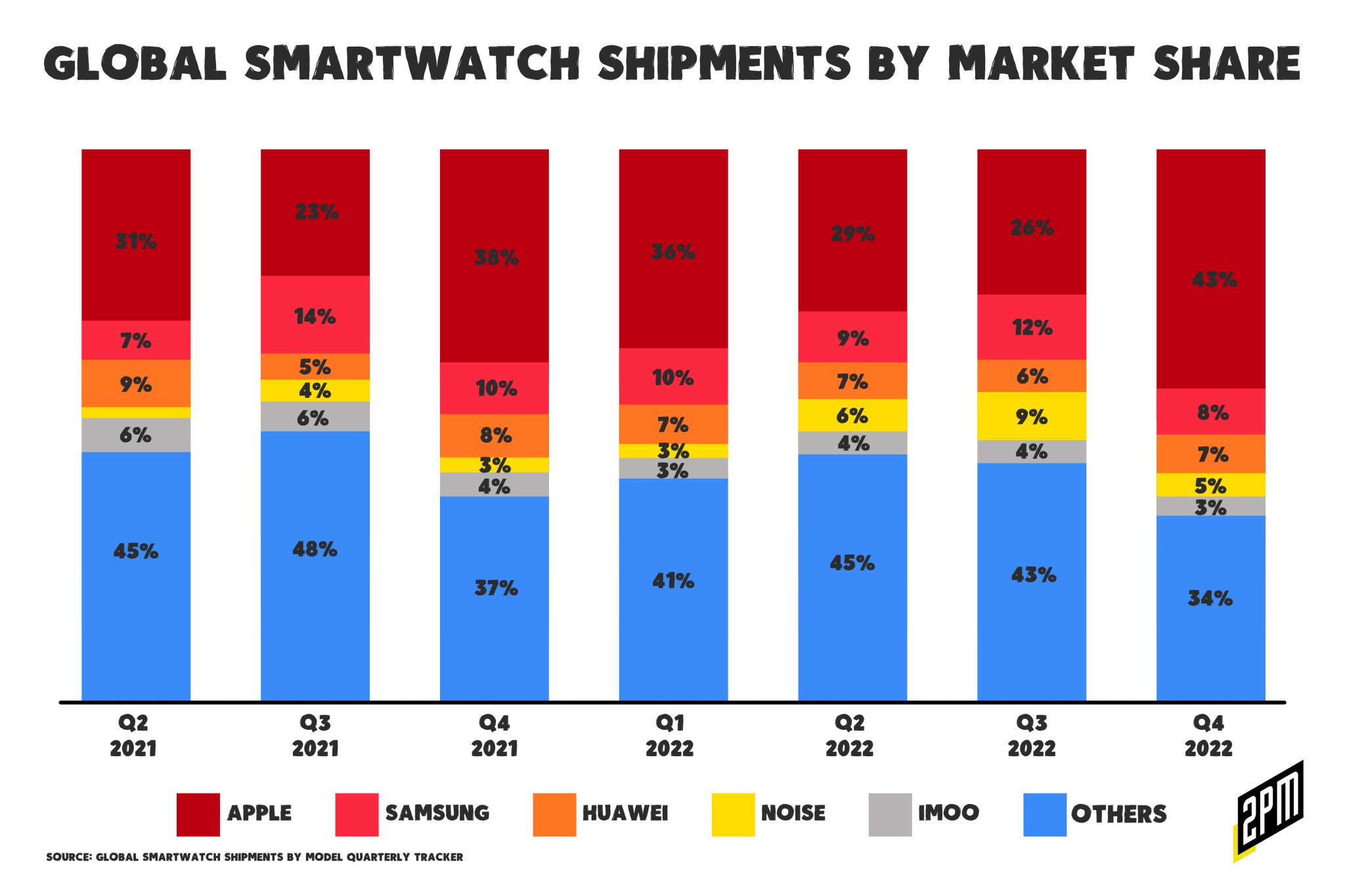
5. Continuous innovation: Whoop has consistently invested in research and development, improving its products and features. This commitment to innovation has allowed the company to stay ahead of the competition and maintain its position as a market leader. Amazon, on the other hand, failed to invest in developing new and unique features for Halo, making it less appealing to consumers. In March, Whoop announced a new stress-tracking feature.
Each member’s current reading, which is converted into a personalized Stress Score, is then compared to their individual HRV baseline from the last 14 days, as well as their typical resting heart rate. When generating a member’s Stress Score, WHOOP is able to delineate between moments of physiological stress and physical strain.
And on April 25, Whoop rolled out its “Strength Trainer,” a service that allows users to track strength training by gauging the “physiological impact of muscular load.”
6. Effective marketing and overall awareness: Whoop has been successful in creating awareness about its products through targeted marketing campaigns, social media presence, and endorsements from athletes and celebrities – especially by the golfing community. This has helped the company build a strong brand presence and attract a dedicated user base. Puff pieces like these by Golf.com are invaluable:
Leading players like Rory McIlroy and Justin Thomas use the detailed recordings of Whoop, while Nick Watney, who was the first PGA Tour golfer to test positive for Covid, was alerted to carrying the virus by the heart and respiratory recording from his Whoop band.
Amazon famously pursued a bold acquisition strategy around connected devices and the many data that they contribute, but for these reasons, it didn’t work out as planned. In Consumer Data and Amazon, I explained:
Amazon now has a presence in the following categories: laptops, streaming television, in-home assistants, smart speakers, Door cameras, fitness monitors, and now vacuum cleaners. Collectively, Amazon knows more about its consumers than any other company on earth.
The closure of the wearables department will mean that Amazon would no longer be able to collect data on users’ health habits, physical activities, and other wellness-related preferences. This data could have been used to serve more targeted advertisements to users, increasing ad revenue.
However, Amazon still possesses a vast data collection infrastructure. While shutting down its wearables department would impact Amazon’s data collection strategy by reducing access to specific types of consumer data, the company’s diversified product and service portfolio ensures that it still possesses a robust data collection infrastructure. But only for now. Amazon seems more than willing to reconsider every program that isn’t focused on traditional eCommerce, physical retail, or retail media networks. What will Amazon brick next?
By Web Smith | Edited by Hilary Milnes with art by Alex Remy and Christina Williams
Member Brief: The Case For Revenue Per Employee

Meta, Google, Amazon, Salesforce, Twitter, Microsoft – but not Apple. What gives? Each of these companies are vital to the retail ecosystem but one measures key results in a way that is most commonly seen in an altogether different industry.
“You’ll hear revenue per employee again, in tech, no one was looking at these metrics at least in the private world, the VC world for at least five years,” Keith Rabois recently said to Elon Musk’s Twitter management.
Whereas growth and market share were once key performance indicators, profitability and efficiency will be the measures of this next five to 10 years. An OKR (objectives and key results) is a strategic framework and a KPI is a measurement within said framework. Brand and SaaS marketing discusses KPIs with endless zeal, but OKRs are rarely communicated with the same energy. I believe that this will change.
Objectives and Key Results (OKRs) are closely tied to human resources but by connecting business development with HR OKRs, organizations can create a stronger, more consistent brand image while also fostering a positive and engaging work environment for employees. Of all of the HR metrics, one seems to be emerging as key to American economic recovery. There’s headcount, time to hire, acceptance rate, employee satisfaction, turnover rate, retention rate, training expenses, and revenue per employee (RPE). The latter is the measure of the hour.
RPE is the metric that has come to define big tech’s layoff narrative. RPE, often ignored during bull market growth periods has become the talking point used to justify right-sizing organizations. Fortune Magazine explained:
In addition to curtailing talent acquisition efforts and building up its people practice, Apple is reducing business travel and delaying employee bonuses. CEO Tim Cook will also take a pay cut of about 40% this year, which he reportedly requested. Altogether, the moves make for a true “doing more with less” strategy.
Apple is efficient in a key sense that many others in big tech will adopt. Here’s an example that reads like a big law firm’s measure of success. Founded in 2006 and headquartered in Amsterdam with around 2,000 employees, Adyen is the best direct ‘comp’ to Stripe. The Information recently explained why Stripe’s private valuation to Adyen’s public valuation:
Stripe spent so heavily on staff and new business initiatives in recent years that its 2022 expenses per employee were twice those of Adyen, even though Adyen’s revenue per employee was higher, according to an analysis by The Information. The expense gap is expected to stay the same this year, although Stripe is expected to do better on revenue per employee.
Even Google Trends reflect the growing reference to the phrase “revenue per employee.” Long a practice in other industries: they say that if you are a law firm partner, you need to consider yourself a business and not an employee. According to The Four Week MBA, Amazon’s primary OKR – RPE – grew by $40,000 between 2021 and 2022. But clearly the objectives were not met; Amazon recently laid off another 9,000. Though, I suspect RPE grew again in 2023 as layoffs continued. Meta’s RPE is set to rise to $1.85 million based on the Wall Street Journal’s revenue and headcount projections.
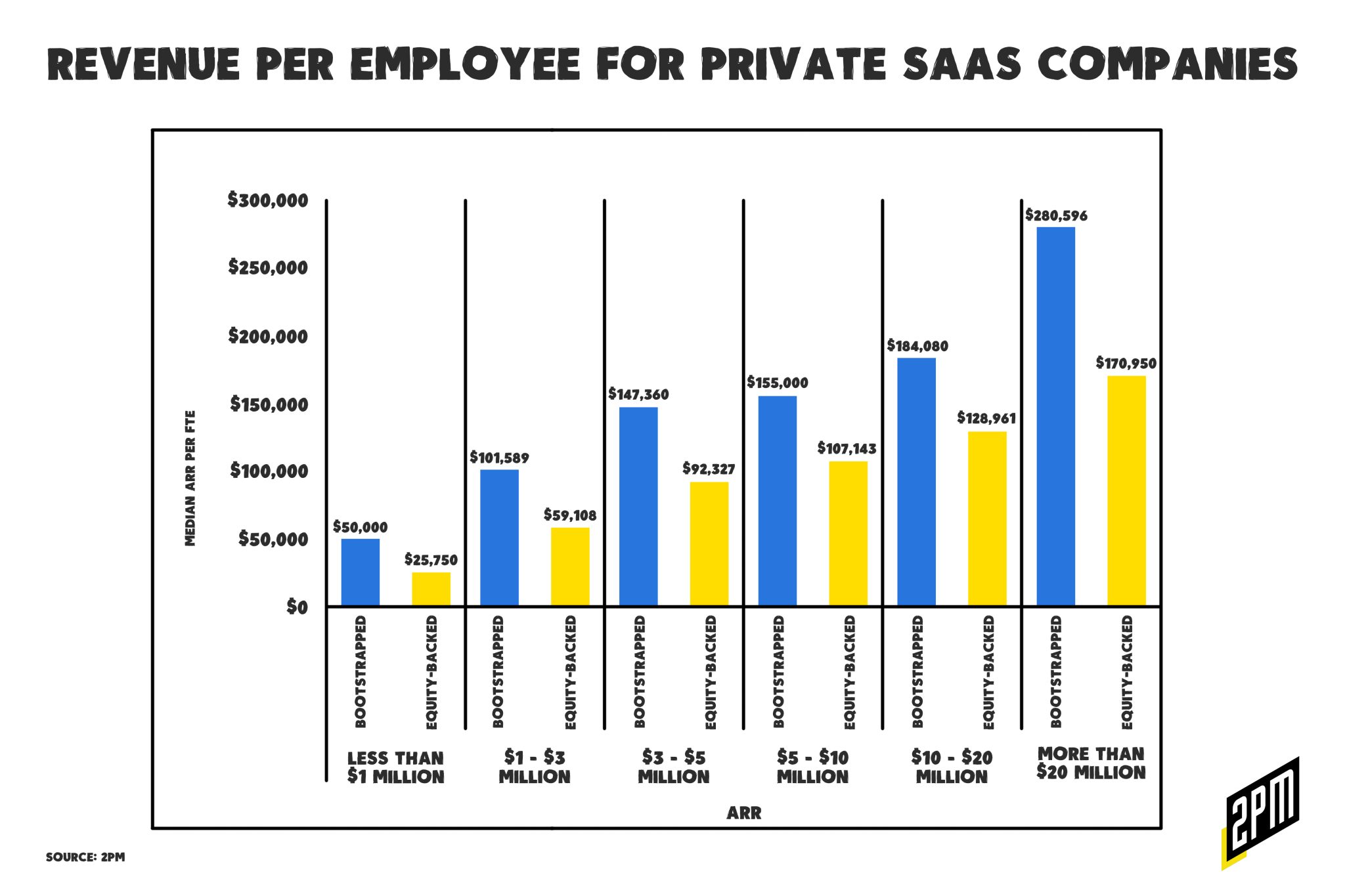
And this is how companies will be judged. A firm well-known to many in big tech, Wilson Sonsini measures success by RPE. According to data by The American Lawyer, the firm’s RPE and headcount have grown precipitously since 2019. Law.com began its March 2023 analysis with:
Wilson Sonsini’s profits per equity partner fell 9.5% as the firm bulked up its lawyer head count to 1,045 lawyers including 266 partners.
In today’s rapidly evolving business landscape, companies are increasingly seeking new ways to evaluate their performance and long-term prospects. Traditional metrics such as revenue, net income, and market capitalization have been widely used for years, but they may not tell the whole story, especially for big tech companies. The comparison between big tech companies and law firms is based on the premise that both types of businesses will be judged by this OKR in the coming years.
The Case For A New Measurement
RPE is a simple yet powerful metric that divides a company’s total revenue by the number of its employees. This ratio indicates how much revenue each employee contributes to the business, offering valuable insights into the company’s efficiency, productivity, and ability to scale. There are several reasons why RPE is becoming an increasingly important metric for big tech companies:
Focus on Efficiency and Productivity
RPE helps measure how effectively a company is utilizing its people, a critical component of any organization. But also, how those people perceive their role in the growth and health of the company. Senior Research Analyst for Yahoo Tom Forte cited the type of role that saw early attrition at Amazon, i.e. ones that didn’t directly impact revenue growth:
So if you look in particular at the March quarter and the June quarter last year, they had about 100,000 attrition between those two quarters, and it was mostly not rehiring someone to replace someone who left at the fulfillment center level.
A higher RPE ratio implies that the company is generating more income with fewer employees, indicating a more efficient and productive business model. As Amazon begins to show, they’re willing to explore whether or not they can accomplish “more” with fewer cost centers.
Attraction and Retention of Talent
Talent is a critical resource in the tech industry and companies need to ensure they can attract and retain top talent to maintain their competitive edge. A higher RPE ratio suggests that the company is utilizing its workforce effectively, which can lead to increased employee satisfaction and loyalty. This, in turn, can help attract new talent and reduce turnover, contributing to the overall health and growth of the company.
Scaling and Growth
As tech companies grow, they often face challenges in scaling their operations efficiently. RPE can help identify whether a company is maintaining or improving its productivity as it expands. A consistent or increasing RPE ratio during periods of growth suggests that the company is successfully scaling its operations, which is essential for long-term success. Barron’s recently published relevant numbers:
Apple generated around $2.4 million in revenue per employee in its latest fiscal year and has averaged around $2.1 million on the same metric over the past five years, according to FactSet. That far outstrips Facebook-owner Meta (META), which generated $1.35 million in revenue per employee in 2022—below its five-year average of $1.5 million.
This gives us a uniform means of comparing companies regardless of their status as a public or private company.
Use in eCommerce and Retail
RPE can serve as a valuable benchmark for comparing companies across the tech industry. The Information framed this public vs. private tech company conversation as such:
An unfavorable comparison to Adyen is a surprising turn for Stripe, a startup brand that became a near-holy name in Silicon Valley. Its early rapid growth and exposure to the fast-expanding e-commerce market helped the payments firm raise more than $2 billion from some of venture capitalists’ biggest names over a dozen years. After it raised money in early 2021 at a $95 billion valuation, it was one of the most highly valued startups in the world.
In comparison, Adyen raised just $200 million as a private company, although it raised hundreds of millions when it went public in its 2018 initial public offering. Its current market capitalization is about $44 billion.
By evaluating this metric, investors, analysts, and other stakeholders can gain a clearer understanding of how well a company is performing relative to its peers, which can help inform strategic decisions and investment opportunities.

Shopify was ahead of the curve in discussing the potency of this measure in retail. RPE is the key metric for assessing the health and prospects of big tech companies, but can be used to assess brands as well.
If you’re looking for real-life examples of how brands calculate RPE, let’s take data from 2PM to calculate the average revenue per employee popular retailers make. Knix: has 127 employees generating an average revenue of $70.5 million per year. That comes out to $555,118 revenue per employee. Boll and Branch: has 116 employees generating an average revenue of $80.8 million per year. That equates to $696,551 revenue per employee. Everlane: has 309 employees generating an average revenue of $361.2 million per year. That equates to $1.68 million revenue per employee.
By focusing on efficiency, productivity, talent attraction and retention, in addition to scaling, RPE provides valuable insights into a company’s performance that traditional measures may not capture. It also emphasizes the importance of efficient profit-seeking. As the tech industry continues to evolve and face new challenges, RPE will play a crucial role in helping companies navigate the competitive landscape and achieve long-term viability.
By Web Smith | Edited by Hilary Milnes with art by Alex Remy and Christina Williams