会员简报:员工人均收入案例

Meta、谷歌、亚马逊、Salesforce、Twitter、微软,但没有苹果。原因何在?这些公司中的每一家都对零售生态系统至关重要,但其中一家公司衡量关键结果的方式在完全不同的行业中最为常见。

"基思-拉博伊斯(Keith Rabois)最近对埃隆-马斯克(Elon Musk)的推特(Twitter)管理层说:"你会再次听到每名员工的收入,在科技领域,至少在私人领域、风险投资领域,至少在五年内没有人关注这些指标。

增长和市场份额曾经是关键绩效指标,而盈利能力和效率将是未来五到十年的衡量标准。OKR(目标和关键成果)是一个战略框架,而 KPI 则是该框架内的衡量标准。品牌和 SaaS 市场营销以无尽的热情讨论 KPI,但 OKR 却很少以同样的精力进行交流。我相信,这种情况将会改变。

供会员继续访问

目标和关键成果(OKRs)与人力资源密切相关,但通过将业务发展与人力资源的 OKRs 相结合,企业可以创建一个更强大、更一致的品牌形象,同时还能为员工营造一个积极、吸引人的工作环境。在所有人力资源指标中,有一项似乎正在成为美国经济复苏的关键。这些指标包括人数、招聘时间、录取率、员工满意度、离职率、留用率、培训费用和每名员工的收入(RPE)。后者是衡量一个小时的标准。

RPE 是大型科技公司裁员的标准。在牛市增长期RPE 往往被忽视,而现在,它已成为证明组织规模合理性的谈资。财富》杂志解释说

除了缩减人才招聘力度和加强人事工作外,苹果还将减少商务旅行和推迟发放员工奖金。首席执行官蒂姆-库克(Tim Cook)今年也将减薪约 40%,据说这是他自己要求的。总之,这些举措是真正的 "少花钱多办事 "战略。

苹果公司在一个关键方面非常高效,许多其他大型科技公司也将采用这种方式。下面这个例子就像是大型律师事务所衡量成功的标准。Adyen 成立于 2006 年,总部位于阿姆斯特丹,拥有约 2000 名员工,是 Stripe 的最佳直接 "竞争对手"。The Information最近解释了为什么 Stripe 的私人估值比 Adyen 的公开估值高:

根据 The Information 的分析,Stripe 近年来在员工和新业务计划上花费巨大,以至于其 2022 年的员工人均支出是 Adyen 的两倍,尽管 Adyen 的员工人均收入更高。预计今年的支出差距将保持不变,但 Stripe 的每名员工收入预计会更好。

就连谷歌趋势(Google Trends)也反映出,"雇员人均收入 "的提法越来越多。这在其他行业早已成为惯例:他们说,如果你是律师事务所的合伙人,你就需要把自己视为企业而不是雇员。根据《四周 MBA》的报道,亚马逊的主要 OKR--RPE--在 2021 年至 2022 年间增长了 4 万美元。但目标显然没有实现;亚马逊最近又裁员 9000 人。不过,我怀疑随着裁员的继续,RPE 在 2023 年会再次增长。根据《华尔街日报》的收入和员工人数预测,Meta 的 RPE 将增至 185 万美元。

这也是评判公司的标准。Wilson Sonsini 是一家在大科技领域广为人知的公司,它以 RPE 衡量成功与否。根据《美国律师》(The American Lawyer)的数据,自2019年以来,该公司的RPE和员工人数都出现了断崖式增长。Law.com从2023年3月开始进行分析

Wilson Sonsini 每名权益合伙人的利润下降了 9.5%,因为该公司的律师人数增加到了 1,045 名,其中包括 266 名合伙人。

在当今快速发展的商业环境中,企业越来越多地寻求新的方法来评估其业绩和长期前景。收入、净利润和市值等传统指标多年来一直被广泛使用,但它们可能并不能说明问题的全部,尤其是对于大型科技公司而言。将大型科技公司与律师事务所进行比较的前提是,这两类企业在未来几年都将以这种 OKR 作为评判标准。

采用新测量方法的理由

RPE 是一个简单而强大的指标,它将公司的总收入除以员工人数。这一比率显示了每名员工为企业贡献了多少收入,为了解公司的效率、生产力和扩展能力提供了宝贵的信息。RPE 日益成为大型科技公司的重要指标有几个原因:

注重效率和生产力

RPE 有助于衡量公司如何有效地利用员工,这是任何组织的关键组成部分。同时,还可以了解这些员工如何看待自己在公司发展和健康中的作用。雅虎高级研究分析师汤姆-福尔特(Tom Forte)列举了亚马逊早期流失的职位类型,即那些不直接影响收入增长的职位:

因此,如果你特别看一下去年 3 月和 6 月的季度,这两个季度之间的减员人数约为 10 万,而且大部分都不是重新招聘来替代履行中心离职的员工。

RPE 比率越高,意味着公司用更少的员工创造了更多的收入,表明公司的业务模式更高效、更富有成效。正如亚马逊开始展示的那样,他们愿意探索是否可以用更少的成本中心完成 "更多 "的任务。

吸引和留住人才

人才是科技行业的关键资源,公司需要确保能够吸引和留住顶尖人才,以保持竞争优势。较高的 RPE 比率表明公司正在有效利用其劳动力,从而提高员工的满意度和忠诚度。这反过来又有助于吸引新的人才,减少人员流失,从而促进公司的整体健康和发展。

规模和增长

随着科技公司的发展壮大,他们往往面临着如何高效扩展运营规模的挑战。RPE 可以帮助识别公司在扩张过程中是否保持或提高了生产率。在增长期间,如果 RPE 比率保持稳定或不断上升,则表明公司正在成功地扩大运营规模,这对长期成功至关重要。巴伦周刊》最近公布了相关数字

FactSet 的数据显示,苹果公司在最近一个财年为每位员工创造了约 240 万美元的收入,在过去五年中,同一指标的平均收入约为 210 万美元。这一数字远远超过了 Facebook 的所有者 Meta (META),该公司在 2022 年的每名员工收入为 135 万美元,低于其 150 万美元的五年平均水平。

这样,无论公司是上市公司还是私营公司,我们都有了统一的比较方法。

用于电子商务和零售业

RPE 可以作为比较整个科技行业公司的宝贵基准。信息》杂志是这样构思这场上市公司与私营科技公司的对话的

对 Stripe 来说,与 Adyen 的不利比较是一个令人惊讶的转折,因为 Stripe 这个初创品牌在硅谷几乎成了一个神圣的名字。Stripe 早期的快速发展和对快速扩张的电子商务市场的接触,帮助这家支付公司在十几年间从一些风投大佬那里筹集到了超过 20 亿美元的资金。2021 年初,该公司以 950 亿美元的估值融资,成为全球估值最高的初创企业之一。

相比之下,Adyen 作为一家私营公司仅募集到 2 亿美元,尽管它在 2018 年首次公开募股时募集到了数亿美元。它目前的市值约为 440 亿美元。

通过评估这一指标,投资者、分析师和其他利益相关者可以更清楚地了解一家公司相对于同行的表现如何,这有助于为战略决策和投资机会提供依据。

Shopify率先讨论了这一指标在零售业中的作用。RPE 是评估大型科技公司健康状况和前景的关键指标,但也可用于评估品牌。

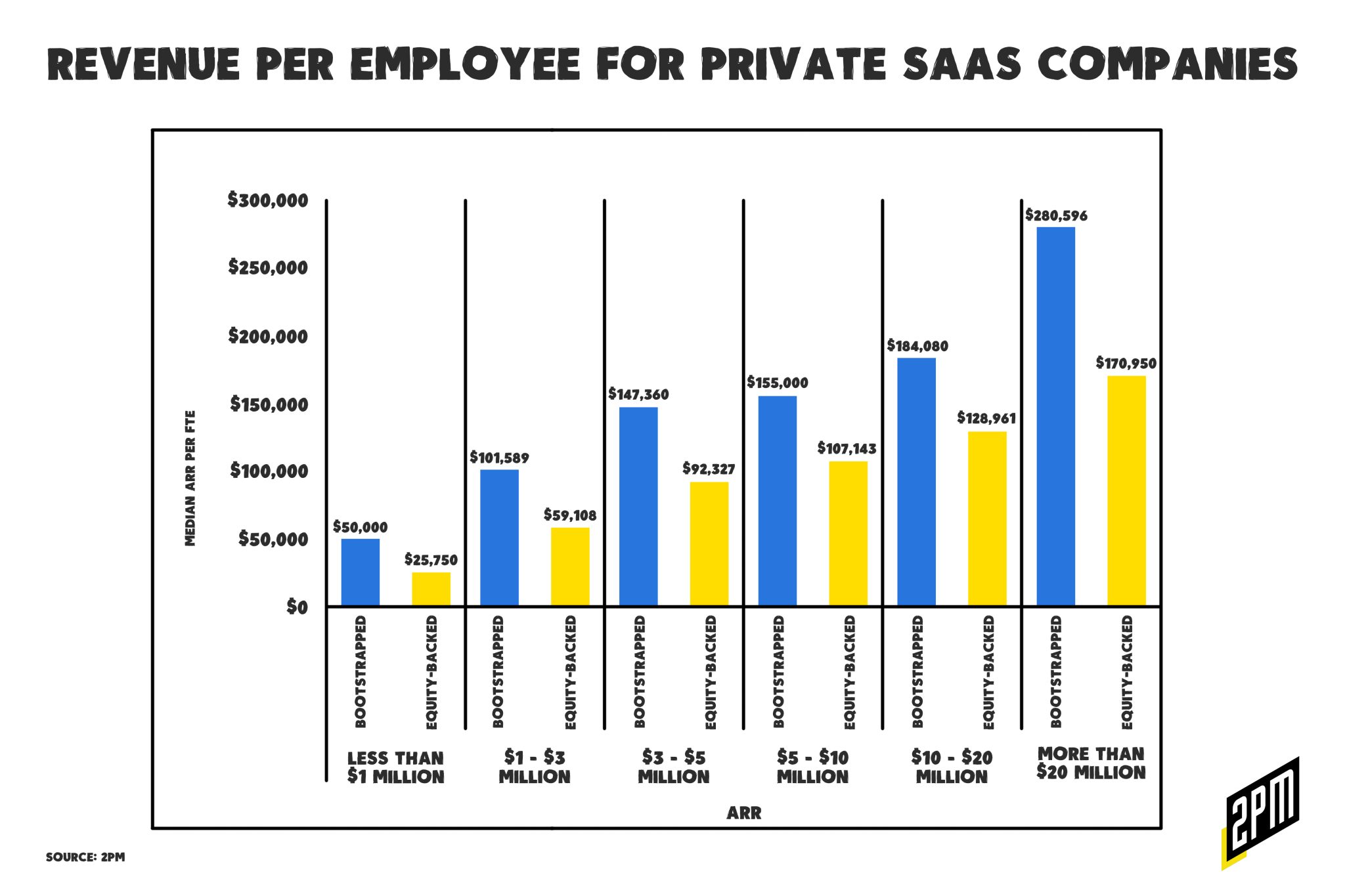
如果您想了解品牌如何计算 RPE 的真实案例,让我们以2PM的数据为例,计算一下热门零售商每名员工的平均收入。 克尼克斯:拥有 127 名员工,平均年收入为 7050 万美元。也就是说,每名员工的收入为 555,118 美元。 Boll and Branch:拥有 116 名员工,平均年收入为 8080 万美元。相当于每位员工的收入为 696,551 美元。 Everlane:拥有 309 名员工,平均年收入为 3.612 亿美元。相当于每位员工创造 168 万美元的收入。

除规模外,RPE 还关注效率、生产力、人才吸引和保留,从而为公司业绩提供了传统衡量标准可能无法捕捉到的宝贵见解。它还强调了高效追求利润的重要性。随着科技行业不断发展并面临新的挑战,RPE 将在帮助公司应对竞争格局和实现长期生存能力方面发挥至关重要的作用。

作者:Web Smith | 编辑:Hilary Milnes,美术:Alex Remy 和 Christina Williams

备忘录Shopify的 "酷小子 "悖论

n6vIM5Xw

An open letter to all eCommerce merchants. In a recent chat with 2PM Executive Member Damian Soong, the DTC founder replied with a poignant thought:

Someone needed to say that DTC isn’t Shopify.

Paul do Forno, the Managing Director of Deloitte’s Commerce Practice, chimed in with the data to support Soong’s thought, adding:

If you plotted by total platform revenue: HCL Commerce, Oracle, SAP, SalesForce would be towards the top.

Shopify has made the industry more interesting, accessible, and newsworthy. But it is not the only participant in this burgeoning ecosystem: Magento (now Adobe), Demandware (now Salesforce), SAP, BigCommerce, Squarespace, BigCartel, WooCommerce, Webflow, Square, and Wix have played pivotal roles in the development of either enterprise or merchant-level markets. Shopify is neither the biggest platform with respect to merchant volume or gross merchandise value (GMV). It sits squarely at the center of the two extremes. Yet somehow, it became the de facto operator of the DTC era.

To understand the direction of eCommerce, you must understand its past and present. During what was likely the most pivotal year in my early eCommerce career, I studied Magento from the perspective of an eCommerce brand that employed 100 or so. That earlier version of Magento was a complicated platform to understand. Its management required the employment of a dozen engineers and an equal magnitude of talent in user experience and front-end design. When I soon had my own opportunity to build an eCommerce brand alongside Kevin Lavelle, we went not to Magento, but to Shopify. We didn’t have the money to hire technical talent, nor did we have the patience to manage it on top of the challenges that we faced in manufacturing and early customer acquisition. But it’s important to recognize that this decision was made nine years ago – a lifetime in technology.

That same company of 100 is now over 1,000 strong. In under one decade, a small industry competitor became a global manufacturing leader all through direct-to-consumer channels. And they’ve done so on Adobe’s Magento. If any SaaS platform has the right to claim the dawn of the DTC era (2008), Magento could easily make that argument. Instead, it gets lost in the conversation.

Standing in a hallway of Shopify Plus’ most recent New York City conference in 2019, I sat with Shopify CEO Tobi Lutke, one of the industry’s most admired executives. I remember marveling at the production of the event. The friends, the networking, the branding of the space all communicated Shopify’s place in the eCommerce ecosystem. I applauded the entrepreneurs who shared their stories on stage with highly produced short films. Also notable was the accessibility of the C-suite executives who, frankly, should no longer be that accessible. This availability is a part of Shopify’s secret sauce. You won’t find another retail CEO of his caliber who is willing to respond to customers on platforms like Twitter and Instagram.

What I remember most about that particular meeting is the intensity of Lutke’s product focus. Suggest an idea that is outside of Shopify’s product pipeline and he will explain why Shopify isn’t right for it. He rarely waivers on his vision for what Shopify and Shopify Plus are to the eCommerce industry, or the functions that they are willing to build.

It’s this same galvanizing vision that rallies Lutke’s base of thousands of platform evangelists. Shopify’s ability to amplify its message through its partnership ecosystem has done wonders in furthering its narrative of perceived inevitability. In Shopify Unite and Network Effects [1], I wrote:

If you were to sit in a room with BigCommerce or Adobe’s c-suite and explain that product differentiation can be more than a software iteration, you won’t be sitting there for long. And that is part of Shopify’s mounting advantage. It’s unclear whether or not the original intent of the Shopify Partner ecosystem was to be a catalyst for network effects. But that’s certainly the case.

Founder Tobi Lutke, Harley Finkelstein, and team stumbled upon a new form of competitive advantage in commerce SaaS. Here, at the intersection of influence and efficacy, sociological advantages of retail brands have interfaced with an ecosystem of software as a service.

Shopify’s primary arguments for the attention it gets are valid. Its holistic approach to fulfillment, returns, and no/low code architecture will become fixtures in North America’s market as eCommerce’s percentage of retail continues to inch above and beyond 20% or 25% or 30%. And consider Squarespace or WooCommerce’s volume and Magento’s GMV: Shopify’s ability to capture mindshare despite these other companies’ advantages are as much the fault of the competitors who haven’t valued the marketing and branding aspects of business.

By weaponizing network effects, Shopify has become the proverbial cool kid of SaaS. Its brand voice is the life of the party and the center of many public discussions. There is market value in this positioning. Like Amazon, Shopify’s fortune is tied to eCommerce’s continued growth in North America. Public investors reward Shopify simply for being tied to the movement towards direct-to-consumer. It’s deserved.

ENkl02YQ
The Traditional, The Cool, The Quirky, and The Hustlers

It is important to note that this is not winner-takes-all, and what Shopify does next matters. There are eCommerce founders building on custom sites that have accomplished profitable growth. There are leaders who’ve chosen Salesforce or BigCommerce to fit their technological or philosophical needs. And in the process, they’ve built companies spewing $10s of millions in monthly EBITDA. Of course, there are examples of these feats on Shopify, but that’s the point. The democratization of eCommerce doesn’t only refer to platform simplicity.

Shopify’s ecosystem stands to benefit greatly by expanding the definition and character of the DTC industry to reach out and include the brands, founders, agencies, and technologies enabled to support them on other platforms. Some of the best and brightest stories, people, and brands are building outside of the spotlight.

The cool kids often earn the lion’s share of attention. But some of the most notable progress happens where the cool kids aren’t. That’s the paradox.

By emphasizing stories and anecdotes from founders who’ve eschewed the industry spotlight or brands that have managed growth differently than is commonly advertised, we’re closing the knowledge gap. Perhaps there was a brand founder who chose to use WooCommerce to scale and now has insights that could help Shopify-based brand founders accomplish the same. Or perhaps a Shopify Plus founder who’s successfully captured five years of year-over-year growth could explain a key strategy to a brand owner who’s built on Magento 2.3.4.

As eCommerce grows beyond 25% or 30% of American retail, we will see more examples of brands and retailers achieving a growth velocity that would have previously seemed unimaginable. In some cases, these brands will not be built with one’s preferred technical architecture. But the credibility or inclusion of these founder perspectives shouldn’t hinge on their platform preference.

Shopify Inc.’s job is two-fold. Their sales team works on converting potential users into new merchants. Their partnership ecosystem plays an essential role in replatforming existing merchants to Shopify or Shopify Plus. There are limits to this, but Shopify’s pronged ecosystem that pulls in new users and levels up existing ones is an advantage in the market, and it has an unparalleled opportunity. Where it reaches from here will determine its next phase of growth.

But they’re on notice. For every great success narrative that you hear from a Shopify partner, there five stories on competitive platforms. The DTC industry isn’t Shopify, it’s bigger than its technology or its ecosystem. This means that there is a greater opportunity to learn from, endorse, encourage, or evangelize the great work of builders who chose a different approach to a positive outcome.

By Web Smith | Editor: Hilary Milnes | Art: Andrew Haynes | About 2PM

第 342 期:对立的埃利奥特先生

Elliot

In the closing scene of AMC’s final episode of Mad Men, the viewers are left to believe that our seven season survey of Don Draper ends in his personal enlightenment. In this particular moment: Draper is seen sitting on the grass, cross-legged and with no shoes. He’s meditating on a hilltop with a dozen or so other students. For what seems like just a moment, the audience is led to believe that the embattled protagonist is finally at peace with himself. And then he smiles. It’s the kind of smile that communicates “I’m still the best at what I do.” The audience is left guessing. The scenery, the moment, and Draper’s skill set suggest that Draper was responsible for conjuring one of the most impactful and audacious brand advertisements of the 20th century. It was a rare moment in brand history: an incumbent brand operated like an insurgent. The result? An ad that reshaped Coca-Cola’s narrative for nearly a decade.

The Mad Men scene of the origin story was fictitious, of course. The story of the advertisement’s impact was not, however. Like Ford and General Motors in the 1960s or Nike and Reebok in the 1980s, Coca-Cola and PepsiCo’s rivalry gave rise to the idea of insurgent brands. Insurgents are brands that arise out of the rivalries of incumbents.

In early 1886 an Atlanta chemist (and morphine addict) introduced Coca-Cola to the world. He called it a “potion for mental and physical disorders.” For him, it was a solve. The product’s main ingredient was cocaine, a narcotic that was – perhaps – less detrimental than his addiction. Pepsi-Cola followed just seven years later. It would be decades before the two companies became legitimate rivals. The arc of the two brands has become a case study in corporate brand competition. One that remains relevant to this day.

Pepsi-Cola had made hay during the Depression. Like Coke, the drink cost a nickel, but it came in a 12-ounce bottle nearly twice the size of Coke’s dainty, wasp-waisted one. But by the 1950s, Pepsi was still a distant No. 2. It nabbed Alfred Steele, a former Coke adman, who arrived embittered and ambitious. His motto: “Beat Coke.” Coca-Cola refused to call Pepsi by name — the drink was “the Imitator,” “the Enemy,” or, generously, “the Competition” — but it began tinkering with its business (and imitating Pepsi) to stay ahead. [1]

When John S. Pemberton secured the recipe for Coca-Cola in 1886, he couldn’t have foreseen a feud that would span three centuries. But for many consumers, the Pepsi vs. Coke feud is about as American as baseball. In 1899, Caleb Bradham decided to compete head on. Also a chemist, Brad’s Drink was later incorporated as Pepsi-Cola. And so began a roller coaster of a century that crescendoed in the 1970’s with the Pepsi Challenge – a marketing push that aimed to convince younger consumers that rival Coca-Cola had inferior taste and less cool. It worked. And so continued the back and forth. The two companies were well-established when the 1970s’ Cola Wars broke captivated American consumers (and international ones, alike).

The cola competition study [HBS Case Summary: 2] is a prologue to a greater point. What happens when incumbents ignore insurgents? The inertia of dominance often becomes an incumbent’s nemesis. At the peak of the cola wars, a future founder was employed by Unilever and then Procter & Gamble. There, he led marketing for German toothpaste manufacturer Blendax. By working for these conglomerates, Dietrich Mateschitz had an early education in the gifts and curses of incumbency. And one chance meeting in Thailand provided his platform for insurgency.

In 1982 he met an Austrian toothpaste salesman called Dietrich Mateschitz, who had started drinking Krathing Daeng (founded in 1976) during visits to Bangkok and found it cured his jet lag. Mateschitz became convinced that the drink had wider commercial potential, and in 1984 the two men became business partners. [3]

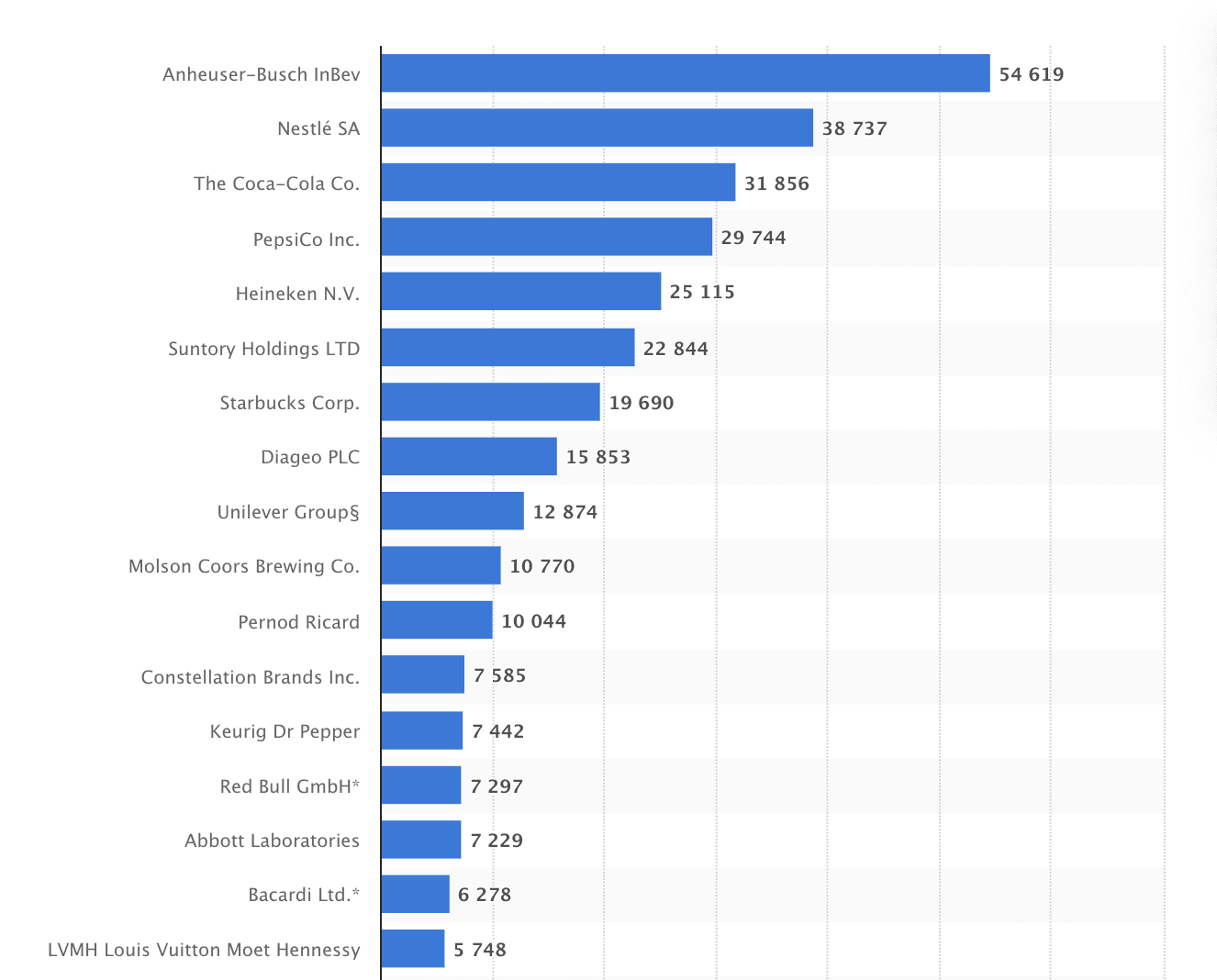
The emergence of Red Bull serves a case study in insurgency-driven marketing and branding. Over the next three decades, Red Bull would go on to master alternative marketing, clawing domestic and international market share from incumbents that should have been equipped to stifle the Austrian beverage manufacturer’s advances.

Screen Shot 2019-12-17 at 8.58.27 AM
Global beverage market: leading companies 2018, based on sales | Source: Beverage Industry Magazine

But as with anything, it can be difficult for incumbents to obsess over potential competitors when existing threats exist. By 1979, Pepsi overtook Coca-Cola in sales after a clever “taste test” marketing push that outwitted the Atlanta-based manufacturer. This victory was relatively short-lived. By 1996, Fortune magazine declared the cola wars to be finished. And since, Pepsi shifted its focus altogether.

IMG_7163-1024x682
Concepting a new form of brand marketing.

Retail has been witness to a history of these brand battles. And if the future of retail is eCommerce, it’s likely that today’s next surprise is brewing. Insurgents take markets by surprise by operating in ways unanticipated by established corporations. They move differently and they rarely play by traditional rules. Incumbents are incentivized to preserve the status quo, retaining market share. It’s often the case that product-wise, all things are equal. It’s the subtle differences in messaging and community that tends to shift the conversation from old and stable to new and dynamic. Shopify is the Coca-Cola of this conversation. Shopify wasn’t first to democratize eCommerce but no platform has a better understanding of marketing and branding than the Ottawa-based SaaS company. In a recent 2PM report, I explained:

The growth of the DTC era can be attributed to SaaS companies like Shopify, BigCommerce, Magento [Adobe], and Demandware [Salesforce]. But in an industry where innovations are finite development cycles away, community and brand equity has become the key differentiator. [4]

Shopify’s innovations are numerous. Two of their top competitors (Salesforce and Adobe) are now cogs in corporate wheels. In this way, BigCommerce is the Pepsi to Shopify’s Coca-Cola. Of all of Shopify’s innovations, branding and sociology are ones that BigCommerce cannot seem to contend with. Led by Brent Brellm, the Austin-based SaaS company competes on the merits of its product. “We taste better” may as well be on his CEO’s whiteboard. But Shopify is more than the merits of its product, it’s a lifestyle brand. This perplexes BigCommerce’s leadership. In the platform wars, taste will matter as technologies shift toward no-code architecture. But brand will be equally important. Enter Elliot, a platform that seems to possess the tools that Shopify’s other competitors do not. And an emphasis on substance and brand.

On Insurgency and No-Code Development

Screen Shot 2019-12-17 at 11.10.58 AM
The rise of the no-code economy

Founded in July 2017 by Sergio Villasenor, Elliot announced a $3 million round in January of 2018. And like many venture announcements in that first quarter, the news came and went. Beyond a PR wire, the company’s announcement made no headlines. There was no grand entrance and even less buzz. This, despite a list of admirable investors and advisors.

We have orchestrated a blue-chip syndicate of seed stage investors including Bowery Capital, a national seed stage fund with offices in SF and NY leading the round, and Susa Ventures as the co-lead. Others participating include Acceleprise, Bam Ventures, Flexport, and SV Angel. [5]

Early on, Elliot’s founder built the company’s value proposition on the common premise: “We taste better.”  In SaaS, this is akin to iterating fast and architecting software superiority. For product developers, this product-first concept is the default.

On the merits of its product alone, Elliot has a number of clones. A casual observer will find them in the brand’s Twitter mentions questioning how the company has begun to consume mindshare with its unique approach to antagonizing incumbent brands. The company, itself, has little protected intellectual property. And until recently, it had no marketing flywheel. But over time, I’ve observed the company’s playbook evolve into one reminiscent of an insurgent of old: Red Bull. The brand has become uncomfortably antagonistic. But you can’t behave insurgently without some level of discomfort.

Elliot on Twitter

@tobi Emojis must be a Plus feature 😉

Elliot contends that Shopify’s products aren’t for everyone. And that its no code approach is early but it will be of increasing relevance as vendors begin to shift away from development agencies to launch new merchandising operations. A Shopify Partner, who asked for his identity to be withheld, commented on this trend. He noted: “As no-code becomes more common, agencies like mine will need to find new ways to add value for our clients. Who is paying $100,000 to do what can be done for free?” In the Lean Luxe slack channel, former Shopify Editor-in-Chief Aaron Orendorff and notable copywriter contended with Elliot’s brand voice:

There’s a 100% chance I’m not your target audience. So that’s probably part of it. For me, it’s the mixed feelings of: (a) that’s clever and attention grabbing vs (b) I’d be uncomfortable to retweet it.

The founding team is rounded out by Clayton Chambers (formerly of Yotpo) who serves as the Head of Growth. Additionally, Villasenor was successful in hiring Marco Marandiz (formerly of Capital One, VRBO]) as his Head of Marketing. The team has made an early impact, though it remains to be seen as to whether it has had a material effect on penetrating one of Shopify’s top advantages: its partnership ecosystem. What is evident is that the DNA of the team is different than the rest. And that, more than anything else, makes them something to watch. They’ve begun to build Elliot into a lifestyle brand, merchandising and all. They are out-Shopifying Shopify.

Sergio Villaseñor on Twitter

est. 2019

The technology and promotional DNA that the company possesses aside, a few questions remain. Can Villasenor convince Shopify’s target consumer that no-code architecture is an acceptable path forward? And can he convince development agencies to shift their offerings to account for a no-code economy? Frequent justifications for merchants considering no-code platforms include: speed, cost reduction, and ease of launch. No-code architecture allows early stage brands to sidestep developer shortages and agency fees, potentially decreasing startup costs and early investment needs.

Although no one is saying that coding is dead or that programmers are going to be out of a job soon, there is no denying that the current demand for software far exceeds the supply of coders and that many traditional ways of building applications are complex and time-consuming. [6]

According to my research, less than 8% of Shopify Plus merchants have a GMV that exceeds $10 million annually. Although, this number can improve. Shopify brands like Supply can grow from $2.5 million annual run rates to $10+ million run rates in just a year.

Shopify’s gift is that its brand partners mature over time, a process that has been aided by the company’s support systems and suite of technical services. Some analysts would argue that BigCommerce (or Salesforce or Adobe) would be positioned to benefit if Shopify ever lost community support. However, it’s likely that Shopify’s incumbent competitors are ill-equipped to facilitate such a shift. And besides, all proverbial cola tastes the same. But no-code is a different value proposition altogether. One that may become relevant as the economy tightens and venture capital becomes less available to early stage eCommerce brands and retailers.

Like Coca-Cola, Ford, and Nike before it – Shopify’s name represents more than its product. In May 2020, Shopify hosts its next Unite conference in Toronto. It’s the annual event that hosts thousands of loyalists that converge to praise Shopify’s continued growth. In the process, the event fortifies the phalanx of protection that the SaaS company has surrounding it. More than software, Shopify is the people, brands, and agencies that evangelize it. These are the company’s strategic advantages. If Villasenor and team have it their way, they’ll be in Toronto as well. But they won’t be in the event’s venue handing out cards with software specs, that’s what an incumbent like BigCommerce would do. They’ll be down the street from Unite, hosting their own party. And perhaps, a few Shopify clients will trickle in to see what the fuss is about. Some will scoff at the lack of decorum and some will nod at the audacity of it.

报告人:Web Smith |大约 2PM