The year was 1984, and Nike needed a change.
Now a corporation with revenues that exceed the GDP of all but 80 or so of the world’s countries, Nike nearly 39 years ago executed one of the most important business decisions in history. On October 26, 1984, Michael Jordan agreed to a partnership that would alter the sports business for an entire generation. There is something sort of Orwellian about this year, when a shoe brand with $919 million in sales became one of the most powerful corporations on earth. To accomplish this, they signed an unproven NBA rookie to a contract format that had yet to exist in sports.
A New York Times report, eight long months after Jordan’s signing, detailed the company’s distress. It would snap out of it in two years’ time with the help of the NBA rookie.
Nike’s earnings declined 29 percent in the fiscal year 1984, the first drop in 10 years. ”Orwell was right: 1984 was a tough year,” Philip H. Knight, Nike’s co-founder, chairman and chief executive, said in the company’s annual report. Yet 1985 is even tougher. In its two most recent quarters Nike had its first losses ever.
Today, Nike isn’t just a shoe and apparel manufacturer. Its advertising and public relations strategies contribute to the national consensus. The company’s impact extends far beyond sport; it has reached the stratosphere of culture, economics, and even politics. It’s as much a part of the fabric of America as the flag’s fibers themselves.
The year is 2023. And Nike is still more recognizable than the names of many American presidents. But there’s been a seismic shift.
1985: Michael Jordan vs. 2023: Tiffany x Nike Capsule
While sports has never been bigger as a business, it requires more investment by corporations like Nike to match the influence that it once maintained. Today, a Nike swoosh or Michael Jordan logo is on every MLB, NBA, and NFL uniform and countless more within the NCAA’s ecosystem.
The decline in the influence of professional athletes and the waning of Nike’s share of that influence are two interrelated phenomena. When Lebron James broke the all-time NBA scoring record, it should have moved the sales needle for Nike. Instead, his participation in the promotion of Nike’s Tiffany collaboration was more likely to pay dividends than a special “scoring title” edition of Lebron’s shoes. He’s the company’s highest-profile (active) star athlete. But it was just another passing moment; Phil Knight sat on the sideline looking morose and bored by the spectacle before him. He’d seen a lifetime of those moments and they’ve lost relevance over the decades. In fact, he all but created the economy for moments-turned-advertisement. In Nike and Omniversal Brand, I explained:
To many, Michael Jordan is Nike’s greatest athlete. To others, it’s Kobe Bean Bryant, Cristiano Ronaldo, Tiger Woods, or Serena Williams. For me, it’s Steve Prefontaine. Nike’s first athlete set the stage for decades of the brand’s rebellious and counterintuitive thinking. The spirit of Pre lives on.
So let’s explore how the decline of athletes’ influence and Nike’s waning influence are connected and what factors have contributed to these changes.
Founded in 1964 as Blue Ribbon Sports, Nike was inventive from the beginning. Over the years, it’s become one of the biggest and most recognizable brands in the world. However, in recent years, the company has faced declining influence and has struggled to maintain its position as a leader in the athletic apparel industry.
One of the biggest factors contributing to that decline of Nike’s influence is increasing competition from enterprise brands and direct-to-consumer brands, alike. In recent years, new and innovative athletic apparel companies have emerged, offering consumers a wider range of choices and forcing Nike to adapt to changing market demands.
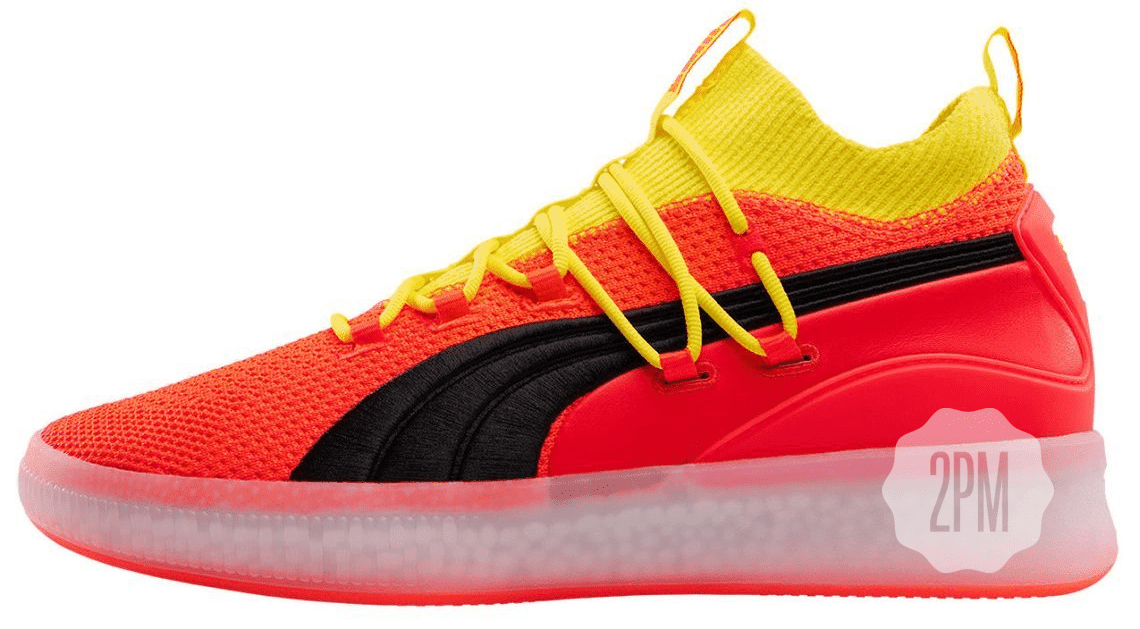
Companies such as Under Armour, Adidas, and Puma have all made significant gains in market share, challenging Nike’s dominance in the industry. These companies have been able to offer consumers high-quality products at more affordable prices. Nike’s response has been to move further up market, leaving the average consumer behind. Additionally, the increasing popularity of athleisure brands like Lululemon has also had an impact on Nike’s influence. But each of the aforementioned still struggle with a similar problem: professional athletes are less of the attention equation than they were just a decade prior.
With the rise of social media, the rise of the commercially-viable musician, and the increasing number of athletes, it has become much easier for talented (and untalented) individuals to become celebrities and gain a large following. This has resulted in a saturation of the market, making it more difficult for individual athletes to stand out and maintain their influence. As momentum has shifted away from athlete influence, their efficacy of has waned. Look no further than the current struggles at Adidas:
The company’s messy split last year with the musician Kanye West, which could knock about €1.2 billion off full-year sales, and €500 million off its operating profit — an even greater loss than Adidas had calculated just four months ago. (NYT)
This explanation would have been unfathomable when Jordan still played. A rapper’s canceled partnership influenced €1.2 billion off full-year sales? While Nike is pivoting to luxury and monopolizing professional sports, smaller companies are beating Goliath with a smoothed stone. We covered this in a recent member brief on the developing phenomenon.
Read More: The Euro DTCs Invade
But perhaps the greatest factor contributing to Nike’s decline is the changing consumer attitudes towards the company itself. In recent years, Nike has faced criticism for its labor practices and its impact on the environment. From using sweatshops in developing countries to producing its products while contributing to environmental degradation; this is no longer a fair tradeoff to the modern consumer. Enes Kanter Freedom, an NBA player, is the personification of this consumer shift:
He calls himself more than an athlete. He calls himself a human rights activist or freedom fighter, so I was just very disappointed in him choosing money and business over his morals, values, and principles. Obviously, he signed with a company like Nike that pretty much use slave labor and sweatshops in China, and he talks about all the problems that are happening around the world, but when it comes to one specific topic, China, he stays silent. And that is hypocrisy, so that’s why I want to expose it.
As such, this has led to a negative perception of the brand among consumers, who are becoming more conscious of the ethical, socio-political, and environmental impact of the products they purchase. Nike is attempting to address some of its issue. Recall the declining interest in star athletes? Pop star Billie Eilish has replaced the gridiron star.
Nike and American singer-songwriter Billie Eilish have come together to unveil the brand-new Air Force 1 Low sneaker, as part of their commitment to sustainability.
Nike is still one of the largest and most recognizable brands in the world despite the changing world around it. It’s no coincidence that the upcoming biographical film about Phil Knight’s most important business decision is on the horizon.
Nike needs “Air” to remind consumers that sports matter, athletes matter, and that they are a more reliable bellwether than their pop cultural counterparts. It will premiere in 3,000 movie theater screens and then follow with streaming accessibility (on Amazon) in more than 240 countries.
The 1985 New York Times case study on Nike concluded with a sentiment that is still applicable, 38 years later: “The question now is whether management can keep Nike pointed in the right direction. Nike thinks it is ready to run again. But the race will be tougher this time.”
By Web Smith | Edited by Hilary Milnes with art by Alex Remy