第 340 期:机动性碰撞课程

Steve Jobs believed that one of the few things that separated humans from high primates was our ability to build tools. In some cases, these tools mitigated the crippling inferiority of human mobility. Compared to some animals, humans possess lesser top end speed, endurance, and efficiency of movement. It’s our ability to engineer solutions that ultimately improves our collective mobility. Jobs assessed these shortcomings in a 1995 interview:

I read a study that measured the efficiency of locomotion for various species on the planet. The condor used the least energy to move a kilometer. And, humans came in with a rather unimpressive showing, about a third of the way down the list. It was not too proud a showing for the crown of creation.

Over the course of Jobs’ career, he predicted the future quite a few times. He foresaw what the inter connectivity of internet would do for humanity. He predicted the efficacy of the computer’s mouse, and the dawn of cloud computing, and the professional preference of the laptop computer. Jobs even understood that the diffusion of this technology would be so profound that ten year olds would own computers that are orders more powerful than the ones used by 1960’s-era NASA engineers. But it was perhaps his two distinct thoughts on figurative and literal mobility that may go on to define the next ten years of disruption.

Jobs indirectly recognized the inverse relationship between online retail and shopping centers:

People are going to stop going to a lot of stores. And they’re going to buy stuff over the web.

The second thought expounded on his obsession with human physical efficiency:

Somebody at Scientific American had the insight to test the efficiency of locomotion for a man on a bicycle. And, a man on a bicycle, a human on a bicycle, blew the condor away, completely off the top of the charts.

This line of thinking is the origin of Jobs’ commentary on the personal computer serving as a proverbial bicycle for the mind. According to Jobs, “What a computer is to me, is it’s the most remarkable tool we’ve ever come up with. It’s the equivalent of a bicycle for our minds. Walking is relatively slow and inefficient.” This remarkable thought may end up meaning something more than what Jobs meant at the time.

The advancement of mobile payment technology and the evolution of physical mobility are on a collision course. The diffusion of one technology may lead to the diminishing of the other. There is no greater example of the potential disruption than China’s stark contrast to the nature of American retail. Cashless consumer economies will have a profound effect on mobility. Paul Haswell of Pinsent Masons notes:

Many Chinese cities are now the closest we have to cashless consumer economies.

According to eMarketer’s Shelleen Shum: 79.3% of smartphone users in China will operate within a completely cashless economy. By comparison, the United States will see just 23% of smartphone users doing so by 2021. And Germany will have just 15%. Why is this significant? The move towards a cashless economy corresponds with a shift in mobility preferences. “The use of digital technologies—from smartphones and wearables to artificial intelligence and driverless cars—is rapidly transforming how city dwellers shop, travel, and live.Without a firm foundation in electronic payments, cities will not be able to fully capture their digital future, according to our analysis,” said Lou Celi, Head of  the Roubini ThoughtLab.

无标题

Mobile payments are influencing a collision course. No. 1 market for mCommerce (payments) is China. Here is a quick comparison. Mobility:1a/ US cars per 1000: 8381b/ China’s cars per 1000: 179Retail locations:2a/ US sq. ft. / person: 23.5 2b/ China sq. ft. / person: 2.8

And here is the key question. If the United States is moving towards a cashless society driven by mobile wallets and smartphone-driven payments systems, will the shape of our economy begin to change with it? The data affirms. The shuttering of American retailers outpaced all of 2018 by April of 2019 according to data from Coresight Research. As of now, the correlation does not rely upon mobile payment tech. Rather, it’s driven by the growing adoption of online retail. However, online retail adoption in China is driven by mobile payment technologies. American adoption of such technologies will accelerate overall growth. The percentage of retail in the form of eCommerce will hockey stick when it does.

Smart Cities and Urban Mobility

9db5098f3d10fea0f7d35b394714b6ae9518277c_2_1380x840
From Polymathic: The market opened to red, post Black Friday 2019.

There may not be a greater example of the potential clash between online retail and mobility than the city that is quietly known for its specialty retailers. In retail circles, Columbus is known as HQ City; the Central Ohio region is host to Abercrombie & Fitch (and Hollister), L Brands (Victoria’s Secret, Bath & Body Works, etc.), Express, Ascena Retail Group (Limited, Justice), DSW, Value City Furniture, and ties to American Eagle Outfitters. There isn’t a mall in the United States that isn’t influenced by this region’s businesses.

For Columbus, it’s a double-edged sword. The city’s working population is heavily influenced by this small group of very large employers. And these large employers have a symbiotic relationship with America’s inflated 23.5 square feet of retail real estate / person. In comparison, China has just 2.8 square feet of retail / person. Despite this lacking physical infrastructure, China passed the United States as the number one retail market in 2019. [1]

In 2015, Columbus, Ohio applied for a national grant for the Smart City Challenge, a national competition between a collective of technologically progressive cities.

Smart Columbus will help shift travel patterns. Even more, we want to shift people’s thought patterns and behavior. This means inspiring policy makers and influencing people’s preferences. We will partner with others to create programs, introduce new solutions and promote adoption. Once our city understands what’s possible, everybody should be able to get on board. This will be a gradual process over the coming decade. As a region with urban sprawl, we are committing to a new, improved ecosystem of solutions to move people and goods. [2]

A smart city is tasked with testing technological solutions and progressive policies to innovate mobility practices. As the winner of the first-ever Smart City Challenge, the city agreed to embrace the “reinvention of transportation to accelerate human progress.” The city would then serve as a standard bearer to other cities as they continue to evolve. In 2017, the city outwitted dozens of other top cities to include: Pittsburgh, San Francisco, Portland, Kansas City, Austin, and Denver. The result was an award of a combined $50 million grant from the US Department of Transportation and the Paul Allen Foundation.  This award would then be amplified by hundreds of millions in public-private partnership, generated by the cities own businesses and political partnerships.

Through the Smart City Challenge, the Department committed up to $40 million to one winning city. In response, cities leveraged an additional $500 million in private and public funding to help make their Smart City visions real. [3]

Screen Shot 2019-12-02 at 1.44.24 PM
United States: eCommerce as a share of retail

The data suggests that the advancement of eCommerce adoption would influence mass transit and ride sharing as primary means of urban travel. This same data would suggest that eCommerce would also spur economic development in harder to reach areas of the region. But it would have to get much worse before conditions improve. Some 92% of the citizens in China’s largest cities use Alipay or Wechat as their mobile wallets and sole means of transacting. In rural China, that number is 47%. In both cases, the primary means of retail is through eCommerce channels. In contrast, America will see just 12.4% of retail by eCommerce in 2020. For rural citizens and underbanked Americans, that number is significantly lower. The majority of eCommerce transactions are located in or near major metropolitan areas. This is relevant and will be explained shortly.

Black Friday 2019

In September of 2017, the proverbial floodgates opened. Amazon’s patent for one-click purchasing expired. With this, any and every online retailer could build or integrate payments solutions to promote better consumer experiences on desktop and mobile platforms. The improved experiences were especially noticeable on mobile operating systems, where dropped carts were commonly 60+%.

The end of Amazon’s hold on one-click ordering gives opportunities to large and small retailers to reap benefits they haven’t had before. Perhaps the most widespread benefit will come in the world of mobile commerce where there are high rates of cart and purchasing abandonment. […] The patent expiration will allow for widespread adoption of one-click purchasing, which will challenge the market to adapt quickly. There is an opportunity for major reconfiguration of social networks to challenge major e-commerce giants such as Amazon.  [4]

This coincided with the integration of tools like Apple Pay, Android Pay, and Shopify Pay, three solutions that would fuel mobile commerce in ways that were only previously seen in Chinese markets. Apple Pay recently crossed Paypal in volume of transactions. Amazon’s YoY growth was closely tied to the stickiness of similar technologies. An unnamed Shopify analyst suggested that with Shopify Pay, conversion rates were nearly identical to Amazon’s – an extraordinary improvement in performance between 2016 and 2019.

Screen Shot 2019-12-02 at 1.42.59 PM
United States: Projected revenue from mobile commerce ($B)

Over this most recent retail holiday, there was a contrast to observe. In 2PM’s most recent Executive Member Report, I explain the context behind the title “The Blackest Friday.” According to data pulled from Alibaba, Amazon, and Shopify – Black Friday was a success for the burgeoning eCommerce ecosystem and a disappointment to traditional retailers like Kohl’s, JCP, and Nordstrom. The holiday shed light on the growing divide between mobile adoption and the dependence on traditional retailers.

无标题

It wasn’t deals that drove the BF, it was ease of purchase. Via Adobe Analytics: 1/ 39% of eCom: mobile2/ 61% of traffic: mobileAnd Shopify added 400k stores in 2019. The avg. BF $ / merchant dropped just 1.8%. Payments ease mitigated the lack of trust or perceived value.

Adobe, which now owns Magento, revealed data that communicates a permanent shift toward mobile traffic (61% mobile). Shopify’s data (69% mobile) reflected the same. Physical retail continued to slip.

The drop in Black Friday physical shopping mirrors a year-long share pullback in departments stores including Macy’s, Kohl’s and Foot Locker, all of which are down more than 25% this year. Meanwhile, Amazon, the dominant U.S. e-commerce retailer, has gained about 20% this year. [5]

For Shopify, the result was especially positive. On the heels of Apple Pay adoption and the growth of Shopify Pay,  the company added 400,000 new stores in 2019 while dropping just 1.8% in average store revenue on Black Friday. This tells a story. Despite the relative infancy of nearly 40% of the stores on the platform, new merchants were able to generate nearly enough in sales volume to match the per capita avg sales figure of the previous year’s merchants. This would indicate that the shift away from desktop and towards mobile payments mitigated issues of trust or early-stage brand equity concerns by lifting conversion rates. As mobile payment adoption increases, the divide between DTC-minded brands and traditional retailers will continue to grow. So where does this get us?

Conclusion: On Primates and Politics

If you’ve ever frequented Amazon Prime Now, you understand the value of two hours saved. In a matter of 90 seconds, you can click through on recently purchased grocery items to replenish your pantries. Then, in a matter of 60-90 minutes, those selections manifest. There are four packages at your door. When Steve Jobs suggested that software engineering would impact our mobility, it’s unlikely that he imagined the effect that mobile commerce would have on developed cities. Mobility isn’t just the efficiency, speed, or distance traveled. It’s what we can do with our time. Mobility is freedom.

When Columbus, Ohio was awarded $50 million to build the blueprint for a smart city, it’s unlikely that the city’s leaders understood the ties between commerce technology and physical mobility. If so, the heaviest investments would have been earmarked for commerce infrastructure:

  • improving shipping lanes by designating key routes for delivery vehicles and couriers
  • retrofitting struggling malls and shopping centers as fulfillment hubs
  • investing in the numerous local businesses by equipping them with the same types of technologies that enable the DTC mobile revolution
  • repurposing successful malls as meeting grounds, deemphasizing the emphasis on shopping
  • and laying the groundwork for a city with 60-80% fewer cars and 70-90% fewer shopping centers

America is over-retailed. And unfortunately, innovation in online retail will exacerbate this. For Columbus (and many other forward-thinking cities), this is a conflict of interest. As regions shift toward mobile commerce-forward models, old ways of retailing will subside. And given early data  – the numerous retailers that are headquartered in and around the city would be placed at existential risk.

It’s for this reason that Columbus serves a microcosm of traditional retail as a whole. The industry will have to choose between its past and its future, both of which are tied to shifts in mobility innovation.  Like Jobs said in 1995: “People are going to stop going to a lot of stores. And they’re going to buy stuff over the web.” This is beginning to reflect in public and private markets. What happens when we stop driving to stores? What happens when shopping centers no longer have sufficient demand? What happens when advancements in last-mile delivery becomes carbon negative? This is happening now.

The largest retail economy in the world is no longer the United States. But this will potentially change, as the United States closes the gap in mobile computing and payments adoption. China has 10% of the retail square footage and 79% fewer cars. This should give us pause. These numbers provide a bit of foresight into how this country must adapt to modern retail. Computers did become the bicycles for our minds. And now, advancements in mobile computing and payments are influencing physical mobility. The smartest cities will correct for these advancements before the markets correct it for them.

Research and Report by Web Smith | About 2PM 

第 338 期UpWest 和 Hygge

Hygge-2PM

A publicly-traded retailer launched a DTC brand. This is a deep dive into their reasoning, the build, and their internal expectations. 

Middle-class retail is at an impasse. Since the beginning of 2019, there have been 19 bankruptcies to include Forever 21, Gymboree, Charlotte Russe, Payless ShoeSource, Diesel, and Destination Maternity. And there are another eight retailers at risk to include: J.C. Penney, Neiman Marcus, J. Crew, and Hudson’s Bay. In Gilded Age 2.0, I explain that our current retail era signals a casualty of the middle class consumer; a class that once emerged in response to the industrial and financial booms of the late 19th century and the governmental reforms of the mid-20th century.

With a flailing gig economy, stagnant wages, and rising personal debts, 2019 presents a break from the mid-century momentum that defined the 20th century. We are beginning to hear faint echoes of an earlier time of boom or bust and feast or famine. Rather than appealing to pure luxury consumers or fast fashion-loving millennials, the “long middle: erroneously remains the bullseye of the target. Retailers have been slow to optimize for a new market of coveted consumers.

In a recent report by Business of Fashion proclaimed that America still doesn’t have an answer to LVMH. They explain:

Spoilt for choice, consumers are less interested in mid-priced products available at scale: they want dangerously affordable fast fashion or pure luxury. (And preferably at a discount.) It’s harder for consumers to see the value in something that is not cheap but not that expensive, either. Especially if it’s not utterly unique. That’s a problem for Tapestry in particular, which deals exclusively in accessible luxury. [1]

Against the backdrop of abundant choice and a bifurcating market, Ohio retailer Express launched a new brand. Express is currently trading at a $265 million market cap with north of $2b in sales. The cost of that revenue is extraordinarily high compared to healthier retailers. Trailing twelve months, Ralph Lauren Corporation earned north of $6.5 billion with a $2.45 billion cost of revenue.

In contrast, Express earned (TTM) north of $2.1 billion with a $1.5 billion cost of revenue. A 25% gross profit margin heading into a crucial holiday season, the Columbus-based retailer hopes to use the DTC initiative to improve their long-term outlook. The effort has been met with a mix of pessimism and optimism. 

Pierre Kim of Away

For years, retailers have been criticized for not evolving quickly enough to meet the demands of their customers, so what do they have to lose with this new strategy? Their core labels may be faltering, but they still have brand equity. Why not use it to experiment and launch new businesses?  [2]

Paul Munford of Lean Luxe

There’s baggage associated with being under a legacy retailer’s umbrella—it decreases the value of the brand to the savvy consumer,” he said. “However, execution will always ultimately be the key here. Spinoffs need to feel like their own entity, as opposed to a sub-brand of the legacy retailer. [2]

There are merits to both arguments. And a little bit of digging provided more clarity for this report. Under the umbrella of Les Wexner’s Limited Brands, Express launched as women’s clothier “Limited Express” in 1980 Chicago. Led by CEO Michael Weiss, the brand expanded to eight stores in 1981 and by 1986, Express began a test for menswear in 16 of its 250 stores. The men’s line spun out as Structure in 1989.

I remember the brand very clearly. As a twelve year old in 1995, the halls of my middle school were split between the haves and the have nots. For the ones with, shirts by Polo and Structure were the daily wears and all I could remember is the sensation of having neither.

4
Remember this?

The advancements that Express made during that 20 year run are astounding to think about. In 2001, Express became a dual gender brand – a pivot that Madewell is currently attempting to execute. Structure “sold” to Express, or at least that’s how I remembered it. Because immediately, I became a fan of Express. In actuality, the brand was owned by the same holding company. It funneled its mens business to a brand that provided more opportunity. L Brands then, quietly, sold the mark to Sears in 2003. The Structure brand was never heard from again.

Express is no longer owned by L Brands, one of the most prolific builders of retail brands in history. It was sold to Golden Gate Capital Partners, a private equity firm with $15b in assets under management. And then, in May of 2010, the retailer went public.

Demographic vs. Psychographic | Part Two 

In 2016, Express made its first play for the direct-to-consumer era by acquiring a minority stake in HOMAGE, the Columbus Ohio retailer led by founder Ryan Vesler. It’s a genuine brand, one where the founder-product fit is as valuable as its product-market fit. The minority investment with vintage t-shirt company meant that Express bought a new audience of a key demographic: the college-aged millennial.

Homage President Jason Block said in an email that Express will consult with the company on an ongoing basis and the investment will allow Homage to expand both its digital and brick-and-mortar presence. [3]

Aside from investing in a growing company,  Express gained the rights to include a limited selection of HOMAGE products in store. The investment was intended to bolster foot traffic while, potentially, benefitting from the long-term flip – if and when the HOMAGE brand grew with the help of Express. It’s unclear whether or not this initiative was successful for either of the brands. The company is currently trading below the price it maintained during the period that Express began its partnership with HOMAGE. The publicly-traded retailer’s missteps over the past two years were due, in part, to a number of macroeconomic shifts.  The launch of UpWest represents a strategy shift of its own.

In Psychographics in Focus, I explain the difference between a demographic and psychographic. Consumer psychology involves the interest in lifestyle, behavior, and habit. It’s an encompassing measure that considers our idiosyncrasies, our temperament, and even our subtle personality traits. These are the variables that influence our behavior as consumers. Psychographic segmentation is the analysis of a consumer cohort’s lifestyle with the intent to create a detailed profile. [4]

Taking a community-building approach, UpWest plans to connect with new customers through experiential events, including a regional tour across the US that features the UpWest Cabin, a mobile pop-up exhibit featuring relaxation-focused experiences like yoga and meditation classes. Slated stops include Columbus, Chicago, Nashville, Denver and Austin.  [2]

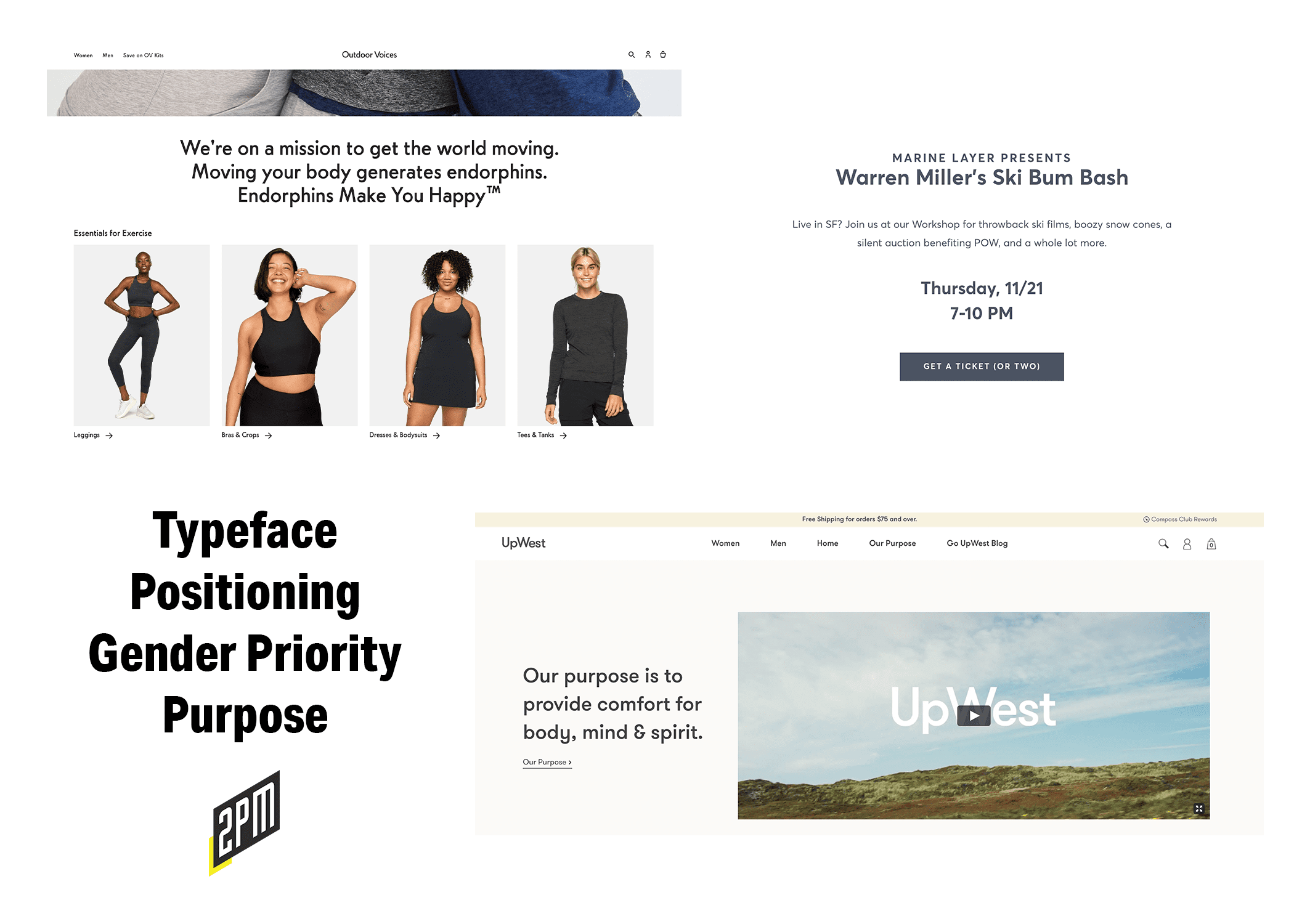
From the typeface, to the story-telling, to the merchandising – the UpWest brand is designed to attract fans of the digitally-native industry. Rather than a specific demographic, Express pursued an interest (DTC) and is building a brand atop of that engaged audience.

DTC As A Psychographic

推特上的网络史密斯

DTC, 2012: a tech stack strategy. DTC, 2016: a logistics strategy. DTC, 2020: a brand strategy.

In a span of three days, I received multiple emails and texts from contacts close to the launch of UpWest. Kaleigh Moore, Forbes writer and 2PM collaborator had a story in queue by then. In the Lean Luxe Slack, it was a topic of conversation. Rather than building in-house with Express’ existing engineering group, UpWest contracted Shopify agency BVAccel to handle the design and development work. This was a nod to several of the most successful digitally native brands in the space to include Untuckit, Cubcoats, Chubbies, and Rebecca Minkoff. 

Comparison-Upwest

The site’s architecture communicates a desire to be mentioned in the DTC conversation, this includes UpWest’s partnership with Klaviyo and its new-age loyalty program. It would appear that UpWest chose to focus on the DTC psychographic for the sake of earned media and brand positioning. As far as the nuts and bolts are concerned, the site’s build communicates that the desired target demographic is millennial-aged women. On day zero, the brand has an explicit purpose: to provide comfort for body, mind, & spirit. The clothes, are priced similar in design and price to Marine Layer – its next closest competitor.

Identifying Waves: Importing Hygge to America

In the past year, this concept of Scandinavian coziness has made inroads with an international audience. [5]

Imagine a whiteboard in one of Express’ suburban Columbus boardrooms; the word “hygge” would have been at the center of it in big and bold lettering. You can picture the brand’s chief comfort officer (and Express’ SVP of Strategic Initiatives) standing in the corner of the room, jamming as Cody’s It’s Christmas plays on the room’s four Sonos speakers. The brand wants you to feel a feeling. Analysts agree. Emily Singer, founder of the DTC newsletter “Chips and Dip” had this to say:

There’s something very boring about it. Maybe that’s intentional. This line feels a little too on the nose: ‘Welcome to curated comfort. For those who are seeking peace and calm in a stressful world.’ Brands tap into emotional states, but it’s rarely laid out so explicitly.

It’s this perceived boredom that is viewed as an understated luxury in American culture. To the Danes, hygge is free of economic status. The culture’s entire focus is on practicality, movement, wellness, and mindfulness. It’s this underlying culture that Express hopes to import with the help of some obvious visual cues from well-known DTC retailers.

The UpWest typeface is nearly identical to the typeface of Outdoor Voices and Marine Layer’s. Ironically, both retailers have references to Scandinavian hygge throughout their brand messaging. But for UpWest, there’s no understatement. Every message is turned to maximum volume. Like the primary header of Express.com: UpWest’s primary menu is a throwback to “Limited Express”, a retailer for women-first and men-second. There are elements of luxury abound. Upwest’s blog features new-age terms like: nourish, mindfulness, tranquility, and sanctuary. The traveling pop-up is a “cabin.” These are all symbols of wealthier millennials with time and resources to spare. As is the concept of philanthropy and sustainability (though UpWest sells products that are made with synthetics).

It starts with our cozy apparel, home and wellness products. We want to surround you with calm and give you balance. But it’s not just the tangible things. It’s also about slowing down. Diving deeper. And giving back.

Not to be outdone, UpWest wants consumers to help them donate $1 million to the Mental Health Association. The Express-borne retailer plays the entire DTC hand of cards. This report began with a simple statement: middle-class retail is at an impasse. To the average consumer, this DTC play is akin to Structure being launched as Express Men. Like a sheep, the seventeen year old me bought from Express as soon as my adolescent wallet would allow. The mechanics are similar here. Express is attracting an existing audience (the DTC psychographic) and using it to invigorate a brand that is plateauing.

结论

The UpWest bet is that the retailer can earn the business of the upwardly mobile DTC audience by engineering a product-market fit. One with heavy branding, ideal-alignment, and market messaging. This is one of the first upmarket attempts that we’ve seen from a specialty retailer. It’s one that deserves praise. Their management team engineered a brand with contemporary pricing and luxury messaging – void of pricing promotions (for now). They’ve acknowledged that the data shows a middle-class at an impasse. They have the supply chain, the logistics, the distribution, and a snapshot of a brand. But do the executives at Express truly understand what makes the top DTC brands work? That remains the question that could move the market.

Time will tell if Express can duplicate the brand architecting of their L Brands era – a time defined by face-less brands, clever signage, billboards, and foot traffic. My guess is that Express will find an audience that is more sophisticated and critical than the young adults of the 80’s, 90’s, and 2000’s. Messaging, distribution, and customer acquisition methods will evolve with this realization. And if that’s the case, their hygge may be tested for quite some time.

Research and Report by Web Smith | About 2PM 

备忘录镀金时代 2.0

thegildedage.jpg

马克-吐温曾写道:"历史不会重演,但往往会押韵。历史学家认为,新镀金时代的基础始于 1990 年。近 30 年后,"强盗男爵 "工业家和残酷金融家的时代又回来了。从那时起,很少有行业能像住房和零售业那样经历如此巨大的破坏。在过去三年中,有近 26000 家商店倒闭;2019 年的倒闭数量将是 2018 年的两倍。这种分化在整个实体商业和数字商业空间都有回响。与流行观点相反,零售业并没有消亡。相反,收入的变化、债务负担的加重和消费率的下降正开始使一些消费者两极分化。中间阶层正在受到挤压,而零售业未能预见到这种社会经济的转变。

"零售业的清算才刚刚开始"。这是记者杰克-霍夫(Jack Hough)的话,他为《巴伦周刊》(Barron's)发布了一份收费报告。但在这里,"清算 "和 "死亡 "并不一定是同义词。零售业不是在消亡,而是在分叉。在《维克多-格鲁恩的歌谣》中,我们从社会政治和税收政策的角度解释了零售房地产的繁荣与萧条:

来源:《巴伦周刊来源:《巴伦周刊

据 CNBC 记者劳伦-托马斯(Lauren Thomas)报道,服装商场零售利润正处于衰退水平。截至 2019 年 6 月,Macerich、Simon Properties、Kimco、Washington Prime Group 和 Taubman 地产的交易价格均处于五年来的最低点。预计到 2026 年,将有 67000 多家店铺关闭,但没有足够多的可行挑战者品牌(DTC)来填补这一空缺。因此,很难断定这个建立在战后消费主义、郊区化和加速折旧基础上的美国零售帝国能否重现昔日辉煌。不过,当我们想知道 "零售业启示录 "如何发生的时候,不妨看看 1954 年。

按人均计算,美国的零售业一直处于过剩状态。但在近 60 年的郊区零售扩张中,零售业似乎永远不会萎缩。杰富瑞公司(Jefferies)的分析师兰道尔-科尼克(Randal Konik)认为"美国大约有 1350 个封闭式购物中心 但只需要 200 到 400 个"。但是,在零售店关闭的同时,销售额预计将增长 3.5%,达到 3.7 万亿美元。根据瑞银的报告,可能需要十年时间才能达到平衡(1350 到 200)。该投资银行预测,在此期间还将有 7.5 万家商店关闭。

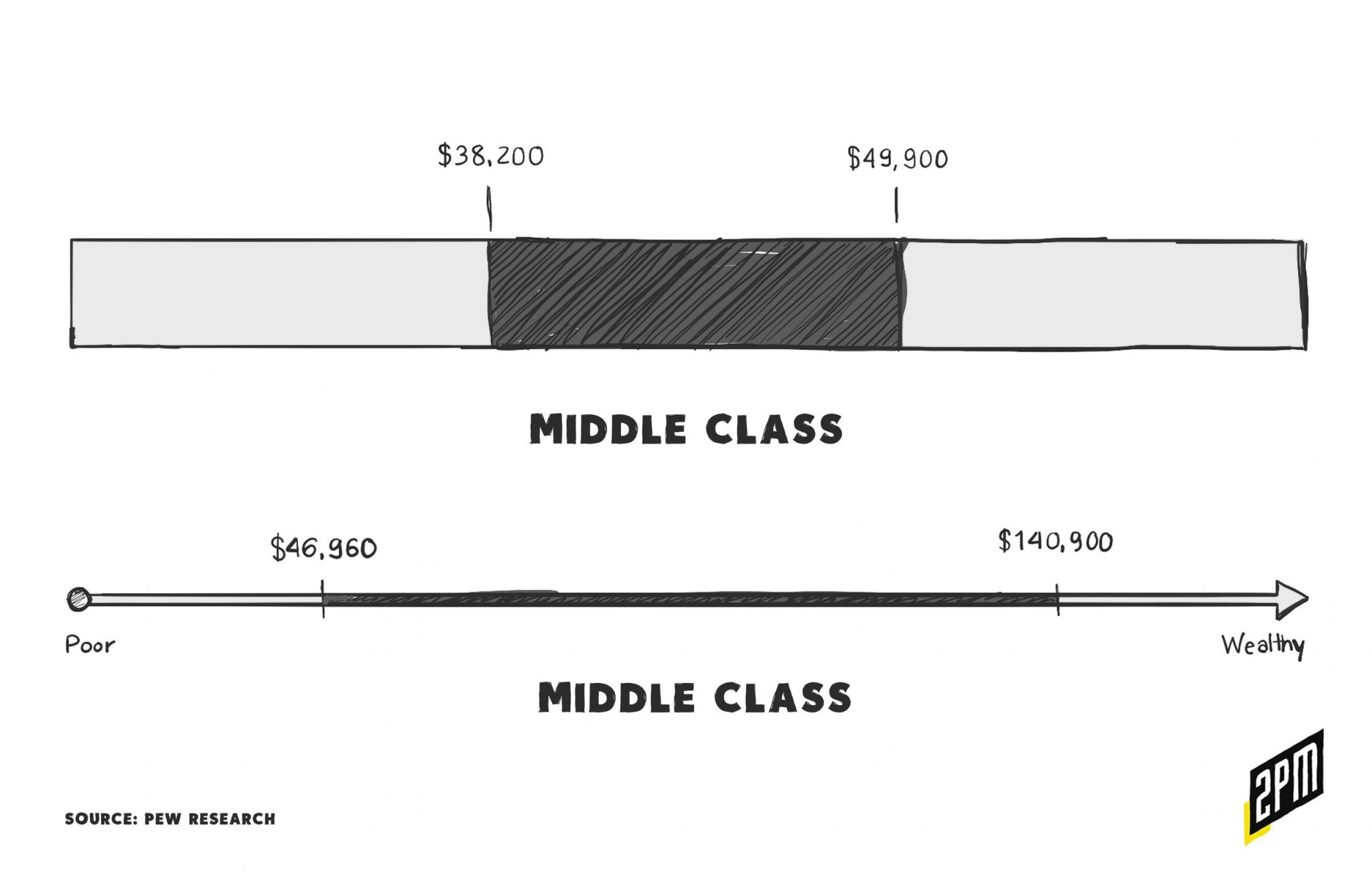
为了更好地理解关店潮的目标群体,我们必须首先考虑中产阶级的定义--一个正在萎缩的美国消费者群体。据统计,如果您正在阅读这篇文章,那么您很有可能属于中上阶层和富裕阶层,并且正在不断扩大。这个群体的家庭年收入超过 140,901 美元。

上图是普通中产阶级家庭的典型消费情况。下图是美国中产阶级的工资水平。这些数字受到地区、受抚养人数量以及其他一系列因素的影响。

但是,对于许多辛勤工作的美国中产阶级来说,有些东西在翻译中丢失了。随着通货膨胀、就业不足、大学学费上涨、消费债务增加以及医疗保健成本上升,典型的消费已经下降。而那些工资收入尚可的家庭,其生活水平已接近中产阶级的下限或更低。简而言之,财富水平正在两极分化,而零售业的分化也紧随其后。

了解镀金时代

在矿业大亨、铁路大亨、商人王子、银行家、世代托拉斯和公用事业大亨的时代,美国充斥着野蛮的资本主义和前所未有的经济不平等。美国开始在贵重商品和服务的生产和提炼方面引领世界。对于少数受益者来说,新的经济君主制应运而生。对其他人来说,生活更像是辛克莱的《丛林》中的场景

如果您有幸到访过罗德岛州的新港市,您一定会发现一些奇特的现象:镀金时代在这座城市的某些地区展现得淋漓尽致,就像那个时代从未被中产阶级的繁荣所取代。1870 年至 1900 年间,在这座美丽的新英格兰城市的海岸边建造了三座美国最大、最奢华的住宅。在这些宫殿式的住宅中,许多人认为是皇冠上的明珠:不莱梅酒店这座占地 14 英亩、面积达 65,000 平方英尺的豪宅是工业时代的典型记忆。科尼利厄斯-范德比尔特二世于 1885 年以 45 万美元的价格买下了这块土地,并于 1895 年完成了这座拥有 70 多个房间的 "避暑别墅 "的建设。

学生时代,我曾和几个同学一起漫步在 "断路器"的大厅里。我们从未见过这样的场景。老实说,我很震惊。在中产阶级家庭长大的我,几乎无法想象住在 4000 平方英尺的房子里。但在意大利文艺复兴时期的建筑中,我们惊叹于一户人家的住宅占地整整一英亩。我不知道还有这样的财富,也肯定没有见过过去那种繁荣景象的现代衍生品。城堡是历史书和中世纪电影的主角,我是这么认为的。

富者愈富,贫者愈贫。

F.斯科特-菲茨杰拉德

美国各地有许多镀金时代的住宅,其中许多已被改建为公共建筑和时代纪念碑。旧金山就有四巨头的豪宅。不远处就是赫斯特城堡。康涅狄格州有劳德-格林威庄园。马萨诸塞州有蒙特山。当然,纽约的街道上也有很多像雅顿、印第安颈、奥拉纳和伍德雷亚这样的住宅,它们现在是沉睡谷乡村俱乐部的所在地。这样的住宅在美国总共有近 80 座。没有一座是在杰伊-盖茨比的 20 世纪 20 年代之后建造的。直到最近。

杰克-比蒂(Jack Beatty)最近出版的《金钱在美国的胜利》 一书中有这样一段话:

但是,尽管厚颜无耻,当时的不平等还是符合过去不平等的模式。从《大西洋月刊》到《西雅图周报》,都将不平等现象称为 "新镀金时代",在这个时代,收入分配中最底层 90% 的人每多挣 1 美元,收入最高的 0.01% 的人就能多挣 18,000 美元。保罗-克鲁格曼(Paul Krugman)指出:"自镀金时代以来,美国从未出现过类似的收入差距扩大现象。

镀金时代是一个辉煌与悲剧并存的时代。我们似乎正站在另一个爆发点的悬崖边上,多年的平静积累终于迎来了 "啊哈!"时刻。住房问题、中产阶级消费债务的增加以及零售业的发展趋势似乎都指向了这个方向。考虑到像 DoorDash 或 GrubHub 这样的最后一英里配送服务,中上层和富裕阶层会觉得很奢侈。但这份工作却利用了未充分就业的人群--他们中的许多人可能是白领专业人士,正在为留在日渐枯竭的中产阶层而奋斗。

美国财富出现两极分化,其发展速度令人眼花缭乱。在旧金山,新近无家可归者在四星级和五星级酒店的墙边安营扎寨。这种两极分化令人震惊。再看看纽约市,那里的贫富差距可能稍小一些(对盲人而言)。然而,这座城市的私人直升机交通却越来越嘈杂,而地铁系统却让许多为跻身中产阶级而奋斗的人失望。纽约街头的最后一英里工人有时和行人一样多。在纽约数英里长的零售店面中,有相当数量的店面空置。

2018 年,《今日美国》记者里克-汉普森(Rick Hampson)写道:"那个时代(大约 1870-1900 年)与我们这个时代有许多共同之处:经济不平等与技术创新;显性消费与慈善事业;垄断权力与民粹主义反叛,[......]以及变化--不断的、令人振奋的、令人恐惧的变化"。"了解当时和现在的社会经济模式的镜像,应该会对今天的零售业务产生深远影响。

镀金时代 2.0 与现代零售业

西尔斯(Sears),这家曾经闻名遐迩的零售商在镀金时代开始起步。理查兹-西尔斯(Richards Sears)是一名铁路工人,他在明尼苏达州创立了 R.W. Sears 公司。他以转售珠宝和手表为生,早期的成功让他将业务转移到了芝加哥,并在那里遇到了阿尔瓦-罗巴克(Alvah Roebuck)并雇佣了他。这位零售业的创始人和这位钟表匠建立了一项创新业务:他们拥有自己的产品和品牌,并直接向消费者销售。这就是今天电子商务的前身。在直销和目录成功之后,这家零售商于 1906 年上市[2]。

西尔斯以优先股上市,每股售价 97.50 美元,相当于现在的 2,500 多美元。 同年,西尔斯还在芝加哥西区开设了一个邮购配送中心,建筑面积达 300 万平方英尺,是世界上同类建筑中最大的。

西尔斯实体店的蓬勃发展带动了全美农村和郊区的蓬勃发展。近六十年的财富随之而来。理查德-西尔斯(Richard Sears)与时俱进。一个为富人打造的企业成为了新兴中产阶级的象征。我想,他看到了机会。

在线零售额占零售总额的百分比 来源:eMarketer 2018

时至 2019 年,零售业的分界线一如既往地清晰。近四分之一的中国公民和全国各经济阶层都采用了在线零售。在美国,在线零售客户的构成偏向富裕阶层。亚马逊 Prime 会员拥有超过 1.1 亿用户,占美国家庭总数的三分之一。在所有互联网消费者中,收入超过 15 万美元的人中有 66.3% 使用亚马逊 Prime。在年收入 3.5 万美元的消费者中,仅有 31.6% 的人购买了亚马逊 Prime 会员资格。

专家称,只有前 20% 的商场生意兴隆。

网上零售和 "A 级 "商场吸引的是富裕的消费者。非价格实体零售商和 "C 级 "商场则偏向于经济不景气的人群。在 2018 年至 2019 年期间,以下专业零售商大规模关闭:Nine West、Claire's、Brookstone、Samuel's、Mattress Firm、Sears、David's Bridal、Charlotte Russe、Payless、Gymboree、Topshop、J. Crew、J.C. Penney、Pier 1 Imports 和 DressBarn。

更多的关闭还在后面。其中GAP 和 L Brands 将加速倒闭,进一步削弱中产阶级的零售业。我们不仅目睹了美国财富两极分化的惊人速度,这种情况现在也反映在零售房地产上。面向富裕阶层的机构保持稳定,在某些情况下还促进了零售业的发展。面向经济困难群体的机构也表现不俗。从历史上看,非价格零售和奢侈品零售一直处于边缘地位。如果这些趋势继续下去,这两个群体可能会成为主流。

这对数字原生型企业也有影响。考虑到当今直接面向消费者业务的客户获取成本不断上升。Facebook、Instagram 和谷歌的广告库存一直保持稳定,而创办公司的 DTC 创始人的数量却在持续增加。许多直接面向消费者的品牌并没有将市场定位在吸引越来越多的现代奢侈品消费者和 HENRY's(高收入者,尚不富裕),而是通过优化信息、品牌和广告支出来吸引越来越多的中产阶级消费者。更糟糕的是,这些消费者还没有完全将网上零售作为一种消费方式。目前还不清楚这种动态是否导致了 CAC 的上升,但受众动态的变化应该引起营销人员的关注。

与此同时,像BrandlessJet.com这样的非价格数字原住民,由于专注于以低价为导向的促销形式,也在苦苦挣扎。虽然有超过 1 亿美国人使用亚马逊 Prime 服务,但在线交易仍占零售额的 11% 至 13%。美国仍处于电子商务应用的早期阶段,因此,非价格消费者在应用曲线上仍然滞后。我们有理由认为,这可能导致高估了非价格类零售商的总可寻址市场(TAM)。此后,Brandless 调整了战略,以吸引更富裕的购物者。"Brandless 新任首席执行官表示:"现在的平均订单价值需要从 48 美元提高到 70 或 80 美元。

这个时代已经开始揭示出美国人在商品和服务消费方式上的鲜明对比。尽管商店倒闭的数量达到了灾难性的程度,但净消费仍在继续增长。零售业和媒体界的一些人悄然认识到,最具竞争力的增长方式是追求现代奢侈品消费者--这群人似乎不受这些变化的影响。产品变得更加独特,生产质量更高,服务更优越。随着在线零售渗透率从 11% 不断增长到与中国类似的水平,非价格零售商开始获得更多成功--这对沃尔玛、好市多和其他公司来说应该是个好兆头。

虽然历史不会重演,但它确实是有韵律的。经济上处于劣势的人在一小时内就能将食品、新奇物品、酒类和商品运送到城市扩张区和豪宅林立的郊区。在全国范围内,随着显性产品和服务消费的增加,前 1%富人的净资产也变得引人注目;StockX、Hodinkee 和 Uncrate 等平台的兴起就证明了这一点。对于 0.01% 的顶级富豪来说,4 万平方英尺以上的住宅比咆哮的 20 年代还要多。零售业正在顺应当今的经济现实。财富正在激增;零售战略应做出调整,以迎合这种变化。

零售业启示录"这个词总是让人感到不舒服。这项研究表明,它也是一个不准确的说法。相反,镀金时代 2.0是中产阶级的牺牲品;中产阶级是随着 19 世纪末的工业和金融繁荣而出现的消费者。21 世纪初的中产阶级几乎不存在。这是一个繁荣或萧条、盛宴或饥荒的不幸时代。对于商业及其相邻行业而言,2.0是一个不容忽视的修正。

韦伯-史密斯的研究与报告 |关于 2PM