Memo: Verano de maletas calientes

Away está a punto de lanzar una cápsula de accesorios de viaje en plena pandemia. ¿Será que la cofundadora Jen Rubio tiene algo entre manos? La respuesta está en las estadísticas macroeconómicas.

El 16 de marzo de 2020, el transporte aéreo nacional alcanzó un punto notable en su caída: lenta al principio, y luego de golpe. El número de viajeros diarios cayó por debajo del millón. Apenas un mes después y en determinados días sólo 90.000 estadounidenses viajaron por los aeropuertos del país. Más de un año después, a medida que vuelven los viajes, también lo hacen las marcas, los mercados y otras empresas que prestan servicio al sector. Se perfila como un caluroso verano del equipaje.

Un día del pasado abril, en el aeropuerto Midway de Chicago, me encontraba en una terminal que abarcaba tres campos de fútbol. Llegaba con una hora de antelación a mi vuelo de la tarde y era el único cliente de toda la terminal. Un mes después, volví. Poco había cambiado, ya que la cifra nacional de tráfico ascendía a sólo 190.477 pasajeros. Esa cifra no volvería al millón o más hasta Acción de Gracias de 2020.

Durante el periodo pandémico de marzo de 2020 y marzo de 2021, realicé con seguridad casi 40 vuelos entre ciudades como Nueva York, Miami, Chicago, Austin, San Francisco y Los Ángeles. Durante los meses de abril a junio, parecía que el transporte aéreo nunca volvería a ser el de antes. Según Rafat Ali, fundador y consejero delegado de Skift, la pandemia persistirá en el sector aéreo hasta bien entrado 2022. Ali:

Incluso cuando estemos vacunados hasta cierto punto, incluso cuando alcancemos la inmunidad de rebaño, llevaremos mascarillas [en los aviones]. Podemos esperar que esto dure al menos todo el año.

Aun así, el regreso del transporte aéreo nacional parece estar en camino. En marzo de 2021, un grupo de seis empresarios organizó recientemente un retiro empresarial. La fecha del viaje en avión estaba prevista para el 16 de junio y el destino se fijó en Montauk, Nueva York. En el mes de junio, hay cerca de cero propiedades disponibles en Airbnb y el fijo local Gurney's Montauk Resort está al límite de su capacidad. Estos no fueron los únicos signos de densidad en la región neoyorquina de Long Island. Los datos demuestran que los viajes nacionales están en pleno auge. Ali añadió más tarde:

El ocio doméstico está en auge. El verano va a ser frenético.

Las cifras cuadran. Los viajes nacionales ya han vuelto al 60% de las cifras de 2019 y la ocupación hotelera ha superado por fin el 60% por primera vez desde marzo de 2020. Las búsquedas en Kayak aumentan un 27% semana a semana. Los alquileres a corto plazo se enfrentan a una escasez de disponibilidad en muchos de los puntos calientes de viajes de todo el país. Airbnb está reflejando los precios de alquiler de propiedades más altos de la historia de la empresa. Ali señaló que tanto Estados Unidos como el Reino Unido han obtenido buenos resultados con la implantación de las vacunas. Prevé un corredor de viajes entre ambos países. Ahora que los datos sobre viajes empiezan a reflejar una conclusión esperanzadora de la pandemia mundial, hay una empresa que puede servir de indicador.

El comercio sigue a los viajes

En febrero de 2020, el sitio web de Awayocupaba el puesto 16.500 en Internet según el tráfico web que recibía. En julio, esa cifra cayó a un puesto de 52.836, pero subió a un esperanzador puesto de 24.882 en Navidad gracias al marketing y la promoción de la nueva directora ejecutiva Jen Rubio y su equipo. En la actualidad, Away se ha estabilizado en torno al puesto 30.000, según los datos que nos ha proporcionado Charm.io, lo que representa una caída del 20% en el tráfico web durante los tres meses anteriores. Puede que sea mucha información para masticar, pero considere las implicaciones: Away es quizás el mayor vendedor de maletas de Estados Unidos por volumen bruto de comercialización (aunque Samsonite probablemente venda más unidades de maletas y accesorios).

Away's trailing 12 months. Más datos en 2pml.com/dnvb

De forma similar, el fabricante alemán de maletas (y filial de LVMH) Rimowa siguió una trayectoria casi idéntica de tráfico digital, aunque su volumen aún no es comparable al de Away y su mercado objetivo es diferente. En la conversación con Rafat Ali, comparamos notas entre la industria en general y las empresas de consumo afectadas por las tendencias generales. Gracias a un acontecimiento que se produce una vez cada cien años, el tráfico de Away cayó.

Pero dada su posición actual como líder del mercado, su alcance social, el número de empleados y las métricas de ventas relativas (más información aquí: 2pml.com/dnvb), 2021 puede ser el año en que Away supere con creces incluso sus expectativas más altas.

Antes de la crisis del COVID-19, la marca de viajes facturaba bastante más de nueve cifras de ingresos anuales. Con la decisión de lanzar la nueva colección de viajes de Away, la inversión de Rubio en marketing y consumo en este resurgimiento de los viajes nacionales es una decisión lo suficientemente significativa como para servir de interpretación pública de los datos positivos del sector privado antes mencionados. Las tendencias del sector de los viajes justifican sobradamente su decisión de apostar por este verano. Al igual que Peloton, Mirror, Tonal y Rogue dominaron las narrativas de fitness directas al consumidor del año anterior, sospecho que Away (y otras empresas de consumo de viajes) tendrán narrativas de trayectoria similares, encontrando su camino entre las 100 marcas nativas digitales de más rápido crecimiento que 2PM rastrea.

Y si es así, puede que veamos la oferta pública que el equipo y sus inversores se han ganado desde hace tiempo. En cualquier caso, el transporte aéreo nacional y las industrias que lo apoyan van camino de llenar sus terminales. Eso significa más equipaje de mano, más Airbnbs y todo lo demás para este caluroso verano del equipaje.

Por Web Smith | Editor: Hilary Milnes | Arte: Alex Remy

Informe para miembros: Comunidades imaginadas

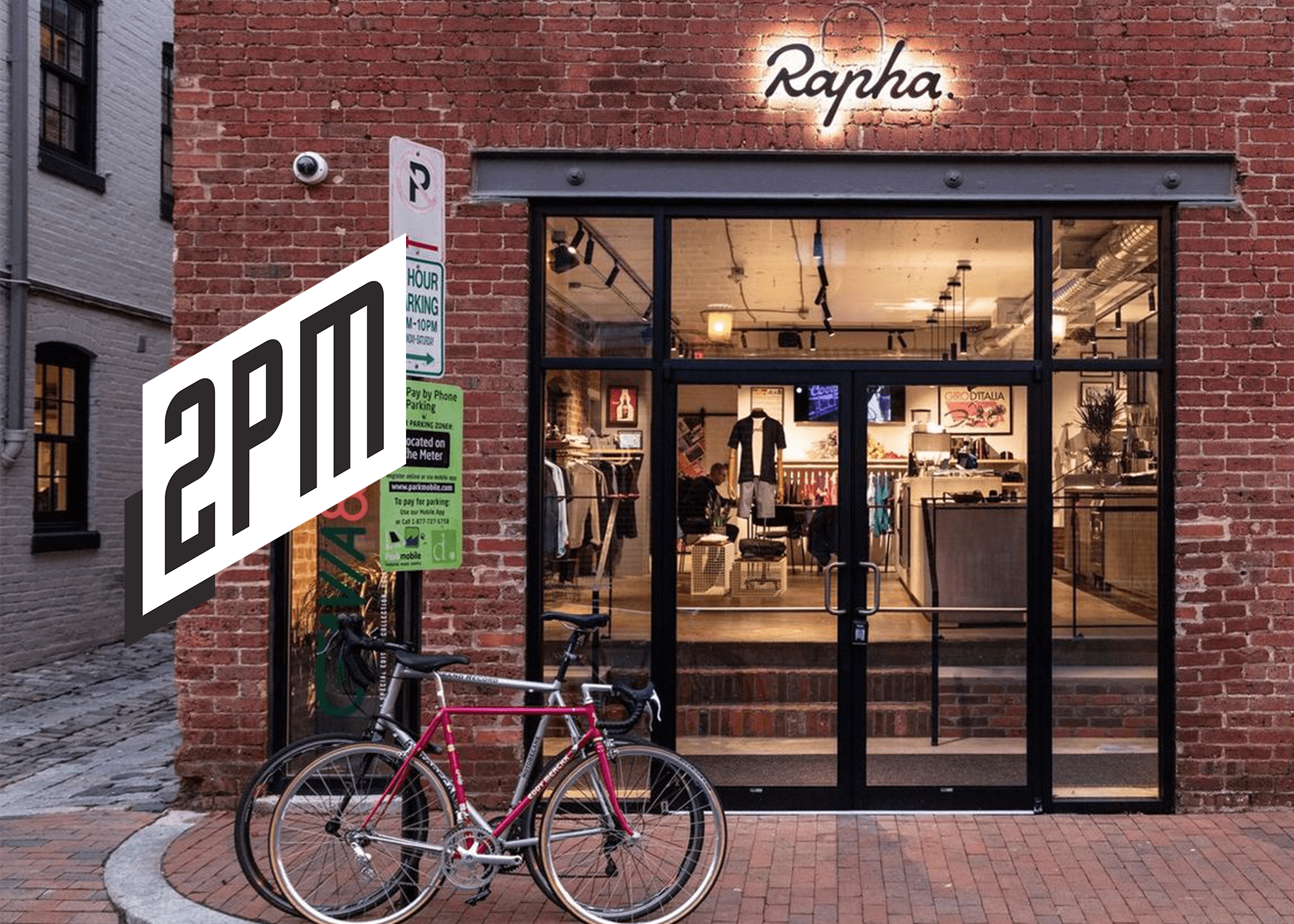
Rapha

No hace mucho se realizó una encuesta y el resultado fue asombroso. Los estadounidenses son cada vez menos religiosos. Hasta hace poco, la religión era una importante línea de demarcación para muchos estadounidenses. La religión influía en la cultura, el grupo social e incluso la política de cada uno. En un reciente reportaje sobre el tema, Derek Thompson, de The Atlantic, expone varios de los catalizadores responsables del alejamiento de la religión en Estados Unidos. Irónicamente, cita como culpables a la política, una cultura en evolución y una secuencia de acontecimientos actuales. Pero en él, parece haber omitido un factor.

Este informe está destinado exclusivamente a Miembros ejecutivos, para facilitarle la afiliación, puede hacer clic a continuación y acceder a cientos de informes, a nuestra lista DTC Power List y a otras herramientas que le ayudarán a tomar decisiones de alto nivel.

Únete aquí

No. 298: Retention is the new currency

Contributor. The much mused about sharing economy jump started by disruptors like AirBnB, Rent The Runway, Netflix and Uber is running past its adolescence. In 2019, both Uber and its rival Lyft expect to go public.

According to Fortune, Uber alone could be valued at as much as $120 billion, higher than the valuations of Ford, General Motors and Fiat Chrysler combined.

It’s also close to double Uber’s valuation at a fundraising round two months ago and would be the biggest debut since Alibaba went public in 2014.

AirBnB, too, is expected to file as early as 2019, bringing some of the biggest disruptors of the last decade to Wall Street. But their impact has already been felt beyond their Silicon Valley offices.

The sharing economy has given rise to the subscription economy:

  • An economy preferred by investors for it’s stability.
  • An economy loved by consumers for its accessibility.
  • An economy coveted by entrepreneurs for it’s long-term customer relationships.
2PM, Inc. contributor: Tracey Wallace

The rise is thanks to the ubiquity of internet access and smartphones in the U.S. across nearly all segments. “Customers, the ultimate endpoint of any business, are today just as connected as the employees of any large enterprise,” writes Ben Thompson on The Stratchery.

This gives consumers and businesses alike endless access to on-going services that don’t function like gym-memberships of old. Instead, modern subscription models are gym-like in execution and participation.

  • They are based on service, not product: The product is the means not the ends.
  • They build convenient communities of like-minded individuals with end-goals in mind: Think Shopify users want to be seen as successful entrepreneurs. Spotify users want to be seen as having the best playlists and musical tastes.
  • They rinse and repeat the experience: The service begets the product, the product begets the goal, the goal begets the service.

Retention is the new currency

Costco – perhaps the longest standing subscription business around – has perfected the model. Amazon evolved it online with Amazon Prime. Giants like Apple and Google are touting their subscription services as differentiators for their products.

  • Google is offering six month free YouTube Premium subscription for all Google Home devices (and varying YouTube Premium subscription access for nearly all Google devices).
  • Apple is packaging their streaming music service and phone care services into single packages –– selling you a full suite of services that beget a product.

The success of the model is clear. You need only look at Dollar Shave Club on the consumer side to see the impact on the industry (or look at newer DNVBs like Quip following similar paths). Or, on the B2B side, look at the stock prices of Adobe (up 770% since 2012), Microsoft (up 320%) or Autodesk (up 360%), which have shifted to offer internet cloud-based software for a monthly or annual fee.

Indeed,  many DNVBs are putting their own spin on the subscription model business. In retail alone, there are more than 5,000 brands offering clothing, cosmetic or the like “subscription boxes” each month.

“It is totally faddish right now,” says Robbie Kellman Baxter, a consultant with Peninsula Strategies and author of The Membership Economy. “Most of them are going to fail. How many ties does dad need?”

But in technology, the rent-rather-than-own trend is holding stronger. In health care, too, it is growing in popularity with brands like SmileDirectClub and MDVIP, a direct primary care service, gaining more and more subscribers.

In media is where we will see the most pronounced shifts. After all, subscriptions are the easiest way around an unforgiving advertising world inhabited by Google and Facebook’s duopoly.

That duopoly began hitting media brands as early as 2015, when many considered the “gold standard” of online content to be free and commoditized. Many digital media brands have yet to recover from this mistake.

According to CNBC:

Vice Media has been the gold standard, earning a valuation of $5.7 billion in June 2017. Earlier this month, Disney wrote down some of its investment in Vice by 40 percent, suggesting a declining overall valuation.

Buzzfeed has built itself into a company that tops $1 billion in value. Still, Buzzfeed missed its 2017 revenue forecast by up to 20 percent, the Wall Street Journal reported last year, pushing back hopes of an initial public offering indefinitely. Vox Media, the owner of sites including SBNation, Eater and The Verge, also missed internal revenue forecasts and is not planning to go public any time soon, said people familiar with the matter, who asked not to be named because the company’s financials are private.

Separately, media companies including The New York Times, The Wall Street Journal, The Washington Post, New York Magazine, Quartz, Bloomberg, Business Insider, Vanity Fair and Wired have all returned back to media’s subscription business model roots by completely paywalling, introduced paywalls or hardening their paywalls beginning in 2018.

We’re living in an environment where Facebook, Google, and Amazon are sucking up so much of the advertising revenue,” says Sterling Auty, software analyst at J.P. Morgan. “Subscriptions and ecommerce are an antidote to that.”

These media companies are looking to lower their reliance on Facebook and Google algorithms and return to their service roots through subscription payments –– adding yet another monthly subscription to consumers’ bank accounts.

On paid subscription tolerance

According to eMarketer, 71% of U.S. consumers with internet access subscribe to at least one streaming video service. However, the number for all other verticals drop dramatically beyond video.

This leaves ample room for other verticals to grow their subscription services, especially as consumers become more accustomed to the model and testing out various offerings. Paid subscriptions through Apple’s App Store reached over 330 million last quarter. That’s up 50% year over year and includes both Apple and third-party services like Netflix.

Consumers are downloading. They are trying. They are testing. And there will be winners. Some analysts like Eddie Yoon, a consultant and author of the book Superconsumers, see the subscription economy as a 20-year trend –– just now beginning to hit its growth stage.

But there are caveats:

“All brands will try to offer subscriptions, but only a few will take,” he added. “Consumers will push back if they feel overwhelmed with subscription services,” Yoon says. “People won’t tolerate a world where everything is subscriptionized,” he said. “For the things that you really care about, you’ll definitely subscribe.”

The experience economy edges in

This is where the experience economy matters most. Subscription business models create desirable P&Ls, forecasting models and enable brands to act in the best interest of their most dedicated subscribers (rather than advertisers), but fail to provide the experience and you’ll lose your list and your recurring revenue.

Ben Thompson from The Stratechery pulled out this quote from Bill McDermott, the CEO of SAP, on this challenge on an investor call:

There are millions of complaints every day about disappointing customer experiences. This is called the experience gap. Businesses used to have time to sort this out, but in today’s unforgiving world, the damage is immediate, disruption is imminent. This has shifted the challenge from a running a business to guaranteeing great experiences for every single person.

It’s best here to remember that subscription and membership are separate things. Membership provides experience and community. Subscription just gets you access to something behind a gate.

Take a look at Peloton, for example. The company has long argued that it’s bike ($2,000) and subscription program ($39 monthly) are a bargain compared to regularly attended SoulCycle classes. And SoulCycle is hard to beat. Similar to fitness organizations like CrossFit, Inc., it has a hardened fanbase and community.

But where Peloton succeeds is its content –– the ability to stream classes on your bike, forgoing a trip to a physical class. All for substantially lower costs than regular in-person classes anyway. Peloton reports its churn at less than 1%.

You have to do delightful things and leave money on the table,” says Peloton CEO and co-founder John Foley.The monthly service is what you really buy. That was the flaw with the old models. It was just hardware.

Of course, not every company can be a Peloton. The subscription model itself does not lower the cost of doing business. It cannot, on its own, generate demand.

As subscriptions proliferate, investors need to dig deeper into the dynamics of their models,” says Aswath Damodaran, a finance professor and valuation specialist at New York University’s Stern School of Business.Many venture capitalists and public investors are pricing user-based companies on user count, with only a few seriously trying to distinguish between good, indifferent, and bad user-based models.

What’s next in the subscription era is a dwindling down to those brands, media packages, and services which can offer the experience worth paying for –– the service that begets the product, and the product that begets the consumer’s goal. A subscription model, alone, won’t be enough. Consumers will seek membership and the benefits that come with it: experience, community, and camaraderie. For the product companies, the software companies, and media companies that figure it out – the prize is recurring revenue and stability until the next preferred model comes along.  

Read the rest of your No. 298 curation here.

Additional reading. Member Brief: The Subscription Economy

By Tracey Wallace | Edited by Web Smith | About 2PM

Editor’s Note: Tracey serves as the Editor-in-Chief at BigCommerce and a public speaker. She is launching a DtC pillow brand, this spring. She is a paid contributor of 2PM, Inc.