Memo: La paradoja del "chico guay" de Shopify

n6vIM5Xw

Una carta abierta a todos los comerciantes de comercio electrónico. En una charla reciente con Damian Soong, miembro ejecutivo de 2PM, el fundador de DTC respondió con una reflexión conmovedora:

Alguien tenía que decir que DTC no es Shopify.

Paul do Forno, Director General de la Práctica de Comercio de Deloitte, aportó datos que corroboran la opinión de Soong:

Si se trazan por los ingresos totales de la plataforma: HCL Commerce, Oracle, SAP y SalesForce estarían en cabeza.

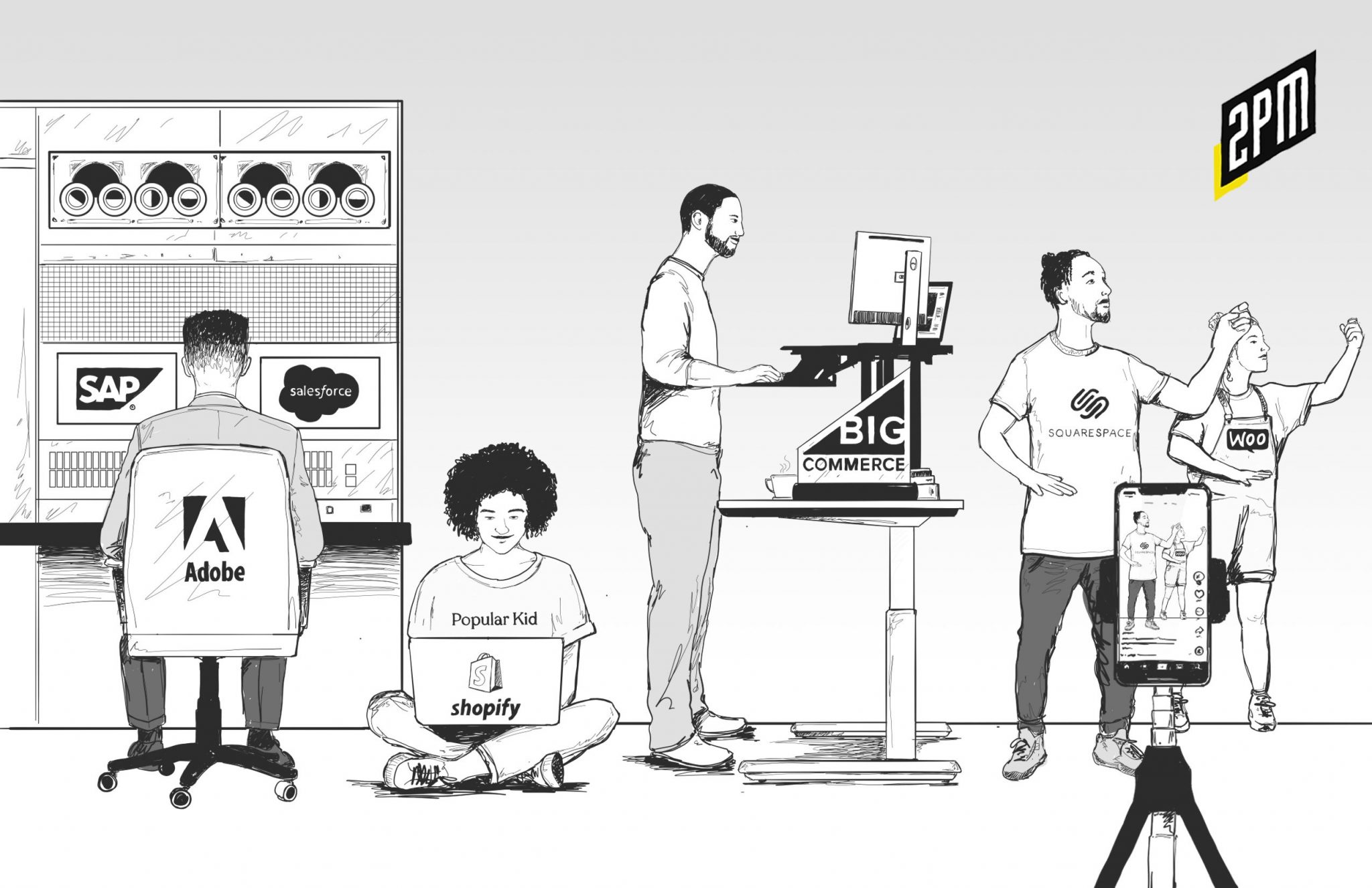
Shopify ha hecho que el sector sea más interesante, accesible y noticiable. Pero no es el único participante en este floreciente ecosistema: Magento (ahora Adobe), Demandware (ahora Salesforce), SAP, BigCommerce, Squarespace, BigCartel, WooCommerce, Webflow, Square y Wix han desempeñado papeles fundamentales en el desarrollo de los mercados empresariales o comerciales. Shopify no es la mayor plataforma en cuanto a volumen de comercio o valor bruto de la mercancía (VBM). Se encuentra justo en el centro de los dos extremos. Sin embargo, de alguna manera, se convirtió en el operador de facto de la era DTC.

Para entender la dirección del comercio electrónico, hay que entender su pasado y su presente. Durante lo que probablemente fue el año más crucial en mis inicios en el comercio electrónico, estudié Magento desde la perspectiva de una marca de comercio electrónico que empleaba a 100 personas aproximadamente. Esa versión anterior de Magento era una plataforma complicada de entender. Su gestión requería el empleo de una docena de ingenieros y una magnitud igual de talento en experiencia de usuario y diseño front-end. Cuando pronto tuve mi propia oportunidad de crear una marca de comercio electrónico junto a Kevin Lavelle, no optamos por Magento, sino por Shopify. No teníamos el dinero para contratar talento técnico, ni la paciencia para gestionarlo además de los retos a los que nos enfrentábamos en la fabricación y la captación temprana de clientes. Pero es importante reconocer que esta decisión se tomó hace nueve años, toda una vida en tecnología.

Esa misma empresa de 100 personas cuenta ahora con más de 1.000 empleados. En menos de una década, un pequeño competidor de la industria se convirtió en un líder mundial de fabricación, todo a través de canales directos al consumidor. Y lo han hecho con Magento de Adobe. Si alguna plataforma SaaS tiene derecho a reclamar el inicio de la era DTC (2008), Magento podría argumentarlo fácilmente. En cambio, se pierde en la conversación.

De pie en un pasillo de la conferencia más reciente de Shopify Plus en la ciudad de Nueva York en 2019, me senté con el CEO de Shopify, Tobi Lutke, uno de los ejecutivos más admirados de la industria. Recuerdo maravillarme con la producción del evento. Los amigos, el networking, la marca del espacio, todo comunicaba el lugar de Shopify en el ecosistema del eCommerce. Aplaudí a los emprendedores que compartieron sus historias en el escenario con cortometrajes de gran producción. También fue notable la accesibilidad de los ejecutivos de la C-suite que, francamente, ya no deberían ser tan accesibles. Esta disponibilidad es parte de la salsa secreta de Shopify. No encontrarás otro CEO minorista de su calibre que esté dispuesto a responder a los clientes en plataformas como Twitter e Instagram.

Lo que más recuerdo de esa reunión en particular es la intensidad con la que Lutke se centraba en el producto. Si le sugieres una idea que está fuera de la línea de productos de Shopify, él te explicará por qué Shopify no es adecuada para ella. Rara vez renuncia a su visión de lo que Shopify y Shopify Plus son para la industria del comercio electrónico, o las funciones que están dispuestos a construir.

Es esta misma visión galvanizadora la que reúne a la base de miles de evangelistas de la plataforma de Lutke. La capacidad de Shopify para amplificar su mensaje a través de su ecosistema de socios ha hecho maravillas en la promoción de su narrativa de inevitabilidad percibida. En Shopify Unite and Network Effects [1], escribí:

Si te sentaras en una sala con los directivos de BigCommerce o Adobe y les explicaras que la diferenciación de un producto puede ser algo más que una iteración de software, no estarías sentado allí mucho tiempo. Y esa es parte de la ventaja de Shopify. No está claro si la intención original del ecosistema de socios de Shopify era ser un catalizador de los efectos de red. Pero sin duda es el caso.

El fundador Tobi Lutke, Harley Finkelstein y su equipo se toparon con una nueva forma de ventaja competitiva en el comercio SaaS. Aquí, en la intersección de la influencia y la eficacia, las ventajas sociológicas de las marcas minoristas han interactuado con un ecosistema de software como servicio.

Los principales argumentos de Shopify para llamar la atención son válidos. Su enfoque holístico del cumplimiento, las devoluciones y la arquitectura de código bajo o nulo se convertirán en elementos fijos en el mercado norteamericano a medida que el porcentaje del comercio electrónico en el comercio minorista siga aumentando por encima del 20%, el 25% o el 30%. Y si tenemos en cuenta el volumen de Squarespace o WooCommerce y el GMV de Magento: la capacidad de Shopify para captar el mindshare a pesar de las ventajas de estas otras empresas es en gran medida culpa de los competidores que no han valorado los aspectos de marketing y branding del negocio.

Aprovechando los efectos de red, Shopify se ha convertido en el proverbial niño majo del SaaS. La voz de su marca es el alma de la fiesta y el centro de muchos debates públicos. Este posicionamiento tiene valor de mercado. Al igual que Amazon, la fortuna de Shopify está ligada al crecimiento continuo del comercio electrónico en Norteamérica. Los inversores públicos recompensan a Shopify simplemente por estar vinculada al movimiento hacia la venta directa al consumidor. Es merecido.
ENkl02YQ
Los tradicionales, los guays, los extravagantes y los buscavidas

Es importante tener en cuenta que no se trata de que el ganador se lo lleve todo, y que lo que haga Shopify a continuación importa. Hay fundadores de comercio electrónico que construyen sobre sitios personalizados y han logrado un crecimiento rentable. Hay líderes que han elegido Salesforce o BigCommerce para satisfacer sus necesidades tecnológicas o filosóficas. Y en el proceso, han construido empresas que arrojan decenas de millones de dólares en EBITDA mensual. Por supuesto, hay ejemplos de estas hazañas en Shopify, pero esa es la cuestión. La democratización del comercio electrónico no sólo se refiere a la simplicidad de la plataforma.

El ecosistema de Shopify se beneficiará enormemente de la ampliación de la definición y el carácter de la industria DTC para alcanzar e incluir las marcas, fundadores, agencias y tecnologías habilitadas para apoyarlas en otras plataformas. Algunas de las mejores y más brillantes historias, personas y marcas se están construyendo fuera de los focos.

Los chicos guays suelen llevarse la mayor parte de la atención. Pero algunos de los avances más notables se producen donde no están los chicos guays. Ésa es la paradoja.

Al enfatizar las historias y anécdotas de los fundadores que han evitado el centro de atención de la industria o las marcas que han gestionado el crecimiento de manera diferente a lo que comúnmente se anuncia, estamos cerrando la brecha de conocimiento. Tal vez hubo un fundador de marca que optó por utilizar WooCommerce para escalar y ahora tiene ideas que podrían ayudar a los fundadores de marcas basadas en Shopify a lograr lo mismo. O tal vez un fundador de Shopify Plus que ha logrado con éxito cinco años de crecimiento año tras año podría explicar una estrategia clave a un propietario de marca que ha construido en Magento 2.3.4.

A medida que el comercio electrónico supere el 25% o el 30% del comercio minorista estadounidense, veremos más ejemplos de marcas y minoristas que alcanzan una velocidad de crecimiento que antes habría parecido inimaginable. En algunos casos, estas marcas no se construirán con la arquitectura técnica preferida. Pero la credibilidad o la inclusión de las perspectivas de estos fundadores no debería depender de su preferencia de plataforma.

El trabajo de Shopify Inc. es doble. Su equipo de ventas trabaja en la conversión de usuarios potenciales en nuevos comerciantes. Su ecosistema de socios juega un papel esencial en la transformación de los comerciantes existentes a Shopify o Shopify Plus. Esto tiene sus límites, pero el ecosistema de Shopify, que atrae a nuevos usuarios y mejora los existentes, es una ventaja en el mercado, y tiene una oportunidad sin precedentes. El alcance que tenga a partir de aquí determinará su próxima fase de crecimiento.

Pero están sobre aviso. Por cada gran historia de éxito que escuchas de un socio de Shopify, hay cinco historias en plataformas de la competencia. La industria del DTC no es Shopify, es más grande que su tecnología o su ecosistema. Esto significa que hay una mayor oportunidad de aprender, respaldar, alentar o evangelizar el gran trabajo de los constructores que eligieron un enfoque diferente para obtener un resultado positivo.

Por Web Smith | Redacción: Hilary Milnes | Arte: Andrew Haynes | Sobre 2PM

Member Brief: Ideal Cities

4wENygkw

The ideal city is one that embraces digital commerce principles, tools, ideas, and technologies. As municipalities begin to report record-breaking spreads in COVID-19 cases, there is little time to waste on idealism or political partisanship. The preparation that we should have assumed months ago must be fast-tracked for the late summer and early fall. Moving forward, the online retail industry should serve as a guide for economic and political policy.

Este informe está destinado exclusivamente a Miembros ejecutivos, para facilitarle la afiliación, puede hacer clic a continuación y acceder a cientos de informes, a nuestra lista DTC Power List y a otras herramientas que le ayudarán a tomar decisiones de alto nivel.

Únete aquí

Members: Juneteenth and American Dreams

SM-B6NAw

The discussion between us was slow and every answer labored. It was difficult to tactfully explain the concept of an “unnecessary wait.”

There’s always a wait.

Modern Retail editor Cale Weissman wanted to understand the Black perspective of those of us in eCommerce. I didn’t have many answers for him. I worked to moderate my responses, struggling to mask volumes of persisting frustrations within the digital industries. At one point, Weissman asked for a list of venture-backed founders in the direct-to-consumer space. There was, of course, the obvious answer. Tristan Walker rolls off the tongue. But I didn’t have a novel response in that moment and I was ashamed of that. There are so few Black professionals in this space. For the vast majority of prospective executives, founders, or investors, they’re still waiting.

A portmanteau of “June” and “nineteenth”, you’ll see Juneteenth celebrations from Target, Nike, Glossier, Deciem, Ford Motors, Adobe, Allstate, Altria, Best Buy, Google, JPMorgan, Lyft, Mastercard, Postmates, Tesla, SpaceX, RXBar, Spotify, Twitter, Square, Workday, Uber, and countless others. Most of it will be in vain and some of the efforts will be widely panned.

Dino-Ray “96,000” Ramos on Twitter: “.@Snapchat released a statement about their #Juneteenth filter… pic.twitter.com/KWPZnlWG3n / Twitter”

@Snapchat released a statement about their #Juneteenth filter… pic.twitter.com/KWPZnlWG3n

You’ll observe brands, people, and media commentators missing the point. You’ll see gimmicks, carefully crafted statements, and an oversimplification of a complex period in American history. Imagine our great grandchildren over-simplifying the present day.

For some of us, Juneteenth was only sort of a celebration. Imagine wanting something for your entire life and then waiting two and a half more years for that something. It’s a bittersweet celebration. For those of us who descended from those strong-minded South Texans, today is the annual reminder of their physical, mental, and emotional resilience. It’s a reminder of our inherited endurance, will, and resourcefulness. There’s always a wait. So, Juneteenth: a celebration, sure. A national holiday? Of course. But within the confines of the classrooms, offices, or neighborhoods of our American cities, Juneteenth should be a day to reflect on the waits that remain.

Grandchild of Slaves and Grandma to Me

Dorothy Smith’s grandson’s first essay remained on her bookshelf. It was an elementary school recount of Jack Roosevelt Robinson’s embattled life, the first man to cross the color barrier in Major League Baseball. I remember the essay because in 1992, it was my first time using a color printer for a school project. I recall the pride of using an image of his baseball card as the hook for a project that made me emotional, even as a nine-year-old. The eight-page report was double-spaced with size 18 font. For some reason, she was proud of that essay and it remained in her home until her passing in April of 2014. She’d critique the cadence and the word choices. She’d implore me to slow down when I read it aloud; I stuttered heavily back then. I credit our conversations for helping to heal that ailment.

Between 1992 and 2014, she’d go on to help me with a number of essays. As she got older and less capable, she’d listen to me narrate the stories that I wrote. But earlier in my life, she’d actually help me write them. A highly educated woman, she was my hero. By the end of this essay, she might be yours. One of those essays was a seventh grade report on Juneteenth’s impact on my own family. I’ll never forget her input:

The message of freedom didn’t make it all the way down here and, so, they had to wait a little bit longer. There was always a wait. There’s always a wait.

President Abraham Lincoln drafted Proclamation 95 in September 22, 1862. Imagine hearing word of this proclamation and then waiting for it to save you. It was effective, five months later, as of January 1, 1863. Imagine counting down those days to freedom. For some, the count was far longer. For that lot, their freedom was hidden by economic and political disdain for the federal order. It would be an additional two years before my relatives heard the news.

Every advocate of slavery naturally desires to see blasted, and crushed, the liberty promised the black man by the new constitution.

Those were the words of Abraham Lincoln in 1864 to Union General Stephen Hurlbut, an ally on paper but a critic in private. Even after the order, a number of states avoided the action required to fulfill the president’s wishes. According to Dorothy Smith, the population of Texas was aware of their ordered freedom long before they received it. For them, it was a painful wait. I’ll never forget the emphasis on “there’s always a wait.” These were the words of Dorothy Smith: child of laborers and sharecroppers. She was an entrepreneur, a retailer, a real estate agent, and mother to six college graduates. Dorothy was the grandchild of Texas slaves and my grandmother.

Her grandparents were born in 1858 and 1853. Dave and Sallie Draper Hill were born enslaved in Panola, a small town on the border of Texas and Louisiana. They were of the last American slaves freed by that Galveston, Texas order on June 19th, 1865. They’d later marry in 1881. According to the 1900 census, they’d go on to have 12 children. My great-grandmother was born in 1895. She’d later become an independent farmer, raising cattle, pigs, chickens. She grew and sold vegetables and she tended to a fruit tree orchard on her property. Her daughter would marry James Smith in 1944 and remain married to the Army Air Corps veteran until their passing – one year apart.

I always contemplate what earlier generations of my family would have done with real opportunity. It always seemed as though they were capable, potent, and waiting. It was Dorothy who we credit with taking matters into her own hands. She was defiant in her capitalism, her pursuit of education, her politics, her advocacy, and the opportunities afforded to her six children. She resented the idea of Juneteenth, in ways. It represented neglect and deception, a stalling of opportunity. It was the embodiment of an unnecessary wait for the opportunity to live a full life.

She stopped waiting.

The Sudden Retailer

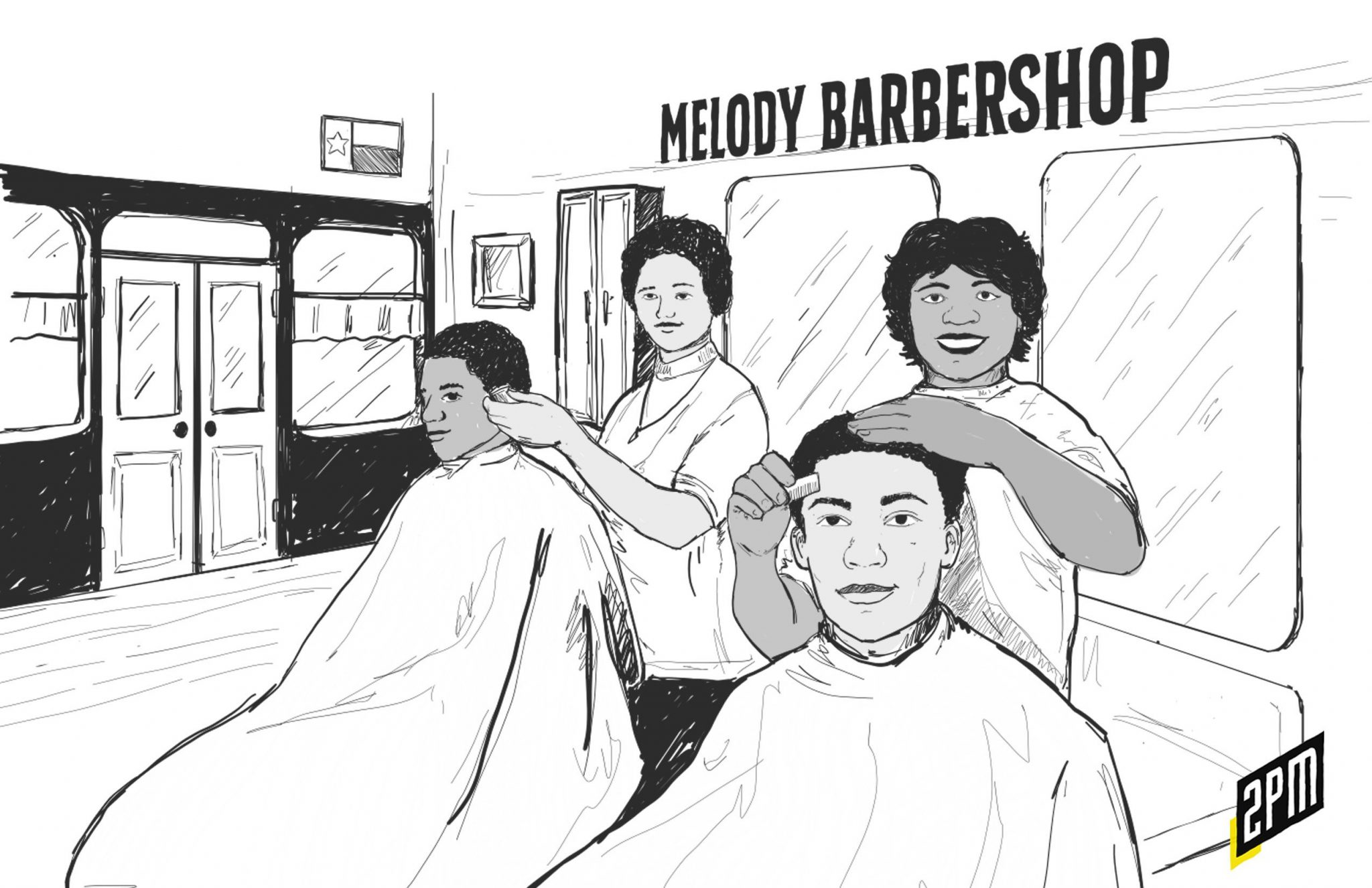
With her meager savings, she launched two businesses that operated in tandem. Both companies were within the same strip mall and they’d feed each other business for decades. A licensed barber and realtor, “Melody” became her calling card. By the mid-1950’s, the barbershop generated substantial cash flow, allowing her to hire staff and procure basic wholesale partnerships. Her storefront would double as a beauty supply retailer, amplifying her earnings by catering to an audience with few places else to shop. This should sound like a familiar strategy. Her clientele was working class and upwardly mobile, a trend that would continue throughout the Civil Rights era.

Many would eventually buy homes in the area Northeast area of downtown Houston. Melody Realty would be one of their guides. The Fifth Ward was an area where Black Americans could buy homes without political or social persecution. Regardless of one’s wealth, the city’s affluent remained deed restricted – first legally and then by proxy. The middle-class son of a Texas Instruments engineer and flight attendant, I’d later be born in that same downtrodden area in 1983. Thirty years later, the city’s deed policies remained. There’s always a wait.

TKZQ5LWw
Pictured: Dorothy, right, with her son.

Dorothy would later become one of the preferred real estate agent of her area. In this way, her storefront operated as a funnel. Her Melody brand of business blended short-term cash flows with longer-term windfalls. It changed the trajectory of our family. James, an Army Air Corps veteran, and Dorothy would send six children to colleges across the United States throughout the 1960s and 1970s. All would graduate and five would go on to have children. By the time that we were born, the idea of college was an afterthought. It was just another task for us. And so was entrepreneurship.

Dorothy would enforce a strict policy for each of her children. My father and his siblings would be required to earn their barber’s license while in high school. This sense of economic independence would propel a number of those children to impactful lives in business, religion, and medicine. Today, Melody Realty continues to operate in the Houston area, a testament to her work.

Conclusion: Ending The Wait

By the time I was born, she’d complete classes at Rice University. She was omnipresent in our lives and she stressed the importance of sacrifice. Dorothy Smith’s life had a profound impact on my own. In our home, she’s taken the form of a superhero. Imagine being born into a world that penned you for one thing and then choosing to achieve something more. She’d send six kids to school before the United States provided her the right to vote. My father was 13 when the Voting Rights Act passed. There’s always a wait.

Dorothy was uncomfortable with Juneteenth because it was symbolic of the proverbial weight of an unnecessary wait. This same concept can be applied across generations, including our own. Dorothy would argue that she was nothing special. Imagine what her parents could have done with the freedoms that Dorothy possessed. I can envision Dorothy Smith atop of our industry, if she was born during my lifetime.

The story of upward mobility in America is one of waiting. In the 1800s, it was for freedom. It the early 1900s, it was waiting for the dignity of citizenship. In the late 1900s, it was the wait for legal equality. And today, it’s the wait for equity in treatment and opportunity. We’re still in the proverbial period of waiting.

Today, we are celebrating the overcoming of adversity. It’s not intended to be a pleasant memory. I’d have preferred to celebrate no Juneteenth at all. I am sure that Sallie and Dave Hill would have agreed. When you’re deserving of opportunity, every single moment without it will feel like a decade. Now, imagine how two years of waiting may feel. The daughter of field laborers, she birthed a generation of Black professionals. Her life was a force function that bent time. There should have been more Dorothy’s in the 1950s and 1960s. There should be more of her children. We have to recognize that an unnecessary wait is just as fraught as no opportunity at all.

The hope is that, today and every day forward, we work to bend time. The leadership of the industries that define American exceptionalism should reflect America. We should provide opportunity, fill executive suites, hire the best people, invest in resilient entrepreneurs, mentor, lead, build, uplift, and provide the freedoms that some Americans take for granted.

There are more Dorothy’s than we know and some of them are waiting. The 45 second pause between Weissman’s question and my answer likely made him as uncomfortable as it made me. In a better version of our world, I would have answered his question with ease. It’s critical that we identify our own unnecessary waits. Once we do, it’s our responsibility to end those waits with opportunity. It’s the one small change that can alter the course of generations.

Essay: Dorothy’s Grandson | Editor: Hilary Milnes | Art: Alex Remy | About