第 304 期:应用内受众

inappaudiences.jpg

If you’ve built a great product, you’ll need an audience. And if you’ve built a captive audience, you’ll need a great product. Spotify has one of the most captive audiences in the entertainment industry. The most recent measure places Spotify’s paid subscriber cohort between 90-95 million. This is an extraordinary number of consumers with a payment method on file. But most importantly, it’s an opportunity for the streaming music company to continue evolving with the digital commerce economy. An unconventional leader in this respect, Epic Games and the metaverse could teach Spotify the most about what’s possible with licensing partnerships and micro-transactions.


Member Brief No. 1: Linear Commerce

The digital economy rewards the companies that work along the line that separates traditional digital media and traditional eCommerce. A great product needs an organic and impassioned audience. Captive audiences need products and services to offer the community. Linear commerce is the understanding that digital media and traditional online retail will eventually meet at the center – along the line – the most efficient path for growth.


线性商务

Spotify’s ability to overcome Apple’s recent and notable growth will hinge on the service aligning their brand with exclusive partnerships. The platform’s defensibility will be closely tied to their faculty to “sell” their product. While this is of little surprise, Spotify’s future may be influenced by how it sells content and physical products.

No. 287: Spotify’s Brand Potential

Audience and then commerce; or commerce to build the audience. Spotify identified an opportunity that – in the short term – will benefit its unpaid and premium consumers alike. And, in the long term, will benefit Spotify if Gimlet Media continues to create content that other platforms want to license for large-scale projects. But perhaps the most significant example of linear commerce, from the past week, was Fortnite’s Marshmello concert (see here).
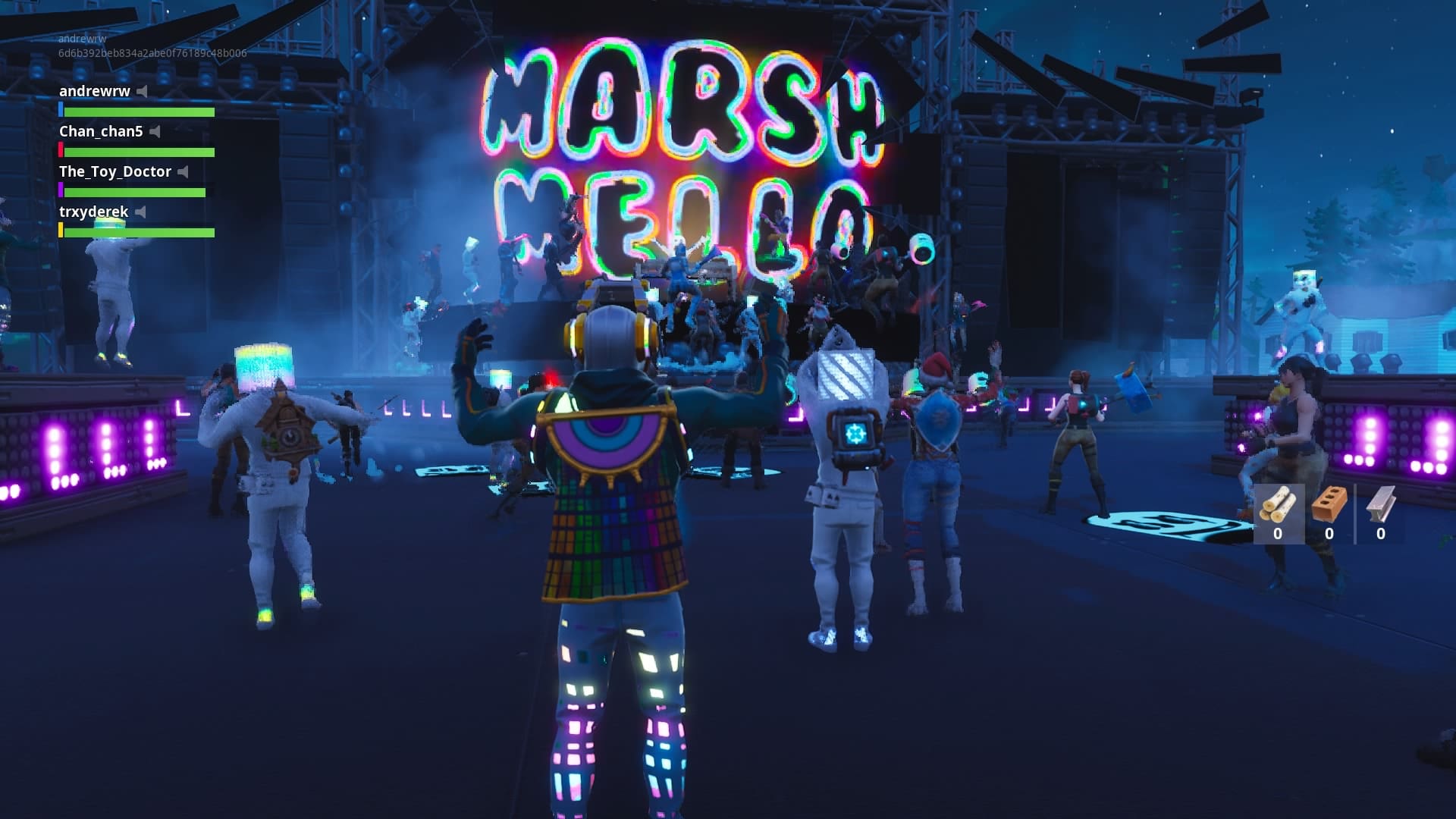
Pictured: a screenshot of the in-game concert

Fortnite, “The Oasis.” This Saturday, Fortnite teamed with EDM performer Marshmello to debut a new concept for attracting and monetizing digital audiences. An estimated 10 million users were “present” (active in the game) for a live, in-game, digital concert that tested the boundaries of our definition of reality. Millions more watched the streams online. For days, the DJ set had been teased throughout the game by way of signage and in-game posters. Fortnite allowed players to enter the stage area in “Pleasant Park”, a well-known area in the game’s playing field. The game automatically removed all of their weapons so none of the attendees could be removed.
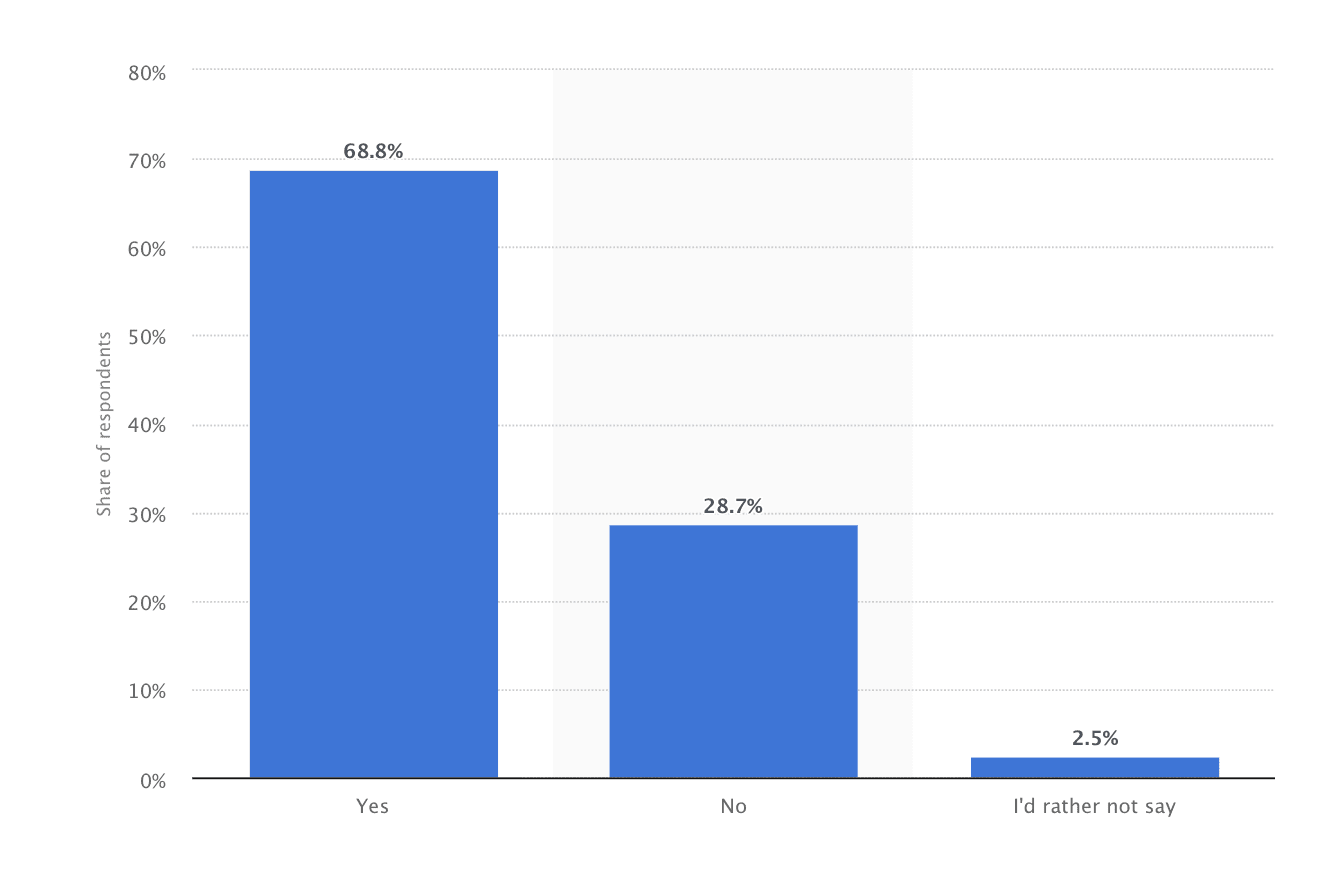
Share of Fortnite players who have ever spent money on in-game purchases (June 2018: LendEDU / Pollfish)

Epic Games was reported to have generated a “sizable sum” in microtransaction revenue from two of Fortnite’s in-game properties: skins (appearance) and emotes (dance skills).

The value of Gimlet Media

The traditional podcast network like PodcastOne, Midroll, and Headgum monetizes groups of podcasts by negotiating advertising rates and / or providing the podcasts with production expertise. There are dozens of podcast networks, but few are built as direct-to-consumer operations. Gimlet Media is one of them; they own and administer the podcasts that they broadcast. This could potentially provide value to Spotify in three ways:

Advertising revenue: podcasting’s main revenue stream is ad sales, but the entire industry generated north of $360 million in sales in 2018. Spotify will be able to count on a new revenue stream. But there is also Gimlet’s innovation in co-branded podcasts. Led by Creative Director Nazanin Rafsanjani, the podcast network has partnered with the likes of eBay, Virgin Atlantic, Microsoft, Gatorade, Reebok, Squarespace, and Lyft. When the deal is finalized, I’d expect this to continue.

Premium listens: speaking of advertising, consumers don’t enjoy listening to the same five ads about meal kits and recruiting. Spotify can now market that their Gimlet podcasts have no ads, potentially driving more listens of the streaming music app. By advertising ad-free podcasts, the content can be used to convert trial and regular subscribers.

Intellectual property and licensing: Spotify isn’t just acquiring a podcast network, they’re bringing a proven creative group in-house. Reply All, one of Gimlet’s properties, is reportedly in the early stages of film development. In 2016, rights to their Homecoming podcast were purchased by Universal Cable Productions. In 2017, Variety magazine reported that director Richard Linklater would lead the adaption of their “Man of the People” episode. It is last slated to star Robert Downey Jr. And in 2018, ABC debuted a sitcom based upon the founder of Gimlet media and their StartUp podcast called Alex, Inc.

Like Wondery and Parcast, Gimlet Media is more than a traditional podcast network. Paired with the streaming giant’s sizable and enthusiastic user base, Gimlet’s properties can become more valuable to potential media buyers. With the added listeners that Spotify would be able to provide, Gimlet could increase the opportunities that it has to license intellectual property or sell the television rights to high paying media partners like Netflix, Hulu, Showtime, and HBO.

The pending acquisition of Gimlet Media is about more than building a direct-to-consumer podcasting powerhouse, it’s about monetizing DTC audio in new ways. Spotify doesn’t own the music that millions of us listen to, they license the rights from three music labels: Universal Music Group, Sony Music Entertainment Group, and Warner Music Group. With Gimlet’s pending acquisition, Spotify is positioning themselves squarely as the Netflix of audio. And Gimlet’s portfolio of audio properties could be another tool that Spotify uses to convert casual subscribers to premium, paid users. And incentivizing users to stay away from Apple Music.

Gaming platforms like Epic Games‘ Fortnite and PUBG have captivated audiences while storing their payment methods for ease of purchase. And services like Netflix and Spotify are learning that they can do the same. The monetization of audiences through innovative, exclusive partnerships will continue to build a foundation for how media companies address a metaverse-driven economy. By reclassifying app downloads as the beginning of a sales funnel (rather than its end), digital content communities can reframe the value of their content.

Read your No. 304 curation here.

报告人:Web Smith |大约 2PM

第 287 期Spotify 的品牌潜力

Super

Spotify’s chief marketer is leaving Spotify and their next CMO has an opportunity to continue its sprint towards 50% market share. In his parting words with AdWeek, Seth Farbman said:

By all measures, we’ve achieved [our] goals, but we’ve also done something most companies only dream of doing—we’ve turned affinity for the Spotify experience into love for the brand. 

And he’s correct. During his tenure, Spotify found ways to grow brand equity despite the offensive by Amazon and Apple Music. The numbers from January to June tell the story. Spotify maintained a 36% market share with a total of 83 million subscribers. Apple grew 2% market share, reaching a 19% stake of the market (43.5 million subscribers). While Spotify added 11.9 million subscribers, Apple has grown 9.2 million members. And Amazon added a half a point of market share, currently holding 12%.

But according to reports, Apple Music is set to overtake Spotify in terms of paid subscribers. Apple’s early Apple Music strategy consisted of music exclusives (Chance the Rapper, Drake) and live DJ sets (Zane Lowe, etc).

The relationship between Drake and Apple Music benefited both parties. Apple Music got first dibs on Drake’s record-breaking 2016 album Views, while the rapper is now the avatar for the paid music streaming era.

An often overlooked part of Apple Music’s library is Beats 1 radio, which in the case of Drake, who has his own OVO Radio show named after his recording imprint, means his fans have a reason to hold onto their subscription even if no new album on the horizon. Artists like Bad Bunny, Pharrell, Deadmau5, Elton John, Charli XCX, and Frank Ocean all have their own Beats 1 shows, reaching dedicated fans who’d rather connect with their favorite musician than trust an algorithm for song recommendations.

Slate: Why Apple Music is Winning Spotify’s Game

The the recent strategy seems to be Apple’s deepening moat around its hardware. While Spotify’s brand is more beloved, Apple has a growing technical advantage: its devices. By all accounts, iPhone and Airpod users are discouraged from choosing Spotify over Apple Music through subtle UX and Siri roadblocks, akin to Apple’s preference of Maps over Google Maps. This is most noticeable when attempting to control the Spotify app through your Airpods or playing music on your lock screen. In Spotify forums, moderators and community members are advocating that users delete Apple Music if they want a better Airpod x Spotify experience.

Apple’s continued growth will be closely tied to how well it develops Apple Music into the iPhone’s default. By cutting off Spotify’s seamless performance with Apple phones, their strategy is similar to Instagram’s uncoupling from Twitter’s timeline. By making it difficult for Twitter users to view Instagram photos, Facebook fostered its own ecosystem of engagement. Apple is benefitting from the same.

Apple music is for music enthusiasts and Spotify is for casual listeners. While Apple Music believes that this is their advantage, it is Spotify’s key differentiator. And it could decide the future of streaming.

By design (according to Jimmy Iovine), Apple Music makes it difficult to discover music. He believes that the service should exist for music lovers; Spotify is quite the opposite. The platform’s entire user experience is designed around (1) the promotion of artist discovery and (2) amplifying pop music’s inertia. Either you’re learning something new, thanks to their algorithmic and manually-curated playlists or you’re being steered towards the songs that are popular. Apple deemphasizes discovery, in this way.

Spotify’s ability to overcome Apple’s recent and notable growth will hinge on the service aligning their brand with exclusive partnerships. The platform’s defensibility will be closely tied to their faculty to “sell” their product. While this is of little surprise, Spotify’s future may be influenced by how it sells content and physical products.

Brands have sounds too

Screen Shot 2018-09-17 at 10.36.45 AM
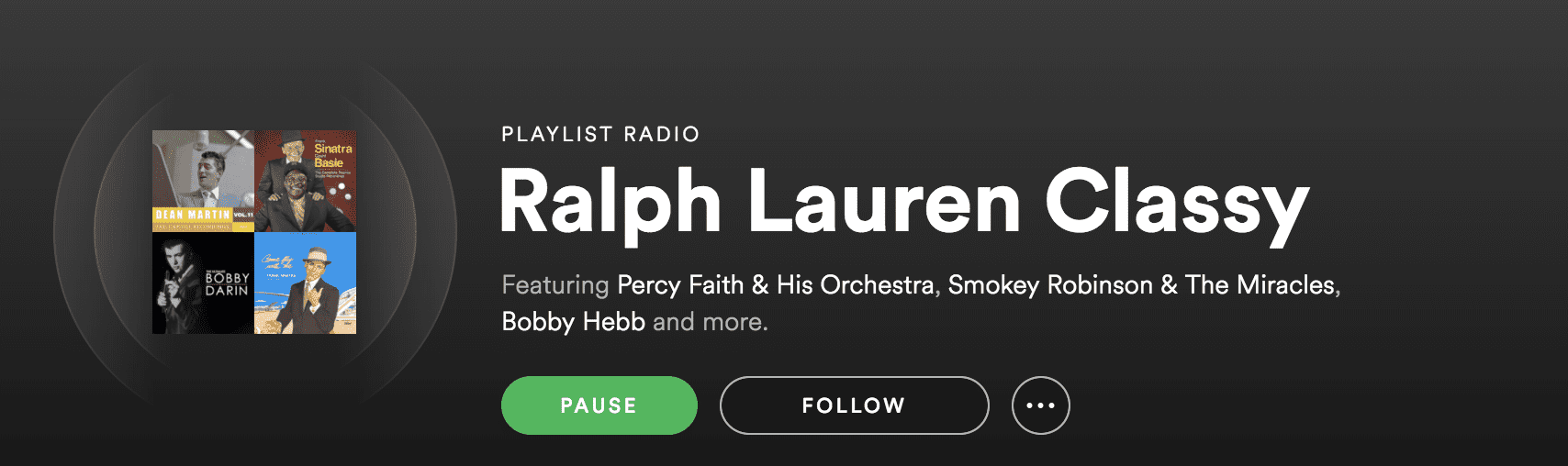
One of dozens of user-generated playlists.

There’s a vibe when you walk into Ralph Lauren’s restaurant in downtown Chicago. The walls are mapped in gold framing, velvet, and vintage pictures of anyone who’s ever worn a tuxedo and evening gown well. But something sticks with you long after you leave, the restaurant’s music.

In a conversation with Lean Luxe founder Paul Munford, he had this to say about his effort to build his media brand through music playlists:

Keeps people engaged, keeps things interesting and fresh. Gives folks something cool to listen to each week under the LL banner. Keeps the brand top of mind in that way. It’s not a huge thing but is just another plot point for the brand that adds to the total sum, so to speak. Plus, it’s fun. I don’t think people are used to media or publications behaving this way. But that’s not to say the interest for publications to do more things like this isn’t there. You never know until you try.

Browse Spotify for your favorite retail brands and it’s possible that the brand will have some presence in the app, whether through an official brand playlist or – more commonly – as a fan-generated project. You’ll find “The Glossier Megamix”, “Ralph Lauren Classy”, “Lululemon Spring 2018”, and dozens of lists devoted to Victoria’s Secret. Spotify has a unique opportunity here. More and more brands are using playlists to shape their brand image. Music can provide a halo effect that helps to keep retailers at the top of consumer minds.


2PM 数据

Screen Shot 2018-09-17 at 11.14.42 AM
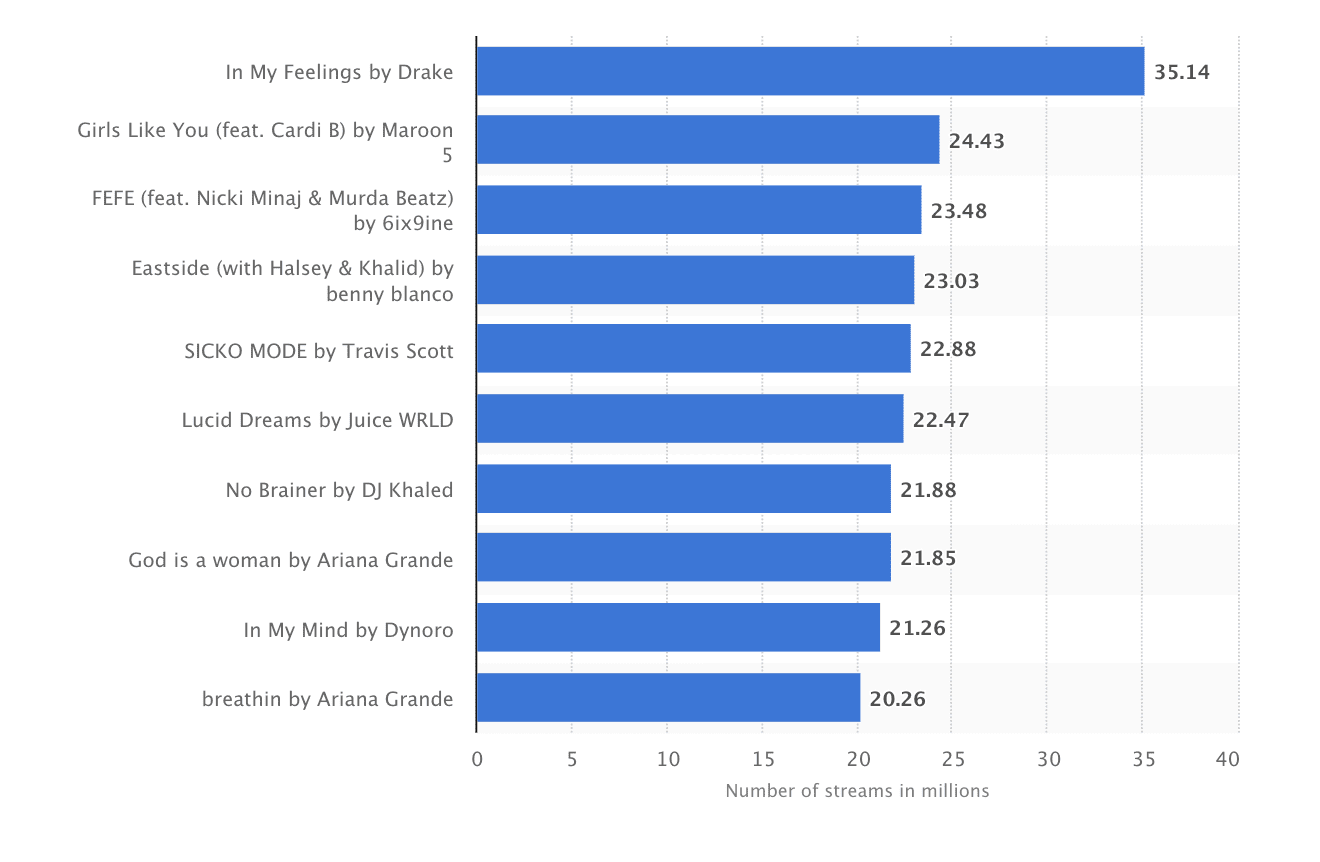
August 2018 on Spotify: “Lucid Dreams” and “In my Mind” bolstered by Spotify playlists
Screen Shot 2018-09-17 at 11.15.10 AM
Method for music discovery (United States: 2018)

Growing playlist spins through partnership

Given Spotify’s recent decision to secure exclusive podcast partnerships with two celebrities, it’s clear that partnerships are on the executive team’s whiteboard. But this isn’t just about performers and brand evangelists aligning with Spotify. Spotify takes pride in experimentation and, as such, the company is primed to take a page out of Apple Music’s original playbook. The streaming service could make great progress by emphasizing its partnership division.

By the time a song lands on Today’s Top Hits or other equally popular sets, Spotify has so relentlessly tested it that it almost can’t fail. “There are very few artists that get into the flagship playlists and then get kicked out,” Holmsten says. When “Call On Me” made that list, it was already destined to go viral—even though most people had still never heard it.

WIRED: on the power of Spotify’s playlists

Spotify has been somewhat of a kingmaker for independent artists and on-the-bubble pop stars. To amplify this effort, Spotify is overdue to take a page out of the direct-to-consumer marketing playbook. Here are the top proposed partnerships with physical “retailers.”

By attaching discovered music to positive, physical retail experiences, Spotify can amplify a key performance indicator (KPI): repeat listens of new and popular music. Here are a few ideas:

  • Orange Theory | OT has earned a network of over 1,400 locations and a loyal following of fitness enthusiasts and business travelers.
  • Core Yoga | This studio is known for its unique practice and a franchise network of over 160 locations.
  • Soho House | The famed members-only club has 50,000 members and a unique vibe in each of its 23 locations.
  • WeWork | Their offices manage 100,000+ members and over 10,000,000 sq. ft. of workspace.
  • Delta Airlines | known for its pre-flight track list, the premium airliner has the ability to set the mood and the wifi for the Spotify deep-dive to continue throughout the flight.

By generating playlist spins through these locations, Spotify can accomplish two things: (1) generate more revenue for artists and (2) convince artists to sign exclusive deals by way of guaranteed minimum spins per month based upon estimated engagement times at Spotify’s potential retail partners.

Apple Music is catching up to Spotify’s by building a competitive advantage into its hardware; the Cupertino company has grown despite glaring weaknesses in the app’s user experience. Spotify may not be able to ship hardware like its chief competitor but that doesn’t mean that it cannot partner with physical retailers. They can redefine their approach to hardware. Beyond their superior engineering, Spotify’s chief advantages could be their partnerships with retail spaces, up-and-coming musicians, and exclusive content offerings. Spotify has an opportunity to find an advantage where Apple has yet to look.  Spotify’s CEO says it best,

I think long term, we at Spotify have some defensible moats, but success for us will be determined by our ability to move faster than everyone else in the space. And just keep on innovating.

Read more of the issue here.

By Web Smith | About 2PM

第 285 期:所有权的终结

所有权
场景:租用产品带来的完美度假体验。

去度假时,毫无疑问至少会遇到一对夫妇,他们会拍下自己完美的早午餐体验照片。他们打了一辆Uber前往附近地区,要求司机在 17 分钟的车程中播放他们最喜欢的Spotify播放列表。他们没有走完最后 0.7 英里的路程,而是抓起 "Bird's"前往早午餐地点。嘿,这样风景更美,更令人难忘。丈夫跟在后面,这样他就能拍到妻子的Rent the Runway裙子随风飘扬的完美瞬间。当他们终于到达座位时,他又用Parachut 提供的数码单反相机为妻子拍了一张照片。这是一次完美的体验。

让我们来分析一下访问权与所有权的关系: 

  1. 他们没有开车,而是使用了 Uber。
  2. 他们没有听自己的音乐,而是访问了 Spotify 播放列表。
  3. 他们没有步行 0.7 英里,而是使用了 Bird 滑板车。
  4. 她没有拥有这条裙子,而是从天桥上租来的。
  5. 丈夫没有购买 iPhone,而是通过 AT&T 获得了一部。
  6. 妻子没有配置自己的数码单反相机,而是通过 Parachut 购买了一台。

但这段记忆在很大程度上属于他们自己。他们拥有这段记忆,而这段记忆在美国人存储他们的时刻的地方得到了很好的记录:Instagram。这个地方保存着我们真正想要拥有的东西。最重要的是,我们在乎拥有美好的瞬间。这对夫妇通过租赁物品来拥有一段经历。


第 265 期:DNVB 能否实现现代奢华

购买体验胜过购买消费品是奢侈品群体的一种趋势。对于那些有能力和意识在DNVB品牌购物的顾客来说,奢侈品一词的含义完全不同。斯基弗特(Skift)的最新研究表明,高端游客对更具变革性的旅游体验的需求发生了明显转变(Skift / 2017年5月2日)。过去,昂贵的产品是消费者的愿望:而现在,产品、社区和服务扮演着促成体验经济的角色。


什么是使用经济? 一种由商业模式驱动的经济,在这种模式下,实物商品和服务的交易以使用权而非所有权为基础:它指的是临时租用而非永久出售。

如果你问Joymode 首席执行官乔-费尔南德斯(Joe Fernandez),他会告诉你一场消费革命即将到来。越来越多的访问经济公司创始人和高管都持有这种观点。这也是有道理的。考虑到该领域的初创公司,如Rent the RunwayArmariumParachutFor Days。这些初创公司提供硬商品,以换取每月的订购费。对于消费者来说,这种转变不仅仅是个人经济学或降低拥有成本的问题。它重新定义了 "拥有 "的含义,以及永久拥有产品是否比使用产品更有价值。有些人认为,使用就是拥有。

宝马正在测试名为 "Access "的新项目。以下是 The Verge的安德鲁-霍金斯(Andrew Hawkins)摘录的内容:

每月支付 2000 美元,用户可以选择 X5 SUV、4 系和 5 系轿车等车型,包括所有插电式混合动力版本。如果每月支付 3700 美元,用户可以获得 M4、M5 或 M6 敞篷车以及 X5M 和 X6M SUV,但不包括宝马最高端的 7 系列。宝马表示,该费用包括保险、保养和道路救援。

消费主义是美国基因的一部分,是我们的驱动力。它为我们的国民经济提供动力,促进国际贸易,激励创业创新。但是,即使是一个不经意的观察者,也能理解电子商务所加速的商品积累是如何产生有害影响的。看看《大西洋月刊》最近一篇文章中的这段话 大西洋"我们积累了堆积如山的物品 "

在各种因素的共同作用下,美国人正在囤积大量物品。在互联网出现之前,我们必须留出时间去逛逛实体店,而实体店每天只有一定的营业时间。现在,我们可以随时随地购物--在工作、锻炼甚至睡觉的时候。我们可以告诉阿莱克莎我们需要新内衣,几天后,内衣就会送到家门口。而且,由于制造业的全球化,内衣比以往任何时候都便宜,便宜到我们不假思索地就把它放进了网上购物车。 

在许多方面,Joymode都走在了改变消费者行为的前沿。乍一看,人们很容易将 Joymode 看作是一家活动公司,一个去玩乐的地方。但这只是第一眼。进一步了解他们的产品后,你会发现特色产品都是日常用品。从 Oculus Rift 套件到露营必备品,该平台租赁的产品应有尽有。既有活动产品,也有日常生活产品。这不禁让人好奇。如果事情发展到这一步,我们的衣橱、橱柜和地下室里到底还需要多少产品呢?

Screen Shot 2018-09-04 at 12.30.52 PM
基本产品。我们需要拥有它们吗?

人们的消费方式正在发生文化转变,这将带来巨大的反弹。我很高兴我们能参与其中。本周末,超过 15,000 件产品离开了Joymode的仓库,下周它们将全部返回并进入不同的家庭。大量的人厌倦了债务、杂乱和浪费的恶性循环。

乔-费尔南德斯,Joymode 联合创始人兼首席执行官 

费尔南德斯是Klout 的前创始人,他坚信所有权的未来。与Rent the Runway 等公司相比,他的任务可能更艰巨。与普通家居用品相比,有偿使用服装的门槛可能略低。但我们的分析表明,将会有更多的品牌进入租赁服务领域。这不再仅仅是降低成本的问题。

许多宏观经济指标都支持费尔南德斯的观点:城市化进程加快、住房租赁社区增加、千禧一代债务负担加重、流媒体娱乐增长,甚至我们的旅行方式。作为消费者,你拥有更少的东西。但这些物品将根据你的具体需求进行个性化定制。 人们开始重新定义购买的必要性,因为使用权实际上就是所有权。他们购买的是志同道合的消费者社区。他们花钱购买的不仅仅是产品。他们花钱购买的不仅仅是获得产品的机会,而是进入一个相信理想的集体。而这个理想可能会改变零售业,无论好坏。

作者:Web Smith | 编辑:Meghan Terwilliger |约 2PM