
成员简介:全渠道涅槃

双方都在寻求全渠道的涅槃。

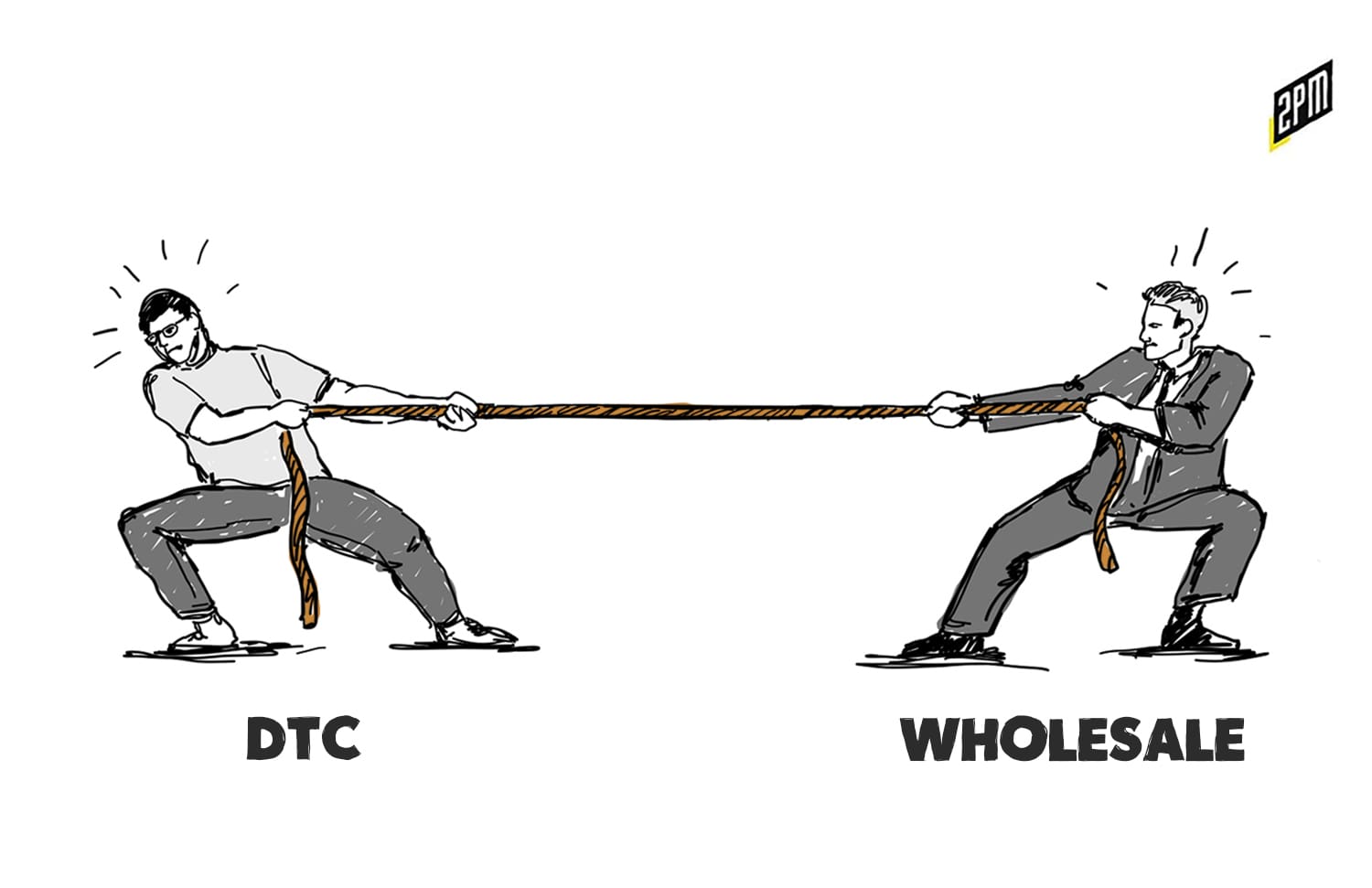
耐克公司专注于其直接面向消费者的战略,在这一过程中伤害了百货商店和专卖店,而 Allbirds 则与批发商亲密合作。在考虑品牌知名度和单位经济效益的全渠道战略中,这是一个有趣的悖论。拥有销售速度和地位的品牌可以并将会转向自有商店/DTC 模式。努力实现盈利并扩大规模的品牌则转向第三方零售批发合作。

一个循环似乎正在形成:通过与批发商合作达到临界质量的数字原生品牌和传统品牌,最终可能会放弃数字优先战略。

这只是 DTC 玩法脆弱状态的又一个迹象,也是当前影响零售业的宏观趋势。自发布以来的短短一周内,本周二下午 2 点前概述的两个关键商务趋势及其连锁反应开始实时上演。摘自数字商务全球峰会演讲:

实体到数字:零售商从第三方零售商撤出

对于各种规模和地位的品牌来说,一个主要的战略是有意识地精心创建一个批发网络,以便控制库存和建立合作伙伴关系,而不是像过去几代人那样采用喷洒和喷洒的零售方式。随着品牌专注于自有渠道,第三方零售商所扮演的角色将越来越小,也将与以往不同。这就是一个很好的例子:到 2027 年,耐克的直销比例将达到 70%。

从数字到实体:DNVB 正在开放自有购物体验

对于网络品牌来说,扩张正在店铺层面进行。实体店提升了品牌的网络光环,如果做得好,还能赚钱。风险在于避免过度零售。随着这种扩张,商场也将按照 DTC 的形象进行改造。

Allbirds 本周的财报显示,该公司需要重新考虑其实体店和批发战略。据 CNBC 报道,该品牌公布的成本增加侵蚀了利润,导致股价下跌。开设零售店是一项主要支出。为了收回销售额,Allbirds 表示将通过第三方零售商进行销售,并指定 Nordstrom 为其批发合作伙伴。WWD 最近的一篇文章对此作了解释:

Zwillinger 说,公司将主要在美国和少数欧洲零售商中开展批发业务,未来还计划在亚洲开设分店。他说,这些商店将无法获得 Allbirds 的全部产品,只能选择最适合其细分市场的产品。Zwillinger 说,为了保持 Allbirds 过去五年来一直保持的定价完整性,他们在促销时销售的产品将受到限制。

为了回归其 DTC 根源,Allbirds 需要发展业务,建立更强大的品牌资产,同时保持首席执行官 Joey Zwillinger 在对 WWD 的评论中提到的单位经济效益(定价完整性)。耐克拥有长达几十年的优势,这种比较并不公平,但这种逆转正是耐克目前重建分销模式的方式。据 NPD 集团称,耐克与阿迪达斯和斯凯奇一样,都是自己最好的零售渠道。

耐克的直接零售战略庞大而细致,将商店概念、游戏、应用程序和 Web 3.0 都考虑在内。耐克计划在每一次互动中都拥有顾客,这对依赖耐克的零售商造成了伤害。鞋业新闻》(Footwear News)援引了耐克总部整合分销的紧迫性

对于耐克来说,积极的 DTC 战略导致该品牌终止了与 Zappos、Dillard's、DSW、Urban Outfitters、Shoe Show 等零售商的批发账户,使许多零售商无法在店内销售最受欢迎的品牌之一。耐克还削减了在现有供应商(如 Foot Locker)的产品数量,以巩固分销。

由于失去了耐克的部分门店,Foot Locker 公司报告的前景黯淡,股价下跌。而其他零售商,如 DSW、Urban Outfitters 和 Shoe Show,在耐克离开的消息传出后也面临着类似的市场压力。在品牌经历自身周期的同时,依靠品牌的商店也在经历自身的复兴。对大多数人来说,这既不是厄运,也不是阴霾。

如果我的假设是正确的,那么最大、最成熟的零售商留下的全渠道空白将由Allbirds和NOBULL这样的新兴现代品牌来填补。5年、10年或20年后,这些现代品牌可能会写下同样的故事,来展望自己的未来--这就是品牌、实体零售商和不断发展的分销战略之间共生关系的新形态。

一方面:盈利的传统企业品牌因放弃批发而转向 DTC 而成为新闻焦点。另一端:尚未盈利的数字原生品牌则因转向百货公司批发以寻求利润和规模而成为新闻焦点。

它们都在努力实现全渠道的涅槃。

作者:Web Smith | 编辑:Hilary Milnes,美术:Christina Williams

第 310 号博诺博斯曲线

bonoboscurve.jpg

The history of digitally native vertical brands (DNVBs) goes back just 12 years. However, the framing of the industry has evolved and so has its terminology. Appointed by Bonobos’ founder and current Walmart executive Andy Dunn in 2016, the DNVB acronym has given way to a simpler version: “DTC” or direct-to-consumer. It rolls off of the tongue and it’s all-encompassing – reporters, analysts, and sources like 2PM and Lean Luxe can apply the terminology across the board. For Bonobos and Dunn, there is symbolism in the paths of the company and the executive. It’s emblematic of the curve that many companies and executives will follow.

By the end of this, you may see how short-sighted the DTC descriptor can be. I believe that the acronym should be viewed as a title of a sales channel or perhaps an emblem of a retailer’s core competency. It’s a misnomer when product manufacturers are appointed the title DTC, as if it’s main channel denotes the character of the entire company. To the mere observer, the consumer has evolved. To operators within digitally native retail, it’s a complicated conversation.

Platforms like Shopify democratized opportunity for early-stage product manufacturers. Led by Tobias Lütke, the CEO led the burgeoning commerce platform at the onset of the Great Recession of 2008 and remains there today. Under his leadership, the company is trading at a $22 billion market capitalization. The timing of Shopify’s ascension is significant. By 2009, the Wall Street Journal was publishing articles like “Recession turns malls into ghost towns.” And given the lack of eCommerce presence for many of the brands that lived and died by big box retail, the macroeconomic effects on the worst recession of this lifetime thwarted brand sustainability. In some cases, the product manufacturers had to seek bankruptcy protection as overall consumer demanded dwindled between 2007 and 2010. This era of web-first retail was fortuitous, it happened at the weakest point for traditional brands in the last 60 years.

The retail industry has changed, not the consumer.

Younger brands had few if any places to turn to effectively market their products. With their lean teams and inexpensive architecture, these brands were capable of surviving the treacherous waters of American consumerism. In 2013, this is what Kevin Lavelle and I wrote for the Wall Street Journal in 2013:

Startups like ours can focus our energy on developing our product, service and brand because of the platforms and tools available today. With the emergence of new web applications and plugins, the face of e-commerce is changing dramatically. A business can launch a product or service worldwide and reach millions without the massive infrastructure investment required just a few short years ago.

[…]

Platforms such as Shopify and Stitch Labs have enabled Mizzen+Main, along with myriad other companies, to focus on brand and product first — essentially democratizing e-commerce. That’s not revolutionary news, but with the robust, cloud-based add-ons available, we really can run an entire business with two partners in two states and nearly all systems run virtually. 

Most challenger brands focused on direct to consumer sales in 2007-2014 because distribution through the likes of department stores, Walmart, and Target were inside games navigated by industry veterans. Coupled with this historic economic downturn, there was little to no access to those channels. And when their were, ERP technology was difficult for newer brands to adopt. In short, those distribution deals were difficult to land.

In this way, direct to consumer sales efficacy was a sort of social proof for potential big box retail contracts. These contracts are much easier to land now; big box retailers invite breakout challenger brands to their shelves. This is enabling traditionally digitally native companies to expand their physical footprints by way of owned storefronts and wholesale agreements.


Bonobos Curve: the path of diffusion from a siloed direct to consumer (DTC) method to a holistic organization of online channels (native, marketplace), physical brand stores, and wholesale partnerships.


By the time that Andy Dunn wrote the heralded rise of digitally native vertical brands, his company successfully raised over $120 million with at least a dozen Bonobos Guide Shops and a nationwide partnership with Nordstrom. In his famed blog, he discussed this in detail:

While born digitally, the DNVB need not end up digital-only. This means the brand can extend offline. Usually its offline incarnation is through its own experiential physical retail, or pop-up strategy, or highly selective partnerships. In nearly all cases of partnerships with third parties, the brand controls its external distribution versus being controlled by it.

Assuming that the economy continues to hold steady and Tier A and B malls continue redeveloping real estate to attract this new wave of brands and their followers, we will see the curve continue and with rare exception. Even companies like Glossier, who are notably opposed to diverging from DTC marketing, have begun to invest in physical retail. And there will be more. In this way, the retail has boomeranged. The retail industry has changed, not the consumer.

Below, is the “Bonobos Curve.” This is the behavioral path toward sales maturity that the brand winners of this era will pursue. As such, many of the most successful brands have relationships with Nordstrom, Macy’s, Target, Walmart, or direct partnerships with progressive mall development companies.

A typical path followed by DTC brands | Souce: 2PM

Few brands will remain online-only. In a recent conversation with Betakit, Shopify discussed their plans to address the “Bonobos Curve”:

The pair see vast opportunity for Shopify to grow in the brick-and-mortar retail market. It’s Shopify’s goal, stated Black, to span the entire ecosystem to meet the needs of all its merchants. He emphasized that it doesn’t matter if merchants approach Shopify from a Shopify Plus standpoint or from Shopify Retail, the company hopes to create seamless solutions that span both markets.

Legacy product marketers, like P&G, have equipped their brand management teams to infuse their operations with many of the same tools and practices that their challenger brands counterparts made popular. It’s true that those challenger brands will mature with online retail operations as a core competency. Given the age of many of today’s founders, digital-first competency will be as natural as walking or eating.

But DTC was never the goal of these retailers and consumerism hasn’t evolved as much as we’d like to believe. Brand traction was the goal for many brands like Bonobos and platforms like Shopify, WooCommerce, and BigCommerce leveled the digital playing fields for a while. Time will tell who holds the advantage as brands compete on traditional grounds but Andy Dunn is now a Walmart executive. And Bonobos is a Walmart brand with flagship stores and Nordstrom distribution. This represents the end of the curve and the closing of the Book of DNVB.

Read the No. 310 curation here.

报告人:Web Smith |大约 2PM

Member Brief No. 14: The Brand Co-sign

facebook-ad 副本 2

Introduction to intra-package advertising. About four months ago, a few things happened in a short period of time. There began early conversations around Facebook and Google’s privacy shortcomings, marketers began discussing ever-increasing top funnel advertising costs, and I began thinking through methods for vertical brands to offset their growing logistical costs. To solve for all three, I proposed a simple solution to a few high-volume, brand equitable retail startups: offer promotional space within your existing packaging to a like-minded brand. Add value to a buyer’s unboxing experience.

本会员简报专为以下人士设计 执行委员为了方便加入,您可以点击下面的链接,获取数百份报告、我们的 DTC 权力清单和其他工具,帮助您做出高水平的决策。

在此加入