
Member Brief: Omnichannel Nirvana

The two sides are seeking omnichannel nirvana.

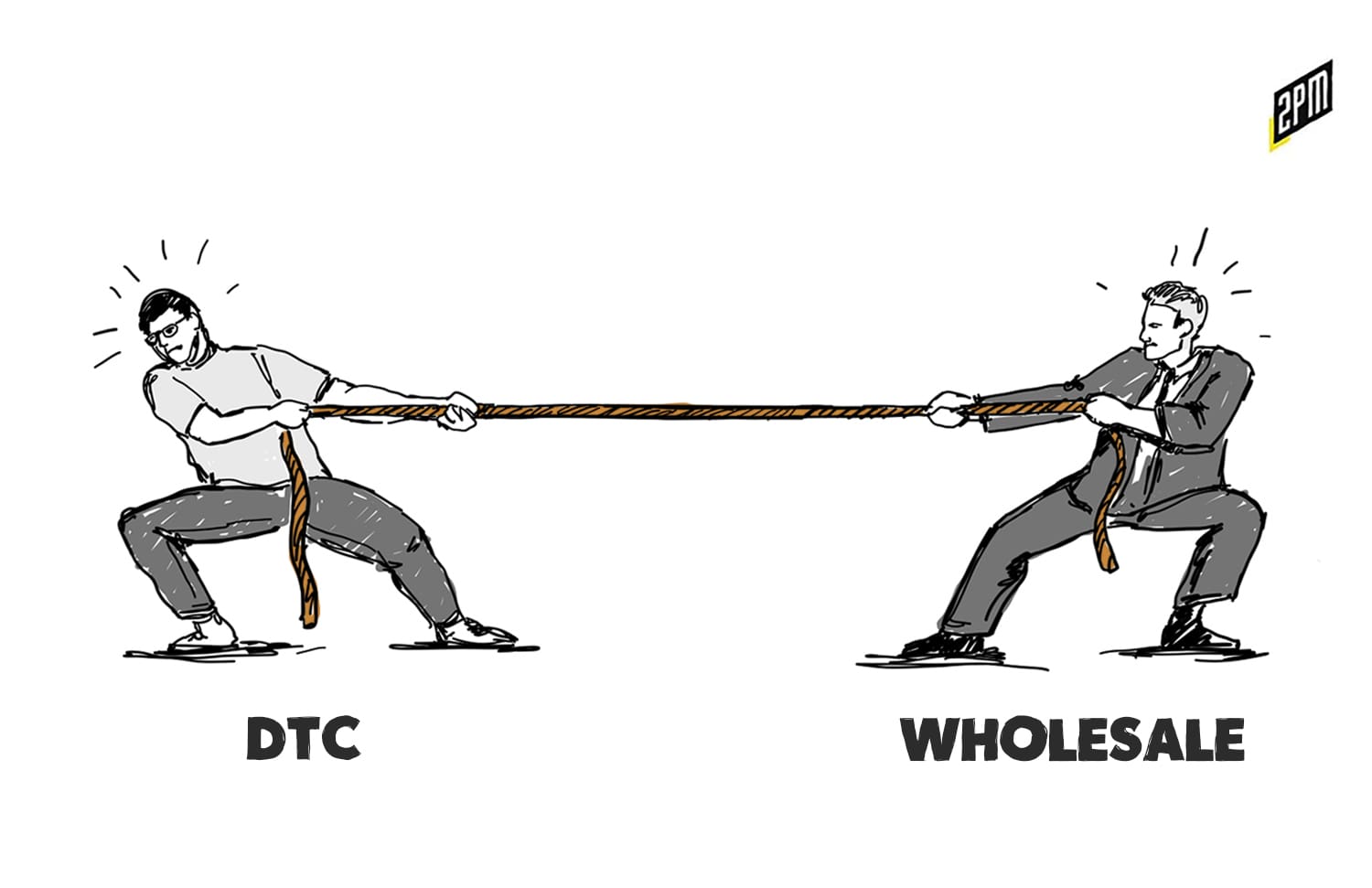
As Nike focuses on its direct-to-consumer strategy, hurting department and specialty stores in the process, Allbirds is cozying up to wholesale. It’s an interesting paradox in omnichannel strategy that takes brand awareness and unit economics into consideration. The brands with sales velocity and stature to own their distribution can and will move towards an owned-store / DTC model. Brands working to reach profitability and scale are moving towards third-party retail wholesale partnerships.

A cycle seems to be forming: digitally-native and traditional brands that reach critical mass by working with wholesalers may eventually resign to a digital-first strategy.

This is just another sign of the vulnerable state of the DTC playbook and follows this macro-trends shaping retail right now. In just one week since publishing, two key commerce trends and their ripple effects outlined by 2PM on Tuesday began playing out in real time. From the Digital Commerce Global Summit presentation:

Physical-to-digital: Retailers are pulling back from third-party retailers

सभी आकार और स्थिति के ब्रांडों के लिए एक प्रमुख रणनीति जानबूझकर और सावधानीपूर्वक एक थोक नेटवर्क बनाना है जो पिछली पीढ़ियों के स्प्रे-एंड-प्रेयर दृष्टिकोण पर इन्वेंट्री नियंत्रण और साझेदारी की अनुमति देता है। जैसे-जैसे ब्रांड अपने स्वामित्व वाले चैनलों पर ध्यान केंद्रित करेंगे, तीसरे पक्ष के खुदरा विक्रेता पहले की तुलना में छोटी और अलग भूमिका निभाएंगे। उदाहरण के लिए: 2027 तक नाइकी 70% प्रत्यक्ष हो जाएगी।

Digital-to-physical: DNVBs are opening owned shopping experiences

ऑनलाइन ब्रांडों के लिए, विस्तार स्टोर स्तर पर हो रहा है। भौतिक स्टोर ब्रांड के ऑनलाइन प्रभामंडल को बढ़ाते हैं और अगर सही तरीके से किया जाए, तो कमाई का जरिया भी बनते हैं। जोखिम यह है कि ज़रूरत से ज़्यादा खुदरा बिक्री से बचा जा सके। इस विस्तार के साथ, मॉल को डीटीसी की छवि के अनुरूप बनाया जाएगा।

Allbirds’ earnings this week underscored its need to rethink its physical store and wholesale strategies. According to CNBC, shares fell after the brand posted mounting costs that ate into profits. Retail store openings were a top expense. To recoup sales, Allbirds said it would be selling through third-party retailers, naming Nordstrom as its wholesale partner. A recent WWD article explained:

The company will start wholesaling primarily in the U.S. as well as a small number of European retailers, with Asian stores in the plans for the future, Zwillinger said. He said the stores will not be given access to the full Allbirds assortment but select products most appropriate for their market segments. They will be limited in what they can sell on promotion to maintain Allbirds’ pricing integrity that it has maintained for the past five years, Zwillinger said.

To return to its DTC roots, Allbirds will need to grow its business and build stronger brand equity while maintaining the unit economics (pricing integrity) that CEO Joey Zwillinger cited in his comments to WWD. Nike has had a decades long advantage and it is an unfair comparison but this reversal is how it’s currently rebuilding its distribution model. According to NPD Group, Nike, along with Adidas and Skechers, is its own best retail channel.

Nike’s direct retail strategy is vast and nuanced, factoring in store concepts, gaming, apps and Web 3.0. Its plans to own the customer at every interaction is hurting retailers that have come to rely on it. Footwear News cited an urgency to consolidate distribution at Nike headquarters:

For Nike, an aggressive DTC strategy has led the brand to terminated wholesale accounts with retailers like Zappos, Dillard’s, DSW, Urban Outfitters, Shoe Show and more, leaving many retailers without the ability to sell one of the most popular brands in stores. Nike has also cut back on the amount of product it is offering in existing vendors, like Foot Locker, in order to consolidate distribution.

Foot Locker shares fell as it reported a grim outlook on the heels of losing some of Nike’s presence in stores. And other retailers like DSW and Urban Outfitters and Shoe Show have faced similar market pressures after news of Nike’s departure. While the brands are along their own cycle, the stores that rely on them are experiencing their own renaissance. It won’t be doom nor gloom for most.

If my assumptions are correct, the omnichannel void left by the largest, most established retailers will be filled by the up and coming class of modern brands like Allbirds and NOBULL. And then five, 10, or 20 years from now, the same stories may be written about these modern brands looking to build their futures – this is the new shape of the symbiotic relationship between brands, physical retailers, and evolving distribution strategies.

एक तरफ़: मुनाफ़े वाले, उद्यम-आधारित पारंपरिक ब्रांड थोक व्यापार से हटकर डीटीसी की ओर रुख़ करने के लिए चर्चा में हैं। और दूसरी तरफ़: अभी तक मुनाफ़े में न आने वाले डिजिटल-नेटिव ब्रांड मुनाफ़े और पैमाने की तलाश में डिपार्टमेंटल स्टोर थोक व्यापार की ओर रुख़ करने के लिए चर्चा में हैं।

वे प्रत्येक एक प्रकार का सर्व-चैनल निर्वाण प्राप्त करने का प्रयास कर रहे हैं।

By Web Smith | Editor by Hilary Milnes with art by Christina Williams

No. 310: The Bonobos Curve

bonoboscurve.jpg

The history of digitally native vertical brands (DNVBs) goes back just 12 years. However, the framing of the industry has evolved and so has its terminology. Appointed by Bonobos’ founder and current Walmart executive Andy Dunn in 2016, the DNVB acronym has given way to a simpler version: “DTC” or direct-to-consumer. It rolls off of the tongue and it’s all-encompassing – reporters, analysts, and sources like 2PM and Lean Luxe can apply the terminology across the board. For Bonobos and Dunn, there is symbolism in the paths of the company and the executive. It’s emblematic of the curve that many companies and executives will follow.

By the end of this, you may see how short-sighted the DTC descriptor can be. I believe that the acronym should be viewed as a title of a sales channel or perhaps an emblem of a retailer’s core competency. It’s a misnomer when product manufacturers are appointed the title DTC, as if it’s main channel denotes the character of the entire company. To the mere observer, the consumer has evolved. To operators within digitally native retail, it’s a complicated conversation.

Platforms like Shopify democratized opportunity for early-stage product manufacturers. Led by Tobias Lütke, the CEO led the burgeoning commerce platform at the onset of the Great Recession of 2008 and remains there today. Under his leadership, the company is trading at a $22 billion market capitalization. The timing of Shopify’s ascension is significant. By 2009, the Wall Street Journal was publishing articles like “Recession turns malls into ghost towns.” And given the lack of eCommerce presence for many of the brands that lived and died by big box retail, the macroeconomic effects on the worst recession of this lifetime thwarted brand sustainability. In some cases, the product manufacturers had to seek bankruptcy protection as overall consumer demanded dwindled between 2007 and 2010. This era of web-first retail was fortuitous, it happened at the weakest point for traditional brands in the last 60 years.

The retail industry has changed, not the consumer.

Younger brands had few if any places to turn to effectively market their products. With their lean teams and inexpensive architecture, these brands were capable of surviving the treacherous waters of American consumerism. In 2013, this is what Kevin Lavelle and I wrote for the Wall Street Journal in 2013:

Startups like ours can focus our energy on developing our product, service and brand because of the platforms and tools available today. With the emergence of new web applications and plugins, the face of e-commerce is changing dramatically. A business can launch a product or service worldwide and reach millions without the massive infrastructure investment required just a few short years ago.

[…]

Platforms such as Shopify and Stitch Labs have enabled Mizzen+Main, along with myriad other companies, to focus on brand and product first — essentially democratizing e-commerce. That’s not revolutionary news, but with the robust, cloud-based add-ons available, we really can run an entire business with two partners in two states and nearly all systems run virtually. 

Most challenger brands focused on direct to consumer sales in 2007-2014 because distribution through the likes of department stores, Walmart, and Target were inside games navigated by industry veterans. Coupled with this historic economic downturn, there was little to no access to those channels. And when their were, ERP technology was difficult for newer brands to adopt. In short, those distribution deals were difficult to land.

In this way, direct to consumer sales efficacy was a sort of social proof for potential big box retail contracts. These contracts are much easier to land now; big box retailers invite breakout challenger brands to their shelves. This is enabling traditionally digitally native companies to expand their physical footprints by way of owned storefronts and wholesale agreements.


Bonobos Curve: the path of diffusion from a siloed direct to consumer (DTC) method to a holistic organization of online channels (native, marketplace), physical brand stores, and wholesale partnerships.


By the time that Andy Dunn wrote the heralded rise of digitally native vertical brands, his company successfully raised over $120 million with at least a dozen Bonobos Guide Shops and a nationwide partnership with Nordstrom. In his famed blog, he discussed this in detail:

While born digitally, the DNVB need not end up digital-only. This means the brand can extend offline. Usually its offline incarnation is through its own experiential physical retail, or pop-up strategy, or highly selective partnerships. In nearly all cases of partnerships with third parties, the brand controls its external distribution versus being controlled by it.

Assuming that the economy continues to hold steady and Tier A and B malls continue redeveloping real estate to attract this new wave of brands and their followers, we will see the curve continue and with rare exception. Even companies like Glossier, who are notably opposed to diverging from DTC marketing, have begun to invest in physical retail. And there will be more. In this way, the retail has boomeranged. The retail industry has changed, not the consumer.

Below, is the “Bonobos Curve.” This is the behavioral path toward sales maturity that the brand winners of this era will pursue. As such, many of the most successful brands have relationships with Nordstrom, Macy’s, Target, Walmart, or direct partnerships with progressive mall development companies.

A typical path followed by DTC brands | Souce: 2PM

Few brands will remain online-only. In a recent conversation with Betakit, Shopify discussed their plans to address the “Bonobos Curve”:

The pair see vast opportunity for Shopify to grow in the brick-and-mortar retail market. It’s Shopify’s goal, stated Black, to span the entire ecosystem to meet the needs of all its merchants. He emphasized that it doesn’t matter if merchants approach Shopify from a Shopify Plus standpoint or from Shopify Retail, the company hopes to create seamless solutions that span both markets.

Legacy product marketers, like P&G, have equipped their brand management teams to infuse their operations with many of the same tools and practices that their challenger brands counterparts made popular. It’s true that those challenger brands will mature with online retail operations as a core competency. Given the age of many of today’s founders, digital-first competency will be as natural as walking or eating.

But DTC was never the goal of these retailers and consumerism hasn’t evolved as much as we’d like to believe. Brand traction was the goal for many brands like Bonobos and platforms like Shopify, WooCommerce, and BigCommerce leveled the digital playing fields for a while. Time will tell who holds the advantage as brands compete on traditional grounds but Andy Dunn is now a Walmart executive. And Bonobos is a Walmart brand with flagship stores and Nordstrom distribution. This represents the end of the curve and the closing of the Book of DNVB.

Read the No. 310 curation here.

वेब स्मिथ की रिपोर्ट | लगभग 2 बजे

Member Brief No. 14: The Brand Co-sign

फेसबुक-विज्ञापन कॉपी 2

Introduction to intra-package advertising. About four months ago, a few things happened in a short period of time. There began early conversations around Facebook and Google’s privacy shortcomings, marketers began discussing ever-increasing top funnel advertising costs, and I began thinking through methods for vertical brands to offset their growing logistical costs. To solve for all three, I proposed a simple solution to a few high-volume, brand equitable retail startups: offer promotional space within your existing packaging to a like-minded brand. Add value to a buyer’s unboxing experience.

यह सदस्य संक्षिप्त विवरण विशेष रूप से के लिए डिज़ाइन किया गया है कार्यकारी सदस्यसदस्यता को आसान बनाने के लिए, आप नीचे क्लिक कर सकते हैं और सैकड़ों रिपोर्टों, हमारी डीटीसी पावर सूची और अन्य उपकरणों तक पहुंच प्राप्त कर सकते हैं जो आपको उच्च स्तरीय निर्णय लेने में मदद करेंगे।

यहाँ शामिल होएं