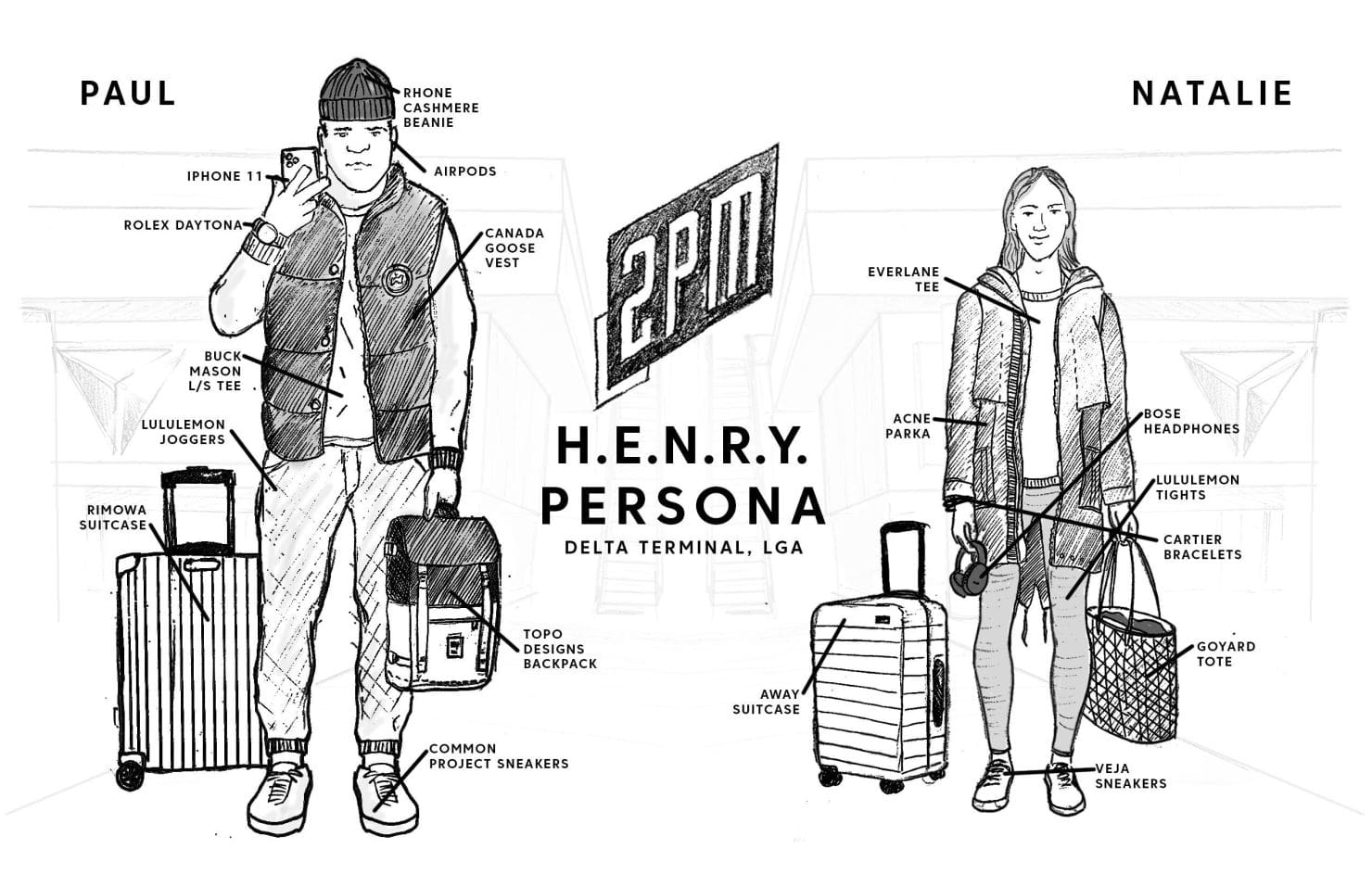
备忘录重温 H.E.N.R.Y.

jNNeOpvQ

Every week, there is a new retailer in distress. It’s time to consider how much of America’s retail economy was built on a class of consumers that was never as static as once believed: the middle class.

Many legacy retail brands, marketplaces, and department stores are at an impasse. For decades, they successfully marketed to a group of Americans that would neither rise nor fall from their economic standing. When that consumer cohort faced job losses or other financial uncertainties, retailers responded by offering promotions to attract them to their stores. In the previous decade, those promotional efforts haven’t let up. Few retail executives seemed to consider the longer-term sociological trends that impact class and consumer confidence.

Consider Ralph Lauren Corporation’s (RL) current struggles. According to a Credit Suisse report, the retailer grew digital sales just 3% in Q2 of 2020. This was against the backdrop of historic online retail growth for retailers. The stock is currently trading near five-year lows; much can be attributed to their poor promotional strategy and a lack of investment into direct-to-consumer business. According to Retail Dive:

The brand also noted in its meetings with Credit Suisse that it plans to take the pandemic as a time to aggressively pivot from low-value online customers and pursue higher-margin customers, a demographic which the company believes to be more accommodating of its recent price increases, reduced promotions and higher-end selection of products. [3]

A product of the 1980s, Ralph Lauren and its peers assumed that some things would never change. That didn’t hold true.

From the Far South to the North Shore

Like many children of the ’80s, I devoured films like The Breakfast Club, Sixteen Candles, Ferris Bueller’s Day Off, and Uncle Buck. The films were idyllic. From the images of economic prosperity to the confidence of the characters, I was drawn to it all. It wasn’t until I was an adult that I realized the cultural implications that served as the backdrop of John Hughes’ work – the fractured city, itself.

Mr. Hughes, whose father was a roofing salesman, used these communities to explore issues of class, status and consumerism as well as the tension and attraction between suburb and city in ’80s America. [1]

The basis of 2PM’s Regarding HENRY report was the 1980s Lisa Birnbach book, The Official Preppy Handbook. That book, along with Hughes’ work, projected an image of ascendant wealth, ease, and certainty to an entire generation of consumers.

The book was written for what was then called Yuppies: a young person with a well-paid job and a fashionable lifestyle. Originally published in October of 1980, the book was co-authored and edited by Lisa Birnbach and illustrated by Oliver Williams. The manuscript played second fiddle to the now-iconic illustrations, ones that served as a guide for consumers and brands for nearly two decades. It was more than a north star for where to go to school, or party on weekends, or which members-only clubs to apply to. [2PM, 2]

Like Hughes’ work, Chicago’s North Shore is omnipresent throughout Birnbach’s satirical take on wealth and class in America. My youthful fascination with Hughes’ Chicago was replaced by a newer, more inquisitive one as I began to visit the city in my 20s and 30s.

America is bifurcating socially, politically, and economically. In these scenarios, the masses move towards one of two proverbial poles. In many cities, there cannot be one without the other. In Chicago, the poles are also literal. Over decades – with a diminished focus on achieving a steady middle class – some resources shifted away from the working class and towards growing the upper class. Most of the resources were misspent elsewhere, furthering the disadvantage of the working class. In just a 45 minute drive through Greater Chicago, you can observe two distinct worlds of diametrically opposed attributes: war versus peace, struggle versus ease, shortfall versus abundance.

This part of the Midwest region along Lake Michigan is a living example of Heraclitus’ Doctrine of Flux and the Unity of Opposites [5]. A Greek philosopher who lived around 500 B.C., Heraclitus claimed that each opposite is inseparable. The opposites depend on one another; this dependence forms the identity of each opposite. If one of the pair disappears so will the other, according to the philosopher.

Imagine two contrasting worlds separated by 25 miles and you’ll begin to understand Chicago’s disparities. The design of the city has bolstered this divide. There are physical barriers, bridges that can be lifted, and a quiet tension between the haves and the have nots. As of recently, the tension has grown beyond quiet and beyond the artificial borders. A citizen who lives in the city’s far South Side has a median wage of $26,400, according to a 2018 article in The Atlantic. However, an astonishing one-fourth of the city’s citizens earn north of $100,000. According to Redfin, the average home price in the North Shore area of Winnetka is $1.28 million. The respective unemployment rates of the North and South Sides are 4.7% and 16%, according to the same report. One cannot exist without the other; both sides squeeze the middle.

When I last visited Chicago, I saw it for myself. In August, I drove from O’Hare Airport towards the 100-block of East 132nd Street to visit an old friend’s grandmother. I stayed at her home for 45 minutes or so, but the impression was lasting. Everyone that I encountered wanted the literal and figurative mobility that many who read this will take for granted. In the week that followed, six local residents would die within one-fourth of a mile from the porch where I sat. The Eden Garden neighborhood of Chicago has an intensity that you won’t quite understand until you’re there for yourself.

I made my way from East 132nd street and along Route 41. One lakeside road ushered me from the city’s South Side to Evanston, one of the most noteworthy areas along the city’s North Shore and the home of Northwestern University. This is John Hughes’ and Lisa Birnbach’s Chicago. The experience was diametrically opposed to my 45 minutes elsewhere: peace, ease, and abundance. I was comfortable enough in both worlds to be able to assess their impact on the other.

In every city, you will find these lines of demarcation, though few are as clear as Chicago’s. The pandemic has accelerated the reshaping of the groups defined by these lines.

On one side, remote work is practical and desirable. Access to capital allows for short-term gains in the stock market. Savings accounts and low unemployment rates ensure a continuation of life within the new normal. It’s as if this period of economic distress hasn’t existed at all.

On the South Side, wage work and income require a physical presence and a tolerance for health risk. These are the dignified hourly workers that make our economy move, though they receive no credit for doing so. There is little to no access to capital on their side; there is no taking advantage of record market gains during record highs in unemployment. There isn’t even capable WiFi access for many. For these citizens, nothing is the same as it was before the lockdown. Matters found a way to further devolve. And for a subset of them, impossibly hard circumstances have worsened. Remote learning is mandated for families whom cannot work from home or support the infrastructure required to learn remotely.

This is the backdrop. American retailers suffered because they didn’t foresee the bifurcation of wealth, access, and humanity that was staring back at them. When you review a list of bankruptcies and closures, you will notice that they will skew towards companies that have built strategies around a perpetual middle class. But in my trip along Route 41, there was no middle class to observe. For our consumer economy (one that employs nearly 30 million Americans) to return to form, enterprise retailers will have to understand the core message of “HENRY.” The middle was never really static at all.

HENRY Revisited

The HENRY designation is short for “high earners not rich yet.” The acronym system of identification has become popular with analysts, however, this consumer classification has gone largely ignored by enterprise retailers.
af39Sn5T

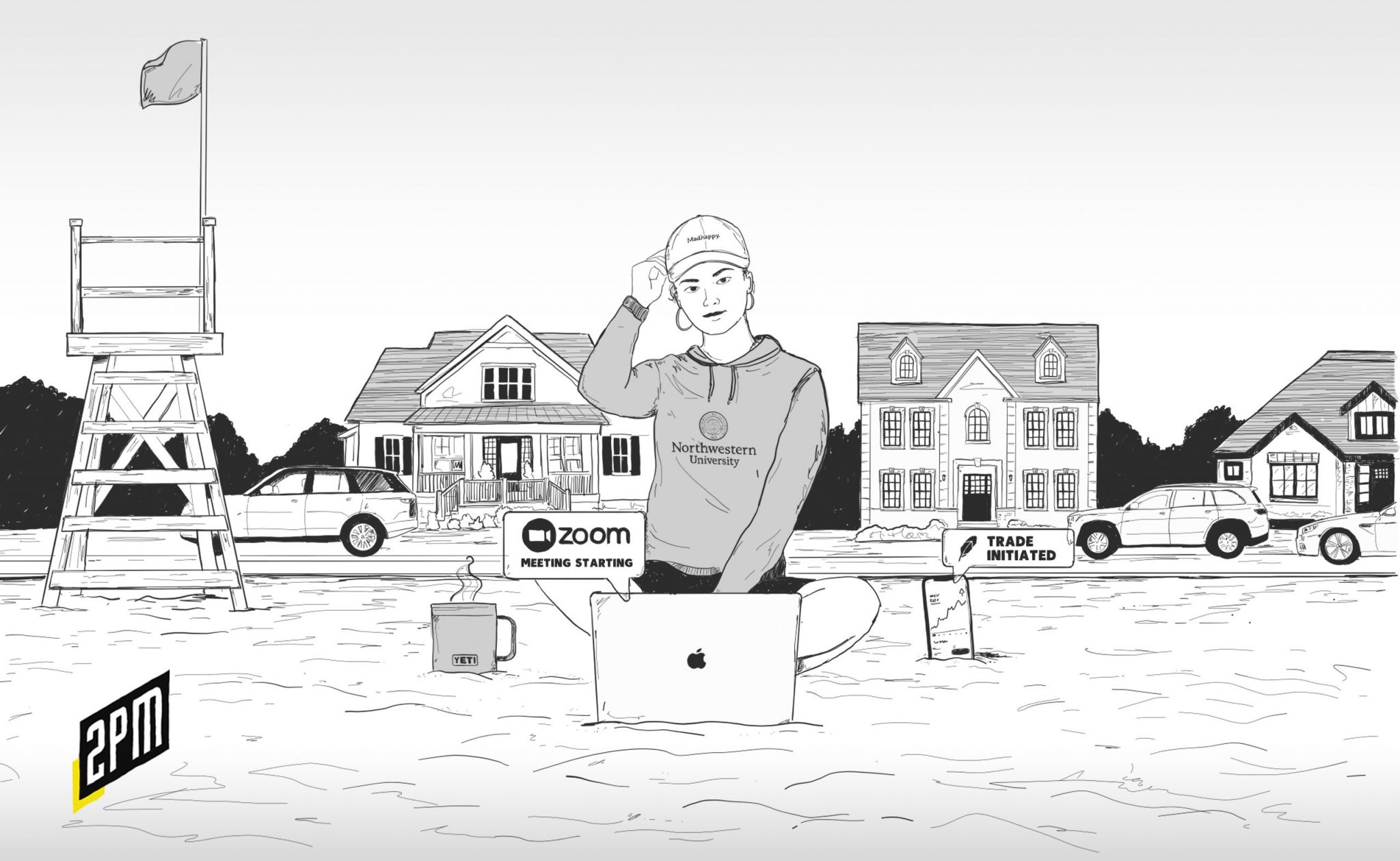
Whether by acronym or not, the pandemic has been witness to this phenomenon. Access to suburban escapes, remote work or educational benefits, and day-trading volume were but a few of the tell-tale signs. In New York and Brooklyn, residents fled to New England and the Hamptons. In the Midwest, the upper peninsula of Michigan was a hot spot for this psychographic. On the West Coast, rents in the Bay Area’s suburbs grew as rents in the city fell as much as 15%.

When Ralph Lauren Corporation cites a strategy to modernize its business by creating “smart customer profiles,” it is the HENRY designation that the brand is speaking of.

The HENRYs are advancers, not necessarily those who have cleared the wealth bar to America’s elite class. In fact, many are working to leave the middle class as if it’s a blemish on their personal ambitions. In this way, the term is more inclusive than the yuppie moniker of yesteryear. It’s also a symptom of our current economy, one where the cost of living can begin to erode long-term investments like real estate, money market funds, or other equities. [2PM, 2]

As Heraclitus wrote, “life is flux.” The focus on early identification of the upwardly mobile is one that will become commonplace in marketing and branding. As target metrics like customer acquisition cost (CAC) and lifetime value (LTV) dominate eCommerce-first retail, I’d argue that there is another that will arise: duration of loyalty (DOL). Brands will identify certain customers early and follow them throughout their education and careers, a strategy commonly practiced in the automobile industry.

As enterprise retailers like Ralph Lauren begin to smart-target the middle class, the days of shallow promotional efforts will give way to the notion of flux. By targeting these customers appropriately, the hope is that many will remain loyal as they ascend to greater discretionary income and higher consumption.

In Sanitized Urbanization, 2PM explored the larger trend of urbanites moving to suburban areas. Across America, the upwardly mobile pursued exurban peace, ease, and abundance. Some sought permanent moves. In theory, these areas brought a calmer pace, cleaner air, and functioning local retailers. These were things that were once considered essential, today they are luxuries. In these areas, amenities like parks and beaches provided a sense of normalcy.

Sanitized urbanization removes the perceived risks of living in urban areas while adding the value of – what’s often – upgraded infrastructure, improved schools, and lower tax bases. It is likely to become a politicized issue once urban municipalities begin to suffer the full force of the migration away from city centers. [2PM, 4]

Like many phenomena, the pandemic accelerated existing trends: sanitized urbanization, remote work, online retail, in-home fitness, and a decreasing dependence on personal vehicles. For the professionals who were comfortable with this shifting economy, a great many of them achieved financial breakthroughs despite the economy’s vulnerability. The vulnerability has never been equally distributed. One of the last bastions of economic mobility is America’s 29+ million retail jobs. To protect what’s left of them, retailers must begin to see the market this way. The industry’s stodgy retail executives seem to lack the ability and foresight to do so.

This cohort of professionals is a cross-section of race, ethnicity, and gender though many share similar traits in quality of education, career, and social standing. This psychographic is due to become the key study in the next five to 10 years of retail marketing and communications development. HENRY is beginning to live up to its name. There is a new guard of creative leaders, solo capitalists, and ascendant executives to show for it.

作者:Web Smith | 编辑:Hilary Milnes | 艺术:亚历克斯-雷米 |关于 2PM

Original Report: Regarding H.E.N.R.Y. 

备忘录关于正在成形的 DTC 创意

dCJh3uJI

Deep generalism is at the core of how 2PM curates and publishes. Deep generalists excel in multiple fields and are able to identify connections between them. They are capable of analysis and adept at information synthesis. A 2018 report by Harvard Business Review stated it best:

One view is that the key to creative breakthroughs is being able to combine or leverage different areas of expertise. After all, every innovation somehow recombines or reimagines things that already exist. Many studies have found that the best ideas emerge from combining insights from fields that don’t seem connected. [14]

There has been tremendous change over the past months. While some of these changes seemingly happened overnight, many were long in the making. With Monday letters, member briefs, and weekly reports written over four years: 2PM has prided itself on publishing forward-thinking analyses, principles, and ideas. These essays were synthesized from many of the same reports, articles, white papers, and features that are included in the thrice-weekly letters that have published nearly 600 times since the newsletter’s start. 

Since the beginning of 2020: eCommerce adoption has doubled, we’ve come to terms with our condition of over-retail, malls are shuttering, Hollywood has gone direct, DTC brands have found a second life, acquisition costs have fallen, total addressable market has grown, the American consumer has bifurcated, and The Law of Linear Commerce has become a prevailing strategy, and Generation Z’s tools of the trade have taken the spotlight.

Here are ten ideas that are now taking shape.

The Law of Linear Commerce 

Linear Commerce is the prioritization of audience. Product manufacturers typically seek to outsource demand generation. Brands, that are ahead of the curve, emphasize their audience’s depth and engagement. Likewise, digital media publishers that follow linear commerce principles prioritize organic and loyal audience growth over SEO or PPC-driven commodity clicks.


第 333 期:食品 52 和线性商务

The most viable companies across the digital ecosystem will share a common trait: established, organic audiences. Content and community are core to that outcome. For the well-executed linear commerce brands, retention rates will be high and CAC will be low. The road map is there for the brands looking for a sustainable advantage and improved optionality. Perhaps, the public and private markets will reward more of them. [1]

第 314 号关于线性商务

DTC linear commerce concepts are akin to those fabled pro shops at Augusta National. And for challenger brands looking toward sustainability, there is a lot to learn from these examples. Audience-driven businesses have figured out how to monetize their visitors by providing value that captures attention. The alternative is paying the audience to show up at your party – a cost that is rising by the year. [2]

The Bifurcation of the American Consumer

按人均计算,美国的零售业一直处于过剩状态。但在近 60 年的郊区零售扩张中,零售业似乎永远不会萎缩。杰富瑞公司(Jefferies)的分析师兰道尔-科尼克(Randal Konik)认为"美国大约有 1350 个封闭式购物中心 但只需要 200 到 400 个"。但是,在零售店关闭的同时,销售额预计将增长 3.5%,达到 3.7 万亿美元。根据瑞银的报告,可能需要十年时间才能达到平衡(1350 到 200)。该投资银行预测,在此期间还将有 7.5 万家商店关闭。

No. 327: The Gilded Age 2.0

More closures are to come. Of them: GAP and L Brands will accelerate closures, further diminishing middle class retail. Not only are we witnessing a polarization of American wealth at a dizzying pace, it is now reflecting in retail real estate. The institutions for the affluent have remained steady, in some cases contributing to a growing retail sector. The institutions for the economically-distressed are also doing quite well. Historically, off-price and luxury retail were at the periphery. If these trends continue, these two cohorts may become the collective majority. [3]

America and Over-retail

The original vision for the American mall was not the suburban dwelling that you recognize today. In Gruen’s opinion, today’s typical mall would promote social isolation rather than a community sensation that it was designed for. In fact, Gruen was a proponent of walkability. An Austrian by birth, he opposed America’s reliance on cars.

His designs would later be amended, however. Gone were the multifunctional social centers – an emblem of urban lifestyles and walkability. The shopping centers that resulted over a period between 1970 – 2000 were diametrically opposed to Gruen’s initial vision for them.

No. 319: Mall Retail and 1954

Shortly after this Supreme Court decision [Brown vs. Board of Education], Eisenhower enacted the “Accelerated Depreciation” (AD) program. This allowed the owners of commercial real estate developments to deduct building costs from their tax burdens. This new form of tax deduction enabled builders to extract wealth from their developments 10x faster than the year before. Thomas Hanchett’s “U.S. Tax Policy and the Shopping-Center Boom of the 1950’s and 1960’s” notes that there was one regional mall in 1953. No less than 25 were approved, immediately after this decision in 1954. America went from one mall to 25 in one year. [4]

Between 1955 and 1975, shopping mall development exploded. Though, development was no longer tied to demand. Many were built as extractable retail assets only to be flipped for massive profits. This meant that development was no longer tied to population growth.

For more: Ep. 008 with Derek Thompson of The Atlantic. In this episode, we discuss the future of cities and the changes to come.

HENRY is equipped to hold steady

Successful brands and services have accounted for consumer bifurcation by maintaining price integrity and adjusting their total addressable market (TAM) to reflect a growing HENRY cohort that is adding to the population of luxury consumers. Short for high earners, not rich yet, HENRY is a designator that will influence TAM for many luxury manufacturers.

2PM-Definition-HENRY

Member Brief: Regarding HENRY

The HENRYs are advancers, not necessarily those who have cleared the wealth bar to America’s elite class. In fact, many are working to leave the middle-class as if it’s a blemish on their personal ambitions. In this way, the term is more inclusive than the yuppie moniker of yesteryear. It’s also a symptom of our current economy, one where the cost of living can begin to erode long-term investments like real estate, money market funds, or other equities. Unlike the traditional middle-class, HENRYs have the inclination to believe that they are on the path to the liquidity. A liquidity and safety net that is necessary for investing in long-term assets. HENRY is a transitional cohort, not a class. A cohort that can no longer be ignored. [5]

Gen Z Arbitrage Steadies eCom Penetration

In America, Generation Z is awaiting the opportunity to buy with the frequency of Millennials and Generation X. The data suggests that their consumer activity will trump that of previous generations. While Millennials prefer DTC brands by a margin of just 4% over traditional retailers, Generation Z prefers these online-born brands to their legacy counterparts by over 40-45%.

No. 330: Gen Z Arbitrage

From time to time, there are technological and economic advantages that lift the brands that are prepared for the moment. For direct to consumer brands, a category of brands that Gen Z prefers over traditional retail, there is an opportunity to shorten the marketing funnel by appealing to a generation of consumers that have been written off by the incumbents in retail. Traditional brands are marketing to the parents of America’s youth rather than directly communicating to a demographic that could benefit them. The data suggests that as Apple Pay’s adoption rates continue to improve, Gen Z will become the primary consumers of the goods that have, so far, been marketed to Millennials and Gen X members. [6]

Live Streaming + Headless Commerce

Pioneered by Taobao and introduced to America through companies like ShopShops, live streaming is due to become the next great acquisition channel. It’s an amalgam of television’s push and social media’s pull. And though native platforms have risen to the challenge, it’s Instagram that stands to benefit. On the livestream-friendly platform, media companies and brands are due to to test influencer and media partnerships before committing to cross-border commerce. A growth tactic that helped MVMT grow to nearly $100 million + in annual revenue.  Thus far, Instagram is the only platform with the capacity and the architecture for experimentation.

Member Brief: Headless Commerce

By reconsidering their commerce architecture, brands can manufacture experiences that meet the sociological as well as the consumer needs of the consumer. Headless commerce emphasizes community and it enables creators and brands to build a service funnel. This evolution of online retail gives brands control over their consumer experience, allowing depth of identity and relationship. By allowing creators to build end-to-end solutions, headless commerce may change the definition of customer acquisition altogether. This means more predictability and sustainable growth for media creators or brands willing to take the chance on owning their commerce outcomes. [7]

第 304 期:应用内受众

Gaming platforms like Epic Games‘ Fortnite and PUBG have captivated audiences while storing their payment methods for ease of purchase. And services like Netflix and Spotify are learning that they can do the same. The monetization of audiences through innovative, exclusive partnerships will continue to build a foundation for how media companies address a metaverse-driven economy. By reclassifying app downloads as the beginning of a sales funnel (rather than its end), digital content communities can reframe the value of their content. [8]

New Zones

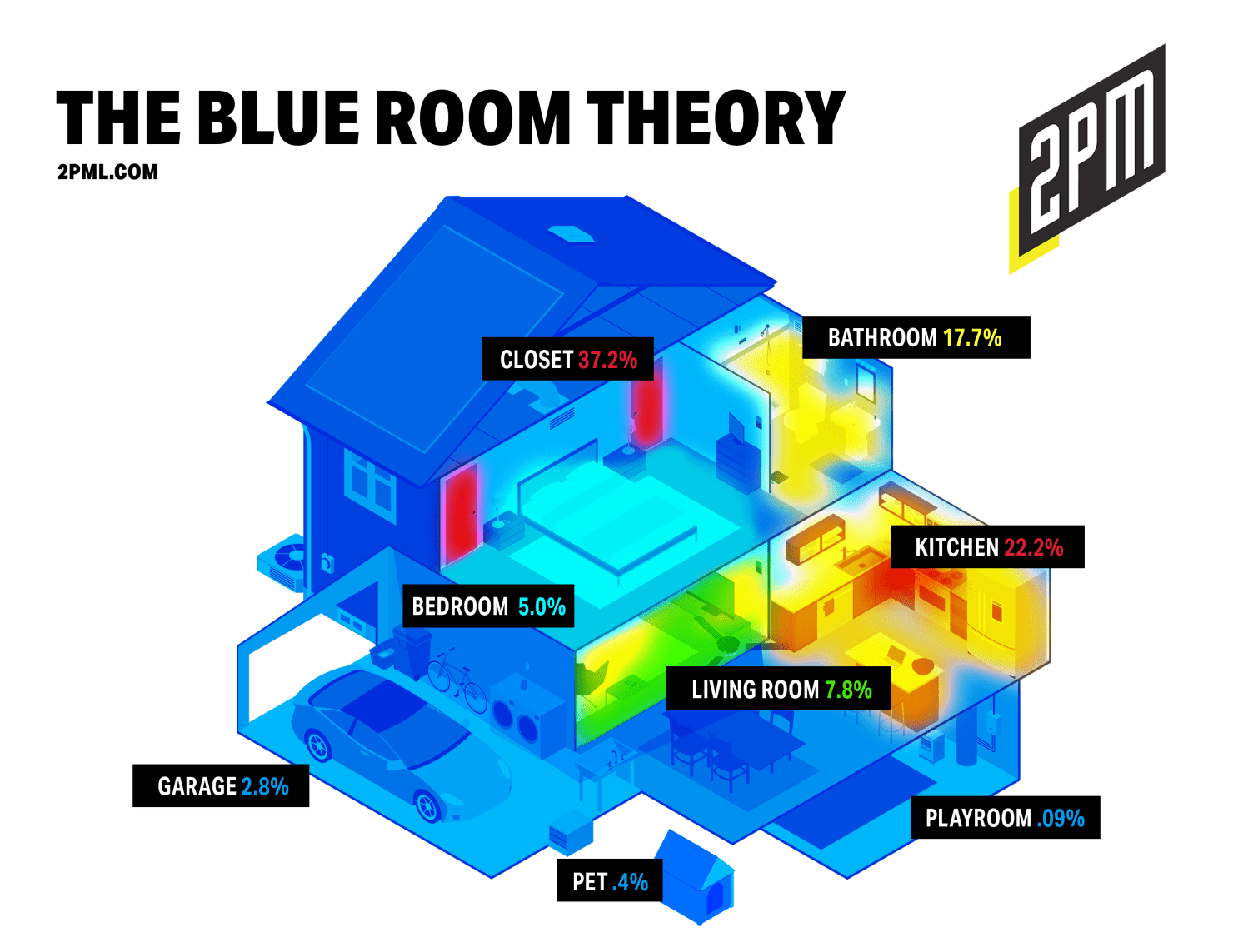
The Blue Room Theory serves as a more useful interpretation of DTC brand density. It identifies opportunity zones throughout the home rather than by category. As (1) millennial home ownership continues to rise and (2) as DTC brands grow in preference vs. traditional counterparts and (3) as HENRY-esque [4] millennials begin to leave major urban centers for second-tier metropolitan areas: each 1,800+ square foot home represents a new canvas . Of the 729 growing, private companies that we studied, the vast majority were concentrated in three areas of the home: the closet, the kitchen, and the bathroom.

2PM-Blue-Room-Theory- (3)

Member Brief: The Blue Room Theory

The Blue Room Theory is a new framework for product launch, early traction, and hyper-growth in consumer retail. It relies on a basic understanding of Red Ocean vs. Blue Ocean strategies. It’s here that Jen Rubio and Steph Korey made a wonderful key decision, very early on. Rather than view their product through the lens of category, they positioned specific real estate as the constraint. Away didn’t market their products in the context of storage capacity or durable plastics. Rather, they focused on owning a domain: the airport. [9]

Modern Luxury Holds Steady

With eCommerce at less than 11% of all retail sales in America, eCommerce continues to skew towards wealthier American. Until that domestic eCommerce figure grows, online retail’s adoption will continue to benefit the brands, services, and platforms appeal to the upper-middle class and beyond. This is reflected heavily by the growth of companies like Peloton, Equinox, SoulCycle, and the boom of meditation-based hardware. Additionally, the gig economy continues to thrive. Last mile workers have taken the form of a servant class, serving the upper-class. Time is the ultimate luxury, you know.

Member Brief: The Modern Luxury Thesis

The DTC retailers with the most promise to grow throughout this period of economic uncertainty can be broken down into two distinct groups: (1) off-price retail and (2) modern luxury. These two groups can operate independently of a dwindling middle class. Both nos. 1 and 2 are less likely to spend disproportionately on customer acquisition as the consumers in each of the respective wealth class tend to be more receptive as consumers. While CAC continues to rise on platforms like Facebook, this can be disproportionately attributed to increased competition for the attention of the a dwindling middle-class consumer cohort. [10]

Streaming and Bundles

The next twelve months will be pivotal in determining the viability of each of more than a dozen SVOD brands but one thing is apparent, streaming services are drilling down on their strengths. For Walt Disney Corporation, this means the ownership and operation of valuable intellectual property. For Netflix, Showtime, HBO, and others: this means adopting other mediums to amplify top funnel awareness.

第 325 号合并与电缆 2.0

Streaming services will be bundled. It’s likely that we’re near the point of OTT carriers marketing the opportunity for consumers to purchase pre-negotiated, economically-friendly bundles of streaming services packaged. With no-login, one collective price, and less of a fear of missing out – the past has become the present. Disney’s streaming offering may be the sole victor here; their value and reach may outlast a shift back consolidation. For all others, the fracturing market of streaming video on demand (SVOD) has begun to cannibalize the direct to consumer opportunity that was the initial appeal. [11]

The DTC-fication of Hollywood

Disney will be able to command a fee that is more lucrative than traditional day and date releases and at margins far greater than their streaming competitors (Netflix), marketplace vendors (Apple’s iTunes) or cinema competitors (AMC Theaters). Before Walt Disney Studios’ 100th anniversary, you will be able to rent a blockbuster premiere through your Disney app. With respect to the overturning of the Paramount Decrees of 1948, this is Walt Disney’s end game.

Member Brief: The Netflix Report

Direct-to-consumer strategies have been influential across physical product industry over the last decade. Hastings seems to be applying this DTC strategy to streaming media. It’s clear that the Netflix team understands that they must play in the traditional space to eventually overtake tradition. [12]

Member Brief: Disney+ and Antitrust

Whether or not DOJ’s ruling on the 1948 Paramount Decrees is overturned, Disney has found a way forward. When Disney+ achieves its desired scale, it will redefine how consumers interact with blockbuster, box office films. Either you’ll watch it in the theaters that you always have. Or you’ll view them in the comfort of your own home – on the day of the film’s premiere. When that time comes, Disney+ will offer their blockbuster debuts for a premium price. And consumers will pay up. The data proves as much. Disney’s intellectual property is responsible for nine of the top ten highest grossing films over the trailing twelve months, a pace that is sure to continue. And to think, it all began with a negotiation over distribution rights with Paramount. [13]

There is an incredible trove of data and insights throughout the 2PM family of categories: weekly reports, member briefs, daily data, and more. But the core of 2PM is the thrice-weekly letters available to Executive Members. The collection of stories, insights, and short analyses provide a window into the why’s, when’s, and how’s of shifts throughout a number of industries that impact one another. If that interests you, you can join at the top of the site. 2PM readers can anticipate the curve; our Executive Members are ahead of it.

By Web Smith |About 2PM