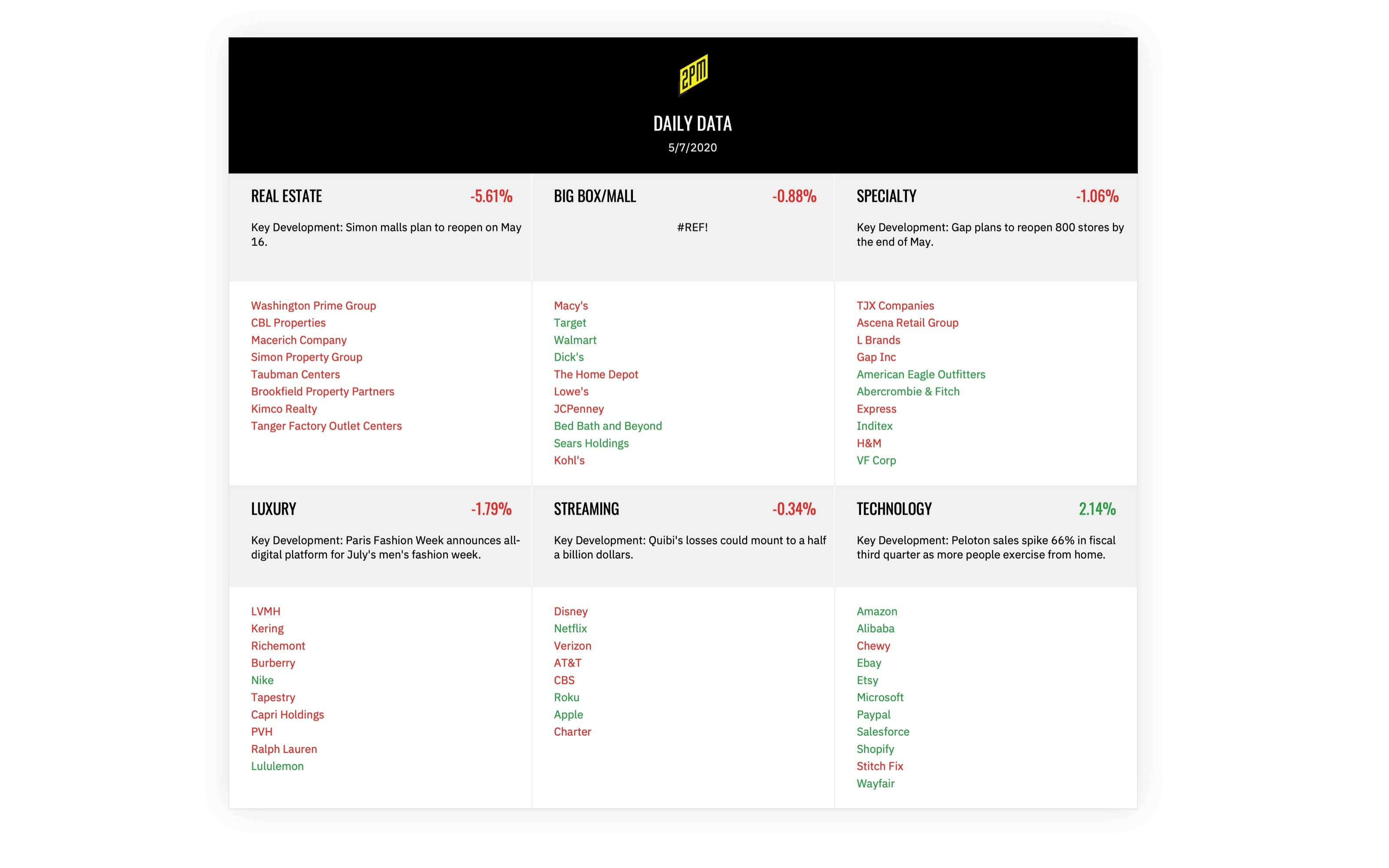
Can a company build a Metaverse or does it simply manifest? It’s been surreal living in Columbus, Ohio during this period of pandemic and national response. The distant future feels nearer in many ways. It accelerated towards us. Like other major cities, the stores, streets, and parks are empty. So are the churches, banks, and theaters. But people are convening elsewhere; the statistics suggest as much. According to Bank of America data, the prevailing growth category has been electronics. In nearly every Target or Walmart, gaming systems and computer software that has flown off of the shelves. The non-essential has become essential. It’s an indicator of a greater shift in how we buy, create, consume, and gather.
As we’ve reported, the conditions of the global pandemic favor the bottom lines of some retailers more than others. The dichotomy is becoming clearer as retailers report earnings for the first portion of the year to be truly affected by the circumstances. Hand sanitizer brands and grocery stores, for instance, are reaping the benefits of an otherwise poor situation. Even Wayfair has come out on top. And then there’s Peloton, which started this year as the butt of good-intentioned-advertising-gone-very-badly jokes.
A love letter to How to Make it in America. The retail industry is changing. Old norms like profitability, sustainability, and efficient growth have risen to the top of admired attributes for brands and their founders. Bootstrapped founders were once lesser-than. Today, executives like Moiz Ali and Jamie Schmidt have taken center stage. The two exited founders are often seen discussing capital efficiency, supply chain mastery, and their blue-collar mentalities. With others like them, they are often seen explaining the difficulties of building from scratch.