No. 299: Open Letter – Physical Retail 2.0

Dear DNVB CEO,

This year began with a letter to you. It was the very first letter written on 2PM’s new platform and one of the most meaningful of the year. The original “open letter” from January wasn’t communicated as an analyst or a writer, it was published as a peer. It was an expression of empathy and encouragement. But most importantly it was recognition of your task at hand, building steadily throughout perpetual change. It was a nod at your endurance and resilience. The successful DNVBs of the many that are out there, succeeded in making something out of nothing. And frankly, observers only really understand what that’s like if you’ve been through it. So this one is meant to close out the year with a few observations and some acknowledgment of some impactful, forward thinking. The most shared paragraph in that January letter:

You started your company in an age that required your retail independence. On day one, your brand couldn’t depend on wholesale purchases from Nordstrom or Target or Whole Foods or Wal-Mart. And that independence made you more practical in the long run. And now, those retail powerhouses are now knocking at your headquarters.

I went on to write that DNVBs will make the foundation of which the future of retail is built. Over the past year, we’ve gained a bit of clarity on what that could mean. Direct to consumer brands killed mall retail. Direct to consumer brands reinvigorated the mall. 

Riding on the efforts of your collective innovations – from Andy Dunn to Steph Korey, Tyler Haney to Kristin Hildebrand, Aman Advani to Emily Weiss, and Michael Dubin to Blake and Patrick – retail has taken a new shape. And in the process, we’ve defined and redefined the word direct in the DTC acronym.

More than ever, consumers demand fluid purchase experiences. Online-only retail was supposed to accomplish that but for the majority of retailers, that hasn’t been the case. In the most recent Member Brief: a neighborhood of goods, I argued that the sunk costs attributed to operating within the confines of online-only retail (eCommerce software, logistics costs, and acquisition costs) could motivate further investment into the same systems. But more and more of your peers are realizing that operating a technical, data-driven, physical storefront can accelerate growth, increase LTV/CAC ratio, bolster AOVs, and even fortify speedier shipping and returns.

The irony of the conversations around physical retail weren’t lost upon any of the industry leaders at the [2PM Executive Member table, that evening]. We were in the heart of Soho, Manhattan. If you walked a tenth of the mile in any direction, you’d see the physical manifestation of nearly every top 30 DNVB in the market: Casper, Glossier, Warby Parker, Bonobos, M. Gemi, Rowing Blazers, Aesop, Aether, Birchbox, Harry’s, Theory, and the list goes on. It seems as though every DNVB executive with a war chest (or profitability) is all-in on maximizing profitability through physical retail. Not just the quaint pop-up stores, full 13,000 sq. ft. acquisition and conversion machines. 

Member Brief: a neighborhood of goods

Revisiting Retail independence

Over the years, consumers have shifted from shopping to buying – we’re beginning to witness a shift backwards; American online retail never quite figured out how to duplicate the sensation of stumbling upon a must have while walking through a shopping center. Over the course of the year, we’ve seen the beginning of a tide towards the return to physical retail – a method of acquisition that most of us very vocally dismissed over the years. Sure, we have all seen our fair share of “guide shops”, showrooms, pop-ups, and stores-within-a-store. But while many brands tested the waters with physical footprints, we are now seeing a new level of commitment to a tech-enhanced, traditional way of acquiring customers.

The renaissance of brick and mortar retail could be representative of a few key macroeconomic trends: (1) the saturation of and wavering trust in social media platforms (2) and the inundation of online advertising. Both key tools in the growth of early vertical brands from 2007-2017, online brands have saturated every channel that attracts our attention.

A funny thing happened on the way to the retail apocalypse. Stiffening competition, surging online advertising costs and cheap mall space have prompted these so-called digital natives to embrace what they call “offline” in a big way. In their push to become retail’s next household names they’re venturing beyond the coasts and major cities into suburban America. It’s also an acknowledgement that 90 cents of every retail dollar in the U.S. is still spent at a physical location, and industry watchers don’t expect it to fall below 75 cents until the middle of next decade.

Why DNVBs continue to open physical stores

With every passing year, early brands must raise more to compete less effectively than the brands that launched just a year earlier. Facebook and Google’s cost data suggests that DNVBs have begun to max out these acquisition channels. As a result, shopping has become less leisurely. And solely transactional. Consumers want leisure. Physical retail embodies a social and tangible experience that America’s Amazon-driven format of online retail has yet to duplicate. And digital-first retailers are re-prioritizing those moments of consumer delight by investing in extending their DTC relationships by owning permanent storefronts in worthwhile locations.

Physical Retail 2.0

One of the most challenging tasks ahead, for the DNVB C-suite, is the mandate to build a product and sales funnel atop of a constantly evolving industry. One of the chief roles in the DTC c-suite is the leader charged with discerning between short-term trends and long-term shifts. There have been numerous instances over the last 5-7 years where brands underestimated new technologies or over-estimated the stability of precedent. To that end, physical retail is in its own renaissance. With the right technologies and logistics partnerships, DNVB peers are building more than consumer touch points. They are also building platforms for improved return logistics and quicker shipping mechanics.

Brands that own their own independent storefronts are capable of accomplishing several key goals without outright dismissing their previous investments into technology, advertising, and logistics. To that effect, those tools will only help brands become pioneers in physical retail 2.0. Whereas mall brands of old depended on analog advertising-alone and the unpredictability of foot traffic, physical retail 2.0 are benefiting from six categories of customer acquisition funneling:

  • online to offline
  • traditional to online
  • offline to geo-fenced retargeting to online
  • traditional to offline
  • online to retargeting to offline
  • online to physical returns to offline

For retailers, 2019 is shaping up to be a resurgence of the old. More of your peers will follow in the likes of Allbirds, Casper, Warby Parker, and Glossier. The data-driven physical store will allow mature DTC brands to reduce their dependencies on existing acquisition channels, while now-fully engaging with existing customers. Over the past decade, DTC brands did quite a bit of damage to traditional mall retailers by building direct relationships with potential customers.

Now, those same challenger brands are growing to compete in retail’s traditional environments. The successors of physical retail 2.0 will be: (1) the cloud-based systems that enable DTC brands to connected their experiences and (2) the brands that move first to supplant the traditional brands of old. Cloud commerce platforms (Shopify, BigCommerce, Adobe), a near-universal focus on monetizing consumer data, and the spirit of DTC innovation has provided an advantage over traditional retailers. Higher end shopping centers and malls are beginning to reflect this shift.

Read the No. 299 curation here.

Report by Web Smith | About 2PM

No. 298: Retention is the new currency

Contributor. The much mused about sharing economy jump started by disruptors like AirBnB, Rent The Runway, Netflix and Uber is running past its adolescence. In 2019, both Uber and its rival Lyft expect to go public.

According to Fortune, Uber alone could be valued at as much as $120 billion, higher than the valuations of Ford, General Motors and Fiat Chrysler combined.

It’s also close to double Uber’s valuation at a fundraising round two months ago and would be the biggest debut since Alibaba went public in 2014.

AirBnB, too, is expected to file as early as 2019, bringing some of the biggest disruptors of the last decade to Wall Street. But their impact has already been felt beyond their Silicon Valley offices.

The sharing economy has given rise to the subscription economy:

  • An economy preferred by investors for it’s stability.
  • An economy loved by consumers for its accessibility.
  • An economy coveted by entrepreneurs for it’s long-term customer relationships.
2PM, Inc. contributor: Tracey Wallace

The rise is thanks to the ubiquity of internet access and smartphones in the U.S. across nearly all segments. “Customers, the ultimate endpoint of any business, are today just as connected as the employees of any large enterprise,” writes Ben Thompson on The Stratchery.

This gives consumers and businesses alike endless access to on-going services that don’t function like gym-memberships of old. Instead, modern subscription models are gym-like in execution and participation.

  • They are based on service, not product: The product is the means not the ends.
  • They build convenient communities of like-minded individuals with end-goals in mind: Think Shopify users want to be seen as successful entrepreneurs. Spotify users want to be seen as having the best playlists and musical tastes.
  • They rinse and repeat the experience: The service begets the product, the product begets the goal, the goal begets the service.

Retention is the new currency

Costco – perhaps the longest standing subscription business around – has perfected the model. Amazon evolved it online with Amazon Prime. Giants like Apple and Google are touting their subscription services as differentiators for their products.

  • Google is offering six month free YouTube Premium subscription for all Google Home devices (and varying YouTube Premium subscription access for nearly all Google devices).
  • Apple is packaging their streaming music service and phone care services into single packages –– selling you a full suite of services that beget a product.

The success of the model is clear. You need only look at Dollar Shave Club on the consumer side to see the impact on the industry (or look at newer DNVBs like Quip following similar paths). Or, on the B2B side, look at the stock prices of Adobe (up 770% since 2012), Microsoft (up 320%) or Autodesk (up 360%), which have shifted to offer internet cloud-based software for a monthly or annual fee.

Indeed,  many DNVBs are putting their own spin on the subscription model business. In retail alone, there are more than 5,000 brands offering clothing, cosmetic or the like “subscription boxes” each month.

“It is totally faddish right now,” says Robbie Kellman Baxter, a consultant with Peninsula Strategies and author of The Membership Economy. “Most of them are going to fail. How many ties does dad need?”

But in technology, the rent-rather-than-own trend is holding stronger. In health care, too, it is growing in popularity with brands like SmileDirectClub and MDVIP, a direct primary care service, gaining more and more subscribers.

In media is where we will see the most pronounced shifts. After all, subscriptions are the easiest way around an unforgiving advertising world inhabited by Google and Facebook’s duopoly.

That duopoly began hitting media brands as early as 2015, when many considered the “gold standard” of online content to be free and commoditized. Many digital media brands have yet to recover from this mistake.

According to CNBC:

Vice Media has been the gold standard, earning a valuation of $5.7 billion in June 2017. Earlier this month, Disney wrote down some of its investment in Vice by 40 percent, suggesting a declining overall valuation.

Buzzfeed has built itself into a company that tops $1 billion in value. Still, Buzzfeed missed its 2017 revenue forecast by up to 20 percent, the Wall Street Journal reported last year, pushing back hopes of an initial public offering indefinitely. Vox Media, the owner of sites including SBNation, Eater and The Verge, also missed internal revenue forecasts and is not planning to go public any time soon, said people familiar with the matter, who asked not to be named because the company’s financials are private.

Separately, media companies including The New York Times, The Wall Street Journal, The Washington Post, New York Magazine, Quartz, Bloomberg, Business Insider, Vanity Fair and Wired have all returned back to media’s subscription business model roots by completely paywalling, introduced paywalls or hardening their paywalls beginning in 2018.

We’re living in an environment where Facebook, Google, and Amazon are sucking up so much of the advertising revenue,” says Sterling Auty, software analyst at J.P. Morgan. “Subscriptions and ecommerce are an antidote to that.”

These media companies are looking to lower their reliance on Facebook and Google algorithms and return to their service roots through subscription payments –– adding yet another monthly subscription to consumers’ bank accounts.

On paid subscription tolerance

According to eMarketer, 71% of U.S. consumers with internet access subscribe to at least one streaming video service. However, the number for all other verticals drop dramatically beyond video.

This leaves ample room for other verticals to grow their subscription services, especially as consumers become more accustomed to the model and testing out various offerings. Paid subscriptions through Apple’s App Store reached over 330 million last quarter. That’s up 50% year over year and includes both Apple and third-party services like Netflix.

Consumers are downloading. They are trying. They are testing. And there will be winners. Some analysts like Eddie Yoon, a consultant and author of the book Superconsumers, see the subscription economy as a 20-year trend –– just now beginning to hit its growth stage.

But there are caveats:

“All brands will try to offer subscriptions, but only a few will take,” he added. “Consumers will push back if they feel overwhelmed with subscription services,” Yoon says. “People won’t tolerate a world where everything is subscriptionized,” he said. “For the things that you really care about, you’ll definitely subscribe.”

The experience economy edges in

This is where the experience economy matters most. Subscription business models create desirable P&Ls, forecasting models and enable brands to act in the best interest of their most dedicated subscribers (rather than advertisers), but fail to provide the experience and you’ll lose your list and your recurring revenue.

Ben Thompson from The Stratechery pulled out this quote from Bill McDermott, the CEO of SAP, on this challenge on an investor call:

There are millions of complaints every day about disappointing customer experiences. This is called the experience gap. Businesses used to have time to sort this out, but in today’s unforgiving world, the damage is immediate, disruption is imminent. This has shifted the challenge from a running a business to guaranteeing great experiences for every single person.

It’s best here to remember that subscription and membership are separate things. Membership provides experience and community. Subscription just gets you access to something behind a gate.

Take a look at Peloton, for example. The company has long argued that it’s bike ($2,000) and subscription program ($39 monthly) are a bargain compared to regularly attended SoulCycle classes. And SoulCycle is hard to beat. Similar to fitness organizations like CrossFit, Inc., it has a hardened fanbase and community.

But where Peloton succeeds is its content –– the ability to stream classes on your bike, forgoing a trip to a physical class. All for substantially lower costs than regular in-person classes anyway. Peloton reports its churn at less than 1%.

“You have to do delightful things and leave money on the table,” says Peloton CEO and co-founder John Foley. “The monthly service is what you really buy. That was the flaw with the old models. It was just hardware.”

Of course, not every company can be a Peloton. The subscription model itself does not lower the cost of doing business. It cannot, on its own, generate demand.

“As subscriptions proliferate, investors need to dig deeper into the dynamics of their models,” says Aswath Damodaran, a finance professor and valuation specialist at New York University’s Stern School of Business. “Many venture capitalists and public investors are pricing user-based companies on user count, with only a few seriously trying to distinguish between good, indifferent, and bad user-based models.”

What’s next in the subscription era is a dwindling down to those brands, media packages, and services which can offer the experience worth paying for –– the service that begets the product, and the product that begets the consumer’s goal. A subscription model, alone, won’t be enough. Consumers will seek membership and the benefits that come with it: experience, community, and camaraderie. For the product companies, the software companies, and media companies that figure it out – the prize is recurring revenue and stability until the next preferred model comes along.  

Read the rest of your No. 298 curation here.

Additional reading. Member Brief: The Subscription Economy

By Tracey Wallace | Edited by Web Smith | About 2PM

Editor’s Note: Tracey serves as the Editor-in-Chief at BigCommerce and a public speaker. She is launching a DtC pillow brand, this spring. She is a paid contributor of 2PM, Inc. 

No. 297: The DtC industrial complex

Untitled-2-Recovered

There is an entire eCommerce industry that fosters the ideation, launch, and early growth of direct to consumer (DtC) brands. When you notice a new digitally vertical native brand in 2018, there’s a platform aura around many of them. First you’ll see the early PR sensationalism. Then, the founders must live in the right city, have the right investors, and pay the right $25,000 / month PRs retainer. The DtC industrial complex that fosters challenger brands has, thus far, insulated many of them from the reality of attrition-by-market forces.

Consumers first notice that the brands are using Shopify or BigCommerce. Then these target customers ask: Red Antler? Brand Value Accelerator? Partners & Spade? Gin Lane? And then on to the excellent packaging presence. Lumi? That other one? In many (but not all) cases, the table stakes aren’t the physical products anymore. You can argue that in the world of DtC 2.0, the actual product is prologue.

After working with Warby Parker, Partners & Spade struck up a relationship with DTC razor brand Harry’s (before it had launched), Shinola, Hims and Peloton. For an already established brand like Peloton, Partners & Spade worked on their first national advertising campaign, but for a brand like Harry’s, the firm got in early on and helped debut the brand to the world (and has since launched Harry’s secondary brand for women, Flamingo).

Adweek, November 19, 2018

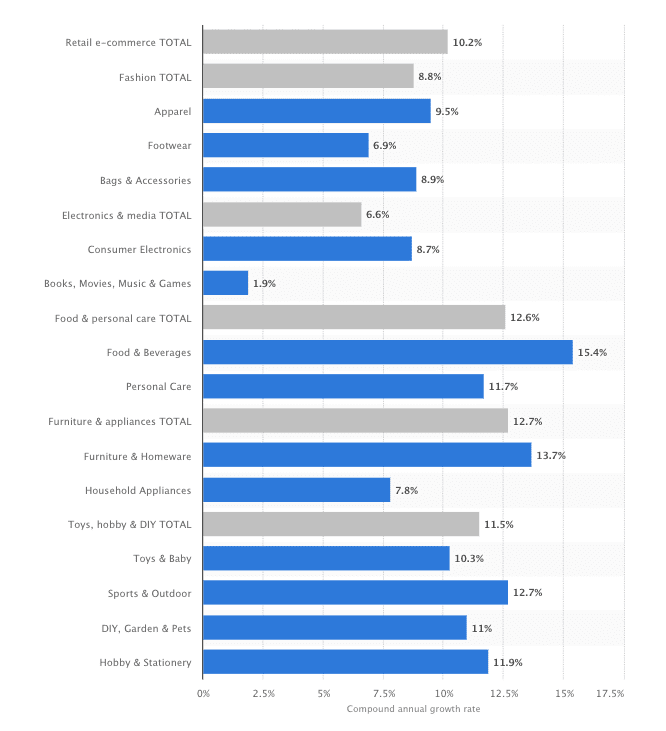
The DtC industrial complex enveloping challenger brands has, thus far, insulated many of them from the reality of attrition-by-market forces. Venture funding is the lifewater of the industrial complex. When brands launch today, many of them are hitting the ground running with $3.5 million to $17.5 million in funding. This means that the days of organic social proof (proving the efficacy of the actual product) are – for the most part – behind us. Our opinions are told to us, en masse, by the best molders of minds in the marketing today. This is not to say that new brand products aren’t great. Or that there isn’t opportunity ahead. Below is the estimated compound annual growth rate through 2022.


2PM Data

Screen Shot 2018-12-03 at 11.37.52 AM
US: DTC compound annual growth rate (2016-2022)

You’ll notice that consumer packaged goods, beauty, and food & personal care are each expected to grow tremendously. This coupled with the abundance of capital and the relative ease founding a DNVB in 2019 means that it’s likely that we haven’t yet observed peak volume of challenger brands competing in stale categories.

From No. 290: brand defensibility:

  • brand: the reputation of the product manufacturer. But also, the impression made upon consumers by the most visible brand evangelists.
  • product: the value created by the product. But also, the value created by the ease of purchase, the fulfillment process, and the customer follow-up – post purchase.
  • new distribution: how is it sold? The better the product, the more likely that a consumer has a 1:1 relationship with the brand.
  • acquisition model: how does the brand achieve meaningful foot traffic? And what is the right combination of paid and organic growth? Is organic growth sustainable?
  • the hive: who is the product’s first 100? Has the brand experienced organic growth on the foundation of this digital community? Will the “100” defend the brand when skeptics criticize the product and brand?

If there is a concern, it’s that the practice of launching a DNVB has ambitious founders shifting resources from within the company walls to outside of them. Brands can outsource product engineering, the brand message, the media relationships, and the customer acquisition. All while ignoring the benefits of the “product’s first 100” for day one, hockey stick-like growth: a strategy that has worked for Warby Parker, Harry’s, Away but very few others. A strategy that is often fueled by that pesky abundance of early stage capital. An amount of capital that’s often justified by the costs of the industrial complex. As we the cycle? Founders are raising to address an amalgam of costs that were once viewed as optional and eventual. But today, they are essentially table stakes to play the game on day one.

The winners will surely include a small handful of consumer brands that overturn the market dominance of their categories’ legacy brands. But if you’re looking for volume, the real winners of the DTC era are the agencies surrounding the products. They are crafting the narratives of the products that we are told by every editorial tastemaker and affiliate-driven publisher to never live without. Those deskside founder interviews aren’t cheap, I know. These are the products that expertly target us on every platform. And when we convert, we get the lovely welcome to the family email. This optimizes for LTV / CAC ratio. And then we receive it; the well-designed box takes our breath away and the nestled card with the well-tested social media CTA that gets us to bite.

This is the experience wished upon us by every challenger brand that adorns the publications that cover consumerism. And only then do we realize that every experience has hints of another. Not because the agencies aren’t expertly executing, they are. But because there are only so many ways to make categories – that weren’t exciting in the aisles of Target stores – revolutionary across the consumer web. There have been tremendous products launched into the stratosphere of consumer America. Few products have impressed me more than the agencies that build them.

Read your latest curation here: No. 297.

Report by Web Smith | Executive Membership