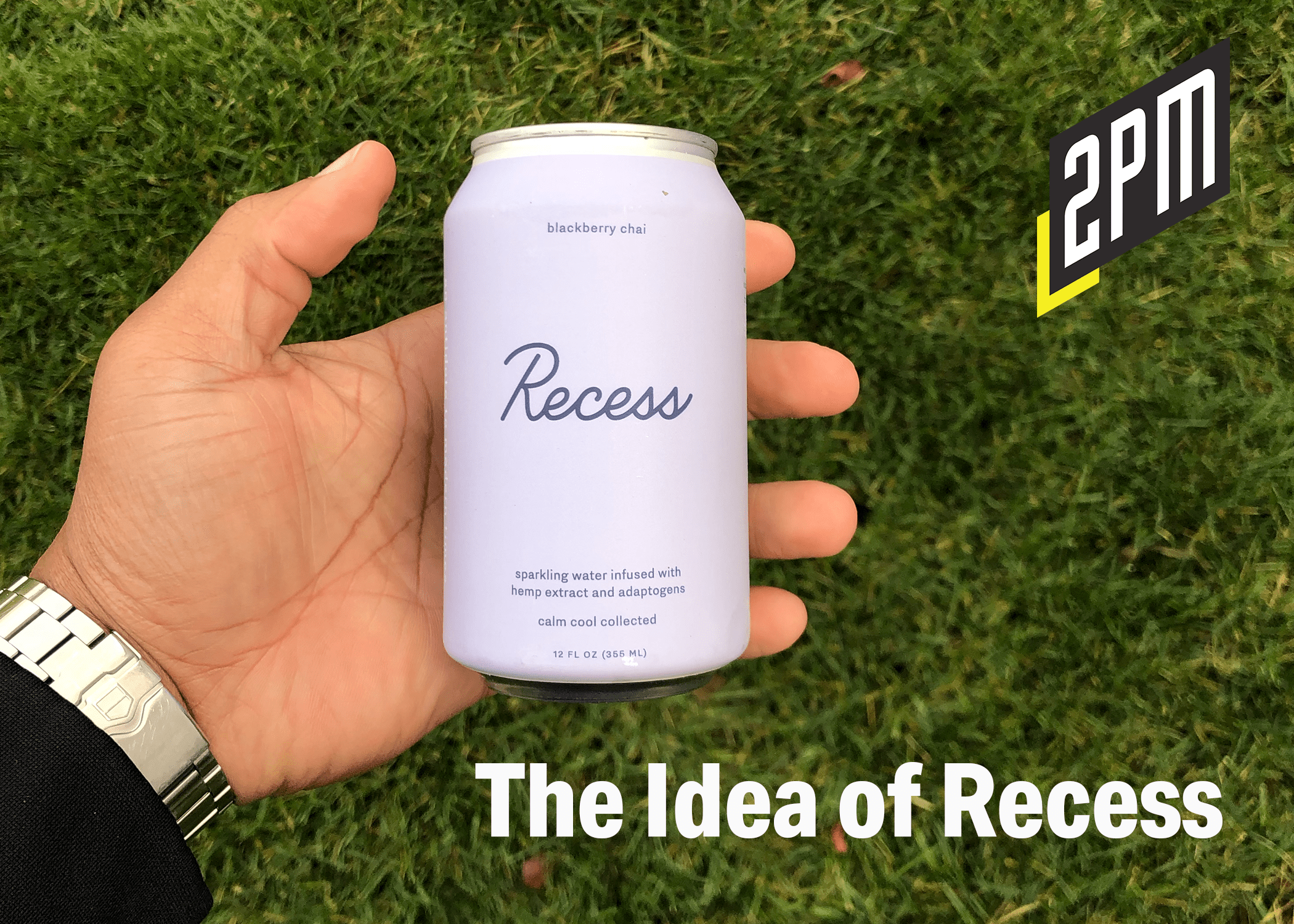
Imagine knowing that your brand will eventually play “chicken” with the Coca-Cola Company. For the founder of Recess, that seems like an inevitability. While 2PM, Inc. doesn’t boast a podcast for retail founders, we’re on the horn with CPG and DNVB investors and founders each and every day. One conversation with Ben Witte and you’ll leave it feeling at ease. The CPG founder has a plan and if he has it his way, Coca-Cola won’t deter the brand that he’s building.
Coca-Cola is looking at pitching cans of cannabis-infused wellness drinks to consumers in the latest bid by a big beverage behemoth to tackle the budding market for potentially potent enhanced potables.
“Along with many others in the beverage industry, we are closely watching the growth of non-psychoactive CBD as an ingredient in functional wellness beverages around the world,” the company said in a statement issued in response to a report from the Canadian BNN Bloomberg new service.
Coke Eyes Cannabis Fueled Wellness Drinks
BevNet, the authority on the CPG beverage industry, lists nine competitors in the CBD-infused drink space. Two of them, Dirty Lemon and Recess, couldn’t be more different. But to newcomers to the CBD product space – it’s difficult to tell, early on. To remedy this, I purchased CBD-based products from both of the brands and tested things on my own:
2PM, Inc. on Twitter
Upcoming: 2PM’s first CPG / DNVB “head to head”. @BenWitte’s Recess vs. @drinkdirtylemon’s CBD. We assess the “end to end.”: purchase process, shipping, and product.
Both products were great. Where Dirty Lemon succeeded in logistical prowess and speed, Recess succeeded in product efficacy. Founded in 2015 by military veteran turned industrial engineer Zak Normandin, Dirty Lemon hit the shelves in 2016 with a focus on several aids to wellness. Here’s Normandin on the recent Loose Threads podcast:
Just one on launch: the Charcoal. And then we launched Collagen and Sleep as well, in 2016. And then in 2017, we launched Ginseng and then in 2018, we launched Rose Matcha. We’ve had a lot this year. Rose Matcha, CBD, the Vogue beverage. Yeah. And then we have Turmeric that we just released as well. So that’s the last one and we’ll do one more this year in December.
Beyond what you see, there isn’t one additional mention of “CBD” in Normandin’s interview with the Loose Threads founder. And that’s by design. Despite the incredible popularity of the Dirty Lemon CBD drink or the drink’s role in helping it leap from pop celebrity to practical mainstream, Normandin is essentially tasked with disavowing CBD until the deal finalizes with Coca-Cola. Looming in the background is Senator Mitch McConnell’s hemp legislation within 2018’s Farm Bill. Without this legislation, full spectrum CBD will effectively remain an illegal additive to mainstream beverages.
Shortly after I experienced Normandin’s innovative text ordering process and pleasing customer service, the CBD drink was effectively discontinued (for the time being). Sure to be lucrative, Dirty Lemon is the type of beverage brand that Coca-Cola or Pepsi would wildly bid for. It’s well branded, the following is loyal, and it has star power. This in addition to the product being pretty good. Coca-Cola’s investment into Kobe Bryant’s BODYARMOR drink is the closest analog to what Dirty Lemon hopes to realize. After the brand’s recent deal with the NCAA, Bryant is one step closer to realizing an acquisition.
Consistent with our strategy of incubating bolt-on M&A deals, we believe taking an initial minority stake today, with a clear path to ownership, will allow BODYARMOR to continue to grow the business in a sustainable manner while maintaining the brand’s leadership and edge that have made it so successful.
Jim Dinkins, President of Coca-Cola
From Issue No. 282: Instagram’s CPG Problem (a deep dive into the CBD industry)
CBD, short for cannabidiol, is growing in popularity among beauty and health consumers. It’s a THC-free substance known for treating everything from muscle relief to insomnia. In June, the first CBD-based drug won FDA approval for epilepsy treatment. And as it relates to this article, CBD has been popping up in high-end skin care products. But Facebook and Instagram’s rules have been uneven at best and it’s causing quite an issue in the CPG space. It falls under Facebook’s prohibited content category.
In October 2018, Business Insider reported that Coca-Cola was mulling a Series A investment into Dirty Lemon. And according to federal laws, inclusion of CBD is considered illegal, unless expertly extracted from the right part of the cannabis plant. To achieve this takes quite a bit of research and expertise. One that Dirty Lemon was unwilling to invest in, for now.
With the closing of its new round of funding, Dirty Lemon will undergo a significant rebranding, the people said. While most of the company’s rebranding efforts aren’t apparent just yet, Dirty Lemon’s CEO Zak Normandin tells Business Insider the company is discontinuing one of its most popular products: its CBD-infused beverage.
But despite the incredible upside that Dirty Lemon has waiting for it in the realm of CPG acquisitions, it’s Recess that has the potential to become a transformative wellness brand. While Dirty Lemon is focused on holistic wellness with use of elements like charcoal and collagen in its drinks, Recess seems to provide a better “why” through its early branding and multi-platform content. And given its relative youth, it needs all of the help it can get.
If you try to order a case of Recess, you’ll find that it’s backordered four to five weeks. The brand’s launch and ensuing public relations tour was meticulous but Witte seems to be playing a long game (straight out of 2PM’s “best practices” handbook). Witte isn’t building a beverage company like Dirty Lemon, he’s building a platform. Much like Glossier isn’t just a makeup company, the plans for Recess are so ambitious that it might just make sense. Like Glossier and its media arm: Into the Gloss, Recess seems to be taking on the tough task of educating its consumers on the why’s of the more adult-like form of recess. Remember elementary school everyone? We don’t stop to breathe, anymore.

While Normandin and Dirty Lemon have temporarily stricken mention of the substance from interviews and pitch decks, you won’t find the acronym “CBD” on a single can of Recess either. To Witte, the brand is bigger than the three letters. His product offering is suited around addressing productive ways for overworked consumers to value calm, balance, and clarity – despite increasingly hectic lives. For consumers who’ve sidestepped any and all forms of psychoactive substances, Recess is tasked with normalizing its productivity and safety.
Dirty Lemon’s scene is built for leisure, Recess is more grounded in the day to day.
And to this end, Recess may be experiencing a bit of serendipity. Known as a “deeper metric”, there is a growing cohort of health conscious entrepreneurs and professionals who’ve adopted the use of HRV (heart rate variance) as a tracked measure. Popularized by Whoop and available on the most recent Apple Watches, the analytical measure was intended to quantify a person’s physical recovery after sleep.
To achieve 80-90% recovery – despite external stressors, physical fitness pursuits, and shallow sleep – many entrepreneurs are adopting CBD oils and drinks. The goal: address the perception of physical, emotional, and mental stressors. To many, the Recess brand may be the most welcoming option on the market.
We all have too many tabs open in our browsers and in our brains. That’s why we made Recess: each can is a moment to reset and rebalance. It’s how you wish that 2PM coffee would make you feel.
The copywriting on Take a Recess homepage says it all. Witte’s recipe of hemp extract and adaptogens may (or may not) be like anything else on the market. But if it’s up to him, the education and entertainment that the company will provide potential consumers will be unparalleled in the CPG beverage industry. And the potential of his Glossier-like “content and commerce” strategy will provide quite the platform for further product differentiation and expansion beyond cans or bottles.
Read your curation here.
Report by Web Smith | About 2PM