
Memo: Apple’s BNPL Ambitions

There are two classes of buy now, pay later services being formed. Klarna, Affirm, and others are competing for the masses. In a time of economic distress, those masses are relying upon BNPL more than ever. According to Credit Karma, 60% of debt users are more likely to use BNPL because of inflation. Apple is taking a different approach for a different kind of customer and it may have something to do with recent news from the Cupertino hardware and software giant.

Apple Pay Later is missing from iOS 16, delaying the company’s entrance into the buy now, pay later market. Reports have swirled that technical and engineering issues were the reason for the delay. Here’s our take. Apple could also be hitting pause after surveying the current economic landscape and the state of other BNPL competitors.

As Bloomberg points out in its iPhone 14 review, there’s no set time frame for when Apple Pay Later will be available – it could be in the spring with the iOS 16.4 update or it could be sometime this fall. Apple is likely waiting until its feature is perfect but there’s reason to believe it’s waiting until the current inflationary period passes in order to get in front of the right customer. To understand where Apple Pay Later fits into the market, it’s important to look at what’s happening in the broader BNPL space.

On Friday, Klarna announced that it will be undergoing a restructuring that will include layoffs and a focus on profitability over growth, Bloomberg reported. About 10% of the company’s 7,000 employees would be cut under COO Camilla Giesecke’s vision for the path forward. This comes as Klarna’s losses have mounted, it’s been hurt by macroeconomic forces like the war in Ukraine, America’s 9+% inflation, and recession. Private market investors have grown wary of companies that aren’t profitable. From Bloomberg:

Klarna’s losses tripled in the first half of the year. [CEO Sebastian] Siemiatkowski has said that Klarna can’t afford to be “as forward leaning” while investors are becoming more cautious on the industry, and said he aimed to bring the business back to profitability. The company’s model makes it vulnerable to rising costs that might force customers to cut spending or affect their ability to repay their loans.

Klarna, which has become a leader in the BNPL space, extended out “over its skis” as it looked for ways to grow beyond “just” payment solutions. In past coverage, Klarna has said to have goals of becoming the power platform behind the online shopping mall.

Affirm, meanwhile, announced a new partnership with Amazon on Monday to expand on the retailer’s platform in Canada. By deepening its relationship with Amazon, Affirm is attaching itself to a massive partner who can help it stretch into new areas without the cost typically associated with expansion. In a similar move, Afterpay parent Square also said this week that it will launch Afterpay in Canada to get its BNPL services in front of more customers.

Affirm and Afterpay are eyeing untapped landscapes as Klarna stumbles and Apple Pay Later looms: it’s likely a winner-takes-all for the remaining players after Apple launches its own offering. At least for traditional consumers, Apple’s BNPL strategy may differ from the rest. Like the Apple Card (backed by Goldman Sachs), Apple may be focusing on wealthier credit clients. More on this in a moment.

All of this is happening as inflation remains high in the US. Klarna and its peers are vulnerable to tighter budgeting, shorter household cash flows, and limited spending. With many people experiencing tougher times, they are more likely to default on payments, opening the model up to risks.

However, in a US survey, 60% of people were found to be more likely to use BNPL because of inflation, and 53% were using BNPL out of necessity. Forty-five percent said they were were most likely to use BNPL when their finances are tight. That means that Klarna’s troubles aren’t to be blamed on a decline in interest on BNPL. But rather, a more tenuous financial outlook makes people more reliant on services like BNPL. For many, it’s a way to make purchases now without taking on credit card debt. It’s a dangerously unregulated substitute for traditional debt.

That raises questions about Apple’s own service and how it wants to differentiate itself from others in the market. Apple is likely looking for a more premium BNPL user, one that it can link to and turn into an Apple Card owner. Apple Pay Later purchases were previously said to be capped at $1,000, meaning Apple is positioning smaller-ticket purchases for APL, while Apple Card would be used for bigger investments. Apple Pay Later is a convenient alternative to credit for people who have the option – it’s not a necessity. Apple Card also gives perks like cashback, which APL doesn’t, but if it’s an entrypoint to Apple Card, it’s a step in that rewards direction. Apple Pay is also already a trusted service, so Apple could get the sign-off from customers who may be wary of other BNPL services. It’s also a convenience factor: Apple stores all information about upcoming payments in the Apple Wallet, keeping payment trackers and reminders in one place.

That could help Apple Pay Later succeed where other BNPLs falter. Klarna’s most recent announcement follows a year of disruption, which we reported on in June:

What is the main culprit causing Klarna’s valuation to tank after such soaring heights? Is it being in the sights of Apple’s next ground capture? Or PayPal developing its own competitive products? Is it the regulations emerging in the UK against Klarna and its peers over predatory practices appealing to young customers? Or is it the sobering up of venture capitalists as we loom on the brink of a recession? It’s likely a combination of the above.

Apple has the ability to withstand obstacles like regulations and a recession in ways that Klarna and its peers may not – at least not to the same degree. Apple’s advantage may grow against AfterPay, Affirm, Klarna, and others. Apple’s payment systems are native to its operating system and hardware, an advantage that other financial technology companies do not seem to share.

Regulations have begun to ramp up. After undergoing scrutiny in the UK for practices that lure young customers into incurring debt, BNPLs are finding themselves facing regulations in the US by the Consumer Financial Protection Bureau, Fox Business reported on Monday. The agency does not currently oversee BNPLs, but new guidance would apply the same standards for credit cards to the sector. If Apple only lends to Apple Card holders, this regulation would benefit them.

BNPL lenders would be subject to “supervisory examinations”, like credit cards, Fox Business reported. Risks assessed by the agency include user privacy and data protection – something that Apple, which already runs Apple Wallet and Apple Card using security measures like Face ID, has an advantage in. At the same time, the CFPB is wary of a monopoly that would consolidate market power, “reducing long-term innovation, choice and price competition” while giving a few big players access to an outsized amount of consumer data.
In BNPLs, competition is a positive, the CFPB posits. From the Fox Business report:“In the United States, we have generally had a separation between banking and commerce,” [CFPB Director Rohit] Chopra said. “But, as Big Tech-style business practices are adopted in the payments and financial services arena, that separation goes out the door.”

With all of that being said, Apple Pay Later is still mysteriously delayed. When you look at the BNPL landscape, the company could be waiting until the right time to release its own entrant into the market. Once competitors start building back up, Apple could come in and disrupt the entire category. But for now, it’s waiting – for the right product, the right customer and the right conditions.

वेब स्मिथ द्वारा | हिलेरी मिल्नेस द्वारा संपादित, एलेक्स रेमी और क्रिस्टीना विलियम्स द्वारा कला 

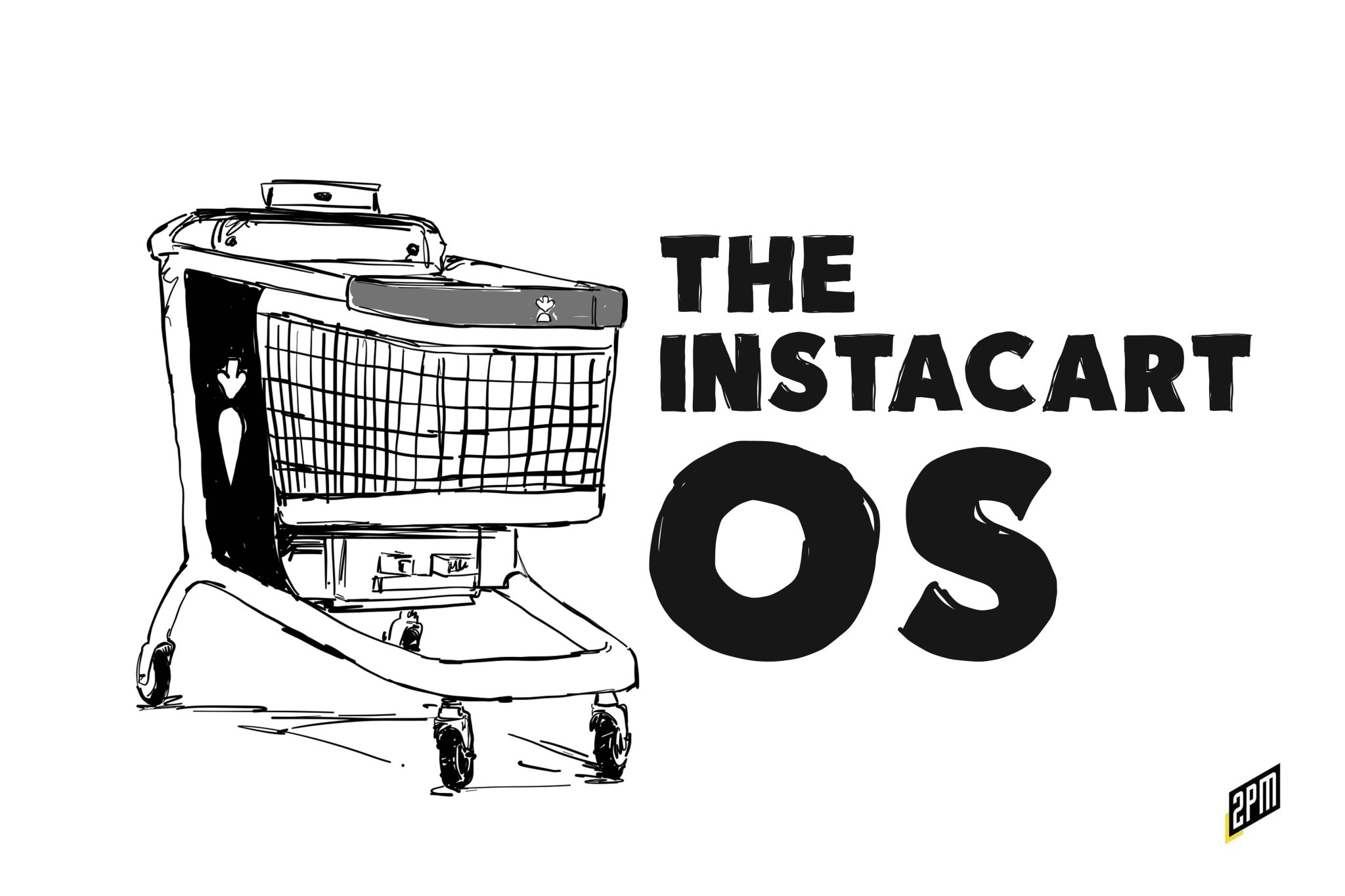
Memo: Instacart’s Omnichannel OS

Instacart is on its way to becoming the Shopify of Grocery on the way to its initial public offering. A suite of new omnichannel merchant tools is laying the groundwork for its refreshed identity, one built around democratizing the access to online marketplaces for merchants – big and small. Sound familiar?

We believe the future of grocery won’t be about choosing between shopping online and in-store – consumers are going to do both,” Fidji Simo, CEO of Instacart

The rollout of the new technology platform, called Connected Stores, is the latest move in a busy month for Instacart, which made two key tech purchases earlier in September that underpinned its independent grocery ambitions. We outlined the acquisitions of Rosie, a grocery eCommerce and mobile commerce platform, and Eversight, an intelligent pricing and promotions platform, and how they fit into Instacart’s long-term plans to connect physical and online grocery retail and advertising into a thriving flywheel for the digital age. From September 9’s Notes on Grocery:

Success online and in retail stores is connected, particularly when it comes to digital advertising. Digital ads and online visibility is necessary to drive awareness, particularly for emerging DTC brands that need to attract new customers. But physical stores are where most people buy CPG products. From Insider Intelligence, nearly 95% of food and beverage sales and 90% of total grocery sales take place in-store.

Instacart’s approach isn’t to try to replace in-store grocery sales with eCommerce sales, but to power both physical and digital purchases in a way that connects them to each other seamlessly. If successful, it will be the platform responsible for flipping the online switch for small, independent grocery companies that have so far struggled to translate their retail businesses to digital ones. The goal is to bring small, independent grocers online with as much capability and tech prowess powering them as Whole Foods has an Amazon-owned company.

It’s an ambitious plan, but Instacart has proven in the past three weeks that it’s prepared to invest heavily in the technology to do it.

Under the Connected Stores umbrella, the company is rolling out six new Instacart Platform technologies. According to the press release, the technologies will help “grocers bring together the best of online ordering and in-store shopping for consumers. Connected Stores create a unified, personalized experience for customers by enabling them to move seamlessly between a retailer’s app or website and its physical, in-store experience.”

The six new technologies are:

Caper Cart: This is an AI-powered smart cart that lets customers automatically scan items for pricing and more information as they shop in store using scales and sensors and equipped with a touchscreen and computer vision. This is Instacart’s version of the smart shopping carts, teased by grocery tech for years and most prominently executed by Amazon but still largely nonexistent in everyday stores.

Scan & Pay: Scan & Pay turns phones into scanners so customers can automatically check themselves out as they shop and skip lines. They’ll need to be logged in to Instacart, which will also save items to online shopping accounts to make future purchases easier.

Lists: Lists gives customers the ability to sync shopping lists from their Instacart app or grocery stores’ Instacart-powered apps to a Caper Cart via QR code. The Caper Cart’s touchscreen will then make it easier to locate items from the shopping list in the store and check them off as they’re added to the cart.

Carrot Tags: Carrot Tags are electronic shelf labels that can be uploaded to the Instacart platform, giving labels more functionality for shoppers and associates. Carrot Tags essentially turn traditional labels into smart labels and can let associates choose what information they want to display about an item in store. It also makes it easier for customers to match online products with in-store items by making shelf labels scannable.

FoodStorm Department Orders: FoodStorm is an order management system connected to the prepared food departments, like bakery and deli, and the new Department Orders functionality connects across departments so that they can all have one customer’s order ready at the same time.

Out of Stock Insights: This API gives retailers real-time alerts when items are nearing out of stock or have fully run out, making it easier for stores to plan ahead with inventory management, avoiding out-of-stock notices.

Together, these technologies are positioned to enable a smarter, independent grocery store. Instacart is also partnering with Good Food Holdings to build the first Connected Store at a Bristol Farms grocery store in Irvine, California. Instacart’s new services will power the store with all six Connect Stores technologies, including new checkout options and smart discovery tools. It’s not unlike Amazon’s strategy of building retail stores to show off its own retail tech, but Instacart is skipping the Instacart-branded store and going straight to the retail partners to demonstrate compatibility. It has no plans to own a branded storefront, it simply wants to enable others. Neil Stern, CEO of Good Food Holdings, on incorporating the Connected Store model:

At Good Food Holdings, we’re proud to provide our customers with a personalized shopping experience – whether they’re opting to build their baskets online or joining us in-store. As customers have adopted delivery and pickup over the past year, we’ve found it increasingly important to evolve our business with omnichannel customers at the forefront. As we look to the next decade of grocery, we want to make sure that we’re providing an inspirational shopping trip for our customers – and this starts by building a Connected Store. In partnership with Instacart, we’re excited to introduce multiple ways to checkout with Caper Cart and scan & pay, while driving inspiration through Lists and Carrot Tags. Instacart is an innovator in grocery technology, and we’re thrilled to be their partner and debut the first-ever Connected Store at Bristol Farms this year.

The partnership between Instacart and Good Food Holdings will show at large that grocery, long the last digital frontier for retail, is coming into a new era of commerce. While the majority of sales are likely to remain in-person, retail media networks and online ordering capabilities will drive business and make it more intelligent at the same time. Instacart is amassing power by giving smaller grocers a way to grow online without sacrificing physical stores. It’s the Shopify approach to grocery retail, and like Shopify, it views Amazon as its competition.

वेब स्मिथ द्वारा | हिलेरी मिल्नेस द्वारा संपादित, एलेक्स रेमी द्वारा कला

Memo: RokuMart

We often choose what’s in front of us. This is the bet that Roku is making on both media and online retail.

Retail Media Networks are at the forefront of merchandising and performance marketing. Roku is months into quietly developing an approach of its own. Two principles that we’ve researched here in the past may be combining to form the future of shoppable commerce. To accomplish this, Roku must first become platform agnostic, at least from a content perspective.

The 1990s saw the peak of cable television’s rule. Today’s market fragmentation is a product of the cable industry’s early indifference towards streaming. Nearly 15 years later and the media property has its own Netflix competitor. As a result, we have an unlimited amount of big budget streaming content. We’re beginning to see narratives like these: Amazon’s latest Lord of the Rings project losing to HBO Max’s Game of Thrones prequel (of sorts). But consumers are also paying for multiple services, often paying more than they would have if cable television was their primary source of consumption. While there are no plans to address the rising costs of maintaining multiple streaming subscriptions, Roku seems the closest to addressing the need for curating content in a platform-agnostic fashion. Consider what we’ve written about the beginning of the market fragmentation that we know today in the context of streaming:

Market fragmentation is accelerating and while the economics may work for popular individual creators, it may not be what’s best for the industry as a whole. The streaming and the eCommerce industries seem to be inching towards a parallel path to consolidation. It’s a privilege that we once took for granted, whether in the context of streaming content, packaged goods, and fashion retail: it was easier to decide what to buy when our choices were in front of us. We spent much less time searching and more time discovering. Before, the burden rested with the marketplace to do the discovering and curating for the consumer. We browsed cable channels and a centralized guide of programs. We window shopped in malls and roamed the aisles of places like Walmart, Target, CostCo, BestBuy, and Sam’s Club.

By the time that Netflix broke into streaming (2007), obvious cracks began to form in cable’s facade. It was no longer the home of all of the content that you were interested in. Friends were binging Netflix shows while you were watching that episode of Friends for the seventh time. In parallel, retailers like Walmart featured products that you needed. A new generation of modern retailers launched their own sites (with the help of platforms like Shopify), hoping to build a direct-to-consumer business in an efficient manner. For some of those brands, it worked. For most, it did not. Market fragmentation, in both media and retail, seemed to occur in tandem.

Consumers are yearning for a central depository of content and Roku seems to be focused on setting aside its own brand of content (Roku Media) to curate the rest, accomplishing this sought after goal for viewers. It just so happens that consumers also seem to want to rely on traditional marketplace systems of purchasing physical goods. Walmart is back in fashion and the timing couldn’t be better for Roku, Walmart, or the hundreds of brands looking for a new, efficient marketing channel.

As reported by TechCrunch, Roku’s recent announcement addresses the first problem (curation vs. fragmentation) head on:

Roku today unveiled the features it has in store for the next version of its media software, Roku OS 11.5. This time around, the platform maker is looking to advance its own offerings, like its Live TV experience, as well as better cater to viewers who are struggling to keep up with a range of film and TV content across a growing number of streaming services with new features like an expanded universal watch list, a platform-wide “continue watching” feature, and a new discovery center called “The Buzz,” featuring short-form content.

And here is why curation is important. Roku spends on content but not like the other platforms. While Netflix and Amazon have Oscars and multi-billion content budgets, Roku has chosen to invest in a manner that resembles the cable systems of old.

With its own discovery platform, The Buzz, Roku wants to take a more active role in curating the content it carries via its streaming channels and helping users decide what to watch. The platform will carry short-form content like clips, trailers and other videos from partners including AMC+, Apple TV+, BET Plus, Crackle, Hallmark Movies Now, IGN, Plex, Popcornflix, Showtime, Starz, The CW, Tubi, Vevo, and Wondrium. The goal is to get new shows and movies in front of users, who can like posts, follow profiles and save things to watch later in the app. It’s paired with new features including a save list and continue watching, making it easier to navigate to programs and shows on the Roku platform without visiting individual apps.

As The Verge reports, the discovery platform’s utility will vary by user, but the idea is to offer a more personalized experience as it gets to know individual preferences over time. Its success will also depend on streaming services’ willingness to play ball: if a big player is missing from the lineup, that will leave a hole in Roku’s ability to show users all of the content that it can offer. Some streaming services may find it useful in order to promote their content, but the big guns like Netflix and Disney+ may not feel as if they need to do so. Ultimately, what Roku wants to do is be the conduit that people use to find the content they want to watch, be it through early discovery or picking back up on what they’re in the middle of as easy as possible. Roku’s own content is taking a back seat, something that might bode well for streaming services’ willingness to work with it.

Roku will also launch new technologies atop its existing self-serve ad platform. An earlier article from June explains why curation and interface are so important to Roku (and why its ceded billion-dollar content budgets to other platforms). It wants to make shoppable advertising the future of streaming content. And while Prime TV and Amazon Prime would make sense as the de facto leader in this retail / media merge, its Roku’s interface and Walmart’s partnership that make Roku the new leader. This is happening at an interesting time for Retail Media Networks. Twenty-eight of the top performing applications, according to Search Engine Land, have already begun building PPC tools for the top retail media networks:

The Roku x Walmart partnership, which was formed in June, is a first-of-its-kind effort to unite streaming and shopping. Walmart is the exclusive retail partner of Roku, and streamers can become shoppers with a few clicks of their remote while they’re watching something in which shoppable products are featured. The point is for it to become second nature by making it easy to checkout. According to Progressive Grocer:

Viewers just press “OK” with their remote on a shoppable ad and move to checkout, with their payment details pre-populated from Roku Pay, Roku’s payments platform. Once there, tapping “OK” on the Walmart checkout page places the order. A Walmart purchase confirmation is then emailed with shipping, return and support information.

Roku already has a built-in payments system to allow viewers to buy streaming-related and subscription purchases in the app. The retail component is an extension of that, and brands, marketers, and the broader industry will be watching to see how it lands with customers. Do people watching an ad on TV jump that quickly to making a purchase? Roku will find out. The efficacy of the shoppable ads will be measured by the company’s in-house team. Its brand studio will also work with marketers to create the right ads for the platform.

Roku’s ambitions to be a streaming media curator may foretell the future of content platforms in the streaming age. Roku has the content, it’s now building a universe where people can watch movie trailers, save content lists, and more easily navigate the often overwhelming world of streaming. Whether or not that’s where people also want to shop will remain to be seen, but the investment in the ad platform has the makings of a new sort of new retail media network at work.

वेब स्मिथ द्वारा | हिलेरी मिल्नेस द्वारा संपादित, एलेक्स रेमी और क्रिस्टीना विलियम्स द्वारा कला