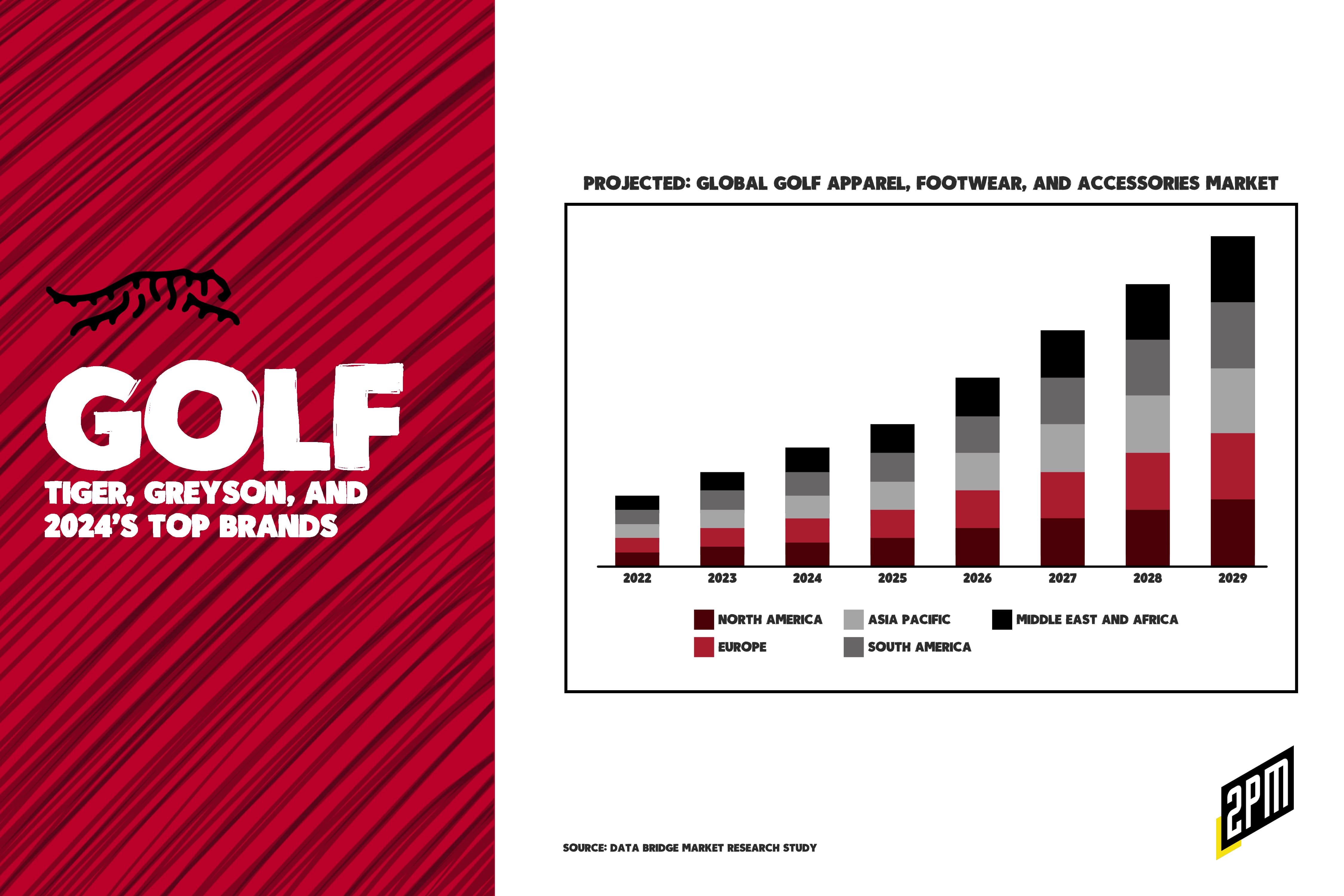
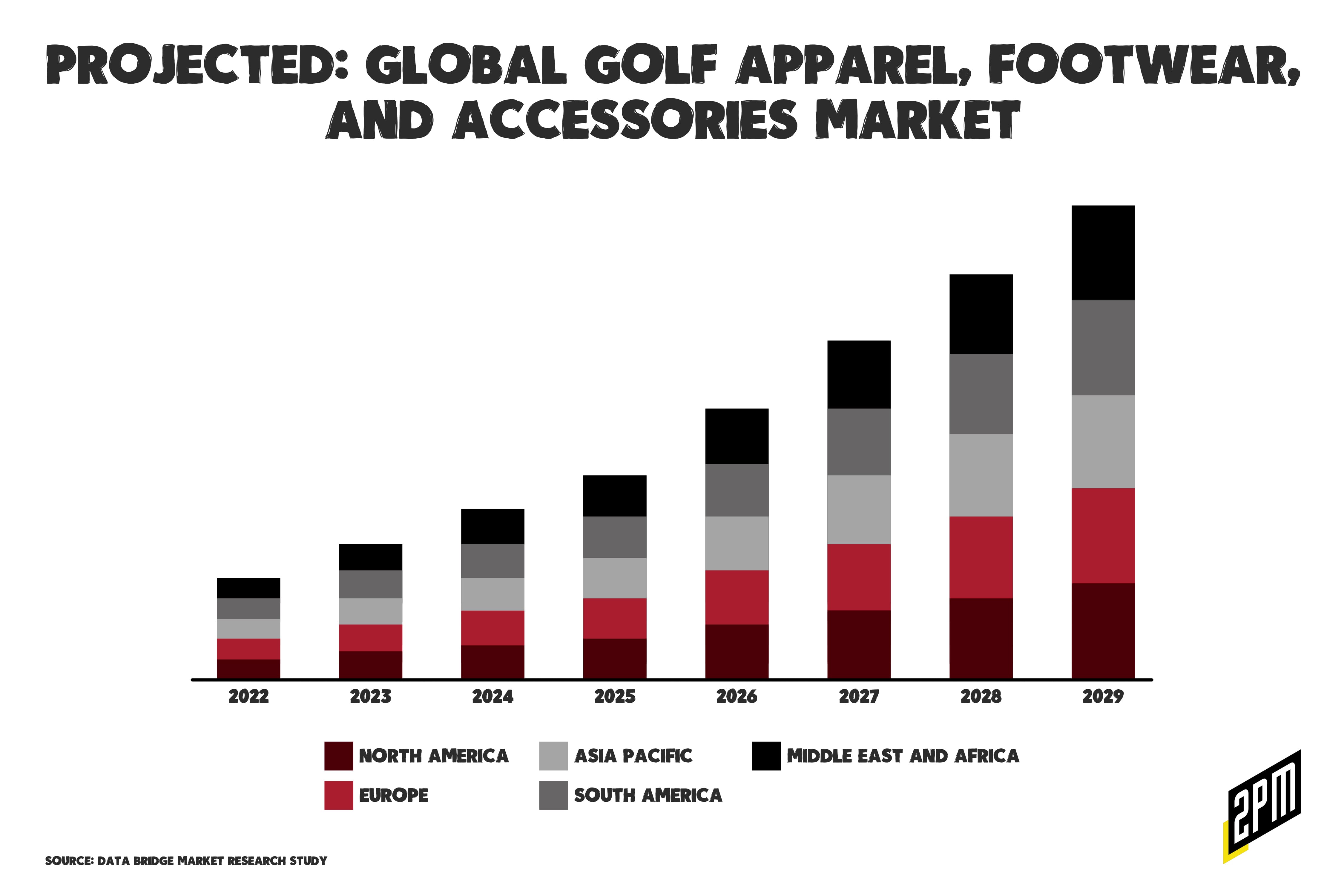
According to recent projections, the golf apparel and accessories industry will triple over the next five years with the most substantial growth coming by way of the Middle East and Africa. This year also marks a sea change in the sport with Nike and Tiger Woods parting ways while several others claw for position atop of a red ocean market.
NFL Hall of Famer (to be) JJ Watt has said many wise things in his career and beyond it. But it’s something he mentioned six years ago that is still relevant today, “Has any one athlete ever moved the needle for an entire sport like Tiger for golf?! Maybe MJ, Serena… idk.” Given recent events, a rundown of the sport’s most interesting was in order.
To do this, I collected every list of golf brands that I could find over the last year, from Gear Patrol to GQ to Golf to Men’s Health and everything in between. I used ChatGPT to identify the brands most consistent among the many lists (with one clear exception). The list blends the old, the new, and the to-be launched.
The 2024 List of Top Golf Brands
- Sun Day Red – May 1, 2024 launch from Tiger Woods will symbolize dominance, victory, tradition.
- Fore All – A new women’s golf apparel brand that mixes functionality with fashion.
- Greyson Clothiers – Known for high-quality, stylish golf apparel.
- A. Putnam – A fresh brand in women’s golf apparel focusing on understated luxury.
- Adidas – Consistently stylish and functional golf apparel for both men and women.
- Malbon – A fashion-forward brand with partnerships across the industry.
- Ecco Golf – Offers some of the most comfortable spikeless golf shoes.
- Polo RLX Golf – Classic golf fashion meets innovative fabrics.
- Puma – Known for quality golf clothing and innovative shoe technology.
- FootJoy – Embraces traditional styles with modern technology.
- Rhone – Offers the “Everyday Five Pocket Pant” and stylish polos.
- True Linkswear – Stylish golf shoes designed for comfort and functionality.
- 7Diamonds – Offers the Yael Striped Sweater Polo, blending fashion with golf attire.
- Original Penguin – Known for its stylish upcoming collections.
- Devereux – The brand’s mantra is “play more, complain less.”
- Lohla Sport – European designs for the American sporty-resort lifestyle.
- Jones Sports Co – Offers high-quality golf bags and backpacks.
- Stitch Golf – Known for its travel accessories and golf bags.
- Sunday Golf – Light and fun golf gear, known for their golf bags.
- Lululemon – High-quality, fashionable athleisure suitable for golf.
- Nike – Offers a wide range of golf apparel and gear, known for affordability.
- J. Lindeberg – A luxury lifestyle brand with a strong golf apparel line.
- Manors – Focuses on classic, preppy shades and quality knitwear.
- G/Fore – Contemporary take on golf apparel with vibrant colors.
- Bogner – Luxury brand known for its functional and stylish golf polos.
- Rhoback – Functional, stylish, breathable, stretchy, vibrant, comfortable, sporty.
- Under Armour – Offers a wide range of golf apparel and accessories.
- Eastside Golf – A newer brand that blends streetwear with golf tradition.
- Bogey Bros – Golf style with an impeccable sense of humor.
- Peter Millar – Offers premium fabric golf apparel, from sweaters to jackets.
- Mizzen+Main – One of the original players in the performance wear space.
One of these brands deserves a spotlight given recent developments and it isn’t Tiger’s. Charlie Woods recently stepped into the limelight with Greyson Clothiers, diverging from his father’s first apparel partner. Tiger, an apparent fan of Greyson but in need of something more, leaned towards TaylorMade for the iconic Sun Day Red partnership. This decision likely hinged on TaylorMade’s robust omnichannel distribution network, despite the textiles bearing a closer resemblance to Greyson’s sophisticated offerings than anything TaylorMade has previously crafted. This strategic partnership reflects a blend of legacy, modernity, and a familiar design ethos (from what I can tell by the early images). That design ethos reminded me of Charlie Schaefer’s burgeoning brand.
In Awe of Greyson Clothiers
The Greyson story is shaping up to become the rare exit outcome in DTC fashion, one plagued with stall outs and private equity mergers (fire sales).
I consider Greyson the sartorial knight of the sweat-wicking fabric category.
Schaefer swung his way from the Duke golf team fairways to the polished floors of Ralph Lauren, only to later set the stage for a fashion revolution of sorts in a stale golf category. It was here, amidst the racks of preppy attire, that fate played its hand. As the story goes, he found himself plucked from the sales floor by Ralph Lauren himself, and whisked into the whirlwind world of corporate fashion development. He there learned how to manage a fashion retailer while maintaining the creativity required to see it to growth.
In 2015, armed with a dream and a rolodex to envy, Schaefer and world’s no. 1 amateur golfer, Morgan Hoffmann, birthed Greyson Clothiers. This wasn’t just another brand; it was a fusion of sophistication and performance, destined to redefine the golf attire landscape. Fast forward through nine years of cutting-edge designs and bold fashion statements, Greyson Clothiers now boasts a roster of brand ambassadors that reads like a who’s who of the golf world, including Justin Thomas and Matthew Fitzpatrick. This family, as Schaefer fondly calls it, is united not just by a love for the game but by a shared commitment to a lifestyle that transcends the golf course.
Justin Thomas, a brand ambassador and also an investor, sums up the Greyson ethos with the zeal of a true believer. When Thomas talks to fashion reporters about the brand, he notes the company line: it’s not just about looking good; it’s about feeling good, about embracing a lifestyle that’s as much about making a statement off the course as it is on it. Greyson has turned joggers from a golfing faux pas into a symbol of sporty chic, a testament to the brand’s influence on golfing culture and its trajectory.
In a world where golf attire regurgitated tradition, Greyson Clothiers leapt forward, crafting a future where fashion and function stride hand in hand down the fairway. This answer stands out amongst the rest; it’s from a 2021 article in Golfweek.
The evolution of sport and specifically golf has seen some “colorful” fashion. Knickers have been in and around the game since the beginning. I believe that the jogger is the modern-day knicker.
I consider Greyson the sartorial knight of the sweat-wicking fabric category. This is not just a story of triumph in the cutthroat realm of DTC menswear brands; it’s a saga of how Greyson clothed its way to the top of a heap that includes competitors like Mizzen+Main, State & Liberty, Rhone, and the Goliaths known as Travis Mathew and Peter Millar gazing in awe at its meteoric rise.
Greyson understood that to capture the imagination of consumers, it had to do more than just sell clothes with technical properties. It needed to sell a lifestyle, an ethos, and perhaps, a sprinkle of magic (there are a few quirks that I admire). The kind of magic that convinces a man or woman that they can shave strokes off of their game by donning the right polo, joggers, or members-only ball cap.
Ahead of Greyson, Mizzen+Main brought stretchy shirts to the table and relentlessly targeted a psychographic that could only be summarized as the “Chads.” State & Liberty, Rhone, and Rhoback offered sharp fits designed for athletes. And then there were the many others, with brands so entrenched in the golf world, they seemed as immovable as the ancient trees lining the 18th fairway at Augusta. In many ways, Greyson decided it would redefine the edges rather than join the fray.
Armed with the audacity of a startup and the finesse of a fashion house, Greyson Clothiers embarked on a campaign of charm, cool, and innovation. They looked at the sea of sameness – the predictable plaids, the mundane monochromes – and nearly ignored those statements altogether. Why settle for the status quo when you can disrupt the very fabric of golf attire? Thus, they unleashed bold designs (enough to make paisley look pedestrian) and patterns so intricate, you’d think they were hiding the secrets in the member house at Cherokee Plantation.
But Greyson knew that in the heart of every golfer, beneath the veneer of competitive spirit, lies a yearning for comfort and functionality. This is where they were able to match their competitors without giving up on perfecting its style cues. They engineered clothes that felt like a second skin while on course, yet possessed the resilience of a caddie carrying your clubs uphill both ways. Their offerings are not just garments; they were shields against the elements.
It’s safe to say that some of the competition watched in disbelief, wondering if their next line of shirts needed to double as yoga mats to keep up. Others pondered if their next innovation would involve integrating GPS technology into their fabrics to help golfers find the nearest hole. Travis Mathew might have even raised an eyebrow, acknowledging the audacity of the newcomer.
What truly set Greyson apart, however, was its ability to capture the essence of golf itself – a sport of tradition yet constantly evolving, steeped in etiquette but always on the brink of revolution. They understood that to win over the golfing community, they needed to respect its roots while gently nudging it towards the future. And nudge they did, with every stitch, every seam, every daring design that whispered, “This, too, is golf.”
As Greyson Clothiers ascended to the pinnacle of golf fashion, it became clear that they had not just overcome their competitors; they had transcended many of them with a compressed timeline. They had turned the act of dressing for golf into a statement, a declaration that one was part of a movement that honored the game while daring to dream of its possibilities.
In the end, Greyson Clothiers did not just capture the imagination of consumers; it captured the spirit of an era. An era where golf attire could be as dynamic as the game itself, where tradition and innovation could walk the course hand in hand, and where a brand could rise from the ranks to become not just a player, but one with staying power. In the world of DTC menswear brands, amidst the rivalry and the competition, Greyson emerged as an innovator in a space that is incredibly difficult to achieve the balance between sales today and innovation tomorrow.
वेब स्मिथ द्वारा | हिलेरी मिल्नेस द्वारा संपादित, क्रिस्टीना विलियम्स द्वारा कला