

备忘录:线性商业和内容堡垒

苹果公司的意图乍一看似乎很简单。该公司希望改善最终用户的隐私。这种良性的努力带来了一些额外的结果。
通过升级隐私保护措施,苹果公司将损害在这些终端用户帮助下发展起来的大型广告网络。这可能会削弱 Facebook 目前的模式,使其无法满足新的隐私要求。苹果公司还为无意中调整其隐私保护措施打开了方便之门。这样一来,马克-扎克伯格领导的广告公司(和社交网络)将采用一种新的方式来实现其最关键的目标:收入增长和用户效用。Facebook 将成为一家电子商务公司。
线性商业法的设想是销售实体产品的品牌与数字媒体之间的关系。第一份成员简介的第一段写道
线性商务是 2PM 对不断发展的商务生态系统理解的核心原则。它是对受众的优先排序。产品制造商通常将需求生成外包。那些走在时代前沿的品牌会像重视实体产品的生产一样重视受众的增长。同样,遵循这些原则的数字媒体出版商会优先考虑有机和忠实受众的增长,而不是搜索引擎优化或 PPC 驱动的商品点击。[2PM, 1]
如果你打造了一款优秀的产品,你就需要一批忠实的受众作为商品的市场。而如果你已经建立了一批忠实受众,你就需要一个优秀的产品来向他们销售。现在,这也适用于软件驱动的受众和为其盈利的第一方产品。在此之前,移动应用程序一直依赖于从名为 "广告商识别码 "或 IFDA 的跟踪系统中获得的宝贵数据。从苹果公司最近发布的 iOS 14.5 开始,这一数据源已被关闭。
苹果公司决定实施新的隐私政策,这迫使广告业束手无策。在 2020 年 6 月的 WWDC 大会上,苹果公司宣布了广告商访问移动生态系统 IFDA 的新方式。最简单地说,用户需要明确选择允许广告商访问 IFDA,这是一个价值 1890 亿美元的国际产业。应用程序跟踪透明度(ATT)框架不利于那些依赖这一市场获取 iOS 客户的广告商。
Verizon Media 旗下公司 Flurry Analytics 跟踪了 100 多万个移动应用程序,每月从 20 亿台移动设备中汇总数据和见解。根据这些数据,全球 iOS 14.5 用户的选择加入率徘徊在 11% 左右。令人震惊的是,这一数字在美国进一步下降。徘徊在 4% 左右。
内容堡垒和 "其他
第一方数据是填充当今蒸馏塔的物质,而零售媒体网络则将石油般的第一方数据加工成关键资产。在这个比喻中,原油就是内容。正如我最近撰写的关于重新认识内容价值的文章所述,内容现在是所有第一方数据战略的核心。我解释道
第一方数据将引领下一波广告和销售浪潮。美国企业现在正处于一场竞赛中:他们将建立、收购或营销拥有这些数据的受众。独立媒体行业很快就会讨论结果,但我们很少对早期步骤进行剖析。随着越来越多的人追求第一方数据,受众开发将成为市场上最令人垂涎的技能之一。
为了获取目标客户,第一方受众正在取代第三方受众。这是未来发展的早期迹象:在过去的六个月里,有两家大型通讯社被更大的公司收购。[2PM, 4]
苹果公司的决定加快了线性商务(媒体与商务的结合)的采用。再看看 Facebook 减少对苹果生态系统依赖的战略。随着 iOS 14.5 的更新,Facebook 跟踪浏览转化的能力受到了削弱。
这就是这些电子商务产品的用武之地。如果 Facebook 能通过自己的应用程序销售更多产品,它就不会那么依赖跨站用户跟踪。[2]
虽然 Facebook 将成为一家电子商务公司,但他们并不一定要与亚马逊竞争。他们可能会从商品销售中赚取相对较少的利润。但这些产品的广告将促使品牌营销人员继续投资,在 Facebook 旗下的应用程序(包括 Instagram 及其原生商店)上投放商品广告。
当您进行销售时,我们会自动从您的付款中扣除一笔费用。我们称之为销售费。销售费为每批货物的 5%,或 8 美元或以下货物的统一费用 0.40 美元。其余收入归您所有。[3]
当达到预期目标时,Facebook 作为广告商的功效跟踪与 IFDA 受 14.5 版升级影响之前并无不同。Facebook 首席财务官大卫-韦纳(David Wehner)与分析师分享了他的乐观看法:"我们认为,对我们自身业务的影响将是可控的。"Facebook 长期以来一直拥有宝贵的受众,最近又致力于原生商务;苹果对隐私的推动促使这家门洛帕克公司优先考虑其围墙花园,这与亚马逊作为围墙花园广告商的发展如出一辙。
亚马逊在周四举行的第一季度财报电话会议上表示,广告销售额(公司将其列为 "其他")同比增长 77%,达到 69 亿美元。
亚马逊目前占据了美国数字广告市场 10.3% 的份额(之前为 7.9%),预计到 2023 年将达到 13% 的市场份额。在目前由谷歌和 Facebook(苹果也想分一杯羹)主导的广告市场上,亚马逊的 "围墙花园 "策略使其排名第三。Facebook 的 "围墙花园 "策略旨在帮助他们攀升至第一的位置。在这方面,他们比谷歌更有优势。
内容堡垒 "一词是由 Mobile Dev Memo 的分析师 Eric Benjamin Seufert 创造的。这种 "围墙花园 "式的方法表明了获取第一方数据并将其货币化的大趋势。
二月初,移动广告网络 Applovin 收购了移动归因公司 Adjust。除了财务工程(考虑到 Applovin 即将上市)之外,这次收购没有任何战略理由,只是因为 Applovin 正在建立一个自给自足的广告生态系统,以连接其第一方属性。[5]
第一方数据正逐渐成为广告商的关键资产;苹果公司的决定进一步促使广告商优先考虑数据的收集、完善和货币化。苹果最终将取消跨供应商的数据共享,这也是许多用户长期以来的抱怨。这样一来,"围墙花园 "将取代由这种数据做法资助的开放网络。在许多方面,媒体公司和商业公司将无法区分。线性商务的法则不再只是品牌及其内容战略或出版商及其电子商务发展。
Facebook 是一家广告商,利用电子商务销售更多的第一方广告。亚马逊是一家利用第一方广告销售更多商品的电子商务零售商。苹果公司可能会帮助这两家公司实现这两个目标,同时加强自己的隐私保护措施,这也是对即将过去的广告时代的一种解决方案。
作者:Web Smith | 编辑:Hilary Milnes
Members: Juneteenth and American Dreams

The discussion between us was slow and every answer labored. It was difficult to tactfully explain the concept of an “unnecessary wait.”
There’s always a wait.
Modern Retail editor Cale Weissman wanted to understand the Black perspective of those of us in eCommerce. I didn’t have many answers for him. I worked to moderate my responses, struggling to mask volumes of persisting frustrations within the digital industries. At one point, Weissman asked for a list of venture-backed founders in the direct-to-consumer space. There was, of course, the obvious answer. Tristan Walker rolls off the tongue. But I didn’t have a novel response in that moment and I was ashamed of that. There are so few Black professionals in this space. For the vast majority of prospective executives, founders, or investors, they’re still waiting.
A portmanteau of “June” and “nineteenth”, you’ll see Juneteenth celebrations from Target, Nike, Glossier, Deciem, Ford Motors, Adobe, Allstate, Altria, Best Buy, Google, JPMorgan, Lyft, Mastercard, Postmates, Tesla, SpaceX, RXBar, Spotify, Twitter, Square, Workday, Uber, and countless others. Most of it will be in vain and some of the efforts will be widely panned.
Dino-Ray “96,000” Ramos on Twitter: “.@Snapchat released a statement about their #Juneteenth filter… pic.twitter.com/KWPZnlWG3n / Twitter”
@Snapchat released a statement about their #Juneteenth filter… pic.twitter.com/KWPZnlWG3n
You’ll observe brands, people, and media commentators missing the point. You’ll see gimmicks, carefully crafted statements, and an oversimplification of a complex period in American history. Imagine our great grandchildren over-simplifying the present day.
For some of us, Juneteenth was only sort of a celebration. Imagine wanting something for your entire life and then waiting two and a half more years for that something. It’s a bittersweet celebration. For those of us who descended from those strong-minded South Texans, today is the annual reminder of their physical, mental, and emotional resilience. It’s a reminder of our inherited endurance, will, and resourcefulness. There’s always a wait. So, Juneteenth: a celebration, sure. A national holiday? Of course. But within the confines of the classrooms, offices, or neighborhoods of our American cities, Juneteenth should be a day to reflect on the waits that remain.
Grandchild of Slaves and Grandma to Me
Dorothy Smith’s grandson’s first essay remained on her bookshelf. It was an elementary school recount of Jack Roosevelt Robinson’s embattled life, the first man to cross the color barrier in Major League Baseball. I remember the essay because in 1992, it was my first time using a color printer for a school project. I recall the pride of using an image of his baseball card as the hook for a project that made me emotional, even as a nine-year-old. The eight-page report was double-spaced with size 18 font. For some reason, she was proud of that essay and it remained in her home until her passing in April of 2014. She’d critique the cadence and the word choices. She’d implore me to slow down when I read it aloud; I stuttered heavily back then. I credit our conversations for helping to heal that ailment.
Between 1992 and 2014, she’d go on to help me with a number of essays. As she got older and less capable, she’d listen to me narrate the stories that I wrote. But earlier in my life, she’d actually help me write them. A highly educated woman, she was my hero. By the end of this essay, she might be yours. One of those essays was a seventh grade report on Juneteenth’s impact on my own family. I’ll never forget her input:
The message of freedom didn’t make it all the way down here and, so, they had to wait a little bit longer. There was always a wait. There’s always a wait.
President Abraham Lincoln drafted Proclamation 95 in September 22, 1862. Imagine hearing word of this proclamation and then waiting for it to save you. It was effective, five months later, as of January 1, 1863. Imagine counting down those days to freedom. For some, the count was far longer. For that lot, their freedom was hidden by economic and political disdain for the federal order. It would be an additional two years before my relatives heard the news.
Every advocate of slavery naturally desires to see blasted, and crushed, the liberty promised the black man by the new constitution.
Those were the words of Abraham Lincoln in 1864 to Union General Stephen Hurlbut, an ally on paper but a critic in private. Even after the order, a number of states avoided the action required to fulfill the president’s wishes. According to Dorothy Smith, the population of Texas was aware of their ordered freedom long before they received it. For them, it was a painful wait. I’ll never forget the emphasis on “there’s always a wait.” These were the words of Dorothy Smith: child of laborers and sharecroppers. She was an entrepreneur, a retailer, a real estate agent, and mother to six college graduates. Dorothy was the grandchild of Texas slaves and my grandmother.
Her grandparents were born in 1858 and 1853. Dave and Sallie Draper Hill were born enslaved in Panola, a small town on the border of Texas and Louisiana. They were of the last American slaves freed by that Galveston, Texas order on June 19th, 1865. They’d later marry in 1881. According to the 1900 census, they’d go on to have 12 children. My great-grandmother was born in 1895. She’d later become an independent farmer, raising cattle, pigs, chickens. She grew and sold vegetables and she tended to a fruit tree orchard on her property. Her daughter would marry James Smith in 1944 and remain married to the Army Air Corps veteran until their passing – one year apart.
I always contemplate what earlier generations of my family would have done with real opportunity. It always seemed as though they were capable, potent, and waiting. It was Dorothy who we credit with taking matters into her own hands. She was defiant in her capitalism, her pursuit of education, her politics, her advocacy, and the opportunities afforded to her six children. She resented the idea of Juneteenth, in ways. It represented neglect and deception, a stalling of opportunity. It was the embodiment of an unnecessary wait for the opportunity to live a full life.
She stopped waiting.
The Sudden Retailer
With her meager savings, she launched two businesses that operated in tandem. Both companies were within the same strip mall and they’d feed each other business for decades. A licensed barber and realtor, “Melody” became her calling card. By the mid-1950’s, the barbershop generated substantial cash flow, allowing her to hire staff and procure basic wholesale partnerships. Her storefront would double as a beauty supply retailer, amplifying her earnings by catering to an audience with few places else to shop. This should sound like a familiar strategy. Her clientele was working class and upwardly mobile, a trend that would continue throughout the Civil Rights era.
Many would eventually buy homes in the area Northeast area of downtown Houston. Melody Realty would be one of their guides. The Fifth Ward was an area where Black Americans could buy homes without political or social persecution. Regardless of one’s wealth, the city’s affluent remained deed restricted – first legally and then by proxy. The middle-class son of a Texas Instruments engineer and flight attendant, I’d later be born in that same downtrodden area in 1983. Thirty years later, the city’s deed policies remained. There’s always a wait.
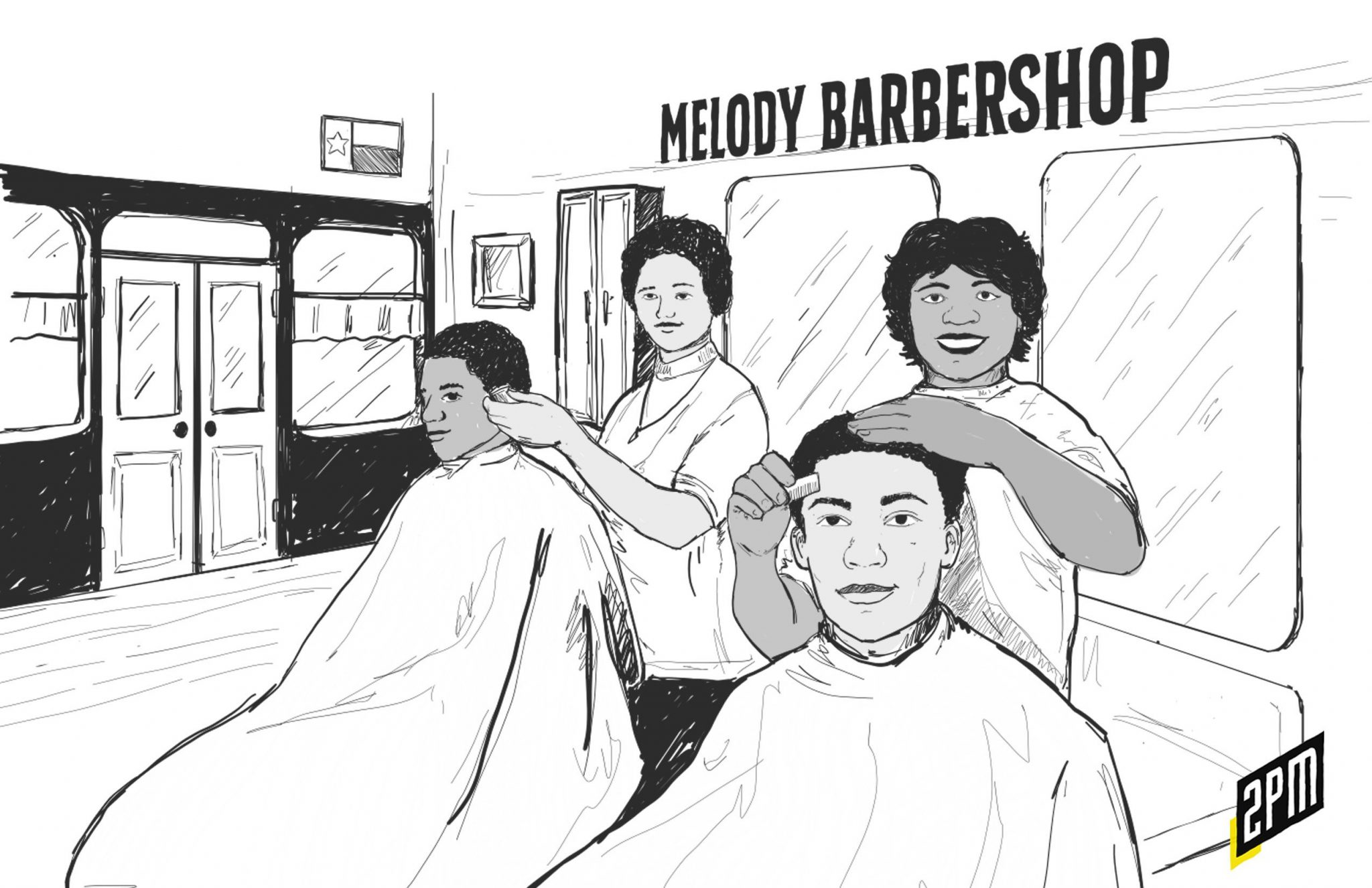
Dorothy would later become one of the preferred real estate agent of her area. In this way, her storefront operated as a funnel. Her Melody brand of business blended short-term cash flows with longer-term windfalls. It changed the trajectory of our family. James, an Army Air Corps veteran, and Dorothy would send six children to colleges across the United States throughout the 1960s and 1970s. All would graduate and five would go on to have children. By the time that we were born, the idea of college was an afterthought. It was just another task for us. And so was entrepreneurship.
Dorothy would enforce a strict policy for each of her children. My father and his siblings would be required to earn their barber’s license while in high school. This sense of economic independence would propel a number of those children to impactful lives in business, religion, and medicine. Today, Melody Realty continues to operate in the Houston area, a testament to her work.
Conclusion: Ending The Wait
By the time I was born, she’d complete classes at Rice University. She was omnipresent in our lives and she stressed the importance of sacrifice. Dorothy Smith’s life had a profound impact on my own. In our home, she’s taken the form of a superhero. Imagine being born into a world that penned you for one thing and then choosing to achieve something more. She’d send six kids to school before the United States provided her the right to vote. My father was 13 when the Voting Rights Act passed. There’s always a wait.
Dorothy was uncomfortable with Juneteenth because it was symbolic of the proverbial weight of an unnecessary wait. This same concept can be applied across generations, including our own. Dorothy would argue that she was nothing special. Imagine what her parents could have done with the freedoms that Dorothy possessed. I can envision Dorothy Smith atop of our industry, if she was born during my lifetime.
The story of upward mobility in America is one of waiting. In the 1800s, it was for freedom. It the early 1900s, it was waiting for the dignity of citizenship. In the late 1900s, it was the wait for legal equality. And today, it’s the wait for equity in treatment and opportunity. We’re still in the proverbial period of waiting.
Today, we are celebrating the overcoming of adversity. It’s not intended to be a pleasant memory. I’d have preferred to celebrate no Juneteenth at all. I am sure that Sallie and Dave Hill would have agreed. When you’re deserving of opportunity, every single moment without it will feel like a decade. Now, imagine how two years of waiting may feel. The daughter of field laborers, she birthed a generation of Black professionals. Her life was a force function that bent time. There should have been more Dorothy’s in the 1950s and 1960s. There should be more of her children. We have to recognize that an unnecessary wait is just as fraught as no opportunity at all.
The hope is that, today and every day forward, we work to bend time. The leadership of the industries that define American exceptionalism should reflect America. We should provide opportunity, fill executive suites, hire the best people, invest in resilient entrepreneurs, mentor, lead, build, uplift, and provide the freedoms that some Americans take for granted.
There are more Dorothy’s than we know and some of them are waiting. The 45 second pause between Weissman’s question and my answer likely made him as uncomfortable as it made me. In a better version of our world, I would have answered his question with ease. It’s critical that we identify our own unnecessary waits. Once we do, it’s our responsibility to end those waits with opportunity. It’s the one small change that can alter the course of generations.
Essay: Dorothy’s Grandson | Editor: Hilary Milnes | Art: Alex Remy | About