第 317 期:DTC 游戏手册是个陷阱

dtcplaybooktrap.jpg

哈利公司(Harry's)最近以 13.7 亿美元的价格退出,取得了可观的成果。这家男士美容公司在某种程度上为 DNVB 的领导者敲响了警钟。是的,Harry's 公司销售的是一种简单的产品,但它在退出的过程中也打破了 DTC 的游戏规则。该公司编写并遵循了自己的游戏规则,为什么更多的数字原住民不这样做呢?据报道,哈利公司的销售额中只有 20% 来自直接面向消费者的收入。哈利公司的一切发展都违背了直接面向消费者时代的假定操作指南。

是的,Target 和 J. Crew 占 Harry's 整体销售额的近 80%。但这并不是 Harry's 有别于其他数字原住民的唯一原因。据报道,Harry's 是一家运营良好的企业:物流运作完美无瑕,据说公司盈利颇丰,而且他们基本上已经根据 DTC 时代的要求重新调整了生产流程。简而言之,安迪-卡茨-梅菲尔德(Andy Katz-Mayfield)和杰夫-雷德(Jeff Raider)是非凡的领导者。

哈利公司在六年时间里取得了巨大的成就。这家剃须刀制造商是早期的全渠道先驱:与 Target 和 J. Crew 的合作对其随后在主流市场取得成功至关重要。与Uncrate等数字出版商的合作提醒消费者,Harry's 是一个高大上的品牌,比竞争对手更胜一筹。Harry's 是最早推出弹出式活动的品牌之一。这些决定都与当时的传统观念背道而驰。


摘自 2014 年 CNBC 采访:华比帕克挑战吉列

雷德尔和卡茨-梅菲尔德认为,哈利公司发展的关键在于这种垂直整合,也就是他们所说的 v-commerce。简单地说,公司现在拥有从研发到制造再到直接销售给消费者的整个过程。"卡茨-梅菲尔德说:"这创造了一个良性循环,让客户真正满意,然后他们成为我们最好的拥护者。


当哈利公司收购了其生产合作伙伴后,该公司成为 DTC 时代为数不多的真正垂直品牌之一。这也是对立的。但是,这使他们能够更快地迭代核心产品,并简化护肤品、肥皂和剃须添加剂等采购产品的迭代。结果,Target 的货架开始反映出 Harry's 不仅是一个产品品牌,更是一个品类的领导者。这样,哈利公司开始以一种不对称的方式挑战吉列,成为首批真正的 DTC 类别品牌之一。通过在其他垂直产品领域设计有吸引力的产品,哈利公司获得了优势。这一优势帮助他们攫取了整个剃须刀市场超过 2.4% 的份额。简而言之,哈利公司不仅擅长营销和设计,他们还颠覆了自己的行业。

我看跌。这很难,只有颠覆者才能生存。

匿名创始人

对直接面向消费者的网络零售时代持怀疑态度并不新鲜。大橡树风险投资公司(Great Oaks Ventures)的普通合伙人亨利-麦克纳马拉(Henry McNamara)最近在推特上写道

亨利-麦克纳马拉在 Twitter 上

DNVB 估值超过 10 亿美元及融资 👓Warby 17.5 亿美元- 2.9 亿美元融资 (6x) 👟Allbirds 14 亿美元- 7,700 万美元融资 (18x) 🪒Harry's 13.7 亿美元- 4.61 亿美元融资 (3x)* 💄Glossier 1.2B- 筹资 1.87 亿美元 (6.5x) 🛏️Casper $1.1B- 筹资 3.39 亿美元 (3.5x) 🪒Dollar Shave $1B- 筹资 1.63 亿美元 (6x)* 🧔Hims $1B- 筹资 1.97 亿美元 (5x)

他后来更正了关于 Harry's 公司的数字(已售出 3.75 亿美元的股权),但重点依然存在。投资数字原住民值得吗?值得。但前提是该品牌有能力颠覆之前的增长策略和品牌定位。Dollar Shave Club 和 Harry's 是 DTC 时代最著名的两个退出案例,它们都找到了获取客户并向其销售不断增长的产品目录的方法。这两家公司的估值都在融资额的 4-6 倍之间。这些公司找到了创新的营销、分销和增长方式。反过来,它们通过创新赢得了市场份额,牺牲了现有企业和其他挑战者的利益。

DTC 的游戏规则是一个陷阱

不言而喻,我对DNVB整体持悲观态度。从整体上看,该行业倾向于依赖有系统和明确计划的左脑经营者。但是,我看好挑战者品牌,他们已经意识到,取胜往往是改写游戏规则的结果。对于那些希望发展到(有效的)临界质量甚至退出市场的品牌来说,DTC 的游戏规则是一个陷阱。从零到一的过程并非以商学院的理论为支撑。品牌无法仅通过分析昨天的LTV:CAC比率来预测明天的生存能力。但DNVB的增长也不是一门艺术。数字原生品牌不仅要有漂亮的设计和精明的文案。众所周知,DTC的玩法每次都必须重写。如果编写 DTC 游戏手册,可以归结为以下几点:

没有战术手册。DNVB的发展必须是灵活机动的。品牌必须在没有机会的地方寻找机会。它们必须寻求做尚未做过的事情。

因此,是的,我看跌当今的许多 DNVB。这些品牌只是在沿袭之前品牌的发展道路,我认为这对它们的发展是弊大于利。它们通往早期阶段里程碑的道路通常都是未经证实的趣闻轶事,而这些趣闻轶事都是由可能从未售出过实体产品的投资者撰写的。

最近,Ryan Caldbeck就这一话题发表了一篇文章,Circle Up 的创始人兼首席执行官也表达了类似的怀疑,他的观点如下:

    • 我不太相信 DTC 会扼杀很多现有企业。如果我们看看百事可乐、联合利华等公司的份额损失,其中大部分并不是因为 DTC,而是因为产品/品牌满足了当今消费者碎片化的独特需求。
    • 我对 DTC 初创公司是否已经掌握了网络营销深表怀疑。几乎所有这些公司都在以 CPG 行业前所未有的速度烧钱(大部分用于市场营销)。这是否意味着他们擅长营销,或者只是他们说服了风险资本家给他们钱?
    • 问题可能是:他们能持续创新吗?我并没有看到很多初创公司推出过多的产品。大多数 DTC 公司并没有把 DTC 用在我认为它最擅长的地方,即产品开发的迭代上。

你应该看跌

在最近的一份 "会员简报 "中,我写道:"充满活力的品牌不仅能使产品获得成功,还能使品类获得成功。当以一种产品而闻名的品牌进入其他竞争者的品类时,那些拥有最多品牌资产和营销技巧的公司似乎最有能力实现从产品公司到品类品牌的飞跃。"[1] 但品牌资产只是其中的一个组成部分;哈里公司作为一家独立公司的六年来,其运营优势和全渠道技巧已经得到了充分展示。这应该给年轻的公司一个启示:要实现退出,需要的不仅仅是一个掩盖运营混乱的精美外衣(情况往往如此)。

只要 DTC 品牌试图效仿前人的做法,你也应该对这个行业持怀疑态度。许多投资者似乎都在寻找一本 DTC 指南来交给他们的投资组合公司。好像在说:"这就是怎么做的。现在执行游戏计划!"但很可能永远不会是这样。当数字新贵开始在传统零售业的领地上竞争时,传统品牌应该起到提醒作用。它们拥有通往临界质量的独特道路,很少有品牌遇到 DTC 时代所寻求的可预测性。

DNVB 应该回顾 DTC 时代的少量成功案例,而不是根据少量数据点来确定投机性的最佳实践。独角兽的诞生屈指可数,退出的更是凤毛麟角。那些退出的独角兽企业往往是以息税折旧摊销前利润(EBITDA)为驱动力的安静品牌,代表着 "可扩展的利润"。 Schmidt's NaturalsNative Deodorant 就是很好的例子。这些零售商通过顺势而为、保持灵活性、促进执行自主权以及超前思考,在市场上赢得了一席之地。这应该是早期创始人唯一需要的指导。

点击这里阅读第 317 期策划。

By Web Smith |About 2PM

编者注Edgewell于 2020 年 2 月退出了对 Harry's 公司的收购,这是在该消息发布约八个月之后。


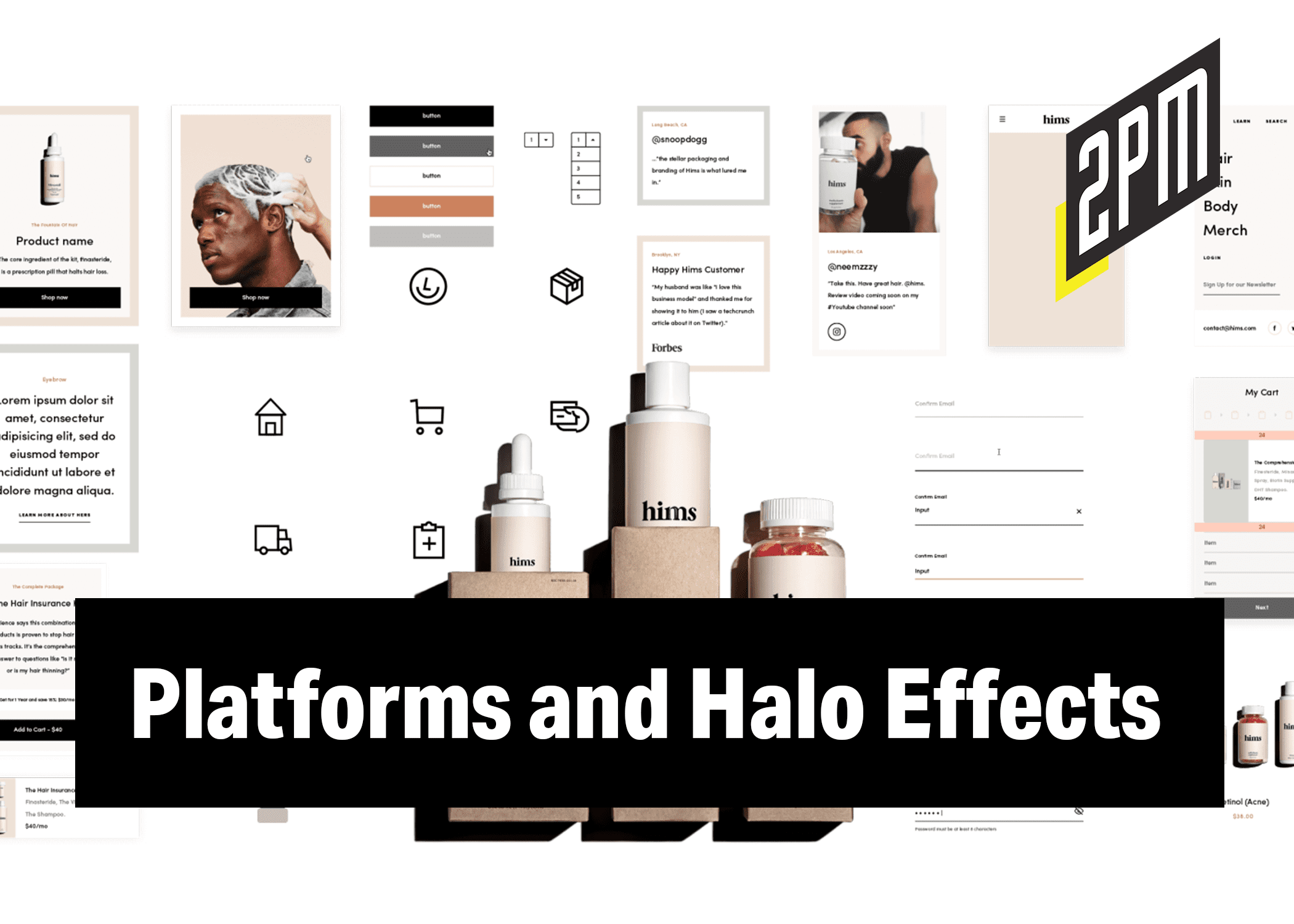
第 306 期平台和光晕效应

The commerce platform report. The term “halo effect” was first coined by a psychologist in 1920. Edward Thorndike used the moniker to describe the methods that military officers used to assess the performance of their soldiers. These assessments often revealed little variance across the categories of performance. Either the soldiers were good or bad; few performance evaluations noted “good” performance in one respect and “bad” performance in another. It is said that the halo effect is influenced most by a person’s first impression. If we see them as bad, they can do no good. If we see them as good, they can do no ill. Today, this phrase is most-often applied to brands and their equity.


The halo effect is a type of immediate judgment discrepancy. It is the tendency for an impression that is created in one category to influence the opinions of impressions created in another category.


Shopify is seemingly everywhere. In December, Digiday’s Hilary Milnes reported that Shopify’s ecosystem of 20,000 partner developers generated $800 million in agency business in 2017. It’s estimated that Shopify’s partners (several of whom are mentioned here) will earn north of $2 billion in revenue in 2019.

To build a Shopify-like eCommerce platform is not hard to do. What’s very hard to do is replicate the partnership ecosystem and the value they drive. It’s their moat. It’s not the software — their competitive advantage is the partnerships.

Jay Myers, VP of Growth at Bold Commerce

The halo effect of Shopify’s ecosystem will not be easily combated. With many of the partners becoming standout B2B brands themselves, Shopify’s group of independent eCommerce agencies serves many functions: recruiting, evangelizing, and perhaps a bit of espionage – often relaying word of advancements and initiatives proffered by competing platforms. This brand halo effect is amplified thanks to the era of the direct to consumer (DTC) brand.

2019: top commerce providers that DTC brands are looking to for partnership | Source: Cloudways

The brand appeal and staff architecture of this cohort of internet-first companies are keys to understanding why so many challenger brands instinctively select Shopify. Though not a Shopify Partner, Gin Lane’s “work” page notes the many digitally native brands that they’ve steered to the platform. These names include: Harry’s, hims, hers, Sunday Goods, Ayr, Stadium Goods, Rockets of Awesome, Cadre, Recess, alma, Smile Direct, Dia & Co, Warby Parker, Everlane, Quip, Shinola, Bonobos, and Shake Shack. Similarly, Red Antler’s “work” page boasts partnerships with Burrow, Casper, Allbirds, Brandless, Crooked Media, Snowe, and Boxed. These brands, which skew mightily towards Shopify and Shopify Plus, serve as media darlings and public relations fuel.

Tobi Lütke on Twitter

I usually don’t highlight financial milestones here, but this one is worth mentioning: As Shopify passes the $1 billion-dollar revenue mark it does so with the highest growth rate of any SAAS company ever. 🎉

In this way, Shopify’s halo effect extends beyond the agencies with whom they partner. The challenger brands, themselves, become recruiting vehicles for like-minded companies looking to build brands from zero to one. As such, newer companies like Great Jones follow the same branding methods and staff architecture guidelines

On DTC Brand Architecture

It’s common for digitally native brands (DNVBs) to go to market with over $3 million raised. This pre-revenue war chest affords companies an early branding and public relations prowess that almost guarantees seven figures of revenue in the first year.

Partnering with a Red Antler or a Gin Lane can cost a brand up to $400,000. There are often added developmental costs that these challenger brands will have to incur. In addition to the cost for the brand standards, messaging, and the essence of the brand, the right PR contact can cost a young company another $180,000 to $240,000 per year.


No. 297 The DTC Industrial Complex:

There is an entire eCommerce branding industry that fosters the ideation, launch, and early growth of direct to consumer (DtC) brands. When you notice a new digitally vertical native brand in 2018, there’s a platform aura around many of them. First you’ll notice the early PR sensationalism that they can only garner if they graduate from the right school or leave the right corporation. Then, the founders must live in the right city, have the right investors, and pay the right $25,000 per month public relations retainer.


The challenger brand CEO is very well-educated and, at this stage, CEOs tend to start the brands post-business school. Founding teams tend to begin with some combination of a product developer, finance lead, and a customer acquisition lead. Software engineering is an afterthought for many of these young product companies; this competency is often outsourced to a partnering agency. Universally, the priority for challenger brands is two-pronged: (1) making a great product (2) find an efficient way to sell said products. This often reduces the urgency to partner with technical founders or hire early, technical employees. Whereas F = founder, B = early branding, and P = early product development:

F(marketing) + F(finance) + B(outsourced) + P(outsourced) = DTC founding architecture

Shopify’s ecosystem appeals to this particular architecture. The Ottawa-based company’s continued growth depends on their management’s ability to increase the percentage of challenger brands that grow into enterprise clients. And from enterprise clients to Top 1000 online retailers. Shopify’s volume-driven style of business is a mark of its commitment to small business retailers. But it’s not the only method of accelerating enterprise growth. There are several commerce platforms with notable gross merchandise volume (GMV) across their enterprise level of clients.

The Platform Landscape

From BigCommerce to Oracle and Salesforce, the DTC era of retail extends beyond the brands that are the most talked about in design, tech media, and public relations circles. Here is the data on the top nine by gross GMV. While Shopify generates the most media buzz in small business circles: Adobe, Salesforce, and Oracle are quietly leading the enterprise+ business. BigCommerce is often viewed as Shopify’s younger sibling, however their enterprise clients now generate a gross GMV of 2.5x Shopify’s enterprise clients. The following data is derived from a recent Digital Commerce 360 report (2019):

[table id=37 /]

The platform ecosystem is vast. Of the top 1000 retailers, the majority of brands are built in-house and on custom platforms. Nearly 450 retailers have outsourced their technical capabilities to these nine companies. Moving forward, we will likely see platforms like Adobe building tools and an improved halo effect to address Shopify’s key audience and vice versa. Shopify will build tools to address more of the needs of top enterprise plus clients, as well as continuing to support the needs of the DTC brands that are adopting physical retail channels.

Specializing for a particular segment of the SMB to enterprise to enterprise plus spectrum may have dire consequences for platforms in this increasingly competitive space. As Shopify has shown, there is value in building early loyalty. Shopify is counting on a number of their industry-leading number of DTC and SMB retailers moving through the funnel to enterprise services. Additionally, Shopify’s reach grows as brands transition to Shopify from Magento or custom builds. A trend that the Adobe acquisition of Magento has potentially impacted. This continued growth would begin to tip the enterprise / enterprise+ GMV scales in their favor.

Commerce platforms advertise new capabilities with the idea that the technical merits of a platform, alone, will attract new business. To this effect, many of these platforms have deprioritized brand marketing superiority and influential partnership development in favor of technical product development and traditional advertising. Whether or not the improvement of competitor platform capabilities will outlast Shopify’s hard-wired brand loyalty remains to be seen. Objectively speaking, the sheer volume and positive brand association plays in Shopify’s favor. As does their halo effect.

Read the No. 306 curation here.

报告人:Web Smith |大约 2PM

第 299 期:公开信--实体零售 2.0

亲爱的 DNVB 首席执行官

This year began with a letter to you. It was the very first letter written on 2PM’s new platform and one of the most meaningful of the year. The original “open letter” from January wasn’t communicated as an analyst or a writer, it was published as a peer. It was an expression of empathy and encouragement. But most importantly it was recognition of your task at hand, building steadily throughout perpetual change. It was a nod at your endurance and resilience. The successful DNVBs of the many that are out there, succeeded in making something out of nothing. And frankly, observers only really understand what that’s like if you’ve been through it. So this one is meant to close out the year with a few observations and some acknowledgment of some impactful, forward thinking. The most shared paragraph in that January letter:

You started your company in an age that required your retail independence. On day one, your brand couldn’t depend on wholesale purchases from Nordstrom or Target or Whole Foods or Wal-Mart. And that independence made you more practical in the long run. And now, those retail powerhouses are now knocking at your headquarters.

I went on to write that DNVBs will make the foundation of which the future of retail is built. Over the past year, we’ve gained a bit of clarity on what that could mean. Direct to consumer brands killed mall retail. Direct to consumer brands reinvigorated the mall. 

Riding on the efforts of your collective innovations – from Andy Dunn to Steph Korey, Tyler Haney to Kristin Hildebrand, Aman Advani to Emily Weiss, and Michael Dubin to Blake and Patrick – retail has taken a new shape. And in the process, we’ve defined and redefined the word direct in the DTC acronym.

More than ever, consumers demand fluid purchase experiences. Online-only retail was supposed to accomplish that but for the majority of retailers, that hasn’t been the case. In the most recent Member Brief: a neighborhood of goods, I argued that the sunk costs attributed to operating within the confines of online-only retail (eCommerce software, logistics costs, and acquisition costs) could motivate further investment into the same systems. But more and more of your peers are realizing that operating a technical, data-driven, physical storefront can accelerate growth, increase LTV/CAC ratio, bolster AOVs, and even fortify speedier shipping and returns.

The irony of the conversations around physical retail weren’t lost upon any of the industry leaders at the [2PM Executive Member table, that evening]. We were in the heart of Soho, Manhattan. If you walked a tenth of the mile in any direction, you’d see the physical manifestation of nearly every top 30 DNVB in the market: Casper, Glossier, Warby Parker, Bonobos, M. Gemi, Rowing Blazers, Aesop, Aether, Birchbox, Harry’s, Theory, and the list goes on. It seems as though every DNVB executive with a war chest (or profitability) is all-in on maximizing profitability through physical retail. Not just the quaint pop-up stores, full 13,000 sq. ft. acquisition and conversion machines. 

Member Brief: a neighborhood of goods

Revisiting Retail independence

Over the years, consumers have shifted from shopping to buying – we’re beginning to witness a shift backwards; American online retail never quite figured out how to duplicate the sensation of stumbling upon a must have while walking through a shopping center. Over the course of the year, we’ve seen the beginning of a tide towards the return to physical retail – a method of acquisition that most of us very vocally dismissed over the years. Sure, we have all seen our fair share of “guide shops”, showrooms, pop-ups, and stores-within-a-store. But while many brands tested the waters with physical footprints, we are now seeing a new level of commitment to a tech-enhanced, traditional way of acquiring customers.

The renaissance of brick and mortar retail could be representative of a few key macroeconomic trends: (1) the saturation of and wavering trust in social media platforms (2) and the inundation of online advertising. Both key tools in the growth of early vertical brands from 2007-2017, online brands have saturated every channel that attracts our attention.

A funny thing happened on the way to the retail apocalypse. Stiffening competition, surging online advertising costs and cheap mall space have prompted these so-called digital natives to embrace what they call “offline” in a big way. In their push to become retail’s next household names they’re venturing beyond the coasts and major cities into suburban America. It’s also an acknowledgement that 90 cents of every retail dollar in the U.S. is still spent at a physical location, and industry watchers don’t expect it to fall below 75 cents until the middle of next decade.

Why DNVBs continue to open physical stores

With every passing year, early brands must raise more to compete less effectively than the brands that launched just a year earlier. Facebook and Google’s cost data suggests that DNVBs have begun to max out these acquisition channels. As a result, shopping has become less leisurely. And solely transactional. Consumers want leisure. Physical retail embodies a social and tangible experience that America’s Amazon-driven format of online retail has yet to duplicate. And digital-first retailers are re-prioritizing those moments of consumer delight by investing in extending their DTC relationships by owning permanent storefronts in worthwhile locations.

Physical Retail 2.0

One of the most challenging tasks ahead, for the DNVB C-suite, is the mandate to build a product and sales funnel atop of a constantly evolving industry. One of the chief roles in the DTC c-suite is the leader charged with discerning between short-term trends and long-term shifts. There have been numerous instances over the last 5-7 years where brands underestimated new technologies or over-estimated the stability of precedent. To that end, physical retail is in its own renaissance. With the right technologies and logistics partnerships, DNVB peers are building more than consumer touch points. They are also building platforms for improved return logistics and quicker shipping mechanics.

Brands that own their own independent storefronts are capable of accomplishing several key goals without outright dismissing their previous investments into technology, advertising, and logistics. To that effect, those tools will only help brands become pioneers in physical retail 2.0. Whereas mall brands of old depended on analog advertising-alone and the unpredictability of foot traffic, physical retail 2.0 are benefiting from six categories of customer acquisition funneling:

  • online to offline
  • traditional to online
  • offline to geo-fenced retargeting to online
  • traditional to offline
  • online to retargeting to offline
  • online to physical returns to offline

For retailers, 2019 is shaping up to be a resurgence of the old. More of your peers will follow in the likes of Allbirds, Casper, Warby Parker, and Glossier. The data-driven physical store will allow mature DTC brands to reduce their dependencies on existing acquisition channels, while now-fully engaging with existing customers. Over the past decade, DTC brands did quite a bit of damage to traditional mall retailers by building direct relationships with potential customers.

Now, those same challenger brands are growing to compete in retail’s traditional environments. The successors of physical retail 2.0 will be: (1) the cloud-based systems that enable DTC brands to connected their experiences and (2) the brands that move first to supplant the traditional brands of old. Cloud commerce platforms (Shopify, BigCommerce, Adobe), a near-universal focus on monetizing consumer data, and the spirit of DTC innovation has provided an advantage over traditional retailers. Higher end shopping centers and malls are beginning to reflect this shift.

Read the No. 299 curation here.

报告人:Web Smith |大约 2PM