Spotify’s chief marketer is leaving Spotify and their next CMO has an opportunity to continue its sprint towards 50% market share. In his parting words with AdWeek, Seth Farbman said:
By all measures, we’ve achieved [our] goals, but we’ve also done something most companies only dream of doing—we’ve turned affinity for the Spotify experience into love for the brand.
And he’s correct. During his tenure, Spotify found ways to grow brand equity despite the offensive by Amazon and Apple Music. The numbers from January to June tell the story. Spotify maintained a 36% market share with a total of 83 million subscribers. Apple grew 2% market share, reaching a 19% stake of the market (43.5 million subscribers). While Spotify added 11.9 million subscribers, Apple has grown 9.2 million members. And Amazon added a half a point of market share, currently holding 12%.
But according to reports, Apple Music is set to overtake Spotify in terms of paid subscribers. Apple’s early Apple Music strategy consisted of music exclusives (Chance the Rapper, Drake) and live DJ sets (Zane Lowe, etc).
The relationship between Drake and Apple Music benefited both parties. Apple Music got first dibs on Drake’s record-breaking 2016 album Views, while the rapper is now the avatar for the paid music streaming era.
An often overlooked part of Apple Music’s library is Beats 1 radio, which in the case of Drake, who has his own OVO Radio show named after his recording imprint, means his fans have a reason to hold onto their subscription even if no new album on the horizon. Artists like Bad Bunny, Pharrell, Deadmau5, Elton John, Charli XCX, and Frank Ocean all have their own Beats 1 shows, reaching dedicated fans who’d rather connect with their favorite musician than trust an algorithm for song recommendations.
Slate: Why Apple Music is Winning Spotify’s Game
The the recent strategy seems to be Apple’s deepening moat around its hardware. While Spotify’s brand is more beloved, Apple has a growing technical advantage: its devices. By all accounts, iPhone and Airpod users are discouraged from choosing Spotify over Apple Music through subtle UX and Siri roadblocks, akin to Apple’s preference of Maps over Google Maps. This is most noticeable when attempting to control the Spotify app through your Airpods or playing music on your lock screen. In Spotify forums, moderators and community members are advocating that users delete Apple Music if they want a better Airpod x Spotify experience.
Apple’s continued growth will be closely tied to how well it develops Apple Music into the iPhone’s default. By cutting off Spotify’s seamless performance with Apple phones, their strategy is similar to Instagram’s uncoupling from Twitter’s timeline. By making it difficult for Twitter users to view Instagram photos, Facebook fostered its own ecosystem of engagement. Apple is benefitting from the same.
Apple music is for music enthusiasts and Spotify is for casual listeners. While Apple Music believes that this is their advantage, it is Spotify’s key differentiator. And it could decide the future of streaming.
By design (according to Jimmy Iovine), Apple Music makes it difficult to discover music. He believes that the service should exist for music lovers; Spotify is quite the opposite. The platform’s entire user experience is designed around (1) the promotion of artist discovery and (2) amplifying pop music’s inertia. Either you’re learning something new, thanks to their algorithmic and manually-curated playlists or you’re being steered towards the songs that are popular. Apple deemphasizes discovery, in this way.
Spotify’s ability to overcome Apple’s recent and notable growth will hinge on the service aligning their brand with exclusive partnerships. The platform’s defensibility will be closely tied to their faculty to “sell” their product. While this is of little surprise, Spotify’s future may be influenced by how it sells content and physical products.
Brands have sounds too
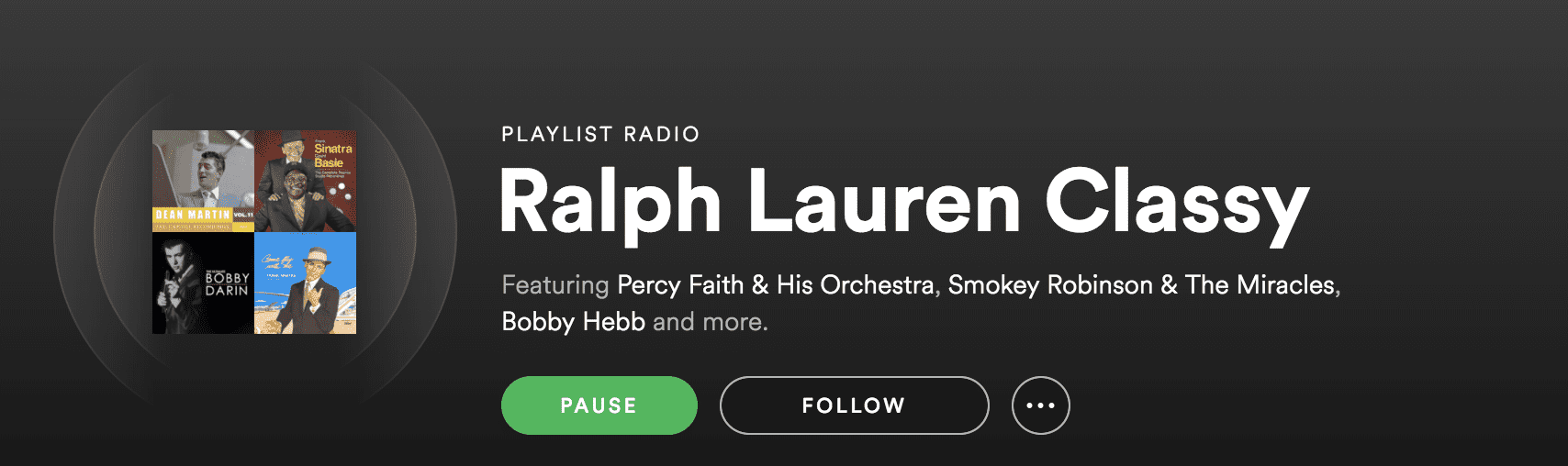
There’s a vibe when you walk into Ralph Lauren’s restaurant in downtown Chicago. The walls are mapped in gold framing, velvet, and vintage pictures of anyone who’s ever worn a tuxedo and evening gown well. But something sticks with you long after you leave, the restaurant’s music.
In a conversation with Lean Luxe founder Paul Munford, he had this to say about his effort to build his media brand through music playlists:
Keeps people engaged, keeps things interesting and fresh. Gives folks something cool to listen to each week under the LL banner. Keeps the brand top of mind in that way. It’s not a huge thing but is just another plot point for the brand that adds to the total sum, so to speak. Plus, it’s fun. I don’t think people are used to media or publications behaving this way. But that’s not to say the interest for publications to do more things like this isn’t there. You never know until you try.
Browse Spotify for your favorite retail brands and it’s possible that the brand will have some presence in the app, whether through an official brand playlist or – more commonly – as a fan-generated project. You’ll find “The Glossier Megamix”, “Ralph Lauren Classy”, “Lululemon Spring 2018”, and dozens of lists devoted to Victoria’s Secret. Spotify has a unique opportunity here. More and more brands are using playlists to shape their brand image. Music can provide a halo effect that helps to keep retailers at the top of consumer minds.
2PM Data
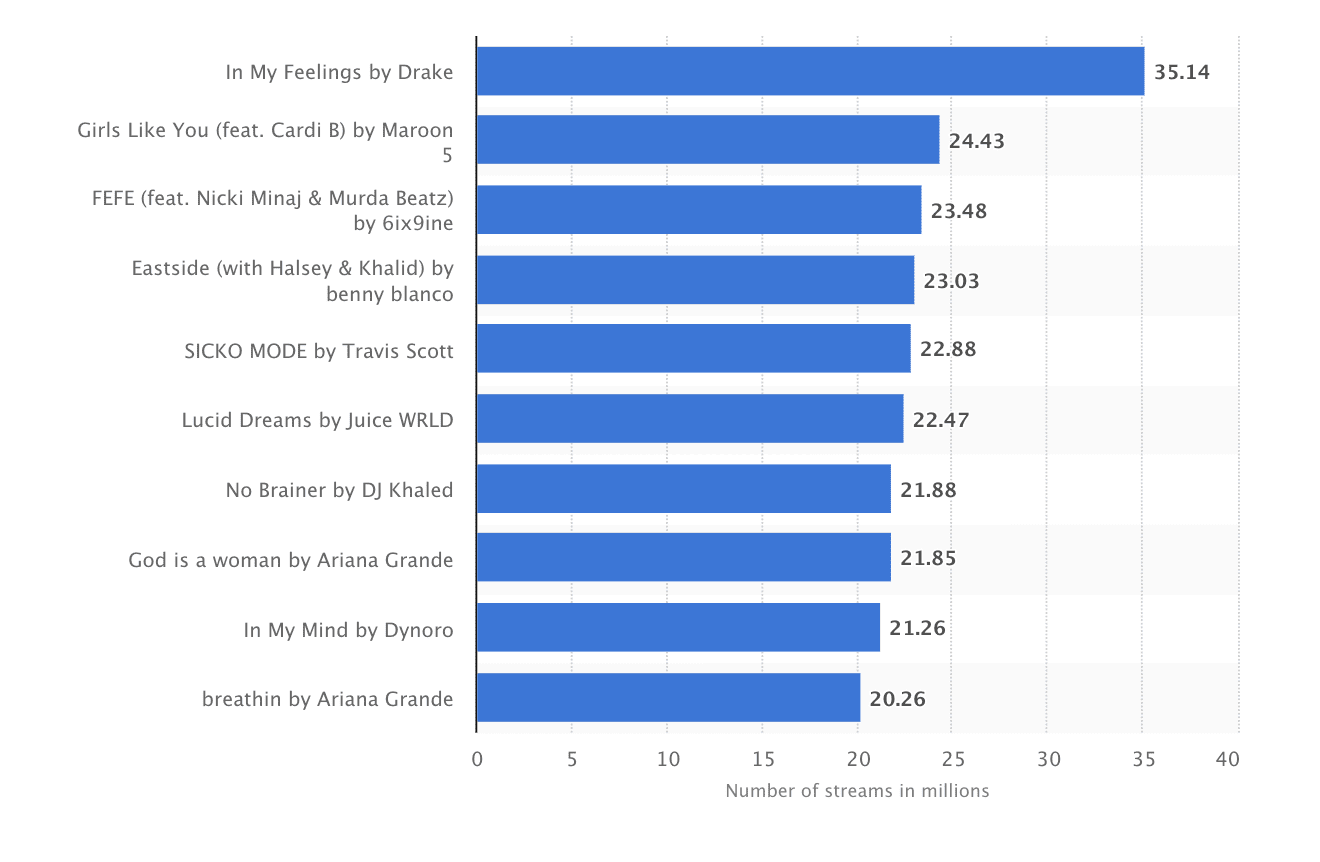

Growing playlist spins through partnership
Given Spotify’s recent decision to secure exclusive podcast partnerships with two celebrities, it’s clear that partnerships are on the executive team’s whiteboard. But this isn’t just about performers and brand evangelists aligning with Spotify. Spotify takes pride in experimentation and, as such, the company is primed to take a page out of Apple Music’s original playbook. The streaming service could make great progress by emphasizing its partnership division.
By the time a song lands on Today’s Top Hits or other equally popular sets, Spotify has so relentlessly tested it that it almost can’t fail. “There are very few artists that get into the flagship playlists and then get kicked out,” Holmsten says. When “Call On Me” made that list, it was already destined to go viral—even though most people had still never heard it.
WIRED: on the power of Spotify’s playlists
Spotify has been somewhat of a kingmaker for independent artists and on-the-bubble pop stars. To amplify this effort, Spotify is overdue to take a page out of the direct-to-consumer marketing playbook. Here are the top proposed partnerships with physical “retailers.”
By attaching discovered music to positive, physical retail experiences, Spotify can amplify a key performance indicator (KPI): repeat listens of new and popular music. Here are a few ideas:
- Orange Theory | OT has earned a network of over 1,400 locations and a loyal following of fitness enthusiasts and business travelers.
- Core Yoga | This studio is known for its unique practice and a franchise network of over 160 locations.
- Soho House | The famed members-only club has 50,000 members and a unique vibe in each of its 23 locations.
- WeWork | Their offices manage 100,000+ members and over 10,000,000 sq. ft. of workspace.
- Delta Airlines | known for its pre-flight track list, the premium airliner has the ability to set the mood and the wifi for the Spotify deep-dive to continue throughout the flight.
By generating playlist spins through these locations, Spotify can accomplish two things: (1) generate more revenue for artists and (2) convince artists to sign exclusive deals by way of guaranteed minimum spins per month based upon estimated engagement times at Spotify’s potential retail partners.
Apple Music is catching up to Spotify’s by building a competitive advantage into its hardware; the Cupertino company has grown despite glaring weaknesses in the app’s user experience. Spotify may not be able to ship hardware like its chief competitor but that doesn’t mean that it cannot partner with physical retailers. They can redefine their approach to hardware. Beyond their superior engineering, Spotify’s chief advantages could be their partnerships with retail spaces, up-and-coming musicians, and exclusive content offerings. Spotify has an opportunity to find an advantage where Apple has yet to look. Spotify’s CEO says it best,
I think long term, we at Spotify have some defensible moats, but success for us will be determined by our ability to move faster than everyone else in the space. And just keep on innovating.
Read more of the issue here.
By Web Smith | About 2PM