备忘录英雄的收购

Direct-to-consumer and growth, growth, growth. That was the narrative that overwhelmed modern retail over the previous decade-plus. Today the narrative is rewriting itself right in front of our eyes. Forget pure-play “DTC”, Amazon-hesitancy, and tech-like valuations. The mega brands (or at least, the brands behind the mega deals) of the next 10 years will be built using a playbook that emphasizes EBITDA margin, profitability, and a more holistic distribution strategy.

Hero Cosmetics is the latest example of how to win in this new environment, with its recently announced acquisition. It confirmed that the days of growth-alone have ceded to the retail principles that defined the previous century before it.

On Tuesday in an exclusive, WWD announced that Hero Cosmetics, which is most well-known for its acne treatment products, was acquired by consumer goods company Church & Dwight (C&D) after a year that has seen 40% growth over the previous year’s revenue totals. The product (Hero) / market (C&D) fit couldn’t be better. Founded in 1847, the conglomerate now boasts 10 divisions, each of which should be familiar: Orajel, Arm & Hammer, Nair, First Response, OxiClean, Toppik, Water Pik, and Pepsodent. The New Jersey-based company’s introduction to cosmetics is Hero; in the trailing 12 months, C&D earned $5.2 billion and Hero is likely to become a key player in the conglomerate’s goal to exceed $6 billion in annual sales.

A Glossy report from February 2022 cited the brand’s launch in Ulta after earning a $100 million run rate. Just seven months later, the brand reported that it was on track to reach $140 million in sales in 2022, up from $100 million last year. This was good enough for a $630 million deal. Hero earned the upper end of the acquisition valuation matrix, in my opinion: 14x multiple on its $45 million EBITDA over the trailing 12 months. CEO Ju Rhyu told Forbes:

We expect that we’ll accelerate some of our growth plans, like continued US expansion and growing our international footprint, while tapping into some of Church & Dwight’s infrastructure and back office capabilities. This acquisition with Church & Dwight marks a huge milestone in our company’s history and I am so excited to unlock more growth with them.

In addition to its best-selling patches, Hero currently sells acne serums and creams as well as a body care line. The company’s capital raised to date included a 2021 minority investment from Aria Growth Partners for an undisclosed sum. This was after a 2020 that saw 300% growth.

Early on, Hero Cosmetics embraced Amazon to grow its business, bucking the belief of so many modern companies that Amazon is a brand-killer.

It first sold on Amazon starting in 2017, then it became available in retailers including Target, CVS, Neiman Marcus, Ulta and Urban Outfitters – now in 8,000 total doors in the US – then, a year later it launched its own direct-to-consumer site, a well-built Shopify Plus site featuring 79 technologies. But the company’s biggest draw is one of its fewer than 40 SKUs. The Mighty Patch has become the number one beauty product on Amazon, according to Marketplace Pulse. Rhyu, who will stay on following the acquisition, said that Amazon was the perfect launch platform because it was a fast, easy and cheap place to test product-market fit. Only once tested was Rhyu comfortable expanding Hero’s distribution through brick-and-mortar and owned channels.

Is the pure-play DTC era conceding to omnichannel nirvana? Other brands have followed a similar path, according to Marketplace Pulse filings, including: Anker, Zesty Paws and SmartyPants (the latter two were also acquired for exits in the excess of $500 million). Peloton recently said it would start selling on Amazon, where its bikes are often searched for. A sea change is starting. As 2PM wrote at the time of the Peloton news:

Amazon is the number one search engine for products, so eventually, every brand will seek out its marketplace reach. It only makes sense that a brand desperate for a resurgence of its own has taken a shot and proving Amazon’s reach and effectiveness.

In a recent report on DTC brands’ migration to online marketplaces, we explained that: “The marketplace model will become more relevant for digitally-native brands as eCommerce continues to evolve and lines blur. The most capable retailers will reach customers where they are.”

In retail’s battle of Davids versus Goliaths, it may seem that upstart brands recognizing they need the Amazon machine in order to succeed is a sign of defeat. It’s more so a reality check, and the best brands will still rise above the noise of Amazon to grow outside of it, rather than get washed away in Amazon’s tides. There are still valid concerns over how Amazon uses and abuses the data it garners from brands that sell on its site, but the best brands’ products will always outshine Amazon knockoffs. It’s the difference between standing out in a crowded room and isolating yourself to your own corner. DTC pure-plays have always had to fight it out for attention as evidenced by the industry’s reliance on marketing via Facebook, Instagram, and Google. The flaws in that model have become clear.

What can other brands learn from this acquisition? Here is a recap of what we have said in previous reports. There are factors to consider including: product category, price range, perishable / non-perishable, and consumer positioning (mid-market, luxury, etc). No brand should remain a pure-play, direct-to-consumer brand unless they maintain the profits and operations to support that decision. Selling direct is extremely expensive and more rare than any new-age marketer would like to believe. In contrast, going where customers are is a traditionally profitable proposition. A loss-making DTC brand is not nobler than a profitable wholesale brand.

Soon, DTC-as-strategy will become a relic of a past era of retail that was riding high on venture dollars and Facebook arbitrage. The brands are returning home to retailers, while using tools at their disposable to drive up their brand equity so when people see their product on a Target or Nordstrom shelf, or in Amazon’s sea of products, they choose it.

Report by Web Smith | Edited by Hilary Milnes with art by Alex Remy and Christina Williams

备忘录关于 RMN 的一切

First-party data is defining this era of advertising and sales. Companies are now in a race against time: they’ll build, acquire, or market to the platforms that have it.

When Facebook revolutionized advertising for early direct-to-consumer brands in 2011-2014, a volume of eyeballs preceded its advertising technology push. Facebook was built atop its user volume, human capital. For Google, a volume of searches preceded its advertising technology push. Google was also built on the byproduct of its user inquiries. But this is the era of user privacy and the end of third-party data – both were commonly used by Facebook and Google. Today, retail sales data is what supplies first-party collection. It is the most important asset in digital marketing today. First-party data precedes today’s advertising arbitrage.

Advertising is being transformed by commerce media, a new form of advertising that closes the loop between media impressions and commerce transactions to improve targeting, provide new audience insights, and deliver more relevant and valuable experiences for consumers.

Consider the following analogy. Crude oil is collected and sent to a furnace, heating to 750 degrees. Then, a refinery separates that asset into useful substances like: diesel fuel, gasoline, kerosene, motor oil, asphalt, and candles. That raw substance is refined in what’s known as a distillation column. As we explained in 2PM’s first foray into the study of first-party data: “it is the substance that fills the distillation column of today, retail media networks process that oil-like first-party data into key assets.” For a retailer seeking new demand generation, ad platforms supplied by first-party data are like the oil refineries of today. Yes, this is a play on British Mathematician Clive Humby’s 2006 proclamation: data is the new oil. In this case, it is.

Retail media networks (RMN) are finding themselves in position to attract the advertising dollars that might have previously been spent with platforms like Facebook and Google. They are accomplishing this massive growth by way of droves of first-party customer data troves.

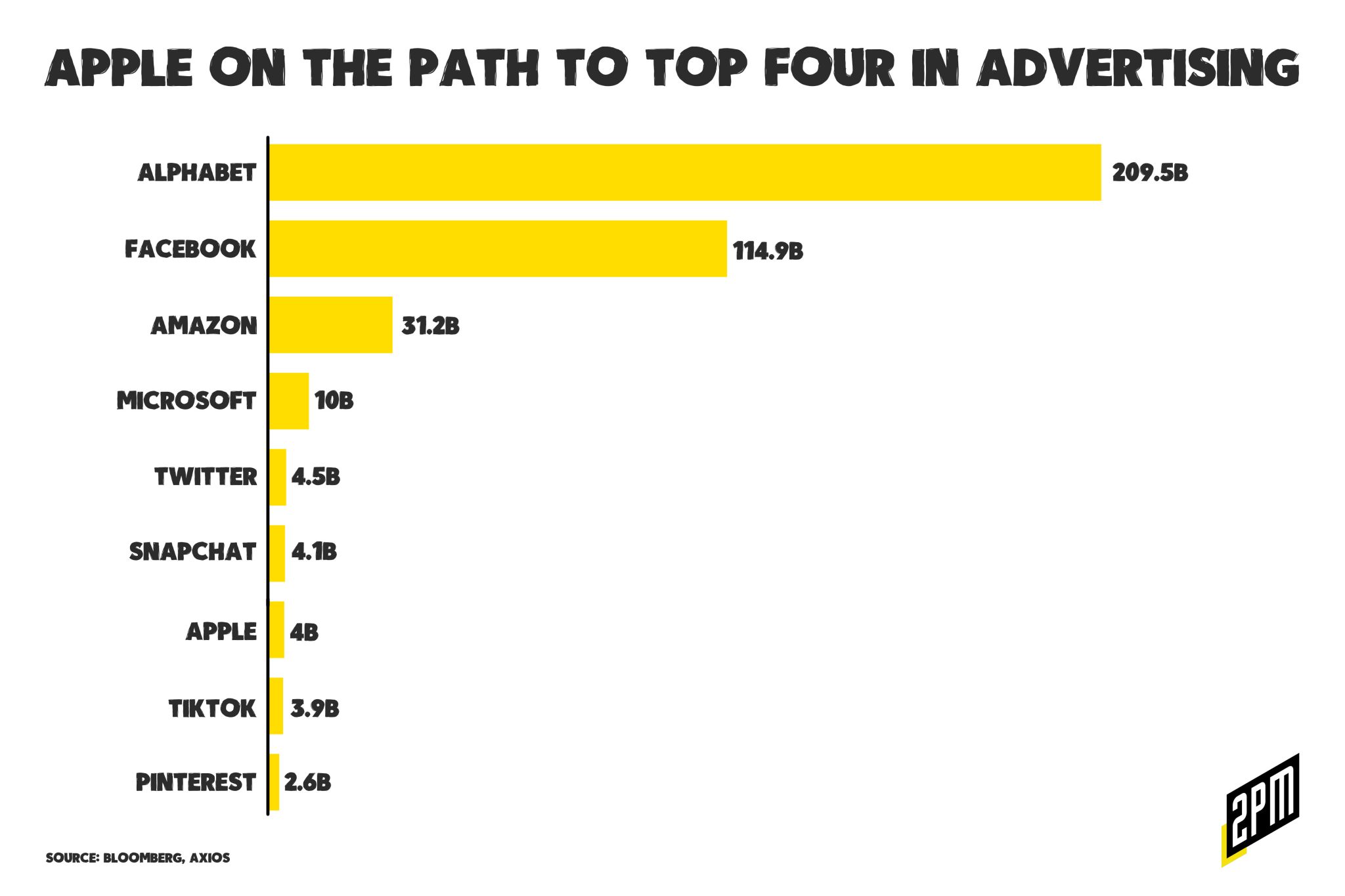
We’re going to focus on the number one RMN: Amazon. It has been able to develop its own self-serve advertising business and in doing so, it’s inspired other retailers to do the same. Amazon’s is the blueprint, raking in $31 billion as of 2021. Walmart brought in a paltry $2.1 billion in ad revenue and Apple’s RMN has recently eclipsed that of Snapchat and TikTok with similar fundamentals.

Expect that RMNs will grow in popularity as Meta’s workarounds for data collection falter; we are already seeing this with Meta’s in-app browsers. In “Trojan Ad Data,” we explained: “Instagram, which has been building up its own shopping capabilities and lets users swipe up on ads to shop from inside the app, can track user data when they’re using the in-app browser by injecting code into URLs that tracks your searches by recording your keyboard inputs, a practice called keylogging. This workaround skirts Apple’s own ATT feature, as well Safari’s third-party cookie security.”

Retailers are dealing with supply chain backlogs, inventory challenges, recessionary forces, and unpredictable consumer demand. For mass market marketplace retailers like Amazon, Walmart, and (in its own way) Apple: advertising revenue is a reliable way to carry high margin revenues to the bottom line. On the other side: brand marketers are grappling with the ramifications of Apple’s privacy restrictions, which have cut off third-party data via apps like Facebook that used to inform high-return advertising strategies.

In a sense, today’s market and economy have influenced the perfect storm for the rise of the retail media network, which has up until now been growing quietly. From Fast Company:

A recession is bound to affect ad budgets across the board. But tighter tracking rules might make the data that retailers amass even more valuable to advertisers.

Retailers stumbled upon a gold mine; there isn’t better targeting data than a retail conversion (or an acquisition of the company with troves of their own first-party data). And now what Amazon has is worth even more to brands who are reconfiguring their performance marketing strategies in light of Apple’s privacy changes. DTC companies were built with the hope of growing independently of America’s largest retail marketplaces but retail media networks like Amazon’s, Target’s, and Walmart’s have already begun to contribute to many of these same brands setting aside idealism for growth. Amazon is already a top three advertiser with Facebook’s current ad model degrading by the quarter. Apple was a surprise entry and the Cupertino-based company will soon have an advertising business that is larger than Twitter, Snapchat, TikTok, or Pinterest. Apple’s privacy practices are to thank:

Within these retail media networks, brands can research consumer brand preferences, demographic data assigned to product loyalty, or what products and brands customers are searching for within their categories. Brand marketers can then programmatically buy their ad positions.

As the cookie crumbles, brands believe the modern retail media network can offer strategic change in the commerce experience (both online and offline) by: Influencing customers at the “digital shelf” point of consideration, offering lower-funnel advertising opportunities to fill the gap left by cookies, and delivering performance insights to improve their return on media investment. (via Broadsign)

In the best cases, retail media networks can make the online shopping experience more relevant to customers. Avoiding the sacrificing of integrity as ads become more prevalent will become the balancing act for these retailers-turned-advertisers as they find themselves on the receiving end of larger and larger marketing budgets.

Apple’s privacy practices may push more brands into the arms of Amazon (see: Peloton, who will now be able to appear in search results) as retailers of its size and scope look for first-party solutions to third-party data shortfalls. Walmart, who is much earlier along in its path to becoming a big three advertiser, released a statement to Fast Company:

Marketers want and need to connect more directly with customers. To do that – they need to know their customers better, the key for that is first party data. […] Large retailers, like Walmart, sit on a gold mine of first-party retail-powered data.

Thirty years ago, a brand needed a mass-market retailer like Walmart to be seen by consumers. Twenty years ago, a brand eschewed this relationship to go direct-to-consumer with the help of demographics data from platforms like Google and Facebook. Now, these DTC companies may be doing away with the need for independence altogether. It was mostly a façade anyway. Brands may or may not remain (exclusively) direct-to-consumer as the market continues to evolve away from that decade-long strategy but the advertising data used by these brands will be direct-from-consumer. We’re just beginning to see how impactful retail media networks may become for retailers looking to reignite growth after a turbulent, post-pandemic period of reversion.

作者:Web Smith | 编辑:Hilary Milnes,美术:Alex Remy 和 Christina Williams

备忘录木马广告数据

It is “moves and counter-moves” as social media platforms continue to find work arounds to improve their advertising products. In the battle of privacy enforcement and consumer data collection, analyst Felix Krause recently wrote on how Meta and TikTok have used in-app browsers to collect key data points that are against the spirit of Apple’s recent iOS privacy practices (ATT).

This past Monday, we detailed Apple’s advertising strategy, which encompasses building a walled garden to benefit its burgeoning advertising business over that of the social media companies that were once the disruptors. This, while framing the narrative surrounding the changes to iOS as privacy-first. Now, in part four of this series, we’ll look at the ways social media platforms are responding to Apple’s crackdowns on data tracking. It’s a development that demonstrates just how little this has to do with consumer privacy. At the center of this back and forth is control, power and who gets to decide what companies get full access to our internet behavior.

A series of reports from August help share a more complete picture of what’s going on in the proxy battle between advertising and privacy. First, Apple’s plans to build its annual ad revenue from $4 billion to the double-digit billions were reported. The company’s ads have a planned expansion into new Apple-owned digital real estate, appearing native apps outside of the app store (whose ad formats will also grow) in places like the Books, Podcasts, News and even the Maps apps.

Yes, Apple is growing its ad business while stifling the performance of competitors including Google and Meta. There is not one without the other. Performance marketers have reported seeing returns on Meta’s network of ads with diminished returns. As for performance insights, ad targeting and tracking are much less informed than they were before iOS 14 and it’s costing Meta dearly: the company said Apple’s privacy initiatives are costing it $10 billion per year. Apple’s App Tracking Transparency (ATT) feature, introduced last year, lets users easily opt out of an app tracing their data from around the internet. And Apple’s expansion of Privacy Relay are due to further impair email and other third-party tracking techniques. Of course, Apple is exempt from this privacy restriction because Apple supplies its advertisers with first-party data, a benefit that Amazon shares. In “A is For Ads,” we explained:

It’s part of a bigger strategic shift for Apple to rely less on hardware sales and see more revenue coming from existing users in the form of ads and other subscriptions and features. It’s also likely to trigger responsive features from companies like Google that are building out their own privacy features. There’s more to come, and this development is only the latest.

As predicted, other companies have been quick to make adjustments. For now, Meta’s most effective workaround has been via a loophole first reported by Krause. Instagram, which has been building up its own shopping capabilities and lets users swipe up on ads to shop from inside the app, can track user data when they’re using the in-app browser by injecting code into URLs that tracks your searches by recording your keyboard inputs, a practice called keylogging. This workaround skirts Apple’s own ATT feature, as well Safari’s third-party cookie security.

Instagram’s ability to track user data when users are on the in-app browser is nothing short of genius. With full control over its in-app browser, Instagram was able to add JavaScript that connects the browser activity to the host app. Technically, Instagram is still tracking within its own walled garden, even as users are browsing other companies’ sites – typically brands and media sites that add links to Instagram Stories or in their bios. It’s a crack in the wall that lets external data back in. It also undermines Apple’s promise to grant user privacy.

It’s not just Instagram. TikTok has found the in-app browser loophole as well, Krause reported in a follow up to his original post. And TikTok, unlike Instagram and Facebook, doesn’t give users the option to divert to a different browser when opening links. TikTok also digs further into consumer data, writes Krause, who lays out the information TikTok’s keylogging can see, or “subscribes to,” here:

TikTok iOS subscribes to every keystroke (text inputs) happening on third party websites rendered inside the TikTok app. This can include passwords, credit card information and other sensitive user data. (keypress and keydown). We can’t know what TikTok uses the subscription for, but from a technical perspective, this is the equivalent of installing a keylogger on third party websites. TikTok iOS subscribes to every tap on any button, link, image or other component on websites rendered inside the TikTok app. TikTok iOS uses a JavaScript function to get details about the element that the user clicked on.

When approached by Forbes magazine, TikTok confirmed that these features exist in the code, but said nothing is being done with them. This workaround appears more critical when you factor in the security issues surrounding TikTok for years. Born from China’s ByteDance, reports have popped up repeatedly claiming that ByteDance employees have mined TikTok for data on US users. The FTC has been called on to investigate the app, and a “cyber advisory” was issued by the House of Representatives in mid-August. It might be hand-wringing. But Apple should be the monitoring force standing between TikTok and its data leaks, and it’s not.

Has Apple’s rally for privacy backfired by submitting users to even riskier data tracking sites that they can’t opt out of and likely don’t know about? In a way, it backs up the argument that Apple’s updates weren’t about privacy to begin with – it is shaping up to seem like a benefit that Apple could sell to users. For it to be a convincing sell, Apple needs to plug security flaws like the in-app keylogging that the social media giants have employed. It’s not just keylogging: a recent WIRED report found that Apple iOS doesn’t fully route traffic through VPNs, opening users who think they’re protected to potential security threats. The report argues that Apple has known about this VPN flaw for years. This privacy issue undermines Apple’s insistence that that’s what all the changes have been about.

It’s unclear now what recourse Apple can take against in-app browsers tracking user data. But for now, brands are still struggling to find the same magic that Meta provided through Facebook and Instagram for over a decade. In May 2021, 2PM explained:

Apple’s intentions appear straightforward at first glance. The company wanted to improve the privacy of its end users. This virtuous effort came with a few additional outcomes. By upgrading its privacy practices, Apple will impair large ad networks that have grown with the help of those end users. This could potentially cripple Facebook’s current model with its new privacy demands.

Whether it’s TikTok, Instagram, or Snapchat housing the data, it leaves brands without the same analytical power that they once required. The most logical assessment is that Apple will continue to subvert its competitors as it grows its advertising business to surpass these platforms and maybe even Amazon. The best possible outcome is that Apple joins Amazon as the new generation of performance marketing platforms. It’s clear that its privacy-first policies do not stand on their own merit. It’s all about the advertising revenue, and Apple is its own Trojan horse.

作者:Web Smith | 编辑:Hilary Milnes,美术:Alex Remy 和 Christina Williams