Memo: Redefining The Revenue Model in CPG

It’s been a boom season for consumer packaged goods and perishable foods brands. This growth skewed heavily towards those properly positioned to benefit from omnichannel distribution and it punished many who rely solely on direct-to-consumer and subscription models.

This week – after sitting with executives at one of America’s most prominent grocers, I was left thinking about all of the changes in how we consume the consumer packaged goods that we love. Here is what I concluded after those conversations:

You have a subscription to products that you like, you repeat purchase the products that you love. More often than not, those repeat purchases exceed the volume of the product that you’d consume if you subscribed to a monthly shipment from the same company.

Olipop and Poppi need no subscription box – they have Amazon Prime Now and DoorDash. I would venture to guess that the enthusiastic Olipop fan buys 4-5 cases of four per month ($50) through various channels. Wild Planet needs no subscription box, nor does Primal Kitchen, Bar Harbor, Organic Girl, Brad’s products, Dave’s Killer Bread, Waterloo water, Bare Bones bone broth, Bulletproof, or Force of Nature meats. Prime Now basically advertises these brands at no cost to them. Whether perishables or not, brands are losing volume to those positioned to help consumers with immediacy.

The subscription model in the food industry has been a popular trend, particularly in the past decade, with businesses offering curated boxes of ingredients, snacks, or specialty products to consumers on a regular basis. However, by 2022, the landscape had changed, with subscription box sales diminishing post-pandemic. For a deep dive on that, start here at The Subscription Crash

Os mercados em declínio da Winc, Birchbox e Blue Apron contam a história do que acontece quando um modelo de assinatura cai em desgraça entre os consumidores. As preocupações atuais de cada empresa ensinam uma lição diferente: a estratégia da Winc de somente vender no balcão diminuiu o crescimento, os parceiros de aquisição da Birchbox falharam a todo momento e a Blue Apron parece não conseguir obter lucro. Em todos os casos, essas empresas de assinatura aprenderam que a novidade da assinatura desaparece.

As a result of recessionary effects in 2021 and 2022 and the move towards retail media networks, the emphasis has shifted towards making consumer packaged goods, both perishable and non-perishable, available for immediate purchase and consumption through services like Amazon Prime Now, DoorDash, Instacart, and Thrive Market. Three of these platforms have robust retail media networks and those three (Prime Now, DoorDash, Instacart) allow for instantaneous availability of goods.

Grocery delivery is set to become a $1 trillion market by 2027 fueled by this model. What’s not included in this figure is the subscription box model. The subscription model in food has now become a form of down-side protection – which aims to “reduce the frequency and/or magnitude of capital losses, resulting from significant asset market declines” for brands looking to maximize revenue. It’s a model that protects a nonsensical (at this point) dependency on aging digital customer acquisition channels (Meta, et. al.)

As the market for grocery shifts to marketplace, this change impacts the consumer’s purchasing behavior and the CPG retailers. Traditional subscription models may actually slow sales velocity and overall volume for the best brands.

Down-Side Protection and Maximizing Revenue

In the current market landscape, the subscription model serves as a way to offer predictable (but increasingly less-reliable) steady stream of revenue through the commitment of customers to receive products periodically. This model, however, does not maximize revenue potential as it limits the frequency and volume of purchases made by consumers. For product-based brands that are truly indispensable, with high loyalty and affinity, a study of consumer behavior suggests that buyers prefer purchasing these products as needed throughout the days, weeks, or months.

Brands with a loyal customer base have a greater potential for revenue generation by catering to the convenience of purchasing products as and when required, rather than committing to a fixed subscription. This trend is particularly evident among the major grocers who benefit from buyers’ repeat purchases throughout the week, as opposed to stocking up through bulk purchases at stores like Costco or relying on traditional subscription models. By focusing on immediate purchase and consumption, brands can maximize revenue while providing a more tailored and flexible service to their customers.

Dynamic Shelf Space, Cooking Schedules, and Refrigerator Capacity

I have two subscription services that see more trash can time than freezer or refrigerator time. In fact, it’s time to cancel those subscriptions. If I cannot get them through Prime Now, DoorDash, or a like-service, I will just find a substitute. This is likely a shared consumer mindset as more products are available through grocery delivery services.

One of the key advantages of this shift towards immediate purchase and consumption is the increased flexibility it offers to consumers in terms of their shelf space, cooking schedules, and refrigerator capacity. Traditional subscription models often require consumers to plan their meal schedules around the arrival of their subscription boxes, leading to potential food waste and inefficiencies in meal preparation. By purchasing products as needed, consumers can adapt their cooking schedules to their daily routines, dietary requirements, and preferences.

Additionally, this approach allows users to be more dynamic in their shelf space and refrigerator capacity management. Traditional subscription models may result in overcrowded shelves or refrigerators, as consumers must accommodate the bulk delivery of food items. On the other hand, purchasing products as needed allows consumers to optimize their storage space, avoid clutter, and reduce food waste due to spoilage or expiration.

Rewarding CPG Retailers with Significant Brand Equity, Product Loyalty, and Affinity

The shift towards immediate purchase and consumption of CPGs not only benefits consumers but also rewards the retailers who have developed significant brand equity, product loyalty, and overall affinity. These retailers have invested in building strong relationships with their customers, ensuring high-quality products, and providing excellent customer service.

By offering products for immediate purchase, these retailers can capitalize on their brand’s reputation and loyalty to drive sales and increase revenue. This approach further strengthens the relationship between the retailer and the consumer, as it demonstrates the retailer’s understanding of their customers’ preferences and their ability to adapt to the changing market landscape.

The move towards retail media networks, as often discussed here, has also created new opportunities for CPG retailers to target their marketing efforts and engage with their audience more effectively. By leveraging these platforms, retailers can further enhance their brand presence, drive consumer engagement, and foster long-term relationships with their customers.

The decline of the subscription model is a headwind facing many companies that have relied solely on this mechanism as a second-order effect of measuring paid advertising spend (with LTV or lifetime value as the holy grail of marketing efficacy) has paved the way for a more dynamic and flexible approach to purchasing and consuming consumer packaged goods. By focusing on immediate purchase and consumption, brands can maximize their revenue potential while providing a more convenient and adaptable service to their customers.

Out: monthly recurring revenue (MRR)

The value of a customer was viewed through two lenses: lifetime value and as a unit in a larger monthly recurring revenue rate. I would argue a new measure will become accountable.

In: monthly repeat rate (MRR) 

Thanks to data from platforms like Amazon Prime Now, DoorDash, or Instacart, a product retailer can measure a customer based on how often that customer buys the same product throughout the month and how that frequency of purchases lends itself to overall volume.

Resumo

While subscription models can provide a predictable and steady stream of revenue for brands, they may not always be the most effective method for maximizing sales. The sales performance of brands through subscription models or Amazon Prime Now can vary depending on the specific brand, product, target market, and consumer preferences.

Brands can better understand the product’s performance by constantly assessing repeat sales (MRR) through delivery systems. The data will better assess competitive landscape and promote a better understanding of seasonal sales trends. This shift has enabled brands to capitalize on their strong relationships with customers and leverage retail media networks to further enhance their marketing efforts and brand presence.

The changing landscape of the food industry highlights the need for brands and retailers to adapt their business models to better serve the evolving preferences and needs of their customers. By embracing the shift towards immediate purchase and consumption, brands can not only maximize revenue but also foster stronger relationships with their customers, ensuring sustainability and continued growth in a highly competitive market.

Por Web Smith | Editado por Hilary Milnes com arte de Alex Remy e Christina Williams

Memo: A Whoop ganhou, a Amazon perdeu

O Whoop venceu; a Amazon bloqueou sua linha de produtos Halo.

A Amazon decidiu encerrar sua operação de tecnologia vestível que tinha como objetivo competir com outros participantes importantes do mercado, como o Google Wear OS e o Apple Watch. Mas a concorrência da Amazon com a Whoop foi a mais notável. O CEO da Whoop, Will Ahmed, ficou furioso quando a Amazon tentou duplicar os principais conceitos e tecnologias de design da Whoop. Em 2021 de setembro, Ahmed tuitou: "[Nós] deixamos uma mensagem para a Amazon etc. em cada placa de circuito 4.0". No entanto, a concorrência é mais profunda do que um tweet. Um relatório do Wall Street Journal de julho de 2020 explicou:

Ex-funcionários da Amazon envolvidos em negócios anteriores afirmam que a empresa é tão competitiva e orientada para o crescimento, e sua capacidade de inovação é tão ampla, que frequentemente não consegue resistir à tentativa de desenvolver novas tecnologias - mesmo quando elas competem com empresas iniciantes nas quais a empresa investiu.

A Amazon enfrentou desafios significativos e acabou perdendo para a Whoop. Há razões importantes para o fracasso da Amazon nesse espaço e para o crescimento contínuo da Whoop por meio de parcerias empresariais, inovação e conscientização geral.

1. Falta de diferenciação: O produto Halo da Amazon não oferecia nada de significativo em relação à Whoop ou a outros líderes de mercado. Por outro lado, a oferta da Whoop se destacava por seu foco em informações personalizadas sobre saúde, desempenho e condicionamento físico, incluindo rastreamento de recuperação e análise do sono. A falta de recursos exclusivos no Halo tornou difícil para a Amazon persuadir os clientes em potencial a escolher seu produto em vez de produtos como o Whoop.

2. Entrada tardia no mercado: Quando a Amazon lançou o Halo, a Whoop já havia se estabelecido como uma forte participante no espaço de tecnologia vestível por meio de várias parcerias oficiais e não oficiais com ligas esportivas e atletas profissionais. Os consumidores e as empresas já estavam acostumados com os produtos e o ecossistema da Whoop, o que tornava difícil para a Amazon penetrar no mercado e obter uma participação significativa.

3. Reputação da marca: A Whoop construiu uma sólida reputação pela qualidade de seu produto, inovação e foco na experiência do cliente. Em contrapartida, a abordagem da Amazon de imitar o produto da Whoop não agradou ao mercado, e a percepção negativa afetou a adoção do dispositivo Halo.

4. Parcerias empresariais: A Whoop tem sido bem-sucedida na formação de parcerias importantes com empresas e organizações que desejam aproveitar o poder da tecnologia vestível para a saúde e o bem-estar de seus funcionários. A Whoop é a parceira oficial da PGA. Esses tipos de parcerias não apenas ajudaram a Whoop a obter um fluxo de receita estável, mas também expandiram sua presença no mercado e o reconhecimento da marca.

5. Inovação contínua: A Whoop tem investido constantemente em pesquisa e desenvolvimento, aprimorando seus produtos e recursos. Esse compromisso com a inovação permitiu que a empresa ficasse à frente da concorrência e mantivesse sua posição de líder de mercado. A Amazon, por outro lado, não investiu no desenvolvimento de recursos novos e exclusivos para o Halo, tornando-o menos atraente para os consumidores. Em março, a Whoop anunciou um novo recurso de rastreamento de estresse.

A leitura atual de cada membro, que é convertida em uma pontuação de estresse personalizada, é então comparada com a linha de base individual da VFC dos últimos 14 dias, bem como com a frequência cardíaca típica em repouso. Ao gerar a pontuação de estresse de um membro, o WHOOP é capaz de delinear entre momentos de estresse fisiológico e tensão física.

E, em 25 de abril, a Whoop lançou seu "Strength Trainer", um serviço que permite aos usuários acompanhar o treinamento de força medindo o "impacto fisiológico da carga muscular".

6. Marketing eficaz e conscientização geral: A Whoop tem sido bem-sucedida na conscientização sobre seus produtos por meio de campanhas de marketing direcionadas, presença na mídia social e endossos de atletas e celebridades, especialmente da comunidade do golfe. Isso ajudou a empresa a construir uma forte presença de marca e a atrair uma base de usuários dedicados. Peças de sopro como essas da Golf.com são de valor inestimável:

Jogadores importantes, como Rory McIlroy e Justin Thomas, usam as gravações detalhadas do Whoop, enquanto Nick Watney, que foi o primeiro jogador de golfe do PGA Tour a testar positivo para a Covid, foi alertado sobre a presença do vírus pelo registro cardíaco e respiratório de sua pulseira Whoop.

A Amazon, notoriamente, buscou uma estratégia de aquisição ousada em torno de dispositivos conectados e dos muitos dados que eles contribuem, mas, por essas razões, não funcionou como planejado. Em Consumer Data and Amazon, expliquei:

A Amazon agora está presente nas seguintes categorias: laptops, televisão por streaming, assistentes domésticos, alto-falantes inteligentes, câmeras para portas, monitores de fitness e, agora, aspiradores de pó. Coletivamente, a Amazon sabe mais sobre seus consumidores do que qualquer outra empresa no mundo.

O fechamento do departamento de vestíveis significará que a Amazon não poderá mais coletar dados sobre os hábitos de saúde dos usuários, atividades físicas e outras preferências relacionadas ao bem-estar. Esses dados poderiam ter sido usados para veicular anúncios mais direcionados aos usuários, aumentando a receita publicitária.

No entanto, a Amazon ainda possui uma vasta infraestrutura de coleta de dados. Embora o fechamento do departamento de vestíveis possa afetar a estratégia de coleta de dados da Amazon ao reduzir o acesso a tipos específicos de dados de consumidores, o portfólio diversificado de produtos e serviços da empresa garante que ela ainda possua uma infraestrutura robusta de coleta de dados. Mas só por enquanto. A Amazon parece mais do que disposta a reconsiderar todos os programas que não estejam focados no comércio eletrônico tradicional, no varejo físico ou nas redes de mídia de varejo. Qual será o próximo passo da Amazon?

Por Web Smith | Editado por Hilary Milnes com arte de Alex Remy e Christina Williams

Memo: The Growth Difficulties in DTC (and a fix for it)

To make sweeping, effective changes requires top down decision-making, humility, and curiosity. Walmart, in 2016, deserves the credit for its senior-level executives’ willingness to listen to innovative problem solvers introduced to the team from the outside.

The recent off-loading of Bonobos and Eloquii were not signs of failure – they were signs of Walmart’s ultimate success in transitioning into a new-age version of itself. This decade is part of an era of corporate retail defined by marketing arbitrage, who achieves it, who lags behind, and who all together ignores it. It’s a tale of complacency and arrogance versus a corporate DNA of humility and curiosity.

The eCommerce industry has many stories of retailers earning effortless growth. They don’t realize at the time that what they’re experiencing is actually well-executed arbitrage. But then the effects of that arbitrage are dampened by saturation. The CMO search ensues and now the pressure is on. Their first task will be to explain to the CEO that the company has the DNA of a laggard and that old ways of doing business needs to cede to newer ways. In a number of ways, Marc Lore, Andy Dunn, and the many women and men who joined Walmart as result served in this role for Walmart between 2016 and 2020. Three years later and the last, formal signs of that have departed. But the DNA of innovation remains at Walmart.

Imagine if Netflix didn’t pivot to streaming because DVDs in red packets were still moving. Many retail CEOs today may not see – and seize – such an opportunity to grow via marketing arbitrage.

As a result, such a company teeters away from growth mode, holding close to aging methods, while others reinvent themselves by building atop newer forms of arbitrage and mastering the tactics required to navigate the new opportunity. Bed Bath & Beyond just filed for bankruptcy after years of neglecting its eCommerce department. Walmart’s stock is trading near all-time highs despite gradually reducing its store count. The difference is in the DNA.

Marketing arbitrage is when a new channel or novel tactic is identified – one with low saturation that can achieve an outsized impact if leveraged quickly enough. Google’s Global Enablement Lead wrote in 2014:

One of the most exciting parts of being a marketer today is the perpetual challenge of finding new channels and tactics to leverage. There’s a whole host of marketing arbitrage opportunities out there – if you know where to look and spend your time.

Walmart will be considered one of the most innovative companies of the last decade. Not because of anything that the company invented, but rather because it maintained a humility and curiosity to understand that it needed to out-innovate the adoption curve of new technologies and industry-wide practices.

Walmart president and CEO Doug McMillon noticed something about his company that few executives have the foresight to observe in real time: the company lacked the ability to identify marketing arbitrage. It wasn’t in Walmart’s DNA, their methods were proven and stale. Their systems were working as designed and there wasn’t a reason to stray away from what was.

That is what’s typical in retail. A brand or retailer identifies one advantage and rides it into the sunset, failing to innovate. Walmart chose a different approach made famous by Gilded Age tycoons like John D. Rockefeller, who once quipped:

If you want to succeed you should strike out on new paths, rather than travel the worn paths of accepted success.

It only took CEO Doug McMillon two years to move on his mandate to modernize Walmart. Prior to the McMillon-approved “Marc Lore era,” Walmart was a mass-market, bargain-focused physical retailer with little emphasis on eCommerce and technology, nor a grasp on modern principles of brand equity development.

So what did Walmart do? It acquired the DNA of innovation. First with Lore, then with Andy Dunn, and then with countless acquisitions of a particular type. The acquired companies shared a few traits: they maintained an understanding of internet-first brand development, they had a grasp on acquisition through Facebook PPC, they maintained New York PR connections, and they were comfortable seeking out arbitrage opportunities when they could.

Walmart’s eCommerce era began with a string of major acquisitions, including the largest in eCommerce history at $3.3 billion for Jet.com. The Jet.com acquisition was brilliant in retrospect. As a result of that investment, Walmart is still moving up and to the right despite the many forces opposing forward motion. In fact, it thrives today because of its DNA implantation. So much so that it’s leaving what remains of that talent and perspective injection behind. This is how I see the offloading of its last few digitally native vertical brands.

Walmart has been sharpening its focus on ramping up its businesses including advertising and delivery, to diversify its revenue streams and boost margins as inflationary pressures on consumer spending weigh on the retailer. (Yahoo!)

The recent fire sale of Eloquii and Bonobos (preceded by the offloading of MooseJaw and ModCloth) was no shock. Walmart has tremendous resources at its disposal. But with the temperature of today’s market, there are novel ways to drive revenue and grow average margin across a portfolio of goods and services that no longer require managing a group of acquired brands. It made sense to acquire direct-to-consumer brands when its original marketing arbitrage was Facebook PPC. That strategy no longer plays; today’s revenue arbitrage for mass-market retailers and smarter brands looks different than it had just five years ago.

The store count peaked in 2019 while new forms of revenue emerged. However, the stock is trading near all-time highs.

Walmart is a retail media network, it’s an omnichannel titan, it’s a recurring revenue magnet, a private label factory, an enviable marketplace. It’s a modern eCommerce corporation. Who needs low-margin brands like Bonobos when these other fundamentals are in place?

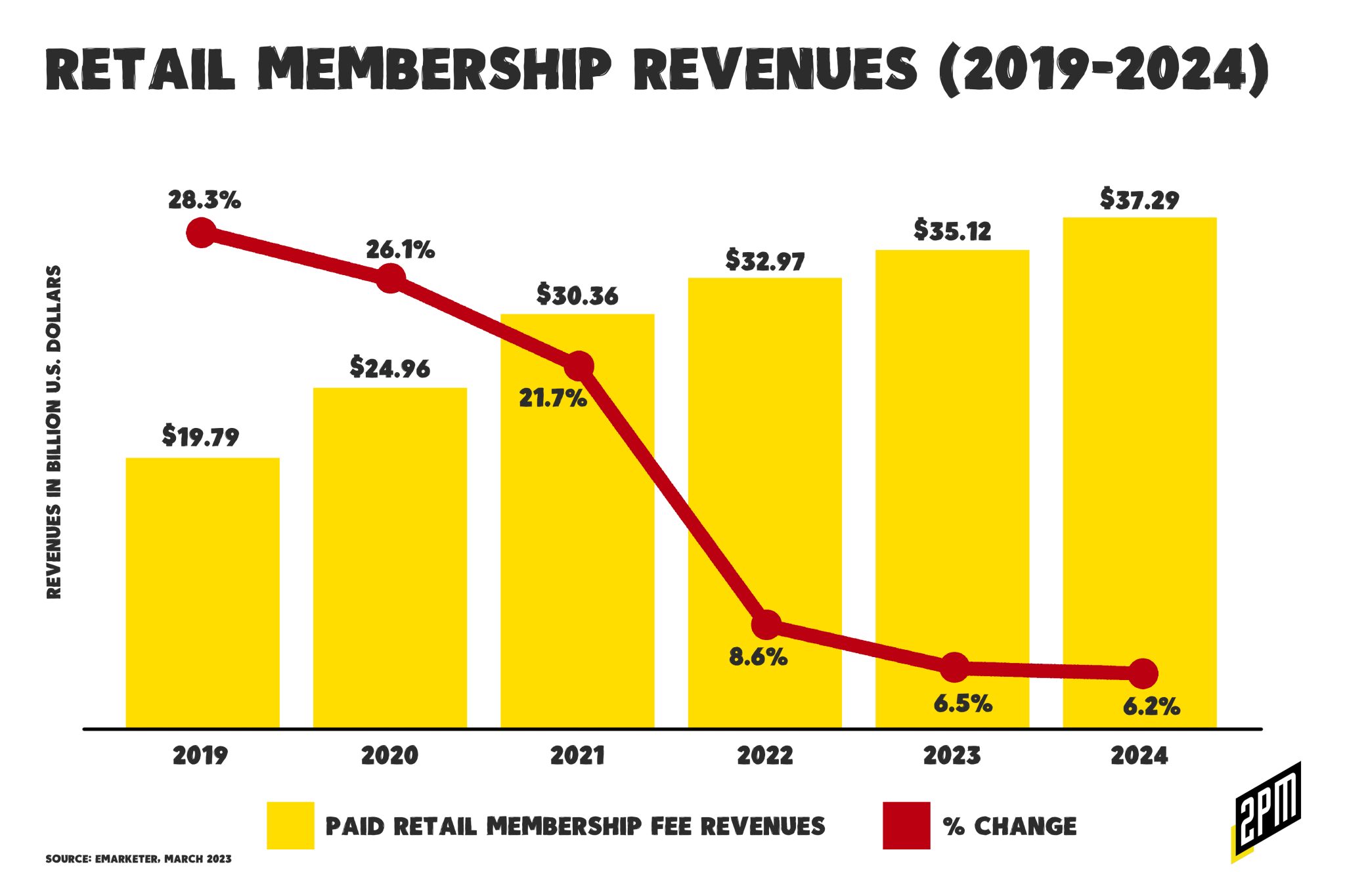
Walmart is on a path to strengthening its global omni-channel ecosystem and scaling higher-margin value streams that serve customers and businesses and are natural connectors to its retail business. This includes advertising, data, memberships and marketplace – all initiatives that will help deliver a better customer and member experience while driving stronger returns.

Many analysts suggest that Q3 of 2023 will be a bloodbath for low-margin retailers, you will find a number of similarities between the companies that will fail to extend their financing or secure profitability in time for tougher market conditions. The measure of success is different than it was pre-pandemic. Gone are the days of rewarding growth without unit economics. Growth? No. Top line revenue? No. Good margin and proper, sustainable unit economics? Yes, these are the companies that will move forward. But the deeper question will be, did these retailers maintain the DNA of innovation throughout its growth curve? The answer, more often than not, will be no.

The end of Facebook PPC as an arbitrage opportunity for direct-to-consumer brands signified a turning point in the digital marketing landscape. Some brands adapted and some did not. Many brands continue to squeeze the remaining value out of the arbitrage that I suppose was thought to be a permanent fixture. It never is. As such, some pivoted to physical retail, omnichannel distribution, or accumulated like-minded products into a native marketplace. Even more so, others went all-in on retail media networks or building linear commerce strategies.

The DNA of innovation was the lifeblood of the pure DTC era. This is what Walmart was buying: the DNA of change. The masters of the craft were successful in identifying arbitrage opportunity after arbitrage opportunity; they molded their companies around it. As a result, Walmart thrived as a multi-faceted retailer.

Walmart’s strength in eCommerce can be seen in its results. Walmart’s US eCommerce sales were up 79% in 2020 and were up 11.0% in 2021 on the back of strong growth in the prior year. Then in 2022 Walmart’s eCommerce sales were up 12%. Walmart is now the second largest eCommerce retailer in the United States with eCommerce making up over 13% of its sales. While Walmart trails Amazon by a wide margin in online sales Walmart is gaining ground. (Indigo Digital)

Brands must now adapt and evolve their marketing strategies to stay ahead of the curve. By embracing platform diversification, investing in content marketing, leveraging data and analytics, and focusing on customer experience, DTC brands can thrive in this new era of digital marketing. DTC companies were founded with the hope of growing independently of America’s largest retail marketplaces but retail media networks like Amazon’s, Target’s, and Walmart’s have already begun to contribute to many of these same brands, setting aside idealism for growth. Amazon is already a top-three advertiser with Facebook’s current ad model degrading by the quarter. Walmart is well on its way to becoming a force in advertising:

Walmart’s online advertising business is a fraction the size of Amazon’s. But here, too, Walmart has an advantage because it can provide brands with data on how shoppers spend not just online but also in stores, said Sreenath Reddy, the founder and CEO of Intentwise, which helps clients place ads on web marketplaces. Walmart.com is also less crowded than Amazon.com, with about 135,000 merchants compared with some 2 million on Amazon. (Digital Commerce 360)

As the digital landscape continues to change, it is crucial for brands to be nimble and open to exploring new avenues for growth. Those who can effectively navigate these shifts and seize new opportunities will be well-positioned for success in the increasingly competitive online marketplace. The end of one arbitrage opportunity may be a challenge, but it also offers an opportunity for DTC brands to innovate, differentiate themselves, and establish a lasting connection with their customers in the ever-evolving world of digital marketing.

Sam Walton was known for his innovative and customer-focused mindset, and was always seeking new ways to gain a competitive edge. He would have been a fan of Walmart’s focus on retail media networks. Why? Enhanced customer experience, data-driven decisions, new revenue streams, and building deeper relationships with suppliers. Walton valued strong relationships with retail partners, as they were essential to his low-cost, high-value business model.

Sometimes, gaining a competitive edge means letting go of the tried and true methods that defined earlier versions of your business. And then finding better, newer methods.

Por Web Smith | Editado por Hilary Milnes com arte de Alex Remy e Christina Williams