

This week, The Atlantic’s Kaitlyn Tiffany wrote a nuanced and worthwhile report on the history of the newsletter industry. The length of the history depends on whom you ask. To her point, Substack would like you to believe that their team pioneered the movement. She argues, correctly, that they’ve successfully adapted it for a different audience. They’ll likely see great, longterm success. One glance at Substack’s paid leaderboard screen and you may understand the point that the author made throughout. In her piece, she writes:
“[Newsletters have] been a thing,” says Ann Friedman, who has written a weekly newsletter since 2013, has 40,000 subscribers, and is widely recognized as one of the leaders of the first newsletter boom.
In many ways, Tiffany’s article was relevant to a few thoughts that I’ve been managing for some time. She aptly stated the argument that while Andreessen Horowitz’s $15.3 million investment into Substack signaled a beginning, it became a useful tool to make newsletters “cool” to other groups. She provides a bullet-by-bullet history of some of the most important names in the newsletter industry’s history. The report is worth your time.
Backstage at September’s Destination D2C, a dozen or so colleagues convened to chat about the professional world, a passion that each of us pursue in our own ways. We each shared a few things in common but the most important was our interest in the direct-to-consumer industry. Now memorialized in Modern Retail‘s “The Rise of the DTC Bro,” that backstage scene was a significant moment and one that would not have been possible without the aid of the mainstreaming of newsletters as a media platform, to Kaitlyn Tiffany’s earlier point. Cale Weissman began:
It started with Paul Munford, founder of the luxury newsletter Lean Luxe, alongside Web Smith, founder of the site 2PM, who sat beside Helena Price Hambrecht, the founder and CEO of Haus. Then came Marco Marandiz, a DTC strategist and consultant, who sat down and joined a conversation about their clients. After that, Nik Sharma, whose Twitter profile describes himself as “the DTC guy,” joined the fun.
What, perhaps, the Modern Retail reporter didn’t see in that scene was the disproportionate amounts of rejection tolerated by each member of that seated group. Helena Price Hambrecht, a now well-known direct-to-consumer founder, began as a creative. In her own right, Hambrecht is a master communicator.
She proved herself quickly but for those of us who knew her before the bottles shipped, she was already proven.
But before Haus launched to a sellout crowd, the brand that she cofounded faced an uphill battle. No one wanted to fund her idea. Early on, reporters privately panned her concept and approach. I know, personally, that she pitched over 500 times to complete her $1 million seed round. That’s an extraordinarily high failure rate. Traditional VCs consider: geography, industry, age, gender, and more. Pattern matching provides comfort and a bit of insurance. Hambrecht was not a pattern match. However, the next round that she raised would close within days. In a comment to 2PM, Haus founder Helena Price wrote:
Our first $1 million took eight months and about 500 pitches. We heard a lot of no’s. There were plenty of dark points and moments of doubt. That said, if you truly believe that there is an audience for what you’re building, you’ll find those people in VC too. I tell people raising, now, that they probably haven’t met 90% of the people who will ultimately invest in them. You just have to keep getting intros and sending cold emails and you’ll eventually find your people.
She proved herself quickly but for those of us who knew her before the bottles shipped: nothing had changed, she was already proven. She just didn’t match the idea of a retail executive and manufacturer. As for the idea of a eCommerce industry leader or thinker, few of those of us who sat backstage matched that pattern either. Marandiz, Sharma, Munford, nor I are the prototypical resources for the higher rungs of the commerce and media industries. You wouldn’t find a single one of us on this list of industry insiders. There are several of the list’s members who subscribe to 2PM or Lean Luxe, however.
In an industry that glazes over contributions of those who don’t match the proverbial pattern, the newsletter movement has provided a platform. What each of us shared in the moment was memorialized by that paragraph. Before we were publishers, we were operators at some point: founders, directors, managers, builders. And that hard-earned experience was the wind the pushed our personal projects forward.
Sharma, once the Director of eCommerce for Hint Water (and then Vaynermedia) is often a co-writer to the prolific David Perell. A public relations executive by trade, Munford launched Lean Luxe within months of 2PM launching. Marco Marandiz made his name publishing now-famous Twitter analyses of DTC brands like Away and Glossier. He began doing so while leading product at HomeAway. And before I managed commerce for media publications Gear Patrol and Uncrate, I cofounded Mizzen + Main. Still, those credentials often fall short.
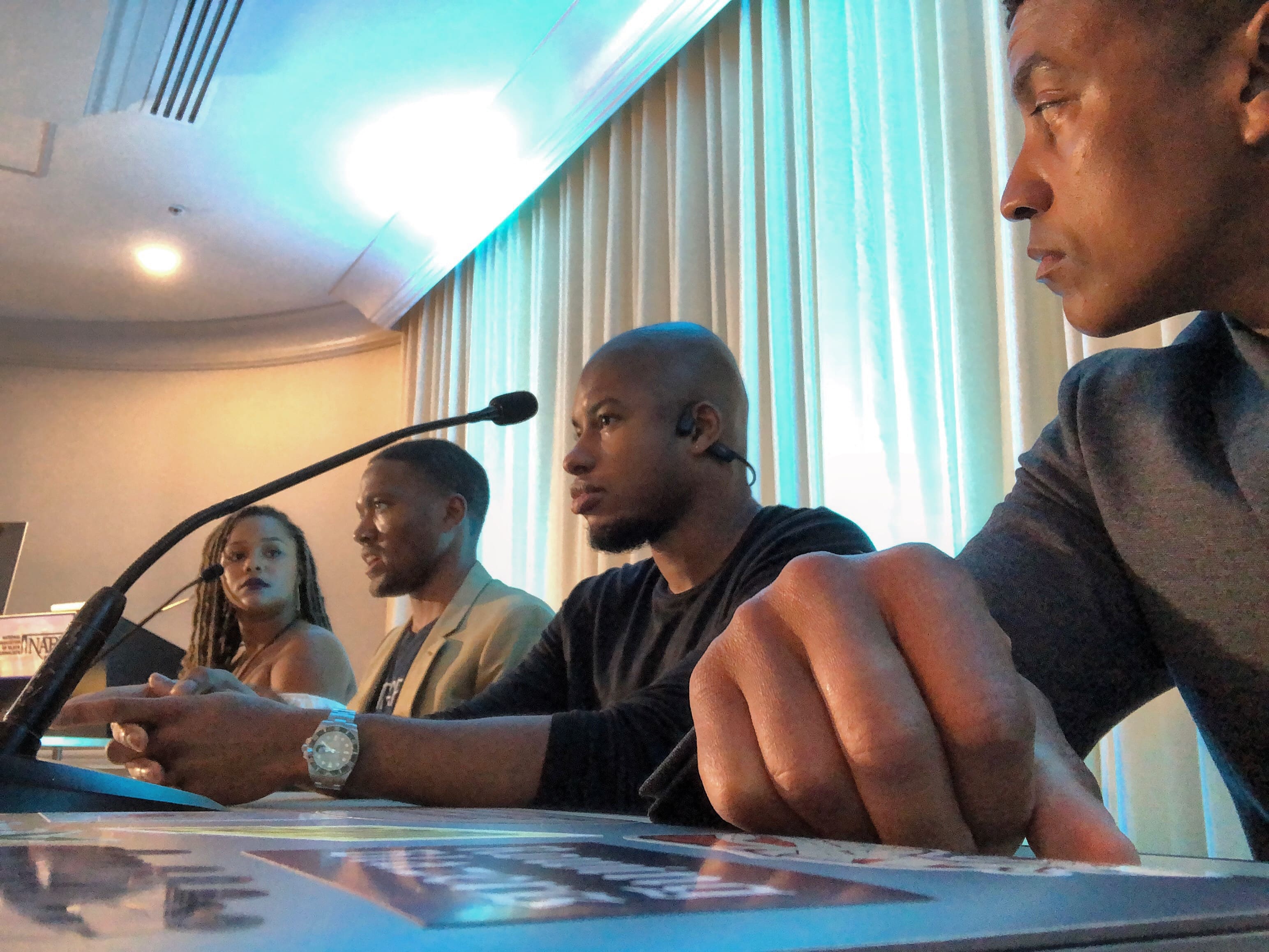
Just three months ago, 2PM was featured on a National Association of Black Journalists (NABJ) panel with successful (and lucrative) newsletter publications: The Plug, Inevitable Human, and Trapital. The topic was on “building paid subscription media companies.” But the common thread throughout was easy enough to observe: without the critical mass of a newsletter audience, our ideas would likely be re-packaged at a traditional outlet through on-the-record or off-the-record conversations with professional reporters. Newsletter publishers strive to own the distribution of their ideas and the communities around them.
So when I read the article by Modern Retail, I wasn’t upset. Weissman is a great writer and he likely meant no harm. But I was confused by how no one saw what we did. I am not sure that many readers understood how proud we were to be sitting there in the first place. Just three years prior and that scene wouldn’t have happened. To me, the moment felt like an enormous privilege. In each instance, we found our own ways to deliver our practical and experience-driven ideas to a very competitive ecosystem. And on that day, the founding team at Yotpo recognized the validity of them all. It was an important moment.
The Pre-Substack Era
Goal: publish 180 letters. Reassess. Launching 2PM, Inc. in 2015 was a hail mary of sorts. In December of that year, I was no longer co-running a DTC operation. Instead, I was advising and / or building eCommerce operations for publishers. As a side project, I started 2pml.com as a way to maintain accountability to myself.
2PM was a simple proposition: understand everything to get better at the one thing.
I wanted to get better at my profession. At the time, my focus on one task was leading to more blind spots than tangible progress. As such, I was missing out on the practical knowledge that follows reading, thinking, and hard analysis. The first 2PM email published to 11 people; I’d monetize it after 180 letters out of necessity. Building this company became my full time job.
By understanding how 2PM’s commerce-adjacent industries interact to negatively or positively impact one another, I was able to map the best steps for the projects that I was attached to – then and now. With 2PM, I hoped to duplicate those same abilities for other industry colleagues. It is a simple proposition: understand everything to impact that one thing.
If there were any blindspots in Tiffany’s Is Anyone Going to Get Rich off of Email Newsletters? [1], there may be one. There is a growing collective of former operators who spend the majority of their time honing their publishing skills. They understand commerce and marketing and branding and logistics and data science. They’ve shipped packages, negotiated distribution deals, and led performance marketing efforts. And readers appear to be drawn to the raw perspectives of those who are discussing industries from within the walls. Whether you’re reading Emily Singer’s Chips and Dip, Magdalena Kala’s Retales, Richie Siegel’s Loose Threads, Jenny Gyllander’s Thing Testing, or Paul Munford’s Lean Luxe, the presence of operational experience is felt.
The Operator-First Publisher
So yes, Substack left out relevant history on their July 17th “A better history for news” blog. Of course they highlighted Ben Thompson and Jessica Lessin, luminaries of the indie paid subscription industry. But Substack may have missed another trend. Substack concludes their homage to publishing with:
One hundred and eighty-four years since the New York Sun first went on sale, we are standing on the cusp of a new revolution in the news business. The time for mourning the loss of the old media model is over. Now is the time to look ahead to the next two centuries.
The revolution itself is not new. But it is reaching new types of thinkers looking for a platform to move their industries forward. Will it make publishers rich? Maybe, maybe not. But publishing as a platform is altogether different than sending newsletters alone. Gyllander just completed a sizable angel round from many of Silicon Valley’s best and brightest. Her subscription-based approach is fresh, credible, and engaging. Siegel just successfully held a one-day retail conference that wouldn’t have existed without his Loose Threads newsletter. Munford fills Lean Luxe social events each time they are held. While not a paid-subscriber driven platform (for now), he’s successfully monetized through weekly sponsorships. And 2PM is launching its first members-only forum for commerce and media executives: Polymathic. Each company has tremendous opportunity ahead of them.
The era of the operator-first publisher is a fascinating one to observe. In some ways, it’s leveling an exclusive playing field within media tables. But at one table, in the backroom of Yotpo’s well-appointed venue, a group certainly stood out – literally and figuratively. We carried ourselves differently and we looked different. Non-traditional voices in business-adjacent media are positively impacting traditional media circles. And the hope is that those newsletter-turned-platforms continue to provide new ideas to the executive levels of established digital industries. 2PM is once again observing a quiet movement from within.
Read the No. 334 curation here.
Report by Web Smith and Edited by Tracey Wallace | About 2PM


