

The past is a foreign country; they do things differently there. British writer Leslie Poles Hartley used this line to open his 1953 novel entitled The Go-Between, a novel that explores memories profound effects on our present. For his protagonist – Leo Colston – it a memory that he cannot shake. Nostalgia is a type of memory that reminds us of the past and drives us forward. In America, nostalgia is often tied to consumerism and for good reason. For one, it influences our perceptions of brand equity. We drive a Ford because that’s what Americans do. High school students compete for coveted spots in timeless institutions like Harvard, M.I.T., and Stanford to take part in what was – with the hope of becoming what will be. People join clubs because of their rich history. Nostalgia drives our passion for sports, cars, education, and even travel. But what is nostalgia that you haven’t personally experienced?
Anemoia is the nostalgia for something before your time. Better put, “a nostalgic sense of longing for a past you yourself have never lived.” [1] For many, there is an anemoia for the Golden Age of air travel. And yet, few reading this are old enough to have experienced travel in the 1950’s and 1960’s. Even so, there is a clear demand for the Golden Age of air travel. For example, there are a number of retailers that still merchandise Pan Am goods despite it being bankrupt for nearly 30 years.
Pan Am is somewhat of a cautionary tale. In 1955, had someone mentioned that – in 1992 – air travel would be a bigger industry but Pan Am would be gone, few would believe it. The airliner, once remembered for glamour, went bankrupt in 1991. A combination of industry deregulation and a lack of investment in booking systems closed the book on nearly 70 years of world renown operations. The TWA hotel is another example. In New York’s JFK airport: plush rooms replaced an empty terminal. The hotel’s Paris Cafe, mid-century architecture, infinity pool, and a room of Peloton bikes expresses a sense of anemoia: air travel’s Golden Age.
For those who endure perpetual business travel, it’s often a pastime to imagine the foregone era of cocktails and business suits. Sophistication, spaciousness, and exquisite service were the rules of the day. Today, these ideals are the exception. Air travel is an altogether different product; it’s inexpensive enough for the masses. But travel didn’t just become more accessible, the entire product changed. For every Qatar Airlines or Qantas, there is a Spirit or a Frontier Airlines. Down-market and highly accessible, airliners have shifted to an economy-first model. Market leaders employ a strategy that requires economies of scale to tip the scales of razor thin profitability.
In this era of flight travel, someone’s foot is on your arm rest. There is an infant’s snot on your right shoe. And you’ve gorged yourself on peanuts and coffee made of brown powder and potable water. When you think of the Golden Age of air travel, you think of a cocktail party with wings. Today, you think of a metro bus equipped with bags of Doritos.
For many, the American airport is no longer an aspirational destination. Yes, there are lounges. And yes, terminals are being redeveloped to meet the demands of modern consumers. And Delta’s food is edible. But as long as flights are $100 from Columbus to Miami, the entire industry drags with it. Air travel will be remain chore to achieve the pleasure and no longer the pleasure, itself. This should be a lesson to today’s retail brands. What happens when you move down market? It becomes a different product altogether. The consumers make the market.
When we think about the Golden Age of Flying–the glory years of Pan Am and the Concorde in the 1950s and 1960s, before flight became cheap with the rise of the jumbo jet–we imagine a colorful, lavish era in which our every comfort and requirement is catered to. [2]
In the United States, the devolution of American air travel should serve as a case study to retailers. There are 5,170 airports open to the general public. None are in the world’s top fifteen. America is the land of the free with your purchase. We are addicted to down-market expansion and excessive promotion.
Anemoia influences consumer sentiment in indirect ways, not just the nostalgia for specific things. This type of nostalgia also influences certain principles. For example, despite the appeal of pricing promotions, consumers want exclusivity. In most cases, people yearn for a time when things were “better” or “more valuable.” Even if they don’t know exactly what that means. Consumers reward the brands that provide that sensation. These products are capable of generating a veblen effect. This effect is often seen in brands like Off-White, Supreme, or Yeezy. Brands with the highest value are known as veblen brands. A veblen brand defies economic law. As price rises, so can demand.
And yet, many brand managers and chief marketers forget this. These days, pricing integrity and product exclusivity are as foreign as the top 15 airports. It’s as if promotional pricing 101 is the first course taught in the halls of the finest business schools in the country. In effect, brands are choosing to compete in the red ocean of a dwindling middle-class rather than an often-uncontested market of modern luxury buyers. Rather than making the competition irrelevant, brands are choosing to compete head on. Their modeling suggested that total addressable market (TAM) would be greater that way.
Rather than a go-to-market that appeals to a growing number of modern luxury consumers and HENRY’s (high earners, not rich yet), many DTC brands optimize message, branding, and ad spend to reach a contracting number of middle-class consumers. Or worse, off-price consumers who’ve yet to fully adopt online retail as a method of consumption. It’s unclear whether or not this dynamic is contributing to a rising CAC but the shifting dynamics of an audience should concern marketers. [3]
When TWA Hotel chose to furnish their facilities with items like Peloton bicycles, they did so because of what it communicated to consumers: perceived luxury. Yet, if this past week was any indication, it’s Peloton that is headed the way of American air travel.
People think of Peloton as a product for hyper-achieving rich elitists because that’s how it branded itself at first. Now, the company is trying to walk back that idea because it got its own appeal totally wrong. It’s not going well! [4]
Peloton and Lightning in a Bottle

Occasionally, a business can experience lightning in the bottle, tangential growth that is unexplained and unaccounted for. The company’s recent marketing efforts and responses to criticism both suggest that it has yet to come to terms with the origin of that lightning. The photo to the left is from Peloton’s 2013 Kickstarter. You won’t find the word “luxury” on the page. But the photos are worth a thousand words. It’s almost as if they built a product without an understanding of what it would take to buy one. And then actively disowned those who did. Prior to the launch of its financing option, a Peloton owner would have to possess each of the following:
- ample room for storage: 15 – 20 sq. ft. for the cycle or 40-50 sq. ft. for the treadmill
- a convenient storage position with electrical access
- superior wi-fi that is capable enough to stream classes without interruption
- around $4,000 of disposable income

These four things sound relatively basic to some. However, even with out ~ 2,000 sq. ft. home in the urban center of our midwestern city, there is exactly one small area that worked in our house. That would seem to to place us at the lower end of Peloton buyers. And yet, recent advertising efforts are intent on convincing the mainstream that the aforementioned requirements aren’t markers of upward mobility. While Peloton’s current c-suite would contend that it is neither a luxury brand nor a fitness company, the brand’s former CMO (Lori Tauber Marcus) explained her advertising strategy as such, in 2016:
Because we are a disruptive innovation, we have to explain to consumers what the Peloton fitness proposition is. My hope is that the campaign continues to elevate the brand while educating consumers about this transformational in-home exercise phenomenon. [5]
Elevate the brand, it did. Not only did Peloton instructors become household names, the cycle became somewhat of a status symbol among fitness-interested suburbanites. The hardware became more than a connected tool for fitness. Peloton became an aspirational brand. Two camps began to emerge:
- Non-users: “Peloton is a stationary bike with an iPad attached.”
- Power-users: “Peloton is a community of successful, motivated a-types.”
So Peloton’s recent post-ad stock decline should have served as a wake up to the company’s leadership. Consumer sentiment matters. Daniel McCarthy, an assistant marketing professor of marketing at Emory University, told Forbes:
[Negative Consumer Sentiment] can cause companies like Peloton to exhibit a lot more stock price volatility when there are events that can cause people’s views to move up or down. I think that is exactly what we are seeing right now.
Peloton is no longer interested in becoming the elevated fitness brand that Lori Marcus envisioned. In fact, she held the position for fewer than eight months. The new direction, driven by the company’s desire for SaaS multiples and profitability, has emerged in recent months.
Peloton and The Mainstream

The now-infamous ad featuring “Peloton Wife” came and went. The Aviation Gin advertisement came and went. According to New York Times reporter Tiffany Hsu:
[Ryan Reynolds] heard about the Peloton ad via text at 2:34 p.m. on Tuesday, when the company’s stock was falling. By Wednesday morning, he was on a call with the actress, Monica Ruiz. “She was game,” he said. “She really does have an excellent and incredibly evolved sense of humor.”
And Darren Rovell, Reynolds’ viral ad received $9.3 million in exposure by December 7th, just a day after the ad premiered. But the overblown outrage towards Peloton will not remain, nor will the memes. However, Peloton’s lack of pricing integrity will impact the company for quite some time. The market fell another 4% when Peloton announced its subscription discount.
Founder and CEO John Foley’s response today was to double down and dismiss any and all criticisms.
That was last week. We don’t have to do much more in order to be one of the great consumer companies of the next couple of decades. If you’re thinking hard about getting a treadmill, I don’t know where you are going to go. Fitness equipment has been a dopey category with dopey products. It’s an albatross we are trying to shake as we build one of the most innovative companies of our day.
This confirms that Peloton doesn’t want to compete in the fitness category, after all. But it may also inform a lack of industry awareness. Rogue is an indirect competitor to Peloton; the Columbus, Ohio company began as a barbell manufacturer but has since built patented fitness machinery (including stationary bikes). And while the cycling company likely leads in revenues (Rogue is very private), it cannot be by much. Additionally, Rogue shares Peloton’s core competencies (software development and product engineering) while also possessing mastery over packaging development, fabrication (domestic and international), sourcing intellectual property, shipping, and native tracking. It’s also important to note that while Peloton raised $994 million while a private company, Rogue raised $0. Rogue is profitable.

One could argue that little of this matters; software development is Peloton’s chief concern. In an effort to grow the user base, Peloton recently reduced its digital-only subscription. The digital-only subscription, originally $19.49, is now $12.99.
Peloton’s internal consensus is that profitability will only come through deep discounting, heavy de-risking, and a high-margin software model. This model is incompatible with current consumer sentiment. The product that many early consumers paid $3,000 may be commodities by Q4 of 2020. Because Peloton began as a product for some and became a product for everyone. Business strategist Marc Ross recently published How Peloton went from being Porsche to being Honda with one advertisement. In it, he contends.
It is not wrong and not without merit to have goals to build a huge brand, have millions of customers globally, and chase billions in market capitalization – it is just that the company you want doesn’t mean the market is there. [6]
It’s unclear whether Peloton’s management fully understands the attrition risk involved. Until recently, the company’s strength has been two-pronged: (1) its on-screen, aspirational fitness talent and (2) its cult-like early adopters. Peloton is shifting away from a premium model because it now contends that it never meant to be a luxury product.
The market may reward Peloton for leaning into new methods of influence and acquisition. However, their management won’t begin to see the unintended effects of mass adoption (and increased churn) until its early marketing flywheel begins to sully. [7] But for many of Peloton’s early adopters, they see cracks in the anemoia that benefited the brand early on. Consumers look for retailers to hold steady. In Christopher Muther’s 2014 article, “What happened to air travel?” he wrote:
As competition grew and prices dropped, something had to give, and that something was free booze and fancy meals. Lower prices helped democratize air travel, but it effectively squashed the halcyon glow of the golden age.
Consumers want the Golden Age to last forever but it rarely does. For Peloton, it remains to be seen. There are few brands like Porsche, there are many brands like Honda. And in this way, it’s likely that the the story of air travel is more universally applicable than not. And so, consumers will imprint on the next breakout brand that represents a premium experience, exclusivity, and sophistication. This is how anemoia works in American consumerism. We want what we believe once existed. Book reviewer Kevin Gardner wrote the following reevaluation of Hartley’s “The Go-Between”, 60 years after its publishing date:
Hartley’s tale […] underscores the modern experience of broken time, a paradox in which humanity is alienated from the past, yet not free from it, a past that continues to exist in and to control the subconscious.
Report by Web Smith | About 2PM


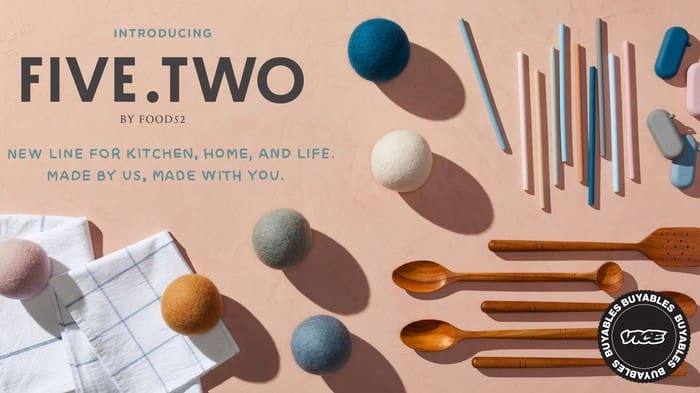 Food52 is a member of a new breed of digital platform, one that combines commerce and media operations. This aids diversificaton of revenue channels while minimizing the rising costs of traditional customer acquisition. It is not easy but it can be rewarding. There are a number of publishers in this category, to include: Barstool Sports, Uncrate, Highsnobiety, Hypebeast, and Hodinkee. And remember, Glossier began as a blog called Into The Gloss.
