
Polymathic Audio No. 16: Alexis Gay


This conversation between Alexis Gay and myself was actually our second; it was equally fascinating. Gay and I talked everything but business just a few weeks back on her new creation: Non-Technical Podcast. The subject matter was slightly different for this one.

The passion and creator economies are here and they’re scaling fast. A key player in this trajectory is Patreon, where our guest worked as a director of creator partnerships and business operations. The conversation moves to the dynamics of companies the likes of Patreon, Substack, Memberful, and their role in the growth and autonomy of the multi-SKU creator.

The responsibility of brands, marketers, and entrepreneurs on social media during moments of national trauma is debated. Recently, Alexis left Patreon for a full-time pursuit of the creator economy and she explains the process of embracing and monetizing in the present climate. She is one of the first to pursue the uncharted waters of building a comedic portfolio, during a pandemic, in a largely still-unrefined creative landscape.

See her work on Youtube

Towards the end of our discussion, Alexis laid out the dichotomy between prioritizing who is in your audience (in other words: depth > width). And in the name of self-awareness, Alexis gives her purview of the TikTok zeitgeist and how to navigate the world of newly available content channels.

The RSS feed is here for those who prefer to listen on the go. Or you can find Polymathic Audio on Spotify.
AUDIO BY ALEXiS Gay AND WEB SMITH 
CO-PRODUCED BY JOE KLOKUS AND WEB SMITH
AUDIO DESIGN BY VINCENZO LANDINO
ENGINEERING BY JOE KLOKUS
POLYMATHIC AUDIO IS A PRODUCT OF 2PM INC.

No. 275: YouTube goes commerce

cópia do anúncio do facebook 2
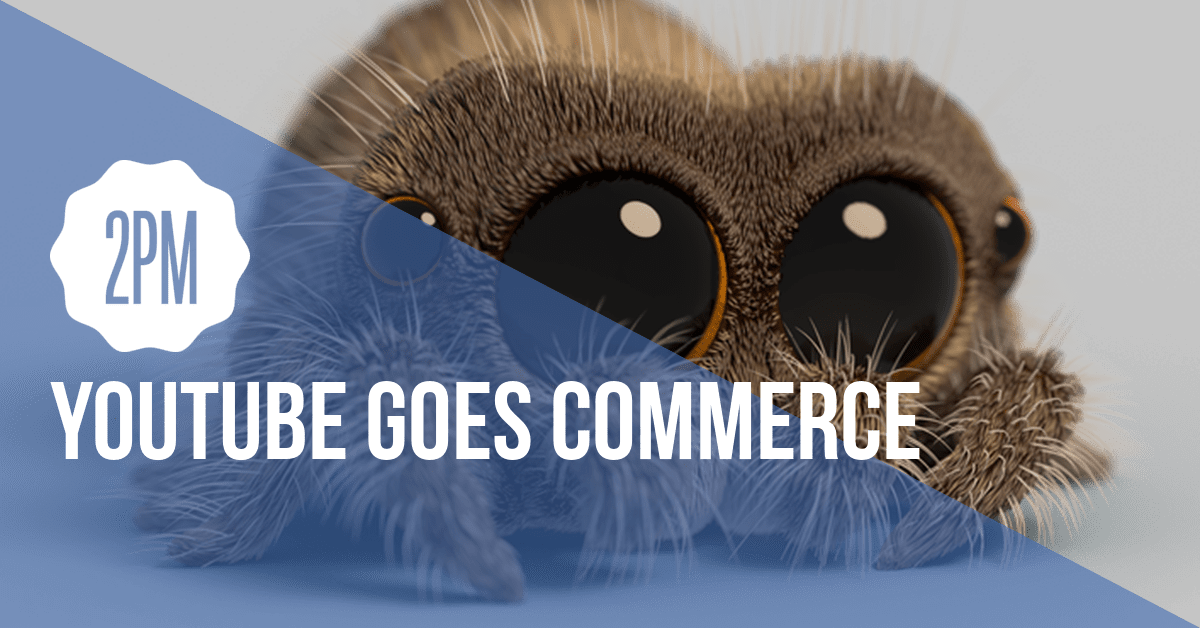
Pictured: YouTube sensation “Lucas the Spider”

YouTube creators have been frustrated with the platform’s ad operations, as of late. YouTube legend and videographer Casey Niestat has nearly 10 million YouTube subscribers, the embattled Pewdiepie has 64 million, the famed MKBHD has 6.5 million, and Logan Paul has nearly 18 million (and an eight figure online store). In addition to the proceeds driven by advertising to an audience of those respective magnitudes, creators have been increasingly reliant upon merchandising for a steady stream of revenue. In a flash, a YouTube creator showed the world just how powerful an online retail operation can be for creators.

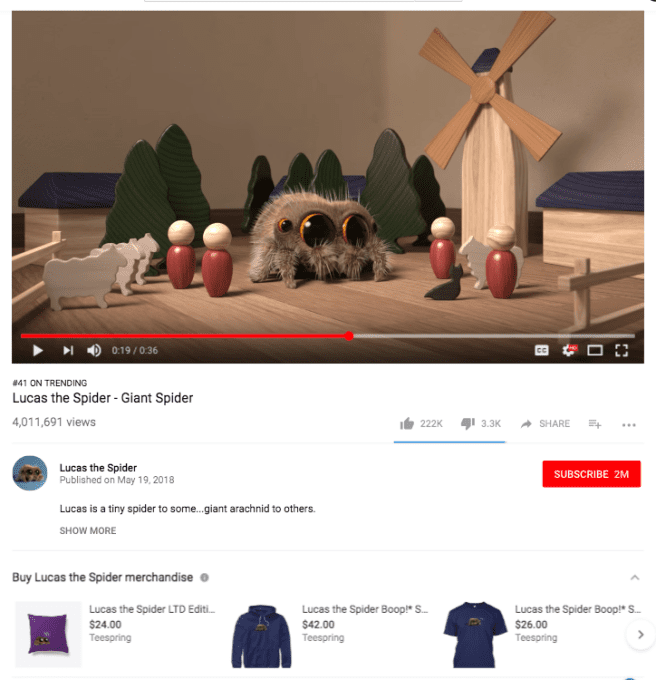
Joshua Slice is a former Disney employee and, currently, the creator and animator of the Lucas the Spider YouTube phenomenon. With a relatively smaller community of 2.4 million YouTube subscribers, the first 18 days of his embedded store achieved an astounding open. The creator of Lucas the Spider, launched a Kickstarter-esque campaign on Teespring (in addition to a full store). The plushie product sold around 60,000 units, netting Joshua $1 million in profit in just 18 days. This 60,000 unit tally was one of twenty available SKUs.

Lucas-The-Spider
Teespring’s integration provides in-line eCommerce for creators

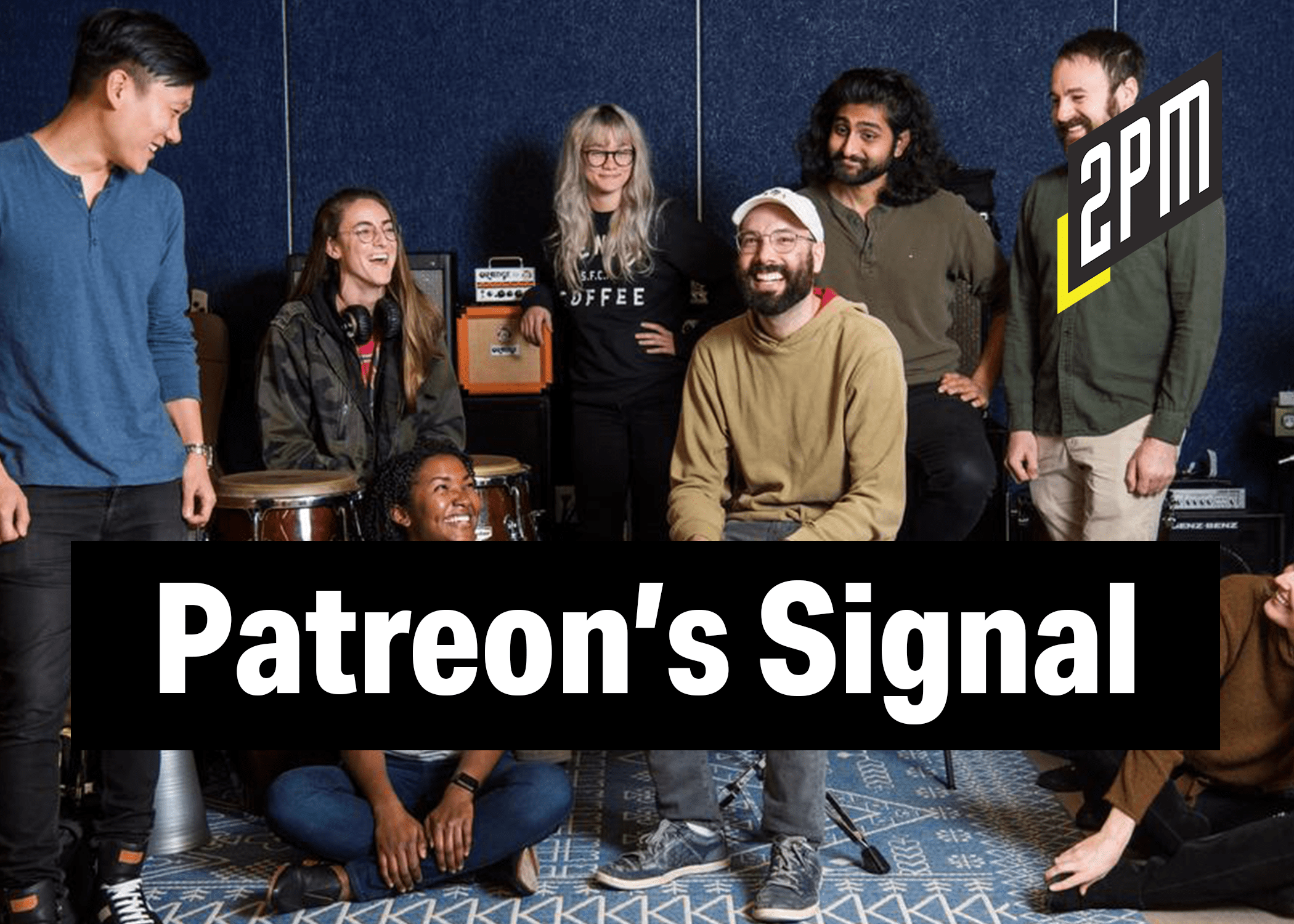
In June 5’s Member Brief No. 16: Patreon’s Signal, our research led me to the following conclusion:

We believe that Patreon’s acquisition of Kit signals a potential uptick in M&A and partnership activity throughout the creator space. Kickstarter acquired Drip in March of 2016 and will likely pursue a merchandising solution for its stable of creators to mirror Patreon. YouTube is positioning its platform to compete with Patreon, Instagram, and Shopify, as well.

According to Tech Crunch’s June 5, 2018 article:

The deal also could help Patreon stay ahead of YouTube and Facebook, which are encroaching on its subscription patronage model. Patreon now has 2 million patrons backing 100,000 creators. It paid out $350 million over its first five years through 2017, and expects to send creators another $300 million in 2018, while taking a 5 percent cut.

Twenty days later and revisiting the Member Brief seems a bit prescient. With the newly announced partnership between YouTube and Teespring, Patreon’s most recent move is already behind the curve. The acquisition of Kit didn’t move Patreon any closer to shipping merchandise for its over 100,000 partners.

Patreon is well-positioned to be the leader in one-stop-shops of monetization for content creators. Kit can be a transformative partner for them, intensifying YouTube and other creator networks’ need to bolster their revenue operations. Commerce will become an increasingly important platform tool in a race to stay competitive for top creators. Activity over the next six to twelve months will determine which creator networks seek out the services of the aforementioned merchandising logistics companies: through partnership, by way of a joint venture, or through an out-right acquisition.

Resumo do membro nº 16: Sinal do Patreon

Prior to this eCommerce rollout, YouTube recently launched the same type of membership service that Patreon offers its creators. What does this mean for creator-based platforms? Patreon’s M&A signaled a period of consolidation and will continue to lead to the siloing of services for top creators. According to Byron Jones of the Music Network, “During the tests, Teespring reported an 82% success rate for YouTube users and an average 25% rise in item sales for each.”

Track the growing merch database

The initial numbers are gaudy and Teespring’s PR has been persistent. Their recent success has sent ripples across the industry. And to be fair, it was an enormous win for them because newer YouTube creators will now be incentivized to remain loyal to YouTube’s offerings.  It’s more than likely that some of YouTube’s creators will consider shifting from other storefronts to YouTube’s Teespring offering. It’s even possible that creators like Logan Paul (who has a sophisticated eCommerce operation in place) will consider testing inline retail on their YouTube channels.

But this partnership is clearly a shot across the bow for Instagram and Patreon. While Instagram is all-in on Shopify’s seamless integration and growing into YouTube’s space, Patreon is still in need of a merchandising partner and an exclusive creative partner that can help them in the short term. Consolidation will continue.

Leia mais sobre o assunto aqui.

Por Web Smith e Meghan Terwilliger | About 2PM

Resumo do membro nº 16: Sinal do Patreon

Se você é um criador independente, é provável que o Patreon seja uma plataforma que você chama de lar. Quase 100.000 criadores o fazem. A plataforma alcançou uma tração notável em um período de tempo relativamente curto. Foi relatado que, em 2018, eles processaram quase US$ 1 bilhão. A criação dos cofundadores Jack Conte e Sam Yam foi lançada em maio de 2013, depois que Conte ficou frustrado com a falta de alternativas de monetização do YouTube. Segundo a história, Conte fez um teste beta do site com seu próprio público pessoal do YouTube e começou a ganhar mais de US$ 7.000 por vídeo. A monetização do YouTube lhe renderia pouco mais de US$ 50 pelo mesmo trabalho. Cinco anos depois, o Patreon é sinônimo de patrocínio, assim como o Kickstarter é sinônimo de crowdfunding.

Este resumo para membros foi elaborado exclusivamente para Membros executivosPara facilitar a associação, você pode clicar abaixo e obter acesso a centenas de relatórios, à nossa DTC Power List e a outras ferramentas para ajudá-lo a tomar decisões de alto nível.

Registre-se aqui