
Memo: Apple, Stripe, and (wink) Mob Ties

With a new Apple partnership, Stripe just secured more power in Silicon Valley. The running joke is that any advancement by Stripe is indicative of its “mob boss” mentality, a reference to the recently viral thread by the founder of Bolt. In actuality, Stripe is showing just how much of a positive-sum mentality it’s using by building more dynamism into American retail and entrepreneurship.
Much has happened since this pre-pandemic report on “falling American dynamism,” a term that I prescribe to suggest that entrepreneurship was falling in popularity. In that report, I explained:
The more that conglomerates exist, the more we’ll see dynamism collapse. As a number of those companies begin to succumb to antitrust scrutiny, dynamism will be called upon to close the gap between the age of conglomeration and the need for new, high-growth businesses.
The idea behind that essay was that companies like Google, Facebook, and Apple were so powerful that it was beginning to make tech employment more popular than self-starting entrepreneurship. Of course, the flip side of this argument is that most businesses cannot survive without using Google, Facebook, or Apple. In the essay, I assigned special value to Jack Dorsey’s two companies, Twitter and Square (now Block), and their positive value to dynamism (word of mouth marketing and ease of transaction). Apple builds on that positive impact with its latest project and I believe that the entire fintech ecosystem will benefit along with the advancement of the end user.
In most media reports, the Apple Pay x Stripe partnership is positioned as competitive with Dorsey’s company. I’d argue that Stripe has no interest in competing with Block, a nod to the positive-sum mentality of Stripe’s founders. In fact, I can see a future where they partner with Dorsey’s hardware/ financial services. But not everyone thinks this way about Stripe.
Days after former Bolt CEO Ryan Breslow compared the company to the mob boss of the tech world (and was retweeted 1,600 times), it was announced that Stripe would be the launch partner for Apple’s upcoming Tap to Pay technology. Tap to Pay turns Apple devices into payment hardware, making credit card swipe attachments essentially unnecessary. (That’s a separate lesson for hardware companies that have built their businesses on being middlemen for Apple and payment services.) This product partnership is the result of a 2020 Apple acquisition of Mobeeweave, an NFC innovation that enabled iPhones and other devices to operate as pay terminals without additional hardware. Apple Pay’s partnership with Stripe is expected to operate with Mobeeweave’s technology.
Whether or not Apple will approach this opportunity to monopolize payments and take on competitors like Block and Venmo is the next debate. Pointed out by NextWeb, Block is more than just a payments portal – it helps small businesses manage inventory and analytics. Shopify’s stake in Stripe boosted its positioning as the payments manager of choice for entrepreneurs and small-and-medium sized businesses. Apple’s Tap to Pay appears to only facilitate payments, but if it were to move beyond the point of sale to the backend management of inventory and data, that would give it a bigger role in the space where Block and Shopify currently operate. Or, Apple could choose to open up Tap to Pay to more partners, widening its reach in assisting payments despite the platform the seller uses. This is the most likely play, in my opinion.
It’s important to consider Apple’s ambitions in fintech. With Apple Pay standing tall as the most adopted technology, Tap to Pay seems like the extension of a strategy that’s just getting started. From Next Web:
Over the last few years, Apple has been focused on expanding its services business — especially financial offerings. In 2019, it launched the Apple Card, and plans to expand it to more countries. Last July, a Bloomberg report noted that the company is exploring a “buy now, pay later” product with Goldman Sachs. If Apple starts accepting payment on a seller’s behalf, it can explore more financial products, ranging from loans to management services. Really, this news shows how serious Apple is about getting its services to reach a $1.5 trillion valuation alone. And, at this stage, who would bet against it?
Two years later and dynamism is on the rise. The “great resignation” has led to 47.4 million American voluntarily leaving their jobs in 2021, according to CNN data. ADP Chief Economist Nela Richardson was recently quoted:
We’re seeing a lot of churn in the jobs market. But one thing we are seeing is that hires are higher. They’re not leaving the jobs market, they’re leaving for other jobs in the same industry.
But to the earlier point of dynamism, it’s not all corporate upward mobility, the pandemic has influenced a boom in dynamism. An August 2021 report in the New York Times began:
After waning for decades, applications to start businesses surged last year. If the rebound proves durable, it could provide a more resilient economy.
So it is through this lens that I see the positive sum game that the Collison brothers are playing with Apple. Will it have an impact on Block’s hardware business? Yes. But that does not mean that Apple won’t partner with Block in the future. Block sells full point of sale systems for readers; this new Apple / Stripe partnership will only impact Block’s dongle business.
Viewed this way, Apple’s Tap to Pay could be helpful to Block as it removes the need for the dongle, giving users more and easier ways to pay, without making the dongle obsolete. Protocol makes the argument that Block is then freed up to focus on other services that are more profitable than a hardware business, including banking, payroll and other financial services. By making it easier for anyone to accept payments via iPhone, smaller business owners and entrepreneurs who aren’t looking for full POS machines can start selling, widening Block’s pool of potential customers in the long run. Then, more can win as the market for proximity payments expects to double over the next four years:

A positive-sum mentality and dynamism go hand in hand. Lost in the news cycle on the Apple Pay x Stripe partnership is that the same technology will be powering Shopify’s similar solution in the coming months. Stripe will be offering the Tap to Pay solution for iPhone users through a new Shopify app, as well.
Dynamism is defined as a theory or philosophy that explains something in terms of great energy or force. In the context of entrepreneurship, it goes hand and hand with payments technology, specifically the way that we use our phones. It is easier to pit one company against the other than it is to understand the bigger picture here. The United States is currently in eighth place behind China, South Korea, Vietnam, Norway, the United Kingdom, India, and Spain with respect to mobile payment adoption. China’s penetration was 39.5% to America’s 17.7% (as of August 2021). With an emphasis on making peer to peer transactions easier, businesses of all kinds can grow in sophistication and in reach.
And in doing so, Apple will achieve its goal for Apple Pay. It wants the payment technology to no longer be bound by the hardware that launched it. As Stripe has become the processing layer beneath much of commerce, Apple likely has aspirations to do the same for the transactions layer. And it won’t care if the trade is happening on iOS, Android or through Block, Shopify, or even Bolt. Dynamism is about agility and reach and it seems to be on its way back.
Por Web Smith | Editado por Hilary Milnes com arte de Alex Remy e Christina Williams
Disclaimer: 2PM is an investor in Fast, a competitor to Bolt. To Ryan’s Breslow’s point, Stripe is an investor in Fast. But Bolt has been noted as better positioned with more money raised, more enterprise clients, and a higher GMV. Stripe has been noted as being competitive with Fast in a few of its recent initiatives. Ok, I am tired.
Memorando: Pelotão, apenas faça isso.

Quem sabe? É provável que a Nike descarte os rumores de sua possível aquisição da Peloton, caso ainda não o tenha feito. A CNBC observou anteriormente que John Foley tem "confiança inabalável" no futuro da empresa como uma empresa autônoma. A Peloton não é do tipo que cede o poder a nenhuma empresa externa, mas se isso acontecesse, funcionaria maravilhosamente bem. Supondo que o acordo não acontecerá, é por isso que ele deveria ter acontecido. Este artigo de opinião da Bloomberg foi muito preciso:
A Nike pode ser considerada uma marca de luxo se observarmos as faixas de preço mais altas, com jaquetas e tênis acima de US$ 500. Isso se encaixa bem com o posicionamento da Peloton, considerando seus preços elevados, com bicicletas a partir de US$ 1.495.
O que a Peloton precisa, acima de tudo, é de novos usuários energizados e engajados que se sintam à vontade para pagar o preço total pelo hardware da Peloton e, ao mesmo tempo, permanecer engajados no aplicativo móvel e na comunidade virtual que o acompanha. A Nike pode oferecer isso, especialmente agora que os consumidores americanos estão voltando às academias:

A Nike passou anos investindo em sua comunidade virtual, apoiando-se fortemente em um conjunto de aplicativos que atendem a diferentes clientes e diferentes necessidades. O principal aplicativo da Nike é para compras diretas, o Nike Run Club e o Nike Training Club acompanham os treinos, e o aplicativo SNKRS é o preferido dos fãs de tênis que acompanham de perto os próximos lançamentos. Ser um membro do Nike+, embora gratuito, ativa um relacionamento mais próximo com o varejista por meio de atualizações e exclusividades de produtos. É fácil ver como o Peloton poderia se encaixar nos aplicativos de condicionamento físico da Nike e impulsionar uma mudança para associações pagas para a Nike. As bases de usuários das duas empresas provavelmente se sobrepõem, mas há várias oportunidades de vendas cruzadas entre as duas. Os clientes de alta renda da Peloton poderiam elevar o posicionamento da Nike como uma oferta de luxo para aqueles que querem comprar, enquanto o vasto alcance da Nike injetará na Peloton uma aquisição eficiente de clientes. Também é fácil ver por que a Peloton pode precisar da ajuda da Nike.
A marca Peloton não é mais o que era. Em Peloton's Diffusion (Difusão da Peloton), escrevemos: "Ao difundir sua base raivosa para conquistar o maior número possível de clientes, ela enfraqueceu os laços entre os membros de seu núcleo demográfico". O resultado de visar à adoção em massa por meio da redução dos preços e do aumento das oportunidades de financiamento significou que a marca representa menos para seus primeiros usuários, o que transformou o ciclo doméstico em um ciclo com um culto de seguidores. Isso se reflete na diminuição de seus negócios de vestuário. A CNBC informou recentemente que a marca está reduzindo sua previsão de vendas de vestuário para 2022. Ainda assim, o produto da Peloton ainda é superior a qualquer concorrente no mercado - por enquanto. A Echelon recentemente convenceu o USPTO de que as patentes da Peloton para aulas de streaming e sob demanda não eram de fato patenteáveis. De acordo com um relatório recente da Bloomberg, pode haver mais por vir.
O risco da estratégia da Peloton é que o tiro pode sair pela culatra se os tribunais considerarem que sua "tecnologia revolucionária" não é tão revolucionária assim. Como no caso do que acabou de acontecer com a Echelon. Se isso ocorrer em uma escala mais ampla, a Peloton corre o risco de perder milhões de dólares e ficar sem proteção legal para o núcleo de seu negócio.
Portanto, se a Peloton está perdendo o valor da marca, perdendo os direitos sobre as patentes tecnológicas que a diferenciavam dos concorrentes e perdendo a batalha contra o ressurgimento do interesse por academias, quem melhor do que a Nike para revigorar o interesse pelo produto?
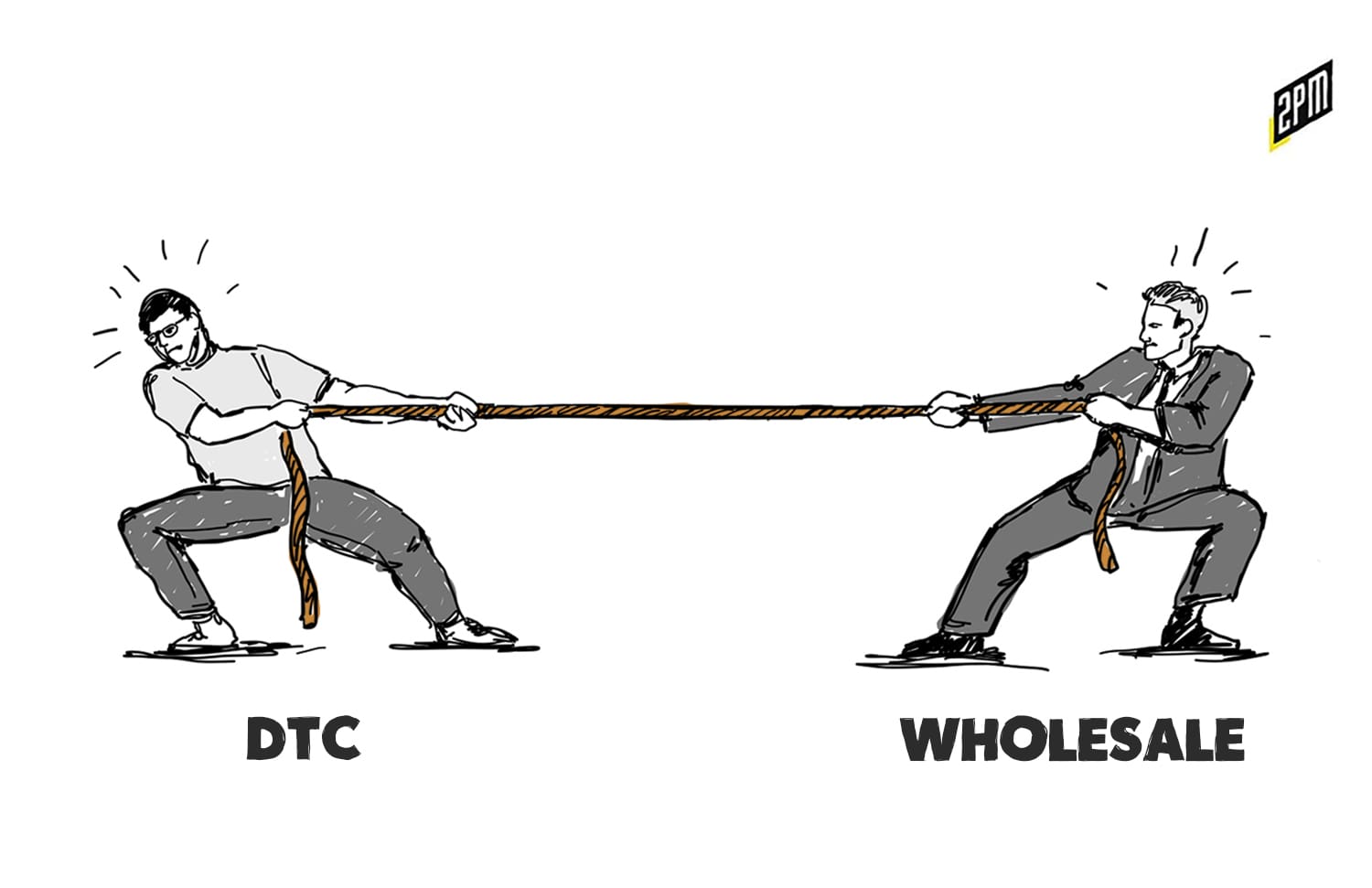
A Nike está fazendo a transição para uma marca direta ao consumidor. Além de seus aplicativos, a empresa investiu em conceitos de loja como a House of Innovation, reduzindo parcerias de atacado de baixo desempenho e classificando seus produtos para criar uma experiência mais completa e rica para os clientes diretos. Iniciativas recentes para levar a Nike à Web3 ressaltaram a importância de uma estratégia DTC. A Nike tem se ocupado com o registro de marcas registradas para o metaverso, construindo um mundo virtual Nikeland no Roblox e também adquiriu a RTFKT, sinalizando um investimento mais profundo no metaverso.
Como resultado, a Nike não é mais apenas uma empresa de vestuário. Ela é líder em vendas diretas ao consumidor e pioneira na Web3. Com um acordo com a Peloton, a Nike receberia centenas de milhares de telas para comercializar seus próprios produtos: físicos, digitais e tudo mais. Mas o mais importante é que ela se posicionaria adequadamente contra seu principal concorrente: Lululemon/Mirror e a contínua ascensão da Tonal.
As buscas da Nike e da Amazon pela Peloton provavelmente terminarão com pouco para mostrar. O interesse em aquisições vem e vai. Mas se houvesse um parceiro adequado para se beneficiar da infraestrutura existente da Peloton, esse parceiro seria a Nike. Em um recente mergulho profundo na estratégia de outro varejista, explicamos que a Nike estava, na verdade, preparando o terreno para seu envolvimento na área de fitness digital em casa:
A Nike está preparando o terreno para uma maior expansão. Atualmente, a marca está enfrentando a Lululemon em uma disputa de patentes sobre a tecnologia Mirror - demonstrando que está lutando pela propriedade em um universo maior da Nike.
Quando a Nike processou a Lululemon por violação de patente sobre sua tecnologia Mirror em dezembro, ficaram evidentes as implicações de que a Nike está planejando seu próprio investimento em hardware e tecnologia de fitness em casa. O processo acusa a Lululemon de infringir patentes, incluindo tecnologia de nível de esforço, competições de usuários e registros de desempenho. Independentemente de o futuro da Nike na tecnologia de condicionamento físico para uso doméstico estar ou não com a Peloton, seu movimento agressivo para desafiar a Lululemon e a própria estratégia da Mirror sinalizam que a Nike está, no mínimo, ameaçada pela ascensão da categoria que está invadindo seu território.
John Foley é um pensador independente, um CEO que prospera no controle e na liderança territorial. É improvável que ele ceda qualquer poder à principal empresa de fitness. Mas se ele o fizesse, seriam as relações mais mutuamente benéficas nos negócios atuais. Com a Nike, a Peloton recebe um canal de novos negócios e uma posição restabelecida no setor de fitness de luxo. Com a Peloton, a Nike reivindica uma participação no que parece ser uma abordagem multifacetada para crescer em espaços físicos próprios, canais digitais próprios e um espaço Web3 em expansão, onde os comportamentos da comunidade IRL e do comércio digital colaboram de novas maneiras. Mesmo aqui, a Peloton pode ajudar a facilitar mais inovações.
A Peloton reduziu a capitalização de mercado para que essa aposta de US$ 10 bilhões faça sentido para a marca de US$ 230 bilhões. Na pequena chance de as partes perceberem que compartilham muitos dos mesmos objetivos, a Nike estará tão presente em casa quanto nas academias, no metaverso e nas arenas esportivas em todos os lugares. E a Peloton, que aumentou a colocação de anúncios em 46% nos últimos três meses, teria o mercado total endereçável que o dinheiro não poderia comprar.
Por Web Smith | Editado por Hilary Milnes com arte de Christina Williams e Art Remy

