
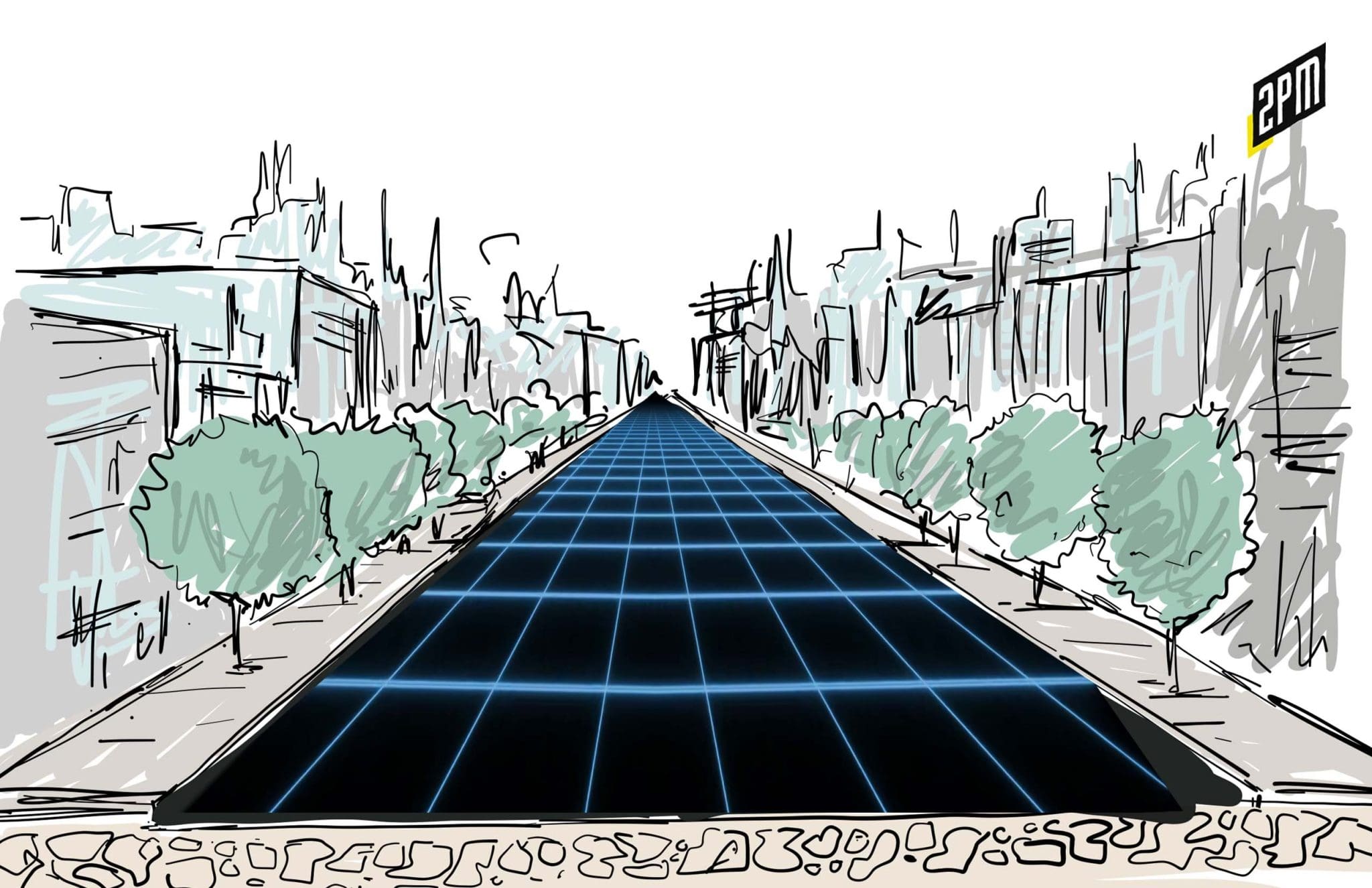
Memo: AI, The Robert Moses of The Internet

Ralph Waldo Emerson once wrote in his treatise on individualism, “An institution is the lengthened shadow of one man.” In “Self-Reliance”, Emerson explains that we must believe in our own institution and reject the opinions of others in order to transcend the bounds of the physical world. Emerson, a man born at the precipice of the 19th century, wrote this in 1841. The transcendentalist’s words are never more relevant 180 years later. His words transcended the bounds of the physical world.

By now, it’s likely you’re either pessimistic about artificial intelligence’s impact and cautious just the same. Or you’re entirely eager and will disregard any of the potentially negative effects that come along with AI-generated innovation. If Emerson were to write about today’s technological innovation, he may see the internet as an institution that is the lengthened shadow of AI. He may add that the tool, itself, is one of self-reliance.

***

As I drove down the the 101 highway from San Francisco to its airport, the landscape was adorned with billboards, each fervently advertising the integration of AI in their products. From tech giants to local startups, everyone was riding the AI wave, promising smarter solutions and transformative experiences. At that moment, a historical analogy struck me, drawing parallels between the urban development of the mid-20th century and today’s digital transformation. Fresh off of reading Robert Caro’s The Power Broker for the first time, it dawned on me that we’ve seen this in the physical world. And, if so, we are to hold two opinions at once: awe and terror.

Robert Moses, the mastermind behind New York’s sprawling urban infrastructure, could be seen as an analogous figure to the evolving influence of AI on the internet. While Moses reshaped cities, AI is reshaping the digital frontier.

Pick your favorite quasi-dictator in whatever field you’re familiar with — Steve Jobs in computing, David Fincher in Hollywood — and in his ferocity, drive, the scope of his vision and a parallel disregard for anything else but blind adherence to it, Robert Moses might put them all to shame. (re:form)

Robert Moses, remembered by many as a genius urban planner, revolutionized New York’s infrastructure. He created beaches, parks, bridges, and highways. Yet, amid the monumental structures, the intricacies of human life, especially those of marginalized communities, often got lost. Much like AI today, Moses was a force of massive potential, capable of improving lives. However, with potential unchecked, it often grew blind to the nuanced requirements of individualism and diversity.

Years ago, one could have contended that Zuckerberg is the Robert Moses of the internet, given how Facebook reshaped our digital social landscape. Similarly, Elon Musk, with his ventures spanning electric cars, space exploration, neural interfaces, and paving over Twitter might be hailed as another Moses of the internet. Yet, neither Zuckerberg nor Musk could hold a candle to the transformative power AI promises. The tech magnates, despite their vast influence, are human. Neither are capable of the Emersonian transcendence. AI, on the other hand, is a self-evolving entity, capable of rewriting the fabric of the internet, society, and culture with an omnipresence that Moses had over urban development.

Much like Moses’s infrastructural feats, AI-driven platforms favor efficiency, speed, and broad appeal. Platforms like art curation websites, influenced by AI algorithms, are increasingly pushing mainstream aesthetics, sidelining unique and diverse art forms. The internet, once a haven for niche cultures and perspectives, risks becoming a homogenized space, echoing the uniform highways and bridges Moses built.

The glaring parallel between Moses’s bridges in New York and AI-driven content recommendation systems is their underlying biases. Moses’s low-hanging bridges on the Southern State Parkway intentionally excluded buses, the primary transportation for the city’s marginalized communities. AI, when fed biased or homogeneous data, amplifies existing prejudices, limiting exposure to diversity and perpetuating stereotypes. Just as Moses’s bridges dictated who could access the amenities of Long Island, AI algorithms dictate the content we consume, often entrapping us in digital echo chambers.

Another salient overlap lies in the promises both Moses and AI made to the public. Moses’s developments promised better connectivity, recreation, and urban growth. AI promises smarter solutions, personalization, and efficiency. However, both often overlooked the human element. While Moses’s highways might have disregarded the cultural hubs they bulldozed over, AI’s algorithms might overlook the value of serendipity, diverse exposure, and organic creativity in their quest for precision.

The vast expanse of AI’s influence, unlike any individual’s, offers both challenges and opportunities. The bridges, parks, and roads Moses built are physical and not easily changed, but AI is dynamic. With the right approach – encompassing diverse training data, regulations, user education, and ethical design principles – we can steer AI away from mere efficiency towards holistic betterment. But this is only idealistic; it’s like meeting Moses while a Yale undergraduate. His peers and observers already knew his power; he successfully outwitted Walter Camp (the father of American football) who was then an administrator and coach at Yale.

Many large, sophisticated technological systems are in fact highly compatible with centralized hierarchical managerial control.

Langdon Winner (1980)

While Moses’s architectural might reshaped urban landscapes, often sidelining the human element in its wake, AI has the potential to rewrite the very essence of our digital contributions. As we stand on the cusp of an AI-driven era, it’s imperative to remember and learn from history. Just as urban spaces thrive with diversity, individuality, and inclusivity, so should the digital realms we inhabit. The lessons from Moses’ era must guide our journey with AI, ensuring we construct digital bridges that connect, not exclude us. And that we save parts of what currently exists rather than paving over it entirely.

In reading The Power Broker for the first time, the following provides context around the downsides of development. Read the history of America lost by the urge to innovate upon what already exists. Like Zuckerberg paved over parts of the web and Musk works to pave over Twitter, artificial intelligence will pave over what we now see as the internet. Take this necessarily long excerpt from The Power Broker:

It was in those streets — at Fraunces Tavern at Pearl and Broad — that their leader, having just refused a crown, took farewell of his weeping officers, weeping himself as he did so and then walking silently to the barge waiting at Whitehall Ferry. And it was to those streets that George Washington returned six years later — in a barge rowed by thirteen ships’ captains clad in white uniforms — to step ashore at Murray’s Wharf at the foot of Wall Street as women threw flowers at him (he “read his history in a nation’s eyes,” wrote one) and be sworn in on the balcony of Federal Hall at the corner of Wall and Broad. And it was through those streets —the streets of the first capital of the new Republic — that there walked the three men — Hamilton, Jay and Madison — who together were “Publius,” author of the eighty-five great essays urging ratification of the controversial new Constitution. […]

Lafayette was only one of a hundred heroes for whom the old fort and Battery Park were the setting for the spectacles honoring them in triumph or in death. Troops were drawn up in the park by the thousands to greet Dewey after he defeated the Spaniards at Manila (the astrakhan busbies of cavalry hussars shook in the sea breeze), Pershing after he defeated the Germans in France, and TR after he returned from safari (conspicuous among the regiments out in full dress to greet the ex-President were a handful of men in khaki and campaign hats: the Rough Riders). Most of New York’s great triumphal processions began there; it was at the Battery that Wiley Post came ashore, and Admiral Byrd, and Gertrude Ederle, and Amelia Earhart, and Coste and Bellonte—and, of course, Lindbergh, slim, bareheaded Lindbergh—to be greeted by Grover Whalen and to ride in an open car between mounted policemen “the short, glorious mile” up a Broadway whose canyons were swirling with confetti. The fort’s cannon boomed at solemn one-minute intervals as the body of young Captain James Lawrence, who had earned immortality by crying “Don’t give up the ship!” as he lay dying on the deck of the Chesapeake, was carried ashore and as Washington’s riderless horse—and Hamilton’s and those of a score of other heroes of the Revolution—were led out from it up Broadway. In New York in which the old was ruthlessly demolished to make way for the new, the fort was pricelessly rich in ghosts of the city’s great past.

Moses’s urban designs were hailed as masterpieces of modernity, yet they echoed a philosophy that missed the nuances of individual lives, especially the marginalized. In the same vein, as we race towards integrating AI into every facet of our digital existence, we must pause and introspect. The billboards that flash AI’s prowess, the algorithms that curate our content, and the smart systems that predict our needs should be designed with humanity at their core.

As we have seen with Moses’s infrastructural legacies, physical or digital constructs built without comprehensive foresight can last for generations, often with unintended consequences. The underpasses of Moses’s design, which once excluded the marginalized from the beaches of Long Island, serve as a stark reminder that our creations, no matter how grand, can become monuments of discrimination.

In today’s digital age, AI’s unchecked dominance could similarly turn the internet, once a beacon of democratization, into a tool of inadvertent oppression. But unlike the concrete structures of the past, the malleability of AI gives us an advantage. With conscious efforts, we can ensure that AI’s evolution is anchored in ethics, inclusivity, and a deep understanding of the diverse tapestry of human experience.

The challenge ahead is formidable but not insurmountable. As stewards of this digital renaissance, our responsibility transcends beyond technological innovation. We must ensure that, unlike Moses’s urban landscapes, our digital spaces are crafted with an unyielding commitment to humanity, ensuring that every individual, irrespective of their background, can traverse these spaces with dignity, freedom, and a sense of belonging. Only then can we truly harness the transformative power of AI, building not just smarter systems but a more inclusive and harmonious digital world.

AI technology, alone, can’t be sole power broker. With more inputs and a greater understanding of long-term impact, we can insure that the internet’s greatest technology doesn’t become the lengthened shadow of a few men.

By Web Smith | Editor: Hilary Milnes with art by Alex Remy and Christina Williams

Acompanhamento: A aurora da consolidação do streaming

Em julho de 2022, analisamos as frustrações emergentes dos consumidores do setor de streaming, o aumento dos custos de DTC (direto ao consumidor) e o início não relacionado, mas relevante, da nostalgia dos anos 1990. Um exame minucioso do cenário da mídia trouxe à tona paralelos significativos entre os setores de entretenimento e varejo. Hoje, ao revisitarmos essa análise à luz dos novos desenvolvimentos em agosto de 2023, encontramos uma mudança notável em direção à consolidação. Essa mudança é uma resposta à evolução dos comportamentos dos consumidores e às pressões do setor. A Intelligence Platform da revista Variety, um serviço pago de dados do setor, proclamou: "Hard Bundles Are The Future of Subscription Video Packaging" (Pacotes rígidos são o futuro do pacote de vídeo por assinatura).

Este resumo para membros foi elaborado exclusivamente para Membros executivosPara facilitar a associação, você pode clicar abaixo e obter acesso a centenas de relatórios, à nossa DTC Power List e a outras ferramentas para ajudá-lo a tomar decisões de alto nível.

Registre-se aqui

Research: The Changing Sociology of Home Ownership

When we unravel the historical tapestry of homeownership, we often encounter tales of innovation and adaptability, tales that encapsulate a society’s zeitgeist. One such epoch-defining moment was the advent of the Sears home-building kit in the early 20th century — a striking juxtaposition to modern homeownership challenges.

Fast Company’s recent article on affordable housing serves as a riveting lens to delve into this historic venture. In the quaint setting of Boulder, Colorado, stands a majestic Craftsman house, now valued at a whopping $1.57 million.

This house, built in 1923, saw its materials derived from a Sears catalog kit costing a mere $1,797, roughly translating to around $32,000 today. Accounting for the ancillary costs such as land purchase, foundational laying, and setting up basic utilities, the house might have rounded up to a total of $64,000 in modern terms. Contextualize this with the earnings of the era, and “the cost might have been around a year’s take-home pay at the time.”  Today, in the US’s priciest locales, homes can cost a staggering tenfold the median annual income.

The affordability story doesn’t end with that Craftsman gem. Sears offered an even simpler proposition: a basic two-room cottage kit available for $146 in 1911, an equivalent of approximately $4,500 today.

Between 1908 and 1940, Sears dispatched kits for as many as 75,000 homes, a testament to their widespread popularity. In 1908, Sears, often dubbed as the Amazon of its era, had reached an expansive customer base, with nearly one-fifth of Americans receiving their voluminous 1,400-page catalog at one point. Faced with the predicament of overstocked building materials and an underperforming department, Sears ingeniously transitioned to packaging these materials as kits. This was the consumer packaged goods play of the turn of the century.

The Sears story tells us that solutions to homeownership affordability have been historically rooted in adaptability, innovation, and, importantly, understanding consumer needs. While modern prefab homes and multi-family unit builds seek to address the financial strain of homeownership, they often only scratch the surface. They miss out on tackling the fundamental socio-economic structures that determine real estate pricing, as well as the value perception of homes in various localities.

It’s imperative to appreciate that the Sears home building kit phenomenon wasn’t just about affordable construction. It was a reflection of societal demands, economic conditions, and corporate responsiveness – lessons that remain ever pertinent as we navigate the convoluted terrains of modern real estate.

Historical trends, especially those tied to economic practices, can often illuminate the most obscure data of society. As one who chronicles the tides of retail, data, and eCommerce, I find it fascinating to turn this same analytical lens onto the ever-evolving landscape of homeownership. The act of owning a home, a cornerstone of the American Dream, is inextricably bound with both socio-cultural determinants and the retail behaviors that have shaped our consumer-driven society.

The US homeownership conundrum, as reflected in current trends, seems to be heavily intertwined with two main sociological pivots: school district quality as a determinant for real estate desirability and the shifting familial dynamics of millennials compared to other generations.

School Quality: A Societal Magnet

At the heart of many homeownership decisions, particularly in the suburbs and growing metropolitan outskirts, is the beacon of quality education. Historically, good schools have always played a pivotal role in real estate value. It’s an age-old adage in real estate: “Buy a home in a good school district, even if you don’t have school-age children.” As the retail world transformed with the advent of eCommerce and shifted the very manner in which we shop and consume, so did the priority metrics for homebuyers. The American Sociological Association published a 2018 white paper by Brian J. McCabe, who wrote the following:

Neighborhoods with high rates of homeownership often provide access to better services, stronger schools, or more robust institutions (Chellman et al. 2011). To the degree that homeowners share a similar set of material interests, buying a home may lead households to access communities of like-minded neighbors. For families that are able to access a broad set of neighborhoods when selecting a home, the decision to buy a home may enable relocation to places convenient to their place of work or their networks of family and friends.

In an age when online ratings can make or break a product, school ratings often influence a family’s decision to lay roots in a particular area. But this presents difficulties with affordability that contend with the Sears solution’s initial premise: home ownership is far more than the cost of raw materials and construction.

In Ohio for instance, housing is influenced by one’s proximity to the region’s top schools. This is reflected not only in property taxes but also in the desirability of the home itself. This can inflate home prices by as much as 20% in just two years. In some areas, such as Dublin, Ohio, a combination of new builds and higher-ranked public schools feeds into a cycle of rising home values, bustling school populations, new needs, and higher taxes. This phenomenon is seen across many similarly structured cities, regions and states. And, for many families, it makes sense. But what if you don’t have a family? Enter “The Reluctant Homeowners.”

Millennials: The Reluctant Homeowners

As the landscape of eCommerce transformed from a niche market to a global phenomenon, millennials came of age. Often dubbed the “digital natives,” their homeownership trends strangely diverge from the paths taken by their predecessors. But why? Jessica Lautz, deputy chief economist and vice president of research at the NAR:

We should see that millennials are the biggest generation of home buyers… [and] for eight years out of the last decade, they were the biggest generation. In the last year, unfortunately, they dropped off and we’ve seen baby boomers have taken over… [W]e are seeing that [millennials are] being priced out of the market, losing those bidding wars with all-cash buyers.

The reason lies in the sociological fabric of this generation. Less than half of millennials are married, a stark contrast to previous generations at the same life stage. And fewer millennials are living in “family” units than ever before. The concept of family, for many within this age group, has evolved to encompass friends, extended networks, or solo living, distancing them from the traditional nuclear family structure. This does not lend itself to purchasing a home in a neighborhood that has its value closely tied to the costs of public education. According to a PEW Research from 2020 that’s served as quite the leading indicator:

Millennials are much less likely to be living with a family of their own than previous generations when they were the same age. In 2019, 55% of Millennials lived in this type of family unit. This compares with 66% of Gen Xers in 2003, 69% of Boomers in 1987 and 85% of members of the Silent Generation in 1968.

PEW Research also noted that: “Millennials lag furthest behind in the share living with a spouse and child. Only three-in-ten millennials fell into this category in 2019, compared with 40% of Gen Xers, 46% of Boomers and 70% of Silents when they were the age millennials are now.” Without a pressing need for access to quality education for their offspring, many millennials are bypassing the traditional “good school district” criterion when choosing a place to live. This isn’t to say millennials aren’t buying homes at all, but the motives and driving factors have significantly changed. But it does reduce the inventory available to many millennial homebuyers. The results are compounded by the lack of liquidity shared by many in the millennial generation:

This year, baby boomers overtook millennials [in home purchases]. One clear answer to why this happened is the older generation’s ability to pay all cash for a home purchase.

Lautz was sure to debunk the most common myth as it relates to the liquidity issue: “It was never the avocado toast and cappuccino. The entrenched joke of millennials not buying homes in favor of overpriced coffee is an entrenched myth.”

Gen Z & Boomers: Outpacing the Middle Child

In this intricate dance of homeownership, two other generations are stepping into the limelight – Gen Z and the Baby Boomers. It’s a curious case of both the young and the old eclipsing the middle child, the millennials. A 2020 CNBC article illuminated the advantages that Gen Z was due to develop over millennials. Three years later and it seems as though their prediction has begun to impact the housing market.

BofA said Gen Z’s economic power was the fastest growing across all generational cohorts. This generation’s income is expected to increase fivefold by 2030 to $33 trillion as they enter the workplace, accounting for over a quarter of global income and then surpassing millennials’ income by 2031.

Generation Z, while younger, seems to be more in tune with the idea of homeownership, influenced in part by the economic and societal turmoil they witnessed during their formative years. Their purchasing behaviors, heavily inspired by the immediacy, availability, and transparency of online retail, are proactive and diligent. And with many Gen Zers growing up in households that prioritized quality education, the lure of good school districts remains appealing. It’s also important to note that economic pressures faced by millennials that Generation Z was able to avoid: the 2008 Recession, rampant student debt accumulation (2012), wage stagnation (2017), the COVID-19 pandemic (2020), 12-year highs on mortgages (2021), and a 41-year high in inflation (2022).

But this is all against the backdrop of the one mitigating factor: income. Gen Z has millennials beat by 2031 according to the same CNBC report.

Bank of America predicts that Generation Z (Gen Z) will be the “most disruptive generation ever” and will see their income surpass that of millennials by 2031.

On the opposite end of the spectrum, the Baby Boomers, who have historically experienced the advantages of property investments, are leveraging their economic might. With a significant portion capable of making all-cash offers, they often outbid younger buyers in competitive housing markets.

Conclusion: A Study in Sociological Evolution

Through the historical lens of retail and commerce, the patterns of homeownership mirror the consumer patterns, sociological behaviors, and social cues of our society. Just as online shopping has revolutionized consumer behavior, so too have shifting societal norms and values influenced homeownership.

School quality remains a steadfast priority for many, a sociological magnet that draws in prospective homeowners. Yet, for millennials, whose very definition of family and commitment diverges from historical norms, traditional homeownership drivers seem less relevant. As we trace the history of homeownership through the intricacies of retail, data, and eCommerce, it’s evident that the house buying market isn’t merely influenced by economic capabilities. It’s a profound reflection of the ever-evolving societal values and priorities that mold us.

Low housing inventory is an issue: there are fewer that 1 million units on the market. But add this to higher interest rates, skyrocketing home prices, and the economic adversities faced by the largest generation by population: “The most cited hurdles were high rent (40%), car loan (39%), credit card debt (38%), student loans (35%), and child care costs (19%).”

And so, as the digital pages of online stores turn and virtual shopping carts fill, in the backdrop, the evolving story of homeownership continues to unfold. The answer seems to be a modern method of duplicating what Sears did for 75,000 homebuyers at the turn of the 20th century. John Burns Research and Consulting believes that we will need 12.7 million new structures by 2030. Fast Company noted at the conclusion of its premium report:

A fully DIY kit might be hard to replicate since it’s difficult to avoid the risk that an amateur might make dangerous mistakes. But it could be possible, Pullen says, to make prefab homes today that would have a similar quality and equivalent price as the kit homes that Sears made.

With the backdrop of the historical context of the Sears homebuilding kit and the immense potential that prefab homes present, it’s tempting to view prefab as the ultimate solution. However, as we weave in the sociological fabric of homeownership (where factors such as land costs and school quality play a pivotal role in location selection) it becomes evident that the answer isn’t as straightforward. For millennials, the challenge isn’t merely financial. And that makes this problem more difficult to account for than the traditional supply and demand lens of retail. Lost in this are the collection of local, state, and federal regulations hindering the answer to Fast Company’s question:

A Sears house today should cost $32,000. Why can’t you buy one?

I visited this neighborhood outside of Cleveland to see one of the last remaining Sears homes. Based on the schooling data, the buyer won’t be purchasing the home for quality of education, and that makes the property especially accessible (even by Ohio standards) to whichever millennial wants to live a few steps from Lake Erie for $170,000.