No. 288: Uma carta aberta aos editores

bem

Aos executivos de editoras digitais. O Wall Street Journal de ontem publicou uma análise reveladora de uma das editoras digitais mais bem posicionadas do setor. Fundada em 2008, a Vox Media levantou US$ 307,6 milhões em capital de risco e fez várias aquisições importantes. Nenhuma dessas aquisições é mais importante do que o Recode, o site de notícias de tecnologia fundado por Kara Swisher. Com uma avaliação superior a US$ 1 bilhão e quase 700 funcionários (via Linkedin), a Vox Media é, na maioria dos casos, a editora modelo apoiada por capital de risco.

Ryan Pauley, o talentoso vice-presidente sênior de operações e estratégia de negócios da marca, também atua como chefe da Concert, a tentativa da Vox Media de transformar em plataforma suas sofisticadas operações de publicidade. E, recentemente, a empresa lançou o "The Goods", a tentativa do conglomerado de mídia, orientada por editores, de impulsionar o comércio de afiliados.

A equipe editorial do The Goods by Vox publicará uma série de notícias, recursos, séries em andamento, vídeos e Explainers todos os dias da semana. Haverá um boletim informativo por e-mail que enviará o conteúdo do The Goods by Vox para sua caixa de entrada duas vezes por semana.

Eleanor Barkhorn, editora-chefe adjunta da Vox, supervisionará o The Goods by Vox, bem como uma equipe de repórteres e editores talentosos, incluindo a editora Julia Rubin e as editoras adjuntas Meredith Haggerty e Alanna Okun.

Vox Media PR

Esse não parece ser o perfil de uma empresa que terá dificuldades para alcançar US$ 185 milhões em receita em 2018, mas é o que acontece. O colapso da publicidade digital está diminuindo ou já diminuiu vários dos principais editores: Vice, Mashable, The Outline e Buzzfeed. E não há fim à vista, enquanto o duopólio do Facebook e do Google persistir.


Dados da 2PM

statistic_id288615_growth-of-digital-advertising-revenue-in-the-us-2017-2018-by-format-1.png

statistic_id455840_digital-market-outlook_-digital-advertising-revenue-in-the-us-2016-2022-by-format


Uma consistência que você encontrará em muitas dessas plataformas de mídia, em meio à queda no desempenho, é o custo elevado do gerenciamento de executivos de publicidade.

Em agosto, a Vox Media anunciou internamente uma reorganização de sua força de trabalho de vendas de publicidade, criando uma equipe para lidar com as principais categorias e contas e outra para se concentrar no cultivo de novos negócios. Em abril, a empresa promoveu a diretora de marketing Lindsay Nelson a diretora comercial, encarregada de liderar os esforços de crescimento da receita.

Amol Sharma | Wall Street Journal

Um estudo estima que o salário médio dos funcionários de vendas de publicidade de nível inferior seja de mais de US$ 120.000 por ano, reduzindo as margens brutas das empresas e aumentando a dependência desses investimentos em pessoal. Enquanto isso, as operações comerciais são frequentemente reduzidas a operações comerciais inconsequentes.

Captura de tela 2018-09-24 às 1.29.02 PM
Vox Media: Loja Shopify da SB Nation

Mas nem todos no setor veem as coisas dessa forma. O Buzzfeed tem uma das operações comerciais mais robustas do setor. Em um relatório recente do The Information, a estratégia de Jonah Peretti foi revelada:

No final do ano passado, o Sr. Peretti revelou sua estratégia "Nine Boxes" em um memorando para os funcionários, descrevendo as áreas em que a empresa estava se concentrando para aumentar a receita. Elas incluíam comércio eletrônico, anúncios programáticos e o BuzzFeed News fazendo programas de TV para serviços de streaming e redes de TV. O objetivo do memorando era esclarecer aos funcionários qual era a posição deles na estratégia da empresa, algo que alguns funcionários disseram que estava faltando, disse Peretti.

Os editores devem começar a reduzir a ênfase na publicidade digital para investir em equipes de comércio direto ao consumidor (DTC). Essas equipes de comércio devem estar equipadas para lidar com todas as operações de afiliados, de acordo com a estratégia da marca para comércio e publicidade. As operações de comércio de afiliados não são uma função adequada para jornalistas; eles devem se concentrar em sua principal e crucial competência: criar e desenvolver uma comunidade em torno de seu conteúdo. Eles são a prioridade!


Edição nº 280: As empresas de mídia também são marcas

O cenário digital está mudando sob nossos pés. Para que os editores continuem a criar leitores orgânicos, eles precisam se tornar marcas. Operar como uma fonte de conteúdo não é mais suficiente. Para isso, os esforços não podem mais ser divididos em silos, as facções tradicionais das redações de estilo antigo devem cair.


Há editores que estão fazendo isso com sucesso. Na edição 252, a 2PM mergulhou fundo no conteúdo e no comércio. Reconhecemos as marcas de mídia que geram margens operacionais significativas com o comércio DTC. Dessas marcas de mídia, a Uncrate pode ter o modelo mais notável para um ecossistema de receita de publicação. A empresa gera receita com (1) anúncios gráficos de bom desempenho, (2) uma cobiçada oferta de publicidade nativa e (3) uma loja on-line com acesso direto a uma seleção das marcas mais desejadas pelo público-alvo do editor.

Quando esse tipo de operação de receita trabalha em conjunto com uma equipe focada em fornecer conteúdo relevante, esses três componentes de receita realmente alimentam um crescimento agregado em audiência, interesse em publicidade e referências sociais. Os investimentos em operações comerciais indicam que os editores digitais priorizaram o crescimento de ecossistemas autossustentáveis, sem depender do Google e do Facebook. Embora os editores precisem do duopólio dos gigantes da publicidade do Vale do Silício, o bolo deles está crescendo às suas custas.

Leia mais sobre o assunto aqui.

Por Web Smith | About 2PM

Resumo do membro: A primeira mesa redonda

bolha

Mesa redonda nº 1. Na semana passada, a 2PM, Inc. realizou uma reunião tranquila e próxima com onze executivos do setor, investidores e empreendedores de mídia (todos membros executivos) no hotel William Vale em Williamsburg, Brooklyn. Discutimos o ressurgimento do varejo físico. A pergunta número um:

Este resumo para membros foi elaborado exclusivamente para Membros executivosPara facilitar a associação, você pode clicar abaixo e obter acesso a centenas de relatórios, à nossa DTC Power List e a outras ferramentas para ajudá-lo a tomar decisões de alto nível.

Registre-se aqui

No. 287: Spotify’s brand potential

Super

Spotify’s chief marketer is leaving Spotify and their next CMO has an opportunity to continue its sprint towards 50% market share. In his parting words with AdWeek, Seth Farbman said:

By all measures, we’ve achieved [our] goals, but we’ve also done something most companies only dream of doing—we’ve turned affinity for the Spotify experience into love for the brand. 

And he’s correct. During his tenure, Spotify found ways to grow brand equity despite the offensive by Amazon and Apple Music. The numbers from January to June tell the story. Spotify maintained a 36% market share with a total of 83 million subscribers. Apple grew 2% market share, reaching a 19% stake of the market (43.5 million subscribers). While Spotify added 11.9 million subscribers, Apple has grown 9.2 million members. And Amazon added a half a point of market share, currently holding 12%.

But according to reports, Apple Music is set to overtake Spotify in terms of paid subscribers. Apple’s early Apple Music strategy consisted of music exclusives (Chance the Rapper, Drake) and live DJ sets (Zane Lowe, etc).

The relationship between Drake and Apple Music benefited both parties. Apple Music got first dibs on Drake’s record-breaking 2016 album Views, while the rapper is now the avatar for the paid music streaming era.

An often overlooked part of Apple Music’s library is Beats 1 radio, which in the case of Drake, who has his own OVO Radio show named after his recording imprint, means his fans have a reason to hold onto their subscription even if no new album on the horizon. Artists like Bad Bunny, Pharrell, Deadmau5, Elton John, Charli XCX, and Frank Ocean all have their own Beats 1 shows, reaching dedicated fans who’d rather connect with their favorite musician than trust an algorithm for song recommendations.

Slate: Why Apple Music is Winning Spotify’s Game

The the recent strategy seems to be Apple’s deepening moat around its hardware. While Spotify’s brand is more beloved, Apple has a growing technical advantage: its devices. By all accounts, iPhone and Airpod users are discouraged from choosing Spotify over Apple Music through subtle UX and Siri roadblocks, akin to Apple’s preference of Maps over Google Maps. This is most noticeable when attempting to control the Spotify app through your Airpods or playing music on your lock screen. In Spotify forums, moderators and community members are advocating that users delete Apple Music if they want a better Airpod x Spotify experience.

Apple’s continued growth will be closely tied to how well it develops Apple Music into the iPhone’s default. By cutting off Spotify’s seamless performance with Apple phones, their strategy is similar to Instagram’s uncoupling from Twitter’s timeline. By making it difficult for Twitter users to view Instagram photos, Facebook fostered its own ecosystem of engagement. Apple is benefitting from the same.

Apple music is for music enthusiasts and Spotify is for casual listeners. While Apple Music believes that this is their advantage, it is Spotify’s key differentiator. And it could decide the future of streaming.

By design (according to Jimmy Iovine), Apple Music makes it difficult to discover music. He believes that the service should exist for music lovers; Spotify is quite the opposite. The platform’s entire user experience is designed around (1) the promotion of artist discovery and (2) amplifying pop music’s inertia. Either you’re learning something new, thanks to their algorithmic and manually-curated playlists or you’re being steered towards the songs that are popular. Apple deemphasizes discovery, in this way.

A capacidade do Spotify de superar o recente e notável crescimento da Apple dependerá do fato de o serviço alinhar sua marca com parcerias exclusivas. A defensibilidade da plataforma estará intimamente ligada à sua capacidade de "vender" seu produto. Embora isso não seja uma surpresa, o futuro do Spotify pode ser influenciado pela forma como ele vende conteúdo e produtos físicos.

Brands have sounds too

Screen Shot 2018-09-17 at 10.36.45 AM
One of dozens of user-generated playlists.

There’s a vibe when you walk into Ralph Lauren’s restaurant in downtown Chicago. The walls are mapped in gold framing, velvet, and vintage pictures of anyone who’s ever worn a tuxedo and evening gown well. But something sticks with you long after you leave, the restaurant’s music.

In a conversation with Lean Luxe founder Paul Munford, he had this to say about his effort to build his media brand through music playlists:

Keeps people engaged, keeps things interesting and fresh. Gives folks something cool to listen to each week under the LL banner. Keeps the brand top of mind in that way. It’s not a huge thing but is just another plot point for the brand that adds to the total sum, so to speak. Plus, it’s fun. I don’t think people are used to media or publications behaving this way. But that’s not to say the interest for publications to do more things like this isn’t there. You never know until you try.

Browse Spotify for your favorite retail brands and it’s possible that the brand will have some presence in the app, whether through an official brand playlist or – more commonly – as a fan-generated project. You’ll find “The Glossier Megamix”, “Ralph Lauren Classy”, “Lululemon Spring 2018”, and dozens of lists devoted to Victoria’s Secret. Spotify has a unique opportunity here. More and more brands are using playlists to shape their brand image. Music can provide a halo effect that helps to keep retailers at the top of consumer minds.


Dados da 2PM

Screen Shot 2018-09-17 at 11.14.42 AM
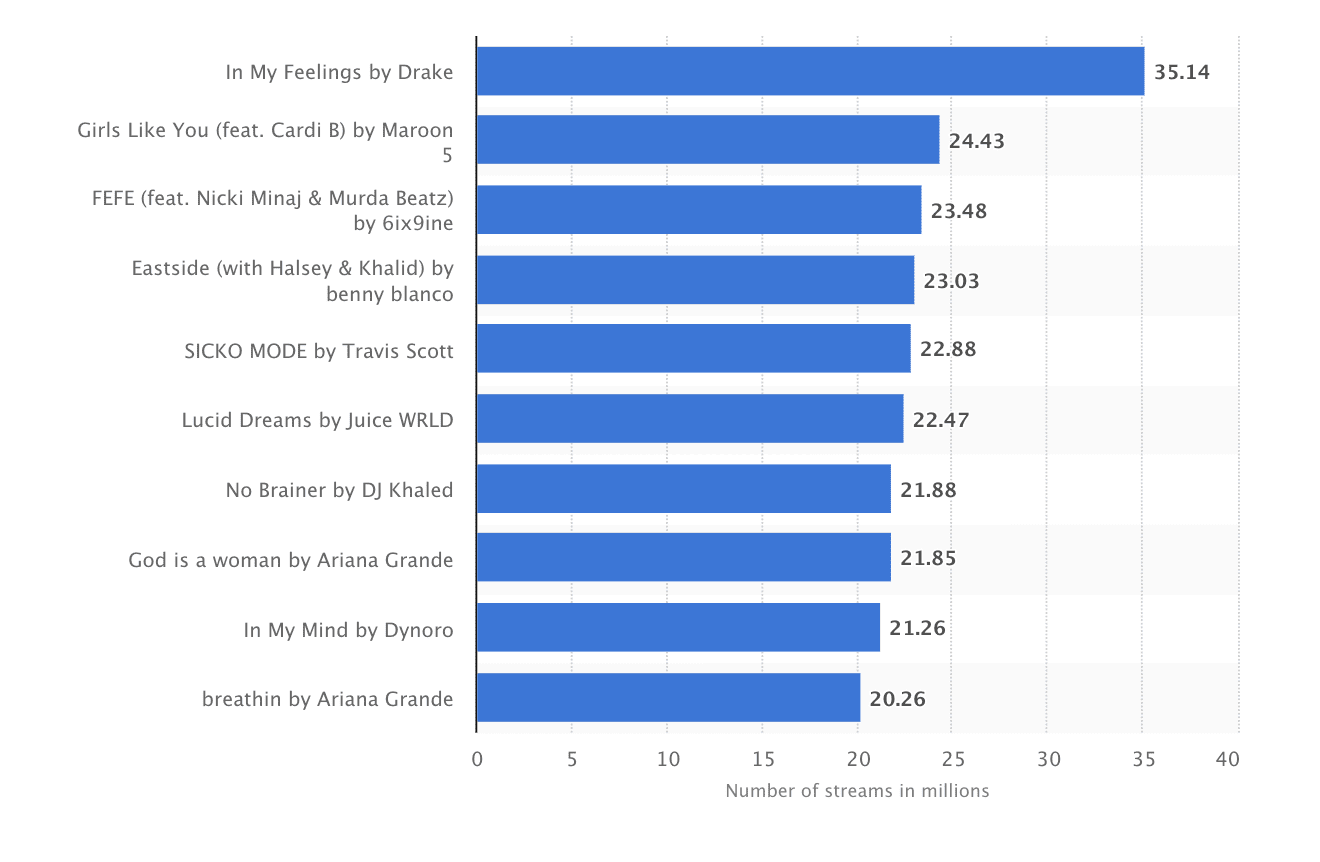
August 2018 on Spotify: “Lucid Dreams” and “In my Mind” bolstered by Spotify playlists
Screen Shot 2018-09-17 at 11.15.10 AM
Method for music discovery (United States: 2018)

Growing playlist spins through partnership

Given Spotify’s recent decision to secure exclusive podcast partnerships with two celebrities, it’s clear that partnerships are on the executive team’s whiteboard. But this isn’t just about performers and brand evangelists aligning with Spotify. Spotify takes pride in experimentation and, as such, the company is primed to take a page out of Apple Music’s original playbook. The streaming service could make great progress by emphasizing its partnership division.

By the time a song lands on Today’s Top Hits or other equally popular sets, Spotify has so relentlessly tested it that it almost can’t fail. “There are very few artists that get into the flagship playlists and then get kicked out,” Holmsten says. When “Call On Me” made that list, it was already destined to go viral—even though most people had still never heard it.

WIRED: on the power of Spotify’s playlists

Spotify has been somewhat of a kingmaker for independent artists and on-the-bubble pop stars. To amplify this effort, Spotify is overdue to take a page out of the direct-to-consumer marketing playbook. Here are the top proposed partnerships with physical “retailers.”

By attaching discovered music to positive, physical retail experiences, Spotify can amplify a key performance indicator (KPI): repeat listens of new and popular music. Here are a few ideas:

  • Orange Theory | OT has earned a network of over 1,400 locations and a loyal following of fitness enthusiasts and business travelers.
  • Core Yoga | This studio is known for its unique practice and a franchise network of over 160 locations.
  • Soho House | The famed members-only club has 50,000 members and a unique vibe in each of its 23 locations.
  • WeWork | Their offices manage 100,000+ members and over 10,000,000 sq. ft. of workspace.
  • Delta Airlines | known for its pre-flight track list, the premium airliner has the ability to set the mood and the wifi for the Spotify deep-dive to continue throughout the flight.

By generating playlist spins through these locations, Spotify can accomplish two things: (1) generate more revenue for artists and (2) convince artists to sign exclusive deals by way of guaranteed minimum spins per month based upon estimated engagement times at Spotify’s potential retail partners.

Apple Music is catching up to Spotify’s by building a competitive advantage into its hardware; the Cupertino company has grown despite glaring weaknesses in the app’s user experience. Spotify may not be able to ship hardware like its chief competitor but that doesn’t mean that it cannot partner with physical retailers. They can redefine their approach to hardware. Beyond their superior engineering, Spotify’s chief advantages could be their partnerships with retail spaces, up-and-coming musicians, and exclusive content offerings. Spotify has an opportunity to find an advantage where Apple has yet to look.  Spotify’s CEO says it best,

I think long term, we at Spotify have some defensible moats, but success for us will be determined by our ability to move faster than everyone else in the space. And just keep on innovating.

Read more of the issue here.

By Web Smith | About 2PM