
Member Research: Why Project S May Change Commerce

In October 2022, 2PM first reported: “A job posting for a business solutions and merchant development manager for a global fulfillment center is a signal that TikTok is planning on becoming an eCommerce platform in addition to a social media app.”

The job description reads: “With millions of loyal users globally, we believe TikTok is an ideal platform to deliver a brand new and better e-commerce experience to our users. We are looking for passionate and talented people to join our global fulfillment centre team, together we can build an e-commerce ecosystem that is innovative, secure and intuitive for our users.”

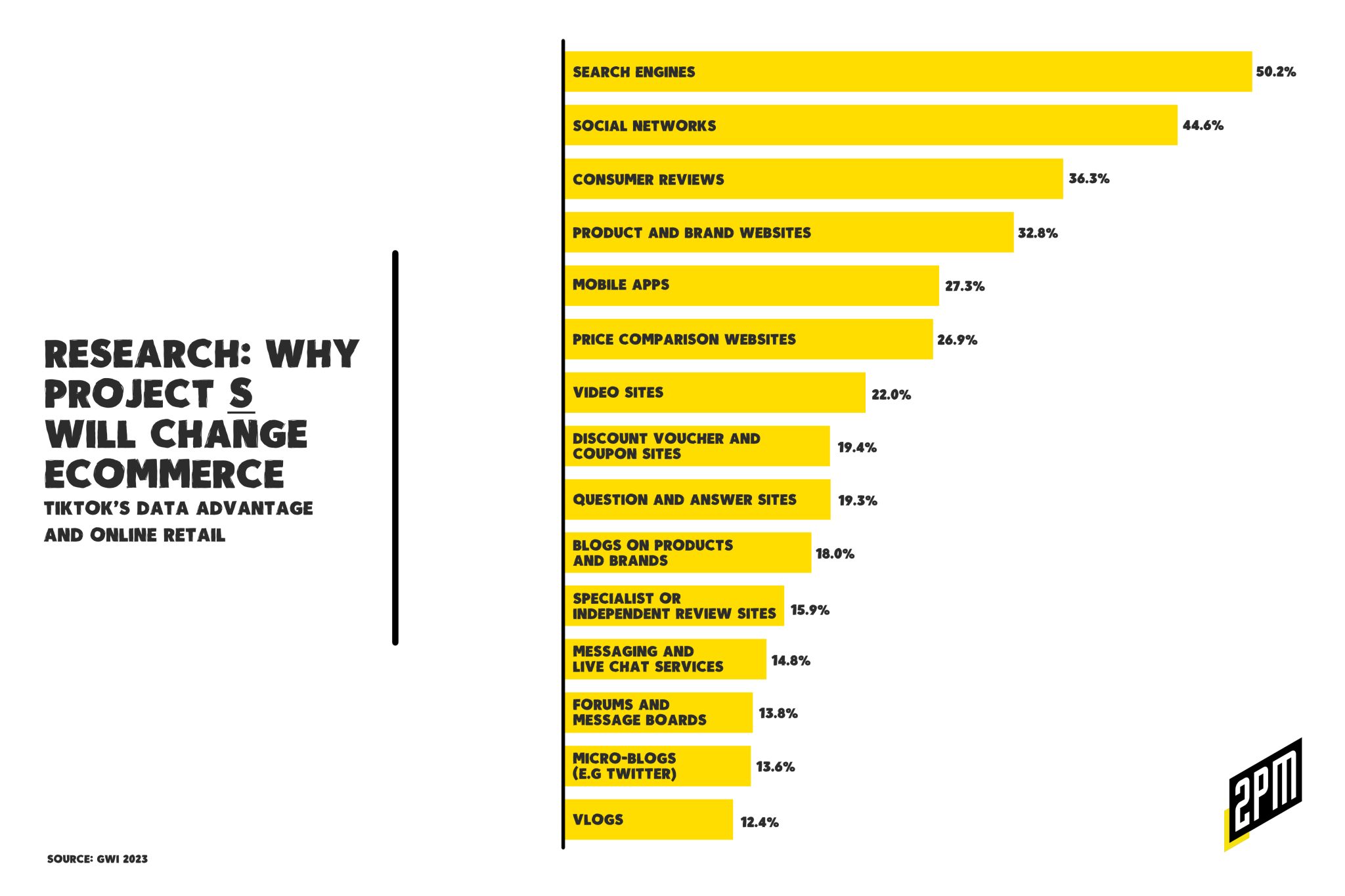
Fast forward a little under a year. TikTok expects to reach a gross merchandising volume (GMV) of $20 billion in eCommerce sales. One glance at this essay’s header can explain why. Of the many methods of product discovery, Tiktok spans: social networks, mobile apps, video sites, and vlogs – four of the top 15 methods.

The eCommerce age has been defined by marketplaces and not social media companies. Now, as TikTok’s parent company, ByteDance, prepares to continue its “Project S” and introduce “Trendy Beat”, there is potential for another significant disruption in the US eCommerce market. This venture has the potential to attract many top American brands while posing a competitive threat to established giants such as Amazon, Shein, and Temu.

TikTok’s “Project S” is a clear indication of the company’s strategic shift in the eCommerce space. Early signs point to its success in other international markets.

TikTok Shop has been a success for the company in Southeast Asia, challenging regional staples like Shopee and Lazada – at least in the social commerce space.

Trendy Beat is a dedicated section within the TikTok app that will feature its version of trending products. This move marks a departure from its existing online selling platform, TikTok Shop, which allows other sellers to display and sell their products. With Project S, TikTok is emulating the Amazon Basics model by directly selling its own items, which is a significant shift in its eCommerce strategy.

What sets Project S apart is the unique leverage that TikTok has over its rivals. With access to a vast amount of data on viral products worldwide, TikTok can effectively utilize its knowledge to create or acquire popular items for sale. This strategic use of data can potentially provide a competitive edge over other eCommerce giants, allowing ByteDance to meet consumer demand swiftly and effectively.

This move could considerably impact the US eCommerce market. TikTok’s massive and engaged user base, combined with the platform’s ability to drive virality, is a recipe for success in the digital retail industry. If ByteDance can successfully implement its plans, it could potentially attract many top American brands that wish to capitalize on TikTok’s popularity and reach.

Moreover, TikTok’s foray into direct sales could force established eCommerce players to re-evaluate their business models. Amazon and other companies may need to reconsider their ad spends and listings on TikTok if ByteDance’s venture succeeds. Consequently, this could significantly disrupt the current eCommerce dynamics, compelling businesses to adjust their strategies to remain competitive.

TikTok’s Trendy Beat initiative will redefine consumer buying behavior in the eCommerce space if it can achieve the sales velocity that it plans.

By selling products that have already gained traction and popularity on its platform, TikTok is in a unique position to influence what its users buy, transforming passive viewers into active consumers. This could set a new trend in the digital retail space, prompting other social media platforms to follow suit in ways that they likely won’t be able to duplicate.

But TikTok’s ambitious move is not without challenges. The company will need to ensure product quality, address consumer concerns about purchasing from social media, and compete with existing eCommerce platforms with established supply chains and delivery networks. Additionally, the brand will need to navigate the complexities of different market dynamics as it expands globally, particularly in the U.S.

Despite these challenges, the U.S. market could offer ByteDance immense growth potential. TikTok’s popularity among American users is undeniable, and successfully monetizing this user base could result in substantial revenue growth. While the company did not initially plan to expand TikTok Shop to the US market, the trademark application for Trendy Beat suggests a potential change in direction. Financial Times explains:

Previous attempts to ape the model of Shien and Temu have failed. Three ByteDance shopping apps — Dmonstudio, Fanno and If Yooou — have either been shut down or abandoned, two ByteDance employees said. “ByteDance realised that they want to build a self-owned brand in the TikTok app instead of making an independent app like Shein and Temu,” one of the employees said.

In looking forward, the introduction of “Project S” and Trendy Beat presents an enticing potential for TikTok to become an all-inclusive social commerce platform. First-party data collection (i.e. cart data and conversion records) will alleviate some of its political issues by shifting how it collects its valuable data on many of its users. By capitalizing on its unique ability to generate viral content and its colossal user base, TikTok could significantly shorten the path from product discovery to purchase. This minimization of friction in the buying process is likely to increase overall sales volume, boosting TikTok’s profits while providing users with a seamless shopping experience.

From a broader perspective, TikTok’s transition into eCommerce may be indicative of a larger trend within the social media industry. By blurring the lines between content and commerce (a la linear commerce), engaged media companies can leverage their user bases to turn popularity into profitability. As noted by Chris Raven, CEO at business growth agency Heur, this could become a common model for other first-party data collectors if TikTok’s venture proves successful.

Raven begins my explaining what this latest development in ecommerce is: “From what can be gleaned from UK users, ‘Trendy Beat’ appears to sell products made and sold by ByteDance, rather than simply linking to items from other eCommerce brands. When exploring this feature, users will see products that have gained popularity or have gone viral on the app, from pet-hair removers to ear wax extractors.”

As the US eCommerce market continues to expand, American brands and consumers alike are looking for innovative platforms that provide unique shopping experiences. If successfully executed, this new venture could result in a mutually beneficial partnership where brands get access to TikTok’s wide user base, and TikTok benefits from the increased engagement and profits generated by these collaborations.

One potential point of concern: TikTok’s transition to becoming a one-stop-shop for eCommerce could result in a narrowing of choices for consumers, which could be a turnoff for some users. In our October 2022 essay on the topic, I shared:

अन्य प्लेटफ़ॉर्म की तरह, TikTok को भी खोई हुई विज्ञापन दक्षता की भरपाई के लिए ई-कॉमर्स से राजस्व की आवश्यकता है। लेकिन दूसरों के विपरीत, यह वास्तव में सफल होने की स्थिति में है। और यही बात मेटा के ई-कॉमर्स से पीछे हटने को उतना ही चौंकाने वाला बनाती है जितना कि TikTok द्वारा शिपिंग और लॉजिस्टिक्स के लिए टीमें विकसित करना। यह फ़र्स्ट-पार्टी डेटा और रिटेल मीडिया नेटवर्क का युग है। अमेज़न ने साबित कर दिया है कि नेटिव कॉमर्स इसे इकट्ठा करने का सबसे अच्छा तरीका है।

Now TikTok has positioned itself for first-party data collection of its own. Success will depend on TikTok’s ability to overcome potential challenges, including consumer skepticism, competition with established eCommerce platforms, political concerns, and the need to ensure product quality and sustainability. Despite these hurdles, “Project S” represents an intriguing development in the evolving role of social media in eCommerce, offering a unique new platform for consumer engagement.

वेब स्मिथ द्वारा | हिलेरी मिल्नेस द्वारा संपादित, क्रिस्टीना विलियम्स और एलेक्स रेमी द्वारा कला
Member Research: How Amazon Used Shopify

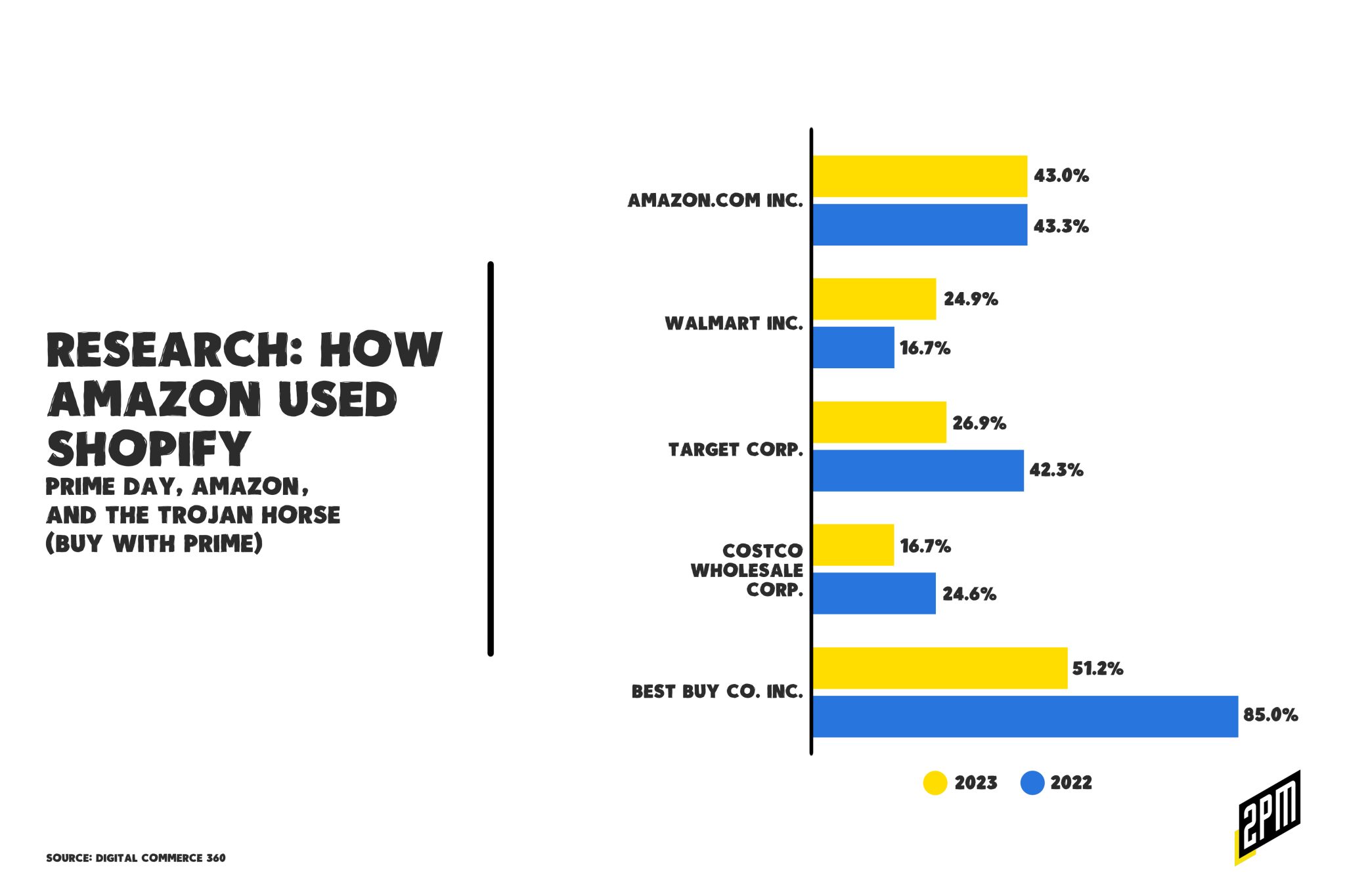
Amazon Prime Day 2023 reached a record-breaking $12.9 billion in sales. It’s a colossal figure, representing 6.7% growth in worldwide sales, despite being a slight dip from the previous growth rates. Most importantly, it was a testament to Amazon’s relentless pursuit of growth and customer satisfaction.

यह सदस्य संक्षिप्त विवरण विशेष रूप से के लिए डिज़ाइन किया गया है कार्यकारी सदस्यसदस्यता को आसान बनाने के लिए, आप नीचे क्लिक कर सकते हैं और सैकड़ों रिपोर्टों, हमारी डीटीसी पावर सूची और अन्य उपकरणों तक पहुंच प्राप्त कर सकते हैं जो आपको उच्च स्तरीय निर्णय लेने में मदद करेंगे।

यहाँ शामिल होएं

Memo: Four Trends For Fashion’s Future

When you think of Vuori, Psycho Bunny, Faherty, Johnnie-O, and Bombas, you think of their rare growth trajectories. None of the brands were first-movers; they each had stiff competition form incumbent retail brands and better-positioned DTCs. But something set them apart from the rest. Here’s an example of how many of these brands work against the typical best practices associated with the segment:

Tucked away in suburban Ohio, a small boutique features a number of brands, none of which are native to the midwest. One trip around the Trevor Furbay boutique in Dublin and you’ll find Faherty, Johnnie-O, and Vuori among others. For smaller formatted stores like this one, it’s rarer to find modern brands of the caliber of those mentioned. For the brands, this type of distribution is a lot of work for relatively little revenue. To a brand of Vuori’s size, this could seem like a waste of time and energy. But for brands like these, who’ve excelled in the art of finding customers where they are, there is no such thing as an account too big or one too small.

These brands are not just popular; they are reshaping what high-performance retail looks like. With their own unique stories and approaches to business, they are rewriting the rules of success for retailers across the globe. Let’s delve deeper. In a recent deep dive by Women’s Wear Daily, the report explained the characteristics that other DTC brands can replicate for their own success. WWD explains the difficulty in achieving what these brand have:

But there are brands that have managed to break that cycle and build highly profitable businesses. In menswear, some of the most impressive include Vuori, Psycho Bunny, Faherty, Johnnie-O and Bombas. Although they service different parts of the market — everything from socks and activewear to polos and beachy button-downs — they have managed to navigate through the potential pitfalls to build multimillion-dollar businesses.

Their stories emphasize the importance of authenticity, quality, social responsibility, and community engagement – trends that are shaping the future of the retail industry.

In an increasingly competitive market, staying true to a brand’s ethos while adapting to market shifts is as difficult as it is crucial. As these brands demonstrate, remaining customer-focused and delivering high-quality products can drive significant growth. Upcoming retailers and DTC brands looking to replicate this success should focus on these aspects: offering unique, quality products, demonstrating social responsibility, fostering a strong brand community, and perfecting channel mix.

This could not come at a better time as fashion retail is poised for a leap in volume of sales for 2023. It’s never been more important to be build close relationships with consumers as competition grows between competitive brands.

Seeing those brands prioritize a small but potentially influential local retailer got me thinking about how each of these companies did so well to build brands with loyal followings, appropriate amounts of inventory, reach, and profitable growth. Here are the top four characteristics shared by each of these retailers.

Trend: Prioritize Product Quality and Innovation

Product reigns supreme in these companies. If you’ve shopped any of them, this is evident. They understand the three Ps of business: Product, Product, and Product. Bombas, a sock company that also deals in other basics, has taken the ‘product-first’ strategy to heart. They prioritize the quality and the utility of their products and you can tell when you wear them. Faherty, an East Coast-based family business, also follows this principle. They deliver products with an East Coast beach flavor made from sustainably sourced materials. The key to their success has been their dedication to creating exceptional products that are both durable enough, appealing, and readily available to consumers.

Vuori was a fitness brand born out of necessity, and another exemplar of this strategy. In “Size Charts, Returns, and EBITDA,” I explained:

Over the course of the pandemic, Vuori became one of the fastest-growing modern brands in the fashion retail space. When the retailer landed its $400 million Softbank investment (at a $4 billion valuation) in 2021, I admittedly didn’t understand the buzz. Then I bought my first pair of joggers from them around a year later. REI, one of Vuori’s top wholesale partners, made it easy. A section of the store is devoted to the brand and an REI associate is frequently stationed within the shop to answer any questions. I was an immediate fan.

Vuori offered an innovative solution to a lack of appealing athletic wear, leading to its exponential growth.

Trend: Craft a Distinct Brand Story and Culture

These standout brands don’t just deliver great products; they also built compelling stories and cultures around their brands. As CEO Dave Gatto of Johnnie-O said, “a brand is a living organism, more than just a logo or a name.” A successful company must create a culture that reflects its brand ethos.

Psycho Bunny turned the challenges it faced in its early years into an inspiring success story. This excerpt begins the narrative that laid the groundwork for the company’s present day stature:

But around 2013, things began to unravel and Psycho Bunny experienced operational issues and internal struggles. Enter Alen Brandman to the rescue.

In 2021, Brandman became the brand’s majority owner. Similarly, Bombas’ advertising campaign Compassion = Change was a powerful expression of its brand story. This campaign was instrumental in spreading awareness about homelessness and promoting a more compassionate approach towards this issue. And, Faherty had a strong human capital ethos that shaped its culture and had consistently been a part of its brand story over the past decade.

Trend: Understand Your Customer and Their Needs

These successful DTC retailers understood their customers and their needs better than anyone else. Johnnie-O’s focus on ‘West Coast prep’ resonated with its target market. Bombas’ approach to addressing the issue of homelessness through its business model appealed to its consumers’ sense of social responsibility. Vuori and Faherty too, with their unique, high-quality wears, understood and catered to the needs of their respective target markets. This quote by Brandman was pretty solid:

Men especially are strange creatures. Some men have the same type of underwear for 12 years. Some men have the same T-shirt for 10 years, so you need to make sure those core fundamentals are treated with great respect to ensure people are going to come back. And we’re not going to do anything to breach that trust.

These brands are not just selling products; they are partnering with their consumers, selling a lifestyle and fostering loyalty to an identity that their customers could connect with.

Trend: Leverage Multiple Channels for Distribution and Growth

This is the key trend, in my opinion. And it goes back to the second paragraph: several of these brands saw value in working with a small store that would barely move the needle from a sales volume standpoint. Each of these brands recognized the importance of multiple distribution channels to their growth. While direct-to-consumer retail was a crucial part of their success, they also understood the value of physical retail spaces and wholesale partnerships.

Faherty, for example, has a significant brick-and-mortar presence and operates 52 stores around the US. Psycho Bunny, despite facing internal struggles and operational issues in the past, managed to bounce back and is currently present in over 70 retail locations across North America. Vuori has followed a similar path, starting out as a direct-to-consumer brand, and then branching out into wholesale. Their strategy shows how a multi-channel approach can help a brand expand its reach and tap into different customer segments.

The success stories of these high-performing DTC brands offer a road map for other retailers. By focusing on product quality, crafting a compelling brand story, understanding the customer, and leveraging multiple channels for distribution, a retailer can replicate their success. But in the end, the internet remains the center of the wheel for these retailers. Vuori founder Joe Kudla:

There’s so much to learn about navigating different cultures and consumer preferences, but that’s the stuff I view as fun. The real challenges were raising money and getting our product marketing and fit correct. Two years in, I thought we were going to run out of money so I thank my lucky stars for the internet and being able to sell online.

These brands have shown that it’s possible to carve out a niche in the market by taking lessons from DTC’s past and challenging the status quo. As the retail landscape continues to evolve, the lessons from these trailblazing brands will remain relevant, guiding the way for future DTC success stories.

Emulating these brands doesn’t require massive investment or out-of-the-box thinking, but instead a dedication to quality, community, and authenticity. It’s a testament to the potential of retail done right, proof that in an industry often seen as challenging and unpredictable, success is achievable when businesses stay true to their values and put the customer first.

वेब स्मिथ द्वारा | हिलेरी मिल्नेस द्वारा संपादित, एलेक्स रेमी और क्रिस्टीना विलियम्स द्वारा कला